★ Your magazine. Your say. Complete our reader survey with a chance to win Jack Pyke kit worth £500! ★


Scotland puts helicopters on standby for wildfire season
The Scottish Fire and Rescue Service will hold helicopters on immediate standby whenever wildfire risk is assessed as high, very high or extreme, answering calls from land managers after the Cairngorms fire


Justice secretary Neil Gray announced the arrangement in the Scottish Parliament on Thursday 3 September, in a ministerial statement on this summer’s Cairngorms wildfire. Scottish Land & Estates, whose report this week called for guaranteed helicopter availability at times of very high or extreme risk, said the move was a significant and practical step.
Why were land managers calling for helicopter cover?
The Glenmore-Strathnethy fire burned across more than 3,300 hectares of the Cairngorms in July, and the report from Scottish Land & Estates documented the scale of the private response, including nearly £6.4m of privately owned specialist equipment drawn into the response by more than 40 businesses and organisations.
Ross Ewing, director of moorland and strategic projects at Scottish Land & Estates, said: “Recent wildfires have demonstrated the immense speed with which fires can spread across Scotland’s rural landscape. Giving the Scottish Fire and Rescue Service the ability to place helicopters on standby and deploy them immediately will strengthen its response, help protect firefighters and land managers on the ground, and provide a better opportunity to contain fires before they cause widespread devastation.”
Is the standby arrangement permanent?
Not yet. Sarah-Jane Laing, chief executive of Scottish Land & Estates and a member of the Scottish Government’s strategic oversight group for wildfire, said: “Although this arrangement is currently intended to cover the remainder of the wildfire season, it provides a strong foundation on which a permanent and properly resourced national capability should now be built.”
She added that helicopters are not a complete solution: “They are best used in conjunction with a comprehensive, integrated ground response, and Scotland must also invest in prevention, preparedness, local wildfire plans, specialist training and equipment, and responsible vegetation and fuel-load management.”
What happens next?
Helicopters will be held on standby, and mobilised immediately, whenever Scotland’s wildfire danger assessment reaches high, very high or extreme for the remainder of the season. Land managers will keep working with the Scottish Fire and Rescue Service, government and rural communities on prevention and response, and the wider argument over fuel-load management continues as Scotland’s muirburn licensing scheme begins on 15 September. The full ministerial statement is in the Scottish Parliament’s Official Report for 3 September, linked below.
Frequently asked questions
When will helicopters be on standby for wildfires in Scotland?
Whenever the wildfire danger assessment rates the risk high, very high or extreme, for the remainder of this wildfire season, with immediate mobilisation when needed.
Why did land managers call for helicopter support?
Fires such as July’s Glenmore-Strathnethy blaze spread faster than ground crews can contain, and the Scottish Land & Estates report called for guaranteed helicopter availability at times of very high or extreme risk.
Is the helicopter standby a permanent arrangement?
No. It covers the remainder of the season; Scottish Land & Estates wants it built into a permanent and properly resourced national capability.
Related Articles

Knowledge is power: training the police to tackle rural crime
Mowbray Partners is a digital training agency equipping police with rural knowledge via its online portal. Martin Puddifer finds out more
By Martin Puddifer | 7 September 2026
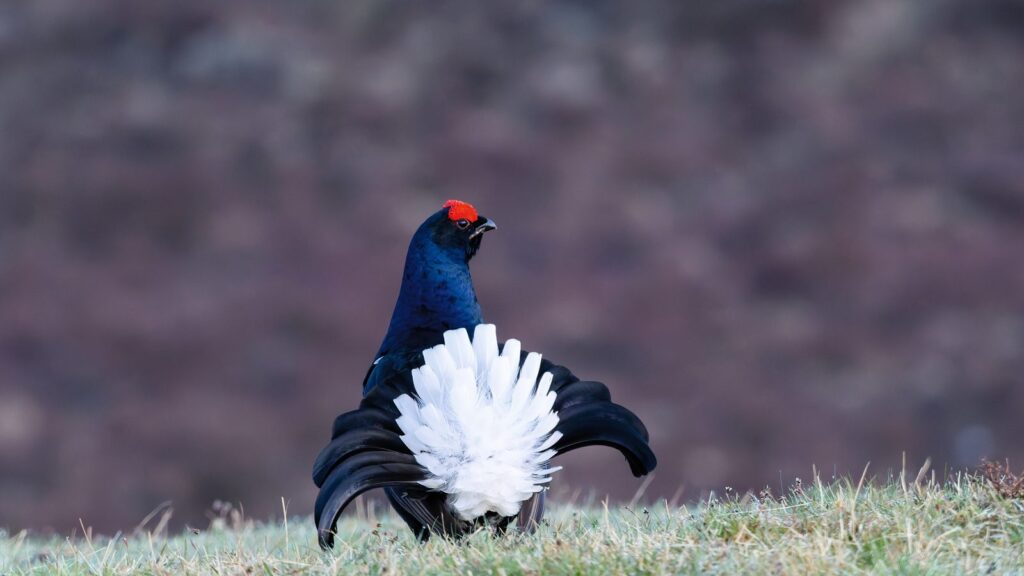
Pointing dogs tally black grouse before a third North York Moors move
North Pennines keepers ran their annual black grouse count with pointing dogs two days before the Twelfth, joined by the GWCT's Phil Warren. The numbers will decide how many birds move to the North Yo...
By Shooting Times | 6 September 2026
Get the latest news delivered direct to your door
Subscribe to Shooting Times & Country
Discover the ultimate companion for fieldsports enthusiasts with Shooting Times & Country Magazine, the UK’s leading weekly publication that has been at the forefront of shooting culture since 1882. Subscribers gain access to expert tips, comprehensive gear reviews, seasonal advice and a vibrant community of like-minded shooters.
Save on shop price when you subscribe with weekly issues featuring in-depth articles on gundog training, exclusive member offers and access to the digital back issue library. A Shooting Times & Country subscription is more than a magazine, don’t just read about the countryside; immerse yourself in its most authoritative and engaging publication.