★ Your magazine. Your say. Complete our reader survey with a chance to win Jack Pyke kit worth £500! ★


Record wildfire year sparks warning that lives will be lost
England and Wales saw a record 1,350 wildfires in 2026, and the Climate Change Committee’s chair fears lives will be lost. Moorland managers say prevention starts with fuel


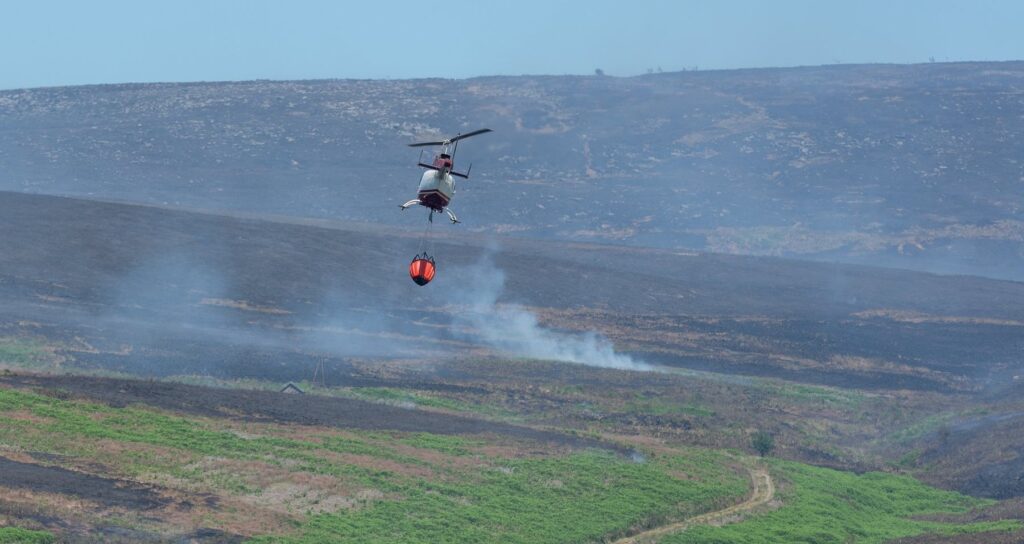
Fire and rescue services in England and Wales responded to 1,350 wildfires in 2026, more than 300 up on last year’s previous record, according to National Fire Chiefs Council (NFCC) figures reported by BBC File on 4 Investigates. The figures land as moorland managers renew their case that reducing the fuel load on the hills – work gamekeepers do months before the fire season – is the prevention tool being restricted.
What did the BBC investigation find?
The 1,350 fires recorded this year are an all-time high, more than 1,000 up on 2024, and July was the busiest month ever recorded for wildfires in England and Wales, with 458 incidents. Records had already been broken in 2022 and again in 2025.
The human cost was severe. One man died in a wildfire in Gloucestershire, 19 homes were destroyed in a single fire at Stourbridge, near Birmingham, and villagers were evacuated in the Cairngorms. In all, more than 50 homes were lost over the summer.
Baroness Brown, chairwoman of the Climate Change Committee, told the programme the UK was not ready for a changing climate and that wildfire risk could double across much of the country by 2050. “I fear that lives will be lost,” she said. “We need to be doing much more education and preparation.”
The Fire Brigades Union told the BBC that more than a fifth of UK firefighter and control room posts, about 12,000 jobs, have been cut since 2010, leaving crews overstretched: firefighters from London were sent to Yorkshire this summer, and crews from Merseyside to Dorset. The Government has invested £97m, including six specialist firefighting teams, and Phil Garrigan, chairman of the National Fire Chiefs Council, warned that without more investment, including in aerial firefighting, 2027 and 2028 are likely to repeat this year.
The fuel on the ground is the factor keepers can change
Once a fire is burning, three things decide how it behaves: the weather, the shape of the ground and the fuel – the heather, grass, bracken and dead vegetation available to burn. Nobody can change the first two on the day. Fuel is managed months in advance, and on heather moorland that work is done overwhelmingly by gamekeepers: controlled burning of small patches in rotation, cutting where burning is not suitable, and grazing.
The Moorland Association, which published its analysis of the BBC findings this week, says licences to burn on deep peat in England have been hard to obtain since 2021, and that the September 2025 change moving the protected peat-depth threshold from 40cm to 30cm extended the restriction to more moorland, so fuel keeps building. The association said active, skilled land management reduces the fuel that feeds wildfires, protecting people, homes, wildlife and carbon stores.
The Campaign for the Protection of Moorland Communities went further this week, arguing that the Government is funding firefighting on a record scale while restricting controlled burning, one of the most effective means of prevention. In Scotland, where the first licensed muirburn season opened on 15 September under the Wildlife Management and Muirburn (Scotland) Act 2024, practitioners now need a NatureScot licence for any muirburn.
What happens next
Baroness Brown said preparation should include specialist teams and equipment but also fire breaks and early warning systems – the same principle, applied in strips, that moorland managers apply across whole hillsides. Moor owners and keepers are being urged to put their wildfire logs and fuel-management records before Defra’s call for evidence on gamebird release, shooting and welfare, which closes on 1 November; the Moorland Association’s draft response is open for member comment until 16 October.
Frequently asked questions
How many wildfires were there in England and Wales in 2026?
1,350, according to National Fire Chiefs Council figures reported by the BBC – an all-time record, more than 300 up on 2025 and more than 1,000 up on 2024.
Why do gamekeepers burn heather?
Controlled burning in small rotational patches removes old, woody growth and leaves a patchwork of younger heather that holds less fuel, so a wildfire reaching it has less to burn and is easier to control.
Is controlled burning still allowed on peatland?
In England, burning on deep peat has required a licence since 2021, and from September 2025 the protected depth threshold fell from 40cm to 30cm, covering more moorland. In Scotland, all muirburn now requires a NatureScot licence under the Wildlife Management and Muirburn (Scotland) Act 2024.

 Closes 15 JanuaryWorth £129.90Win a pair of tickets to the British Shooting Show 2027Enter nowFree to enter
Related Articles

Moorland bird declines linked to less predator control in new data
The latest official wild bird statistics show upland specialists down 39% in England since 1994 – and name reduced site-based predator control among the major pressures on open-nesting moorland specie...
By News Desk | 21 October 2026
EFRA wildfire report calls for review of controlled burning rules
MPs say the UK is unprepared for severe wildfires after two record years, and want burning rules reviewed, firefighting aircraft secured and keepers’ work recognised before spring 2027
By News Desk | 21 October 2026
Get the latest news delivered direct to your door
Subscribe to Shooting Times & Country
Discover the ultimate companion for fieldsports enthusiasts with Shooting Times & Country Magazine, the UK’s leading weekly publication that has been at the forefront of shooting culture since 1882. Subscribers gain access to expert tips, comprehensive gear reviews, seasonal advice and a vibrant community of like-minded shooters.
Save on shop price when you subscribe with weekly issues featuring in-depth articles on gundog training, exclusive member offers and access to the digital back issue library. A Shooting Times & Country subscription is more than a magazine, don’t just read about the countryside; immerse yourself in its most authoritative and engaging publication.

