

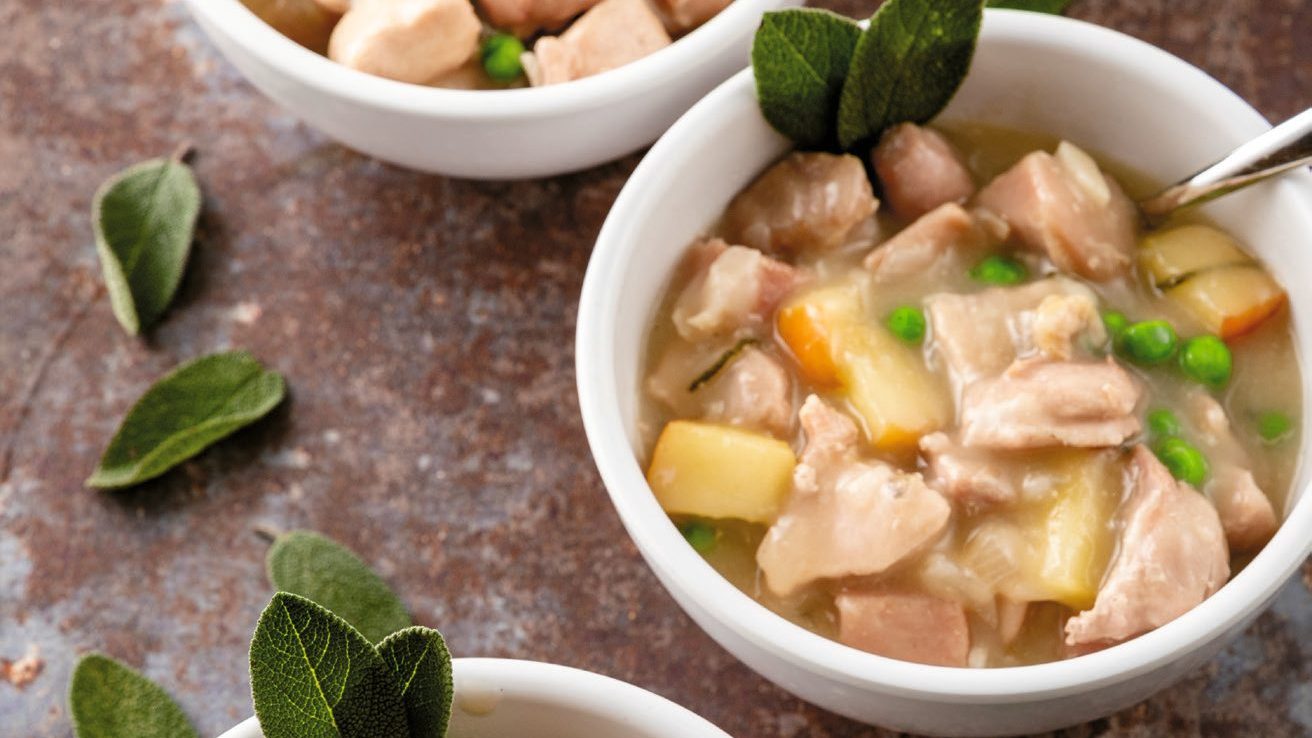
Rabbit, gammon and cider stew
Inspired by his rabbit-hunting outings as a youngster, José Souto shows how a thrilling quarry can make an equally satisfying feast

In my younger years, I spent a lot of time chasing rabbits. In fact, my first day in the field was hunting rabbits with my two uncles in Spain. They worked a small pack of podencos, small whippet-like dogs that in Spain are used to flush small game such as rabbits. These slender little dogs run through the thick, impenetrable undergrowth pushing game ahead of them with an excitable cry, much like a pack of foxhounds. This sort of hunting has been going on in Spain for hundreds of years.
Rabbits as an exciting quarry for hawks and ferrets
In the UK, when I lived on the outskirts of north-west London, I started to practise falconry, and rabbits were the main quarry for my goshawks and Harris hawks. Rabbits are an exciting quarry to fly hawks over and, on sunny days, you could walk them up in long grass, never quite knowing when one would shoot out from its hiding place.
On other days we would use ferrets, just without the nets. The ferrets would work the warren, the rabbits would bolt and the chase would begin, with the bird accelerating at an incredible speed from the fist, on the tail of the rabbit as it twisted and turned to evade the hawk. Out of 10 flights, you were lucky to catch three or four rabbits, depending on the terrain, fitness of the bird and weather conditions. This form of hunting rabbits is one of the most exciting, as the far fitter wild rabbit is at more of an advantage.
Rabbits are an incredible protein source, and more prized in Mediterranean countries than in the UK. In Spain, Italy and France, they are smaller but have a strong flavour from the wild herbs they eat. British bunnies, due to their better diet, will provide much bigger portions.
Ingredients
- 50g butter
- 1 onion, finely diced
- 1 clove of garlic, finely chopped
- 2 rabbits, fully boned and all meat diced
- 200g gammon, diced into 1cm chunks
- 50g flour
- 600ml chicken stock
- 350ml cider
- 150g peas
- 1 Pink Lady apple, cored and diced into 1cm cubes
- 1tsp sage, some chopped and some for garnish
How to make rabbit, gammon and cider stew – step by step
- Step 1. Melt the butter in a saucepan, then add the onion and garlic and sweat without colour for 2 to 3 minutes. Add the rabbit and gammon and cook for a further 10 minutes so that the meat is sealed all over.
- Step 2. Sprinkle the flour over the rabbit and stir well to incorporate the flour with the butter, onions and garlic. This will give you a roux. Cook for another 4 minutes.
- Step 3. Add the stock to the rabbit, stirring it so that the roux breaks down to a thick sauce. Then stir in the cider and, once it is well mixed in, bring it to boil before turning down to a slow simmer.
- Step 4. Allow the rabbit to cook for 1 hour and 35 minutes, or until the meat is tender. Once the rabbit is cooked, check the consistency of the sauce. It should be like double cream. If it is a little thin, remove the rabbit, cover and keep warm and allow the sauce to reduce a little.
- Step 5. Once the sauce is at the required consistency, return the rabbit and add the peas, apple and sage, then cook for a further 8 minutes.
Tips for the best rabbit stew
Sweat the onion and garlic without colour, and seal the rabbit and gammon all over before the flour goes in. The finished sauce should be the consistency of double cream – if it is thin, lift the rabbit out, keep it warm and let the sauce reduce. Add the peas, apple and sage only for the last 8 minutes so they keep their colour and bite. British wild rabbits give much bigger portions than their Mediterranean cousins.
Frequently asked questions
How long does rabbit stew take to cook?
After sealing the meat and making the roux, the rabbit simmers in stock and cider for 1 hour and 35 minutes, or until tender, then the peas, apple and sage go in for a further 8 minutes. The print gives a cooking time of 2 hours in all.
How thick should the sauce be?
It should be like double cream. If it is a little thin, remove the rabbit, cover and keep it warm, and let the sauce reduce a little before returning the meat.
How many rabbits do I need for six people?
Two rabbits, fully boned with all the meat diced, along with 200g of gammon, serve six.
What apple works in rabbit and cider stew?
José Souto uses a Pink Lady apple, cored and diced into 1cm cubes, added with the peas and sage at the end.

About the author
José Souto
A London chef, lecturer and game specialist, José is senior chef lecturer in culinary arts at Westminster Kingsway College, where he trained himself. Born in Britain to Spanish parents, he spent childhood holidays hunting and fishing with one side of the family in Andalucia and learning about produce from the farming side in Galicia. He cooked at the House of Commons for more than 11 years, with sabbaticals at Mosimann’s, The Ritz, the Savoy Grill and the Intercontinental Park Lane, and it was a game training manual he wrote there that took him back to the college to lecture. He is the author of Venison: The Game Larder and Feathers: The Game Larder, both photographed by Steve Lee, runs game seminars for chefs and the public, and is a keen stalker and falconer.
 Closes 15 JanuaryWorth £129.90Win a pair of tickets to the British Shooting Show 2027Enter nowFree to enter
Related Articles
The Bloody Mary: “If it lacks authority, add more vodka”
You come in wet, ravenous and pink about the ears. Only one drink is worth the walk back to the house – here is its history, and how to make it sing
By Shooting Times | 6 November 2026

Partridge stroganoff: Eat Wild chef’s 30-minute recipe for Game Week
Great British Game Week runs to 9 November, and Eat Wild’s Leon Challis-Davies has a creamy partridge stroganoff, written for Sporting Gun, that gets six redleg breasts and 350g of pappardelle on the...
By Leon Challis-Davies | 5 November 2026
Get the latest news delivered direct to your door
Subscribe to Shooting Times & Country
Discover the ultimate companion for fieldsports enthusiasts with Shooting Times & Country Magazine, the UK’s leading weekly publication that has been at the forefront of shooting culture since 1882. Subscribers gain access to expert tips, comprehensive gear reviews, seasonal advice and a vibrant community of like-minded shooters.
Save on shop price when you subscribe with weekly issues featuring in-depth articles on gundog training, exclusive member offers and access to the digital back issue library. A Shooting Times & Country subscription is more than a magazine, don’t just read about the countryside; immerse yourself in its most authoritative and engaging publication.

