

Fit for a hero: the Webley Junior air pistol inherited from a wartime uncle
John Milewski relives his lifelong connection with a treasured Webley Junior air pistol, inherited from the Monte Cassino veteran who first introduced him to a real Webley
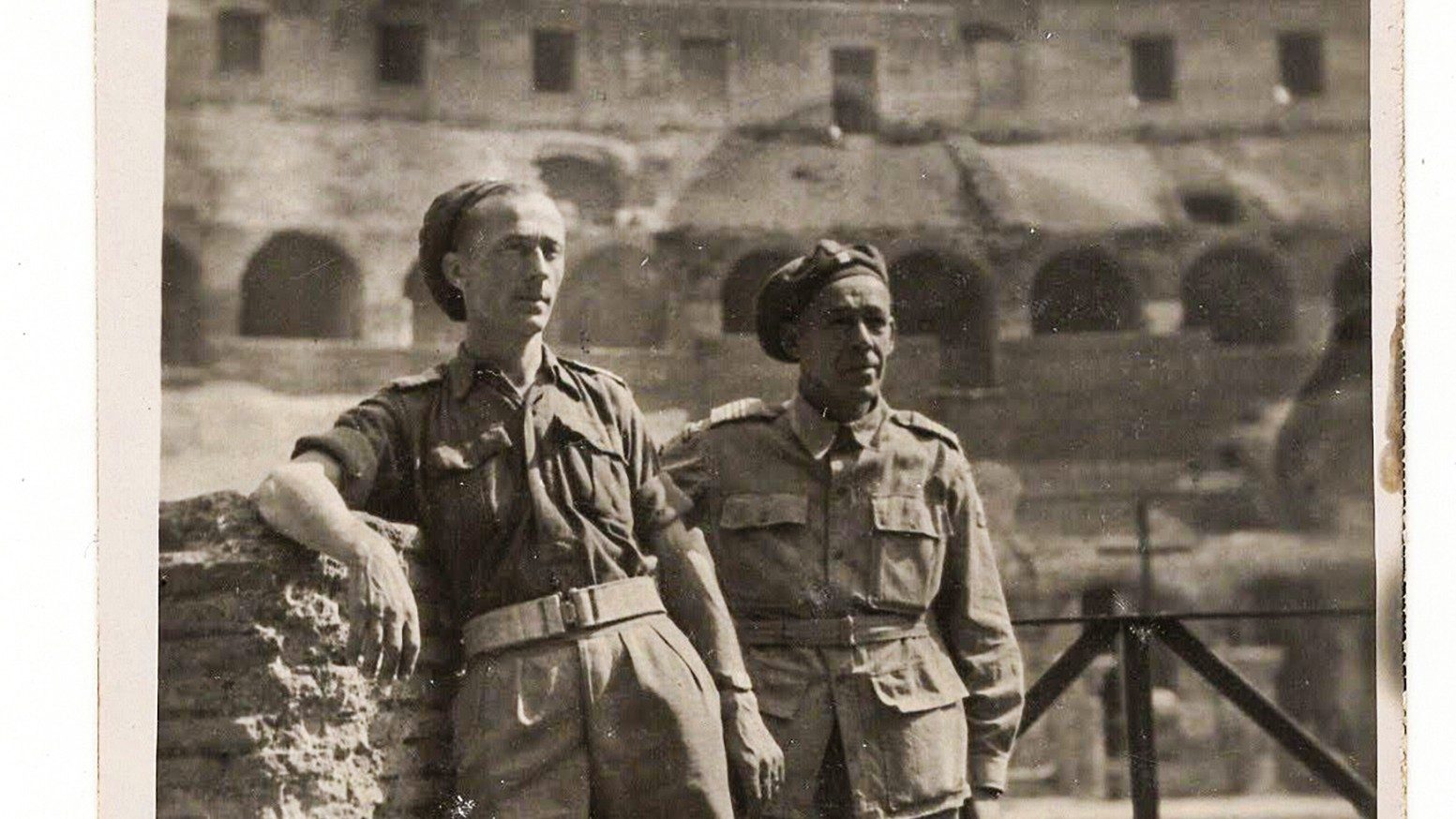

My first airgun was a chrome-plated Gat pistol, which holds a very dear place in my heart, as that was the pistol that started it all for me. I remember showing it to a favourite uncle one day and he said he also had an air pistol. Would I like to see it?
Off he went upstairs and came back with a box emblazoned with the word Webley. I was familiar with the Webley name, even at the age of 13 or so, through war comics such as Warlord and Battle. Upon opening the box, I remember seeing a blue cloth, which protected a steel pistol marked Webley. I wondered what the tube at the top was; could it be some kind of sight?
Uncle Tadzik explained it was the barrel and went on to demonstrate how it worked. He then asked if I wanted a go and off we went into his garden for a plink with a real Webley.

My hero: an uncle who never spoke of the war
I knew my uncle had fought in World War II, but back then, I had no idea in which campaign, as he didn’t talk about his wartime experiences, especially with an impressionable teenager. Sadly, Uncle died not long after, and over time, I discovered why he didn’t discuss his experiences. They are difficult for us today to comprehend, and it’s amazing that he remained a polite, gentle and kind man until the end.

Monte Cassino and a new life in Britain
Uncle joined the Polish forces and served in North Africa. He went on to fight in the Monte Cassino campaign, which involved soldiers of many nationalities attempting to dislodge German troops from the ancient monastery and later its ruins. It was the Polish troops who ended up taking the ground and defeating the Germans in what was a horrific battle.
One night, Uncle became separated from his comrades and spent the freezing night hiding among corpses, some of whom were undoubtedly former friends. Thankfully, he made it back to his unit and continued fighting.
After the war, Uncle made his way to Britain, and while in barracks, he met my mum’s family and went on to marry her sister. Around 1950, one of mum’s brothers and Uncle Tadzik decided they needed an air pistol to pass the time and bought a brand spanking new Webley Junior Series 2 from an Essex gunshop or perhaps sports shop that is lost to time. Apparently they got into trouble for shooting holes through a tin chamber pot with it, an item that was in high demand due to the limited availability of toilets!

On the day that Uncle Tadzik passed away, I was shooting with the Air Cadets at Bisley, and I achieved my personal best rifle score up to that time. I often wonder if he somehow helped me, as my performance was higher than I was capable of at the time. My aunt was the opposite of a hoarder and kept her house spotless. Today, we would probably say she had OCD. I remember broaching the subject of the Junior air pistol, and she was only too glad to present me with it. It was still wrapped in the blue oil-stained cloth I remembered from my first encounter with the pistol, but where was the box! It turned out I was just in time, as my aunt had just thrown it in the bin! Even as a teenager, I must have had the collecting gene, so off she went to recover the box with a look of bewilderment as to why on earth I wanted a scrappy old box.

A family heirloom with a known history
Looking back today, I’m absolutely delighted to have saved the box and inherited the pistol. We often look at a vintage airgun and wish it could talk. Well, this one can. I know its history from 1950 onwards and am its second owner. It came to me with an unmarked brown tin that had held a quantity of pellets, which were used up decades ago. I have since obtained Webley Special pellets from the 1950s and dispensed them into the tin to retain with the pistol.

How to date a Webley Junior Series 2
Webley redesigned its range of three air pistols in 1939, but production ceased for the duration of the war, perhaps with the exception of a few pistols released in 1940 to celebrate Webley’s 150th anniversary. When manufacture recommenced in 1946, the Junior had undergone a facelift and was now fitted with synthetic rather than metal grips. Up until around 1950, the grips had an extended portion at the top and Uncle’s pistol doesn’t have this feature. A laterally adjustable rearsight replaced the previous fixed sight on the Junior in around 1950, and Uncle’s pistol has one fitted. The pistol therefore dates from 1950 or possibly a year after.

I admit to not being a careful owner during my teens. I lost the sear pin, so the pistol was put away, out of action, for a couple of years. I then came across Dennis Hiller and his airgun spares business, so a factory-original pin was sourced, along with a new mainspring and barrel, as I had ruined that too. I cleaned and lubricated the pistol before reassembling it, and it has been carefully looked after ever since.

How the Webley Junior performs today
The Junior has been in my possession for the last 40 years and still performs admirably. I used to use my midriff as a pivot while cocking it and ruined plenty of T-shirts doing so, but today, it’s easier to cock than it was while I was a teenager. The Junior was as well made from steel components as was the Webley Mk1 and Senior, which is just as well as many survive in working order to this day, despite the hard use many have seen.
Advertised velocity was 290fps with 8gr Webley Special pellets, and Eley Wasps perform well too. While no match pistol, I learned the basics of pistol shooting with my Junior, such as stance, hold, breathing, trigger release and follow-through. I was mostly self-taught, albeit I did undertake rifle coaching while in the Air Cadets, and many of the principles transfer over to pistol shooting, other than it’s harder!
One feature that shouldn’t be overlooked is the pistol’s smoothbore barrel. This adds versatility as it means that airgun darts can be used, and Webley used to market them exclusively for smooth-bore barrels. I have enjoyed many a shooting session against an old dartboard, playing round the clock or nearest the bull. You just need to be careful of grouping too tightly as hitting another embedded dart can damage the darts and consequently the barrel if they are reused. The smooth-bore barrel does not mean that pellets are less accurate at the distances the Junior was intended for, hence the versatility I mentioned. Darts can still be obtained on eBay, and I recall them being the projectile of choice when funds were tight!
The Junior remains capable of destroying tin cans placed around 10 yards away, and to be fair, informal plinking is what it was intended for. The principle that Webley followed with the design was offering a superb air pistol to youngsters, in order to provide them with a quality introduction to air pistol shooting. Well, the Junior has certainly done that in my case, with a little help from a war hero.
Frequently asked questions
How can you tell the age of a Webley Junior air pistol?
Post-war Juniors from 1946 have synthetic grips. Until around 1950 the grips had an extended portion at the top and a fixed rearsight; from around 1950 a laterally adjustable rearsight was fitted and the extended grip disappeared.
Can a Webley Junior fire darts?
Yes. The Junior has a smoothbore barrel, so it fires airgun darts as well as pellets, and Webley marketed darts for smooth-bore barrels. Take care not to hit an embedded dart, which can damage the darts and the barrel.
What velocity does a Webley Junior give?
Webley advertised 290fps with 8gr Webley Special pellets.
 Closes 15 JanuaryWorth £129.90Win a pair of tickets to the British Shooting Show 2027Enter nowFree to enter
Related Articles
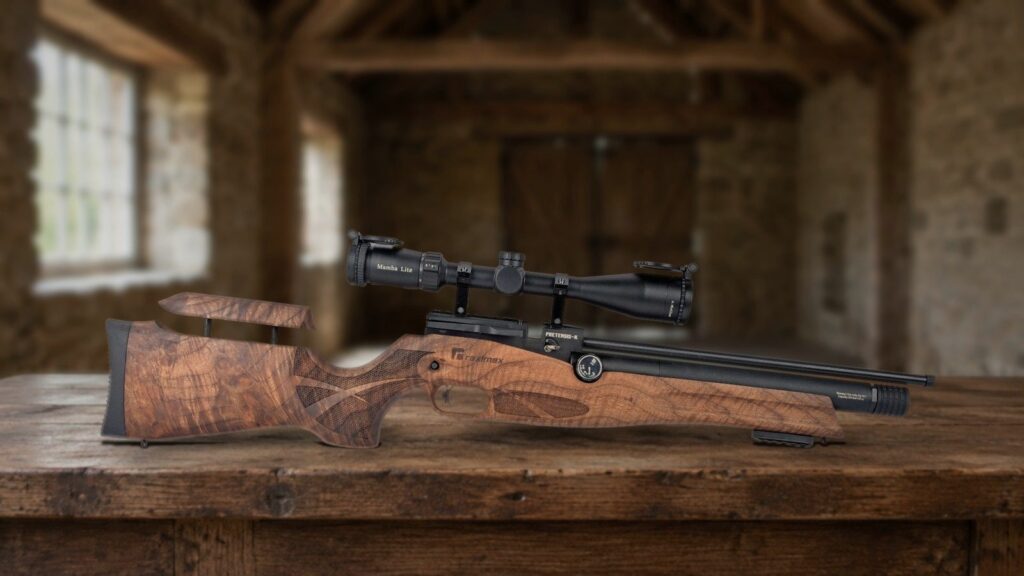
Reximex Pretensis-K review: a walnut-stocked PCP carbine that gives more rifle than its £615 price
Dave Barham tests the .22 Reximex Pretensis-K, the carbine version of the Turkish maker’s well-regarded Pretensis, on the chronograph and the bench – and finds it every bit as good as its big brother,...
By Dave Barham | 4 November 2026

Semi-recoilless air rifle: what Norica’s Omnia ZRS Pro offers keepers
A break-barrel that shoots almost like a pre-charged pneumatic with no bottle or pump to carry has had a full test, and Mark Camoccio, writing in Airgun World, found a pellet balanced on the action st...
By Mark Camoccio | 20 October 2026
Get the latest news delivered direct to your door
Subscribe to Shooting Times & Country
Discover the ultimate companion for fieldsports enthusiasts with Shooting Times & Country Magazine, the UK’s leading weekly publication that has been at the forefront of shooting culture since 1882. Subscribers gain access to expert tips, comprehensive gear reviews, seasonal advice and a vibrant community of like-minded shooters.
Save on shop price when you subscribe with weekly issues featuring in-depth articles on gundog training, exclusive member offers and access to the digital back issue library. A Shooting Times & Country subscription is more than a magazine, don’t just read about the countryside; immerse yourself in its most authoritative and engaging publication.

