★ Save on shop price when you subscribe. Pay just £2.80 per issue – 43% cheaper than buying in-store at £4.95! ★

Best hunting knives put to the test
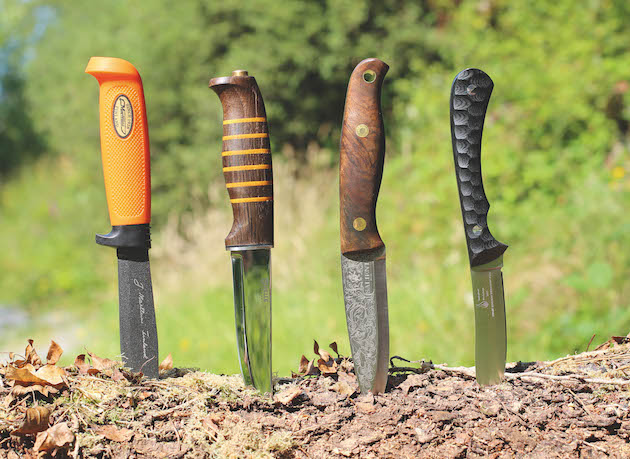 L-R: Marttiini skinner, Helle Morgon, Salient Canterbury, Emberleaf Peryton L-R: Marttiini skinner, Helle Morgon, Salient Canterbury, Emberleaf Peryton

We are supported by our audience. When you purchase through links on our site, we may earn an affiliate commission. Learn more
There are few tools more central to fieldsports than a decent knife and, whether you are gralloching stags in the Highlands or divvying up the game pie at a shoot lunch, you won’t get far without a good blade. Shooting Times asked me to try out this quartet of real beauties, all of which were thoroughly put through their paces over a long weekend camping in the forest. So, how did these best hunting knives measure up? (Read about the law on carrying knives for hunting.)
Marttiini Martef Skinner £56.99
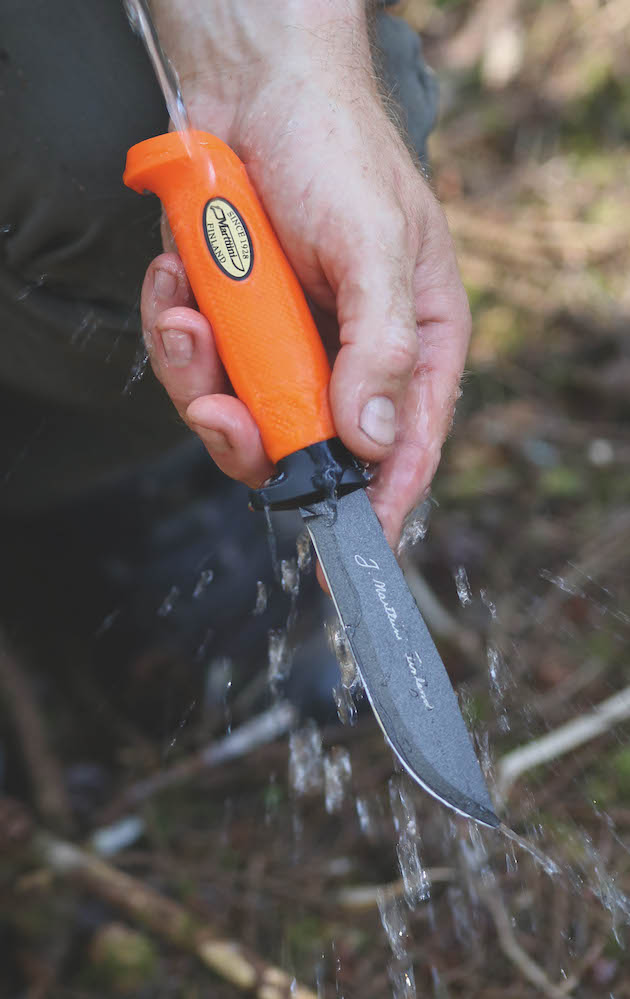
The Marttini Martel Skinner is an easy blade to look after
Best for all round use
+ Dishwasher safe
+ Good price
– Doesn’t hold edge as well as other knives
Marttiini is renowned for no-nonsense, practical blades. I discovered the Finnish manufacturer’s Martef-coated range while fishing in Sweden and it wasn’t long before I couldn’t imagine filleting a fish with anything else.
Though this is a ‘skinner’, the blade design is a good fit for most outdoor applications. Made from 2.5mm fully stainless steel and 10cm long, the blade has a non-stick coating that reduces friction to almost zero. This not only makes tasks such as skinning, field-dressing and butchery a dream, but the clean-up couldn’t be simpler and, of the models reviewed, this is by far the easiest to look after. You can even put it in the dishwasher. The rubberised grip holds up well to mud, blood and all things fieldsports. Anyone who has lost a knife in long grass will appreciate the bright colour. The blade doesn’t hold its edge quite as well as some, but a few careful passes with a very fine diamond file was plenty to refresh it. This is an excellent ‘do everything’ knife.
Verdict: No-nonsense, low-maintenance best hunting knives at an excellent price.
BUY NOW
Rating 7/10
2. Helle Morgon Limited Edition 2021 RRP £149.99
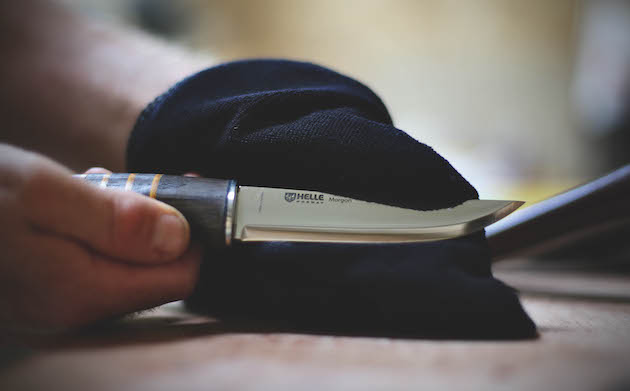
Buffing up the mirror finish on the Helle Morgon
Best for comfortable grip
+ Keeps a keen edge
+ Easy to resharpen
– Limited stock
I’ve been an avid fan of Helle knives ever since I first used one when living in Norway, the home of these hunting knives. Every part of this knife is still manufactured in Helle’s small factory in Holmedal.
The Morgon boasts a classic Scandi design. The stick tang runs the full length of the handle, which is made of stacked Scandinavian oak and naturally dyed leather. Apart from being all natural and rather beautiful, this also creates an extremely comfortable grip.
The 3mm-thick blade is 10.5cm long and arrives with an exceedingly sharp edge and the distinctive Helle mirror-finish. Made from the famous Helle triple-laminated steel — a closely guarded family secret — this pairs softer, extremely corrosion-resistant stainless 18/8 steel on the outside with a harder, tougher high-carbon (though still stainless) core, engineered to keep a keen edge.
The higher-carbon steel in the core of a Scandinavian grind creates a knife with a remarkably robust edge that will not only suffer extraordinary abuse, but is easy to resharpen, making it a perfect all-round hunting and bushcraft blade.
The most comfortable to use of the knives reviewed, this was the one in my hand when I was by the fire, amid a growing pile of wood shavings, happily whittling spatulas out of birch firewood. Only 1,000 of these were made and only 72 are available in the UK, so you’d better move fast if you want to bag one.
Verdict: The king of Norway. There are precious few big-brand knives that approach bespoke quality, but this is certainly one of them.
Rating 8.5/10
BUY NOW
3. Salient Canterbury RRP from £350
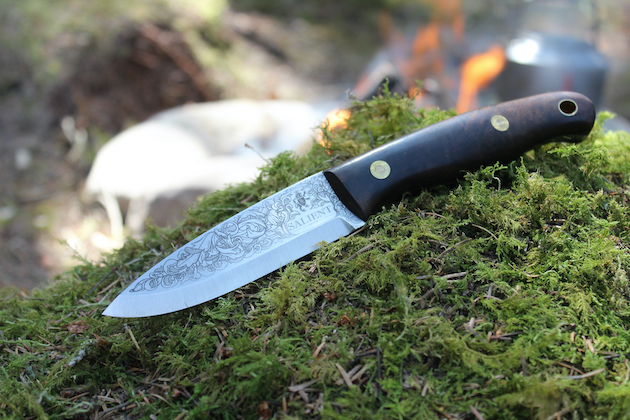
Salient Canterbury
Best for looks
+ Excellent balance
+ Classy
– Heavier than other knives
A relative newcomer to the handmade knife scene, Salient Knives currently produces a very small range of bespoke hunting and bushcraft knives from its workshop in Kent. The Canterbury is the hunting-focused model, sporting a drop-point, 4mm-thick blade, 10cm in length and constructed from N690 stainless steel tempered to 58 HRC.
The handle material on the review model was a beautifully figured English walnut with brass fittings. Alongside the filigree laser engraving on the blade, this gave the knife a timeless, classic look and the unique serial number punched into the spine of the blade added to the collectible feel.
It wasn’t only good-looking. The handle was well crafted and very comfortable, with a nice palm swell and a flare at the end. The bevels are small, but hollow-ground (think switchblades), producing an excellent working edge, despite the thickness of the blade.
In rigorous tests on hardwood and bone, the edge proved every bit as keen, but a shade less robust, than the flat-ground Peryton (below), though it also came back quickly with the strop. Notably heavier than the other blades on review, the Canterbury weighs in at 195g, compared with 120g for the Peryton. The balance is excellent, however, and the overall effect is one of solidity rather than bulkiness. The leatherware deserves a mention in its own right, as the Canterbury comes in a truly exquisite fully hand-stitched leather sheath. As with the Emberleaf, this knife comes with a lifetime warranty and similarly impressive packaging, making them perfect gifts. If I’m ever lucky enough to find either under my Christmas tree, I’ll be a happy man indeed.
Verdict: A very classy entrant to the bespoke knife space. I predict you’ll be seeing a lot more of these. Your only headache will be your children fighting over which of them gets to inherit it.
Rating 9.5/10
BUY NOW
4. Emberleaf Workshops Peryton RRP: from £400
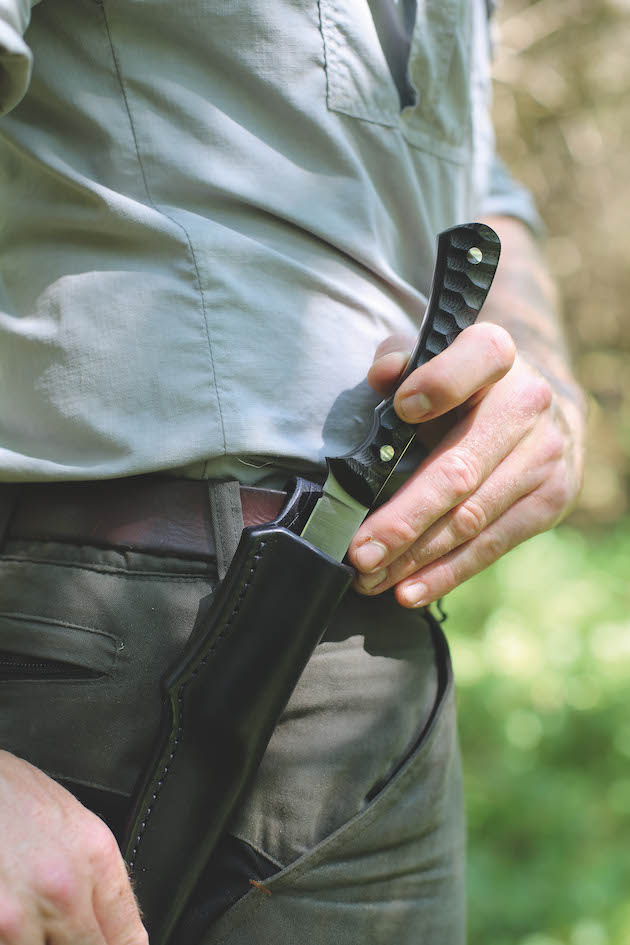
Emberleaf Workshops Perytony
Best reviewed
+ Good all-rounder
+ Stands up well to tough work
-Price
The Peryton is a new model from Emberleaf Workshops and represents a love child of the hugely popular Cael and Ventari models. The 9cm blade is slightly smaller than those of its parents, but similarly constructed from 2.5mm AEB-L stainless steel, fully flat-ground with a micro-bevel and hardened to 59.5 HRC.
Having never previously got close to one of these, I can now confirm that the famous Emberleaf edge is no myth — I could easily have shaved with the Peryton. This sharpness stood up remarkably well to some heavy work in the forest, followed by some campfire butchery. Breaking down a sika haunch with the Peryton, I felt like a cross between a stalker and a surgeon. After trying my hardest to dull the edge, a quick strop brought it right back without the need for a file or stone.
This model was finished in a simple, understated black linen Micarta — though many other options are available — and came with a superb handmade black leather sheath for an ultra crisp, modern look. The slightly upswept blade design is clearly game-oriented and would suit stalkers perfectly, but this size and style of blade also makes an excellent all-rounder.
After wondering for some time if the hype was justified, I’m obliged to conclude that Emberleaf deserves every ounce of its impeccable reputation. This is a fabulous knife. If the price sends your eyebrow upwards, remember that it’s backed by a lifetime warranty.
Verdict: As the brochure says, a knife for life. Product development and craftsmanship such as this comes at a premium, but get it near a deer and I challenge you to find something you don’t love about this one.
Rating 10/10
BUY NOW
More of the best hunting knives to consider
We asked some of our other stalking contributors what they look for when buying blades and what they consider the best hunting knives. Here’s what they said.
Charlie Blance, Shooting Times contributor, said: “ I primarily use a Cold Steel Pendleton Mini Hunter knife (see below) – it’s only a three and a half inch blade but this is actually ideal for gralloching, I feel it gives me quite a lot of control, it’s a sturdy, full tang knife with a diamond ridge handle for good grip. My boss and coworkers use a discontinued model of buck knife, which unfortunately you can no longer purchase. I like the buck knives a lot but my preference leans more to the coldsteel – purely cause I’ve got wee hands and at the end of the day, a knife that fits your hand well is what you want.
“I have to use plastic sheaths for my deer contracts – my Coldsteel came with a sturdy Kydex sheath, Though I can’t use them anymore, I still prefer leather sheaths for their durability and for the fact that they’re one less thing to make noise – if you’re carrying sticks while stalking it’s quite easy to clatter them against your sheath if you wear it on your belt, leather isn’t as noisy.
“Another really important attribute when picking a knife is finding good quality steel that keeps a good edge. There’s no need to spend an absolute fortune on a blade either but if you’re stalking frequently enough, it’s worth investing in a little bit. I think when it comes to knives it’s really an individual thing, you really have to try a few different ones until you find out what you like.”
The Shooting Show’s Chris Parkin said: “I like the cheap Mora Knives as they get lost and are easy to replace, also Victorinox folders and Spyderco (see below for examples). I like a plastic, brightly coloured rubberised grip if possible. A single fixed blade for gralloching, a folding Victorinox for a generally handy day-to-day knife as it’s a legal street carry.
“It’s very important that a knife is easily gripped when wet with slip protection to avoid your hand sliding down the blade.”
Chris Dalton out in the field
Chris Dalton of South Ayrshire Stalking said: “Emberleaf are the best quality knives on the market and come with a lifetime guarantee. The knife’s grip must fit your hand comfortably and ideally have a bevel to stop your hand sliding forward onto the blade. A single blade with a length of no less than 5” allows you to effectively gralloch and bleed the deer, especially the larger UK species. The knife has to be a good fit in the hand – ergonomic and for deer work easily cleanable to comply with food hygiene regulations.
“The knife has to be secure enough in its sheath in order that you don’t lose it while crawling and the sheath sufficiently thick, or have a metal insert, to prevent injury to yourself if you fall or trip.”
BÖKER Outdoor Messer Gray Knife Magnum 01SC712 Eminence, Black, Standard £46.77
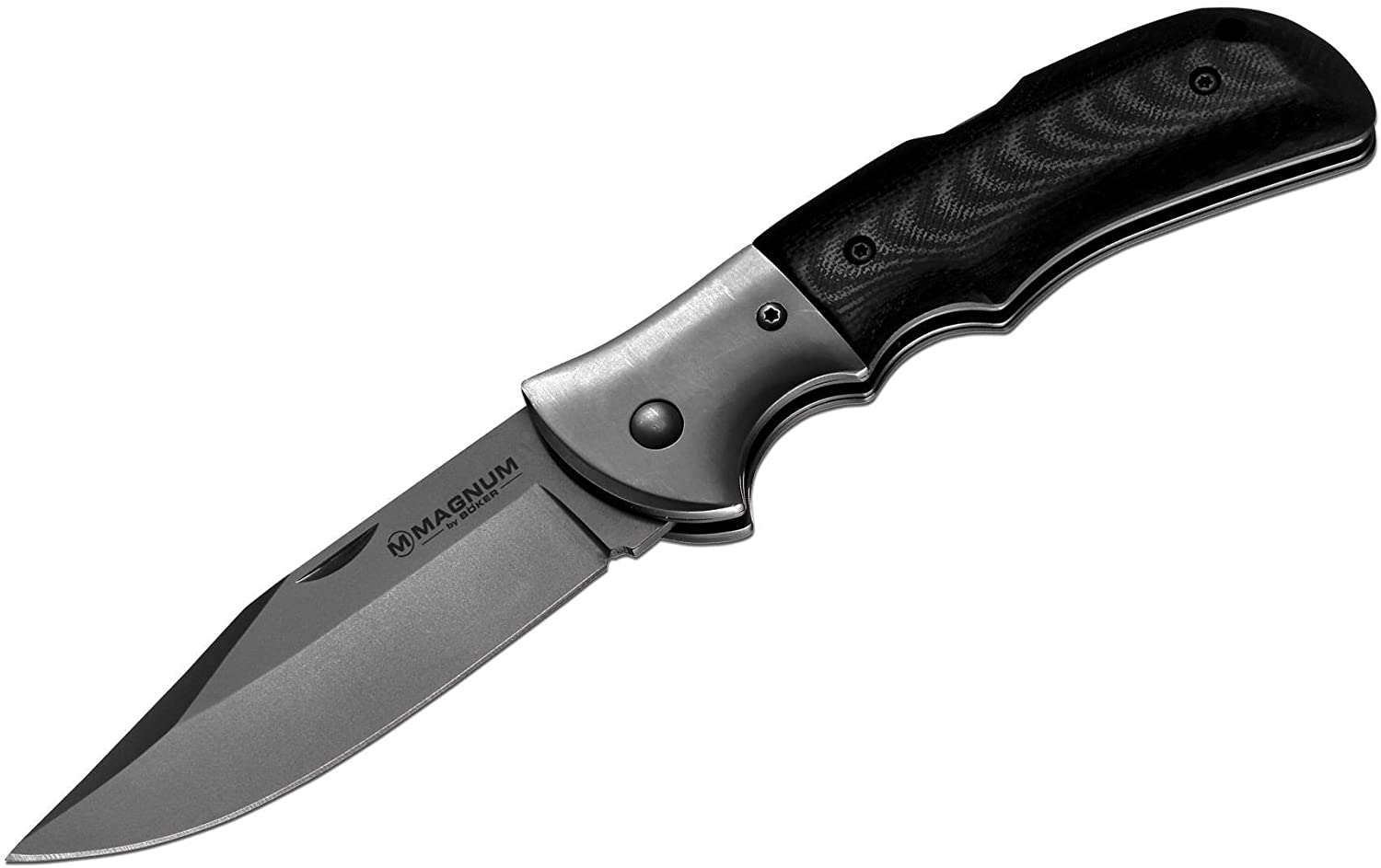
Best for price
+ Titanium coated blade
+ Holds an edge well
-No sheath supplied
Shooting Times contributor Alasdair Mitchell comments: “The German firm of Böker … produces some fine hunting blades.”
BUY NOW
Gerber Hunting Vital Exchangeable blade Pocket Folding knife approx £40.88
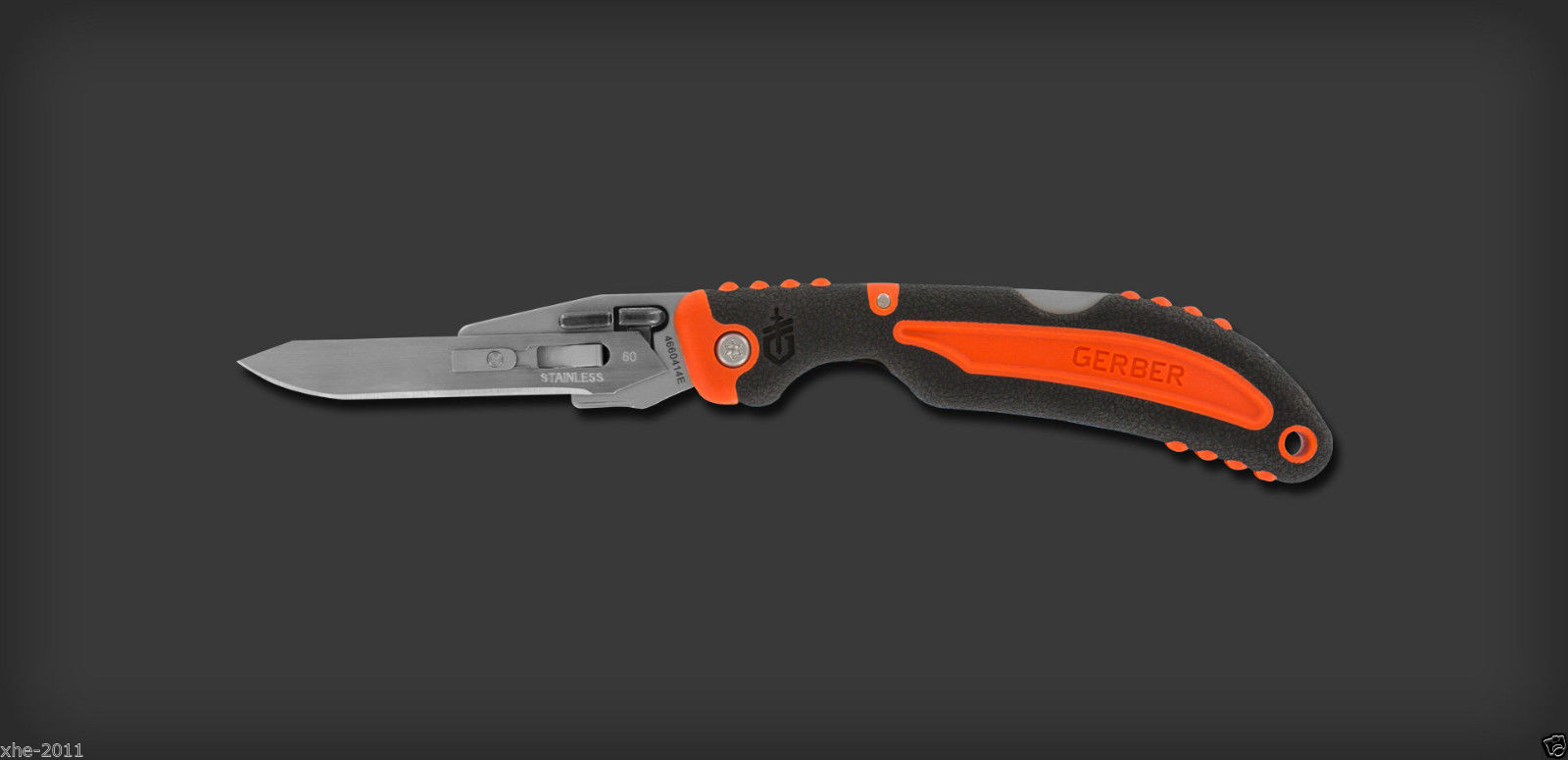
Best for exchangeable blades
+ Comes with six extra blades
+Brilliant for gralloching and skinning
+ Superbly made and lightweight
Shooting Times contributor Bruce Potts says: “If, like me, you are hopeless at sharpening knives, I would certainly recommend a Gerber Vital exchangeable blade knife.”
BUY NOW
Cold Steel – Pendleton Hunter Knife £ 92.50
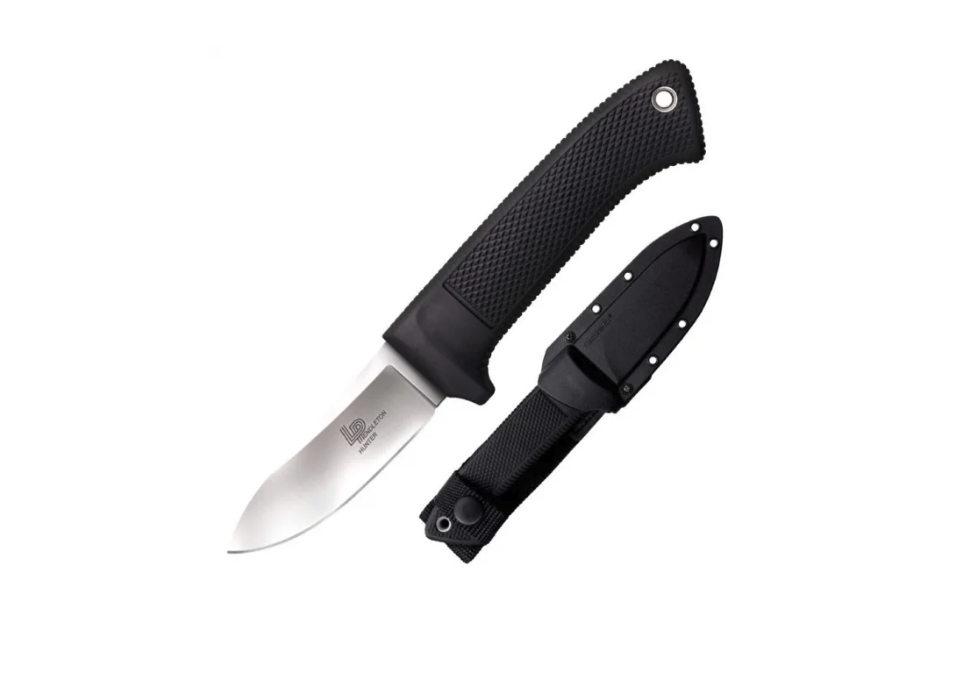
A favourite brand of Charlie Blance
+ Complete with Secure-Ex cover
+ Firm, secure grip
The Kray-Ex handle ensures a good grip even if your hands are wet and cold.
BUY NOW
Morakniv Companion Spark Unisex Adult Fixed Knife, Handle: Red, Blade: 104 mm £34.72
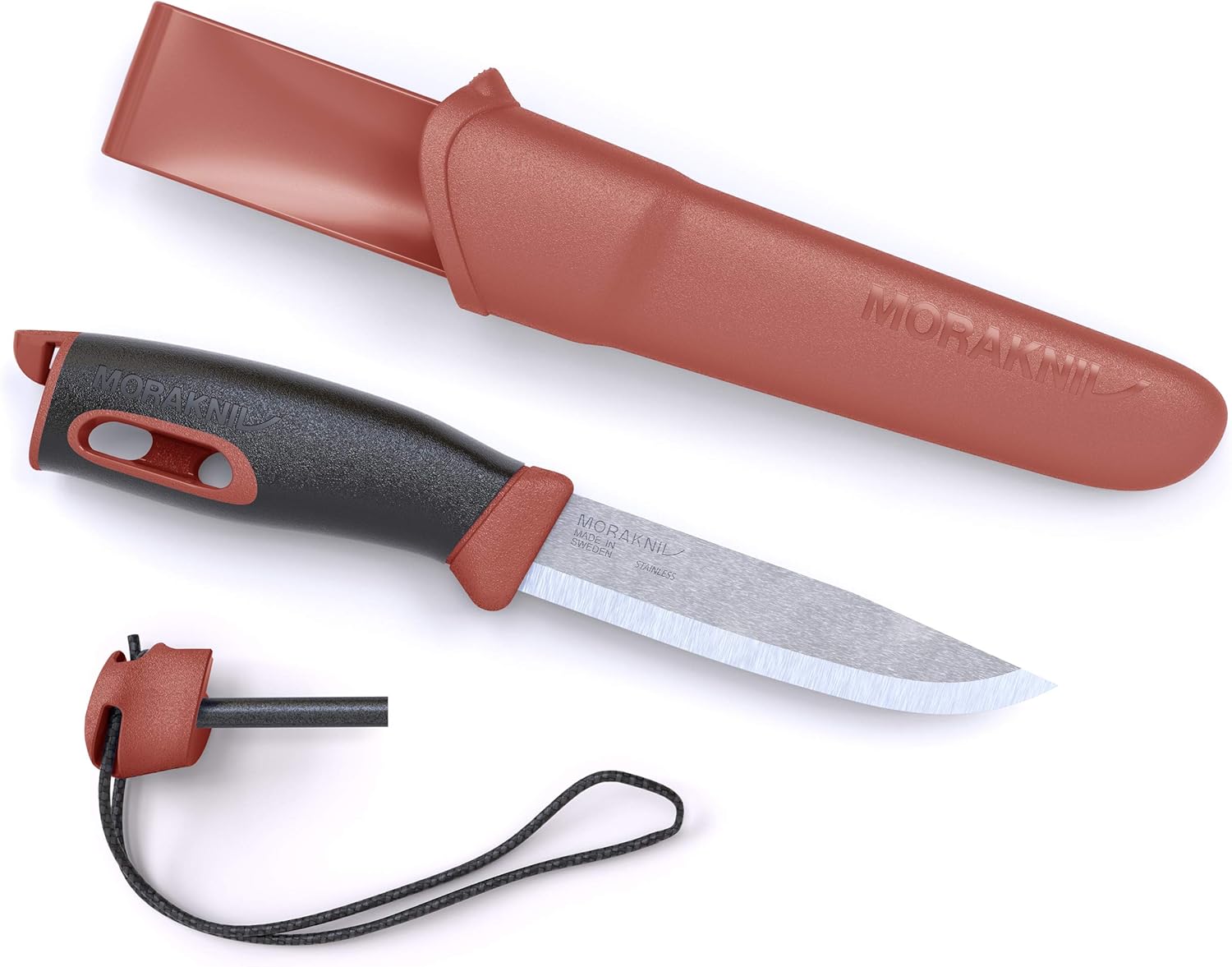
Best do-all blade
+ Integrated fire starter on handle
+Ideal for fish gutting
+ Easy to sharpen
Complete with a fire steel, this knife is throws great sparks. It is comfortable to hold, sharp and has an ergonomically designed sheath.
BUY NOW
Victorinox Ranger Grip 55 Swiss Army Pocket Knife, Large, Multi Tool, 12 Functions, Large Locking Blade, Red/Black £52.99
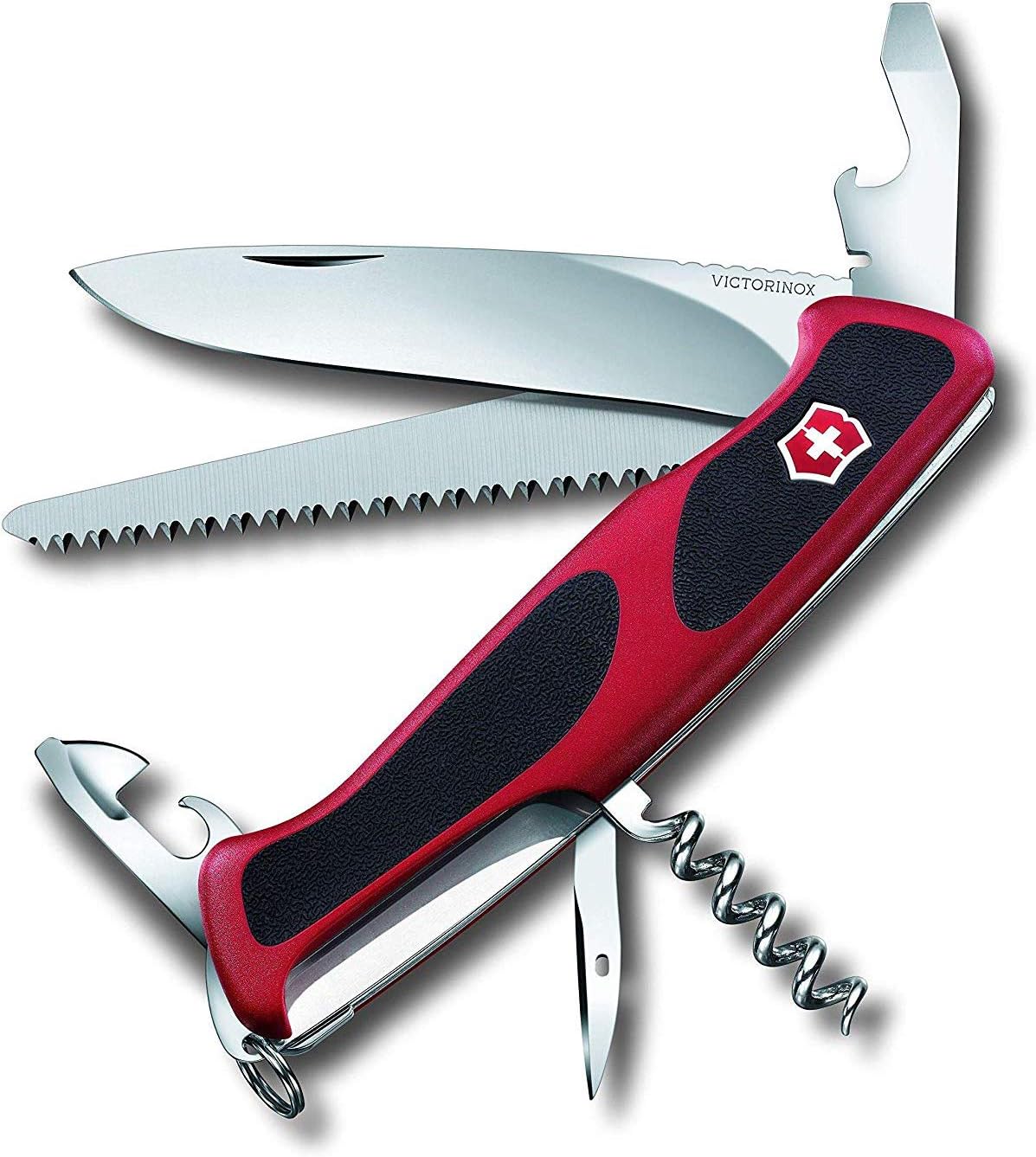
Best classic multi-tool knife
+ 12 functions
+Swiss-made stainless steel
+ Lifetime assurance
Quite simply this is an essential tool for outdoor types: It includes a key ring, toothpick, tweezers, can opener, screwdriver three mm, large blade, bottle opener, screwdriver 5 mm, wire stripper, wood saw, reamer, punch and sewing awl, corkscrew.
BUY NOW
Spyderco Tenacious G-10 Combination Edge Folding Knife – Black £48.94
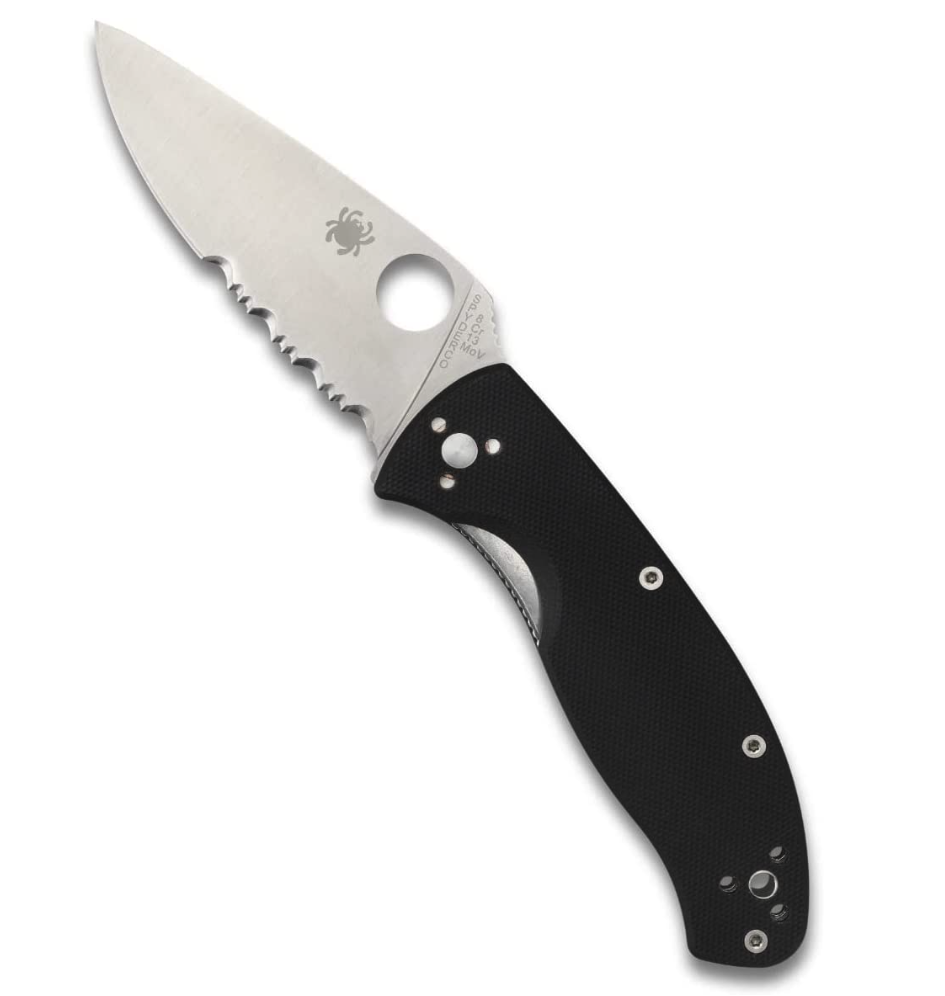
A favourite brand of Chris Parkin
+ Fibreglass handle
+ Easy opening and closing handle
+ Lock mechanism
Good value for money, tough and retains its sharpness.
BUY NOW
This article was originally published in August 2021 and has been updated.
Related Articles
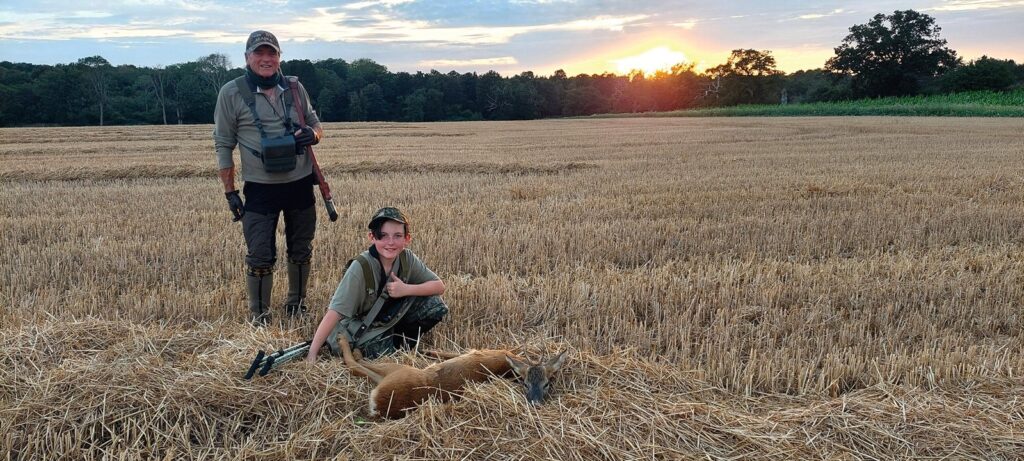
Stalking diary: a slow roe rut and a young guest's first buck
Chris Rogers finds the roe rut slow to start at Euston, but a tactical stalk gives a young guest an invaluable insight into ethical deer management
By Chris Rogers | 21 August 2026
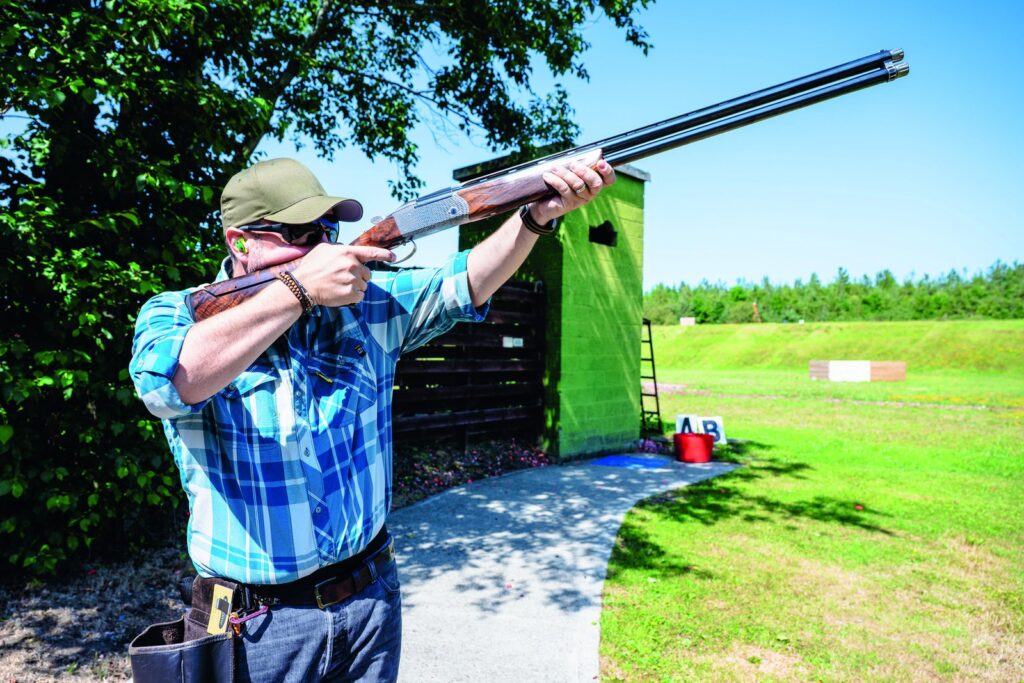
Krieghoff K-80 Custom shotgun review: made to measure in Ulm
Lloyd Pattison follows his own Krieghoff K-80 Custom from a walnut blank on the bench in Ulm to a full day on the layouts at Bywell, at £14,730 plus £1,825 for the custom fitting. His verdict: a com...
By Lloyd Pattison | 19 August 2026
Get the latest news delivered direct to your door
Subscribe to Shooting Times & Country
Discover the ultimate companion for fieldsports enthusiasts with Shooting Times & Country Magazine, the UK’s leading weekly publication that has been at the forefront of shooting culture since 1882. Subscribers gain access to expert tips, comprehensive gear reviews, seasonal advice and a vibrant community of like-minded shooters.
Save on shop price when you subscribe with weekly issues featuring in-depth articles on gundog training, exclusive member offers and access to the digital back issue library. A Shooting Times & Country subscription is more than a magazine, don’t just read about the countryside; immerse yourself in its most authoritative and engaging publication.