★ Your magazine. Your say. Complete our reader survey with a chance to win Jack Pyke kit worth £500! ★

From dawn stalk to burger night: muntjac from the ride to the pub menu
Keith Edmunds sets off down a Suffolk lane under sheet lightning, with insect repellent on and a thermal in his pocket, for a morning after muntjac on the Nedging Hall estate. What follows is a ruined carcass, a redeeming pair of neck shots and a pint in a village beer garden
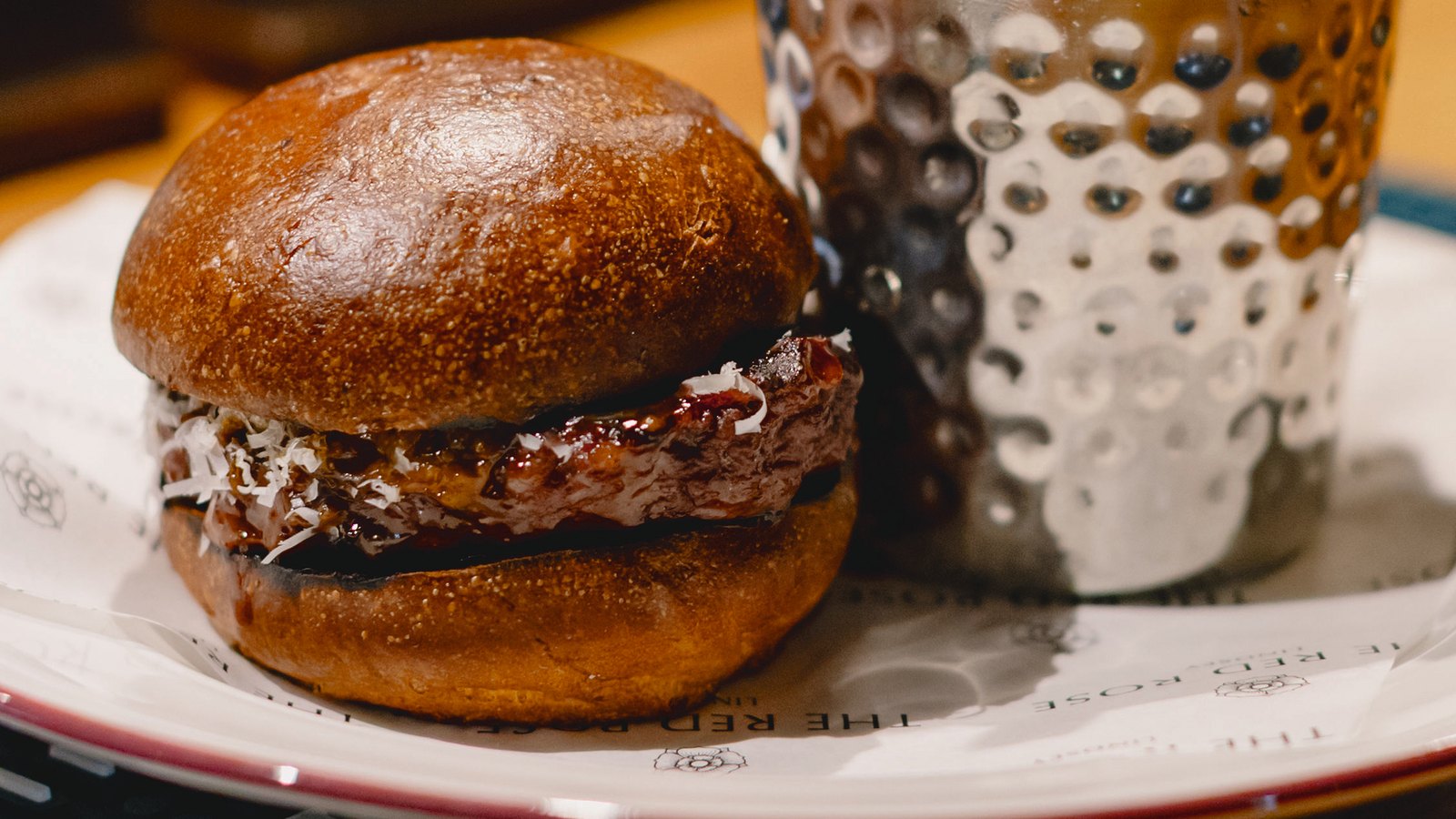 Wednesday night is muntjac burger night at the Red Rose, Lindsey. Credit: Lucy J Toms Photography

Sheet lightning illuminated the skyline before me, as I made my way down the narrow country lane towards South Wood. With the truck parked and all the kit in place I was just about to set off on foot when I remembered a vital ingredient for my dawn stalk. After the Suffolk heatwave came a spell of thundery, sultry weather and the climate was perfect for biting insects, so I liberally sprayed myself with a good dose of insect repellent.
The strong scent of the repellent did concern me and my feeling was that it could impair my stalk when carried on the wind, but then I referred back to advice given to me back in the 1990s by stalking guru Meyrick Griffith-Jones. We were waiting for fallow to leave a piece of woodland and come out to feed when Meyrick lit a cigarette in an unconcerned manner.
When questioned about the smell of the smoke, Meyrick simply stated that if you have the wind right, it doesn’t matter – besides, if they can detect your cigarette smoke, they can detect your human scent with equal ease. To bolster that school of thought, I believe it was the late, great Richard Prior who said that deer can probably differentiate between individual stalkers based on the brand of gun oil that they use. The upshot was that I checked the wind frequently as I stalked my way along the rides.
A shot that spoiled the carcass
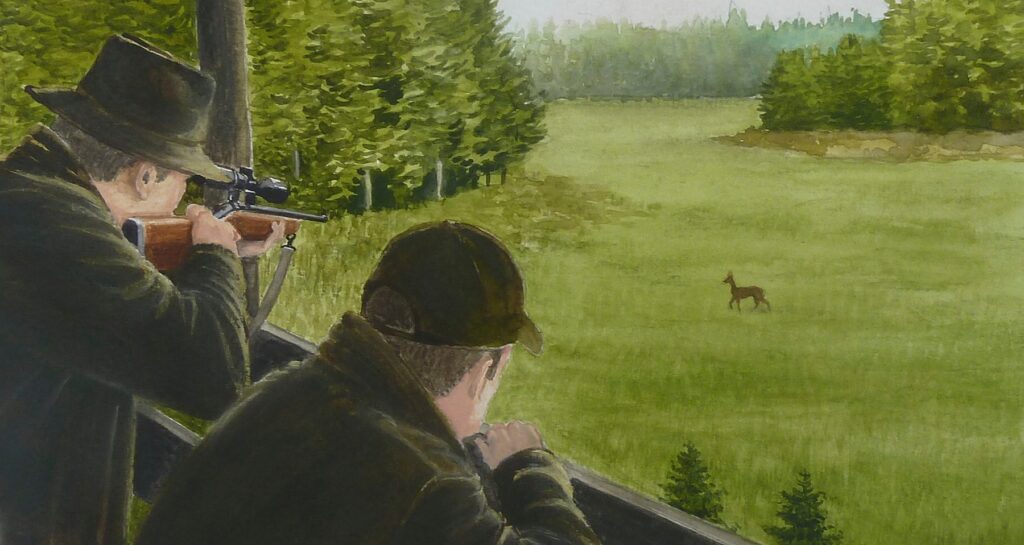
My first shot of the morning saw my spirits rise then suddenly fall. I spied a munty through the brash and an enjoyable stalk enabled a good position for a shot. Through a gap between the horizontal branches the deer exposed its throat as it stretched to browse. The shot rang out and the deer fell on the spot, but my elation was soon stifled when I realised that the bullet had exited just below the rear of the skull and re-entered the body, ruining the carcass in the process.
I had been absolutely sure that the munty buck was quartering-on enough for a clean exit but I had obviously been mistaken. I tried to brush it off and continued my stalk with restored focus, but I kept replaying that shot in my head. I was using a traditional glass scope as I feel they have the edge when shooting in tight spots, but one of the benefits of digital or thermal scopes is that you can replay the video recording of your shot.
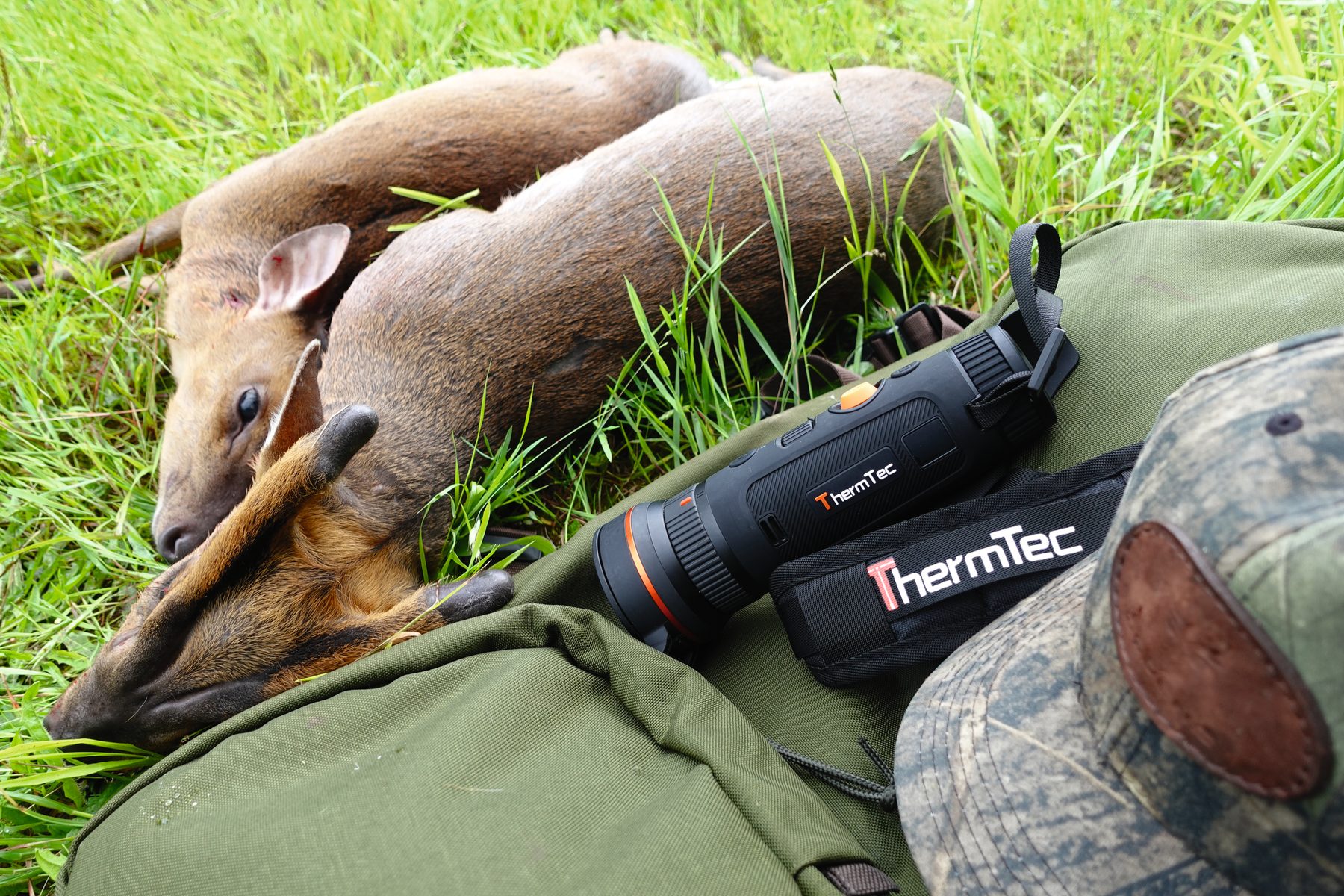
Two muntjac behind a blackthorn hedge
Leaving the woodland and moving into the meadows, I scanned the hedgelines with the ThermTec Wild 650DL Pro and picked up two deer within a thick hedge at about 190m. I stalked in closer, frequently checking their position with the thermal spotter. The images were fragmented by the narrow blackthorn trunks but it looked like a buck and doe muntjac. At a range of 83m I had reached a hawthorn by a fence and decided to use it as cover. I put the rifle on the sticks and waited for the deer to expose themselves.
The thermal image became more vivid but the scope still revealed nothing. The deer had actually been on the far side of the hedge and were now moving through a shallow ditch bottom. The buck came through first, closely followed by the doe. I fixed the crosshairs on the neck of the male and squeezed the trigger, then reloaded and moved on to the doe, which seemed mesmerised by her fallen mate. A second shot brought her trauma to a swift end. I exhaled with relief as I felt that I had redeemed myself after my earlier mishap.
Regarding shot placement, shooting muntjac in summer foliage often means that the neck and head are the only parts visible. At that range, with the animal broadside, I’d rather take a neck shot than risk going for a heart/lung shot through tall grass, with the possibility of the bullet being deflected.
From a forestry perspective, the morning’s work resulted in three fewer mouths to browse on the vulnerable natural regeneration and young coppice shoots. From a venison harvesting point of view, while that first buck was left for the local foxes and buzzards, I did at least have two good carcasses, both neck shot, to take back to the chiller at the Nedging Hall estate. One element of deerstalking that rarely gets discussed is that of the chiller location and facilities, yet the standards and design of this part of the setup can hugely impact the overall experience for the deerstalker.
Keith’s muntjac stalking kit bag
- Howa H-S Precision 1500 rifle in 6.5 Creedmoor – bought from cssporting.co.uk
- Nosler E-Tip 120-gr ammunition – highlandoutdoors.co.uk
- ThermTec Wild 650DL Pro thermal scope – a-s-i.co.uk
- Delta Titanium 1.5-9 x 45 – eliteoptical.co.uk
Why a well-built chiller makes the job
Ensuring that basic requirements – such as a solid road or track to the facility, hot and cold running water, good drainage and ample lighting – are met makes the final part of the job so much easier and even pleasurable, especially in the depths of winter. The estate has gained a local authority licence to butcher its own game for its pub-restaurants, which means that the chilling and butchering facility is of a very high standard. We have two chillers, giving us the capacity to handle the growing population of fallow and the occasional red alongside our staple muntjac and roe.
Taking the above into account, it never feels like an unpleasant chore to take the deer back to the chiller. In fact it often feels a welcome respite. I make good use of the outdoor hose to rinse out the roe sack liner, and use the indoor sink – complete with hot water and bactericidal soap – to wash hands and knives. From a traceability perspective we have all tags and relevant paperwork neatly laid out and the whole process flows effortlessly – although my fine-point Sharpie pens seem to have a habit of straying.
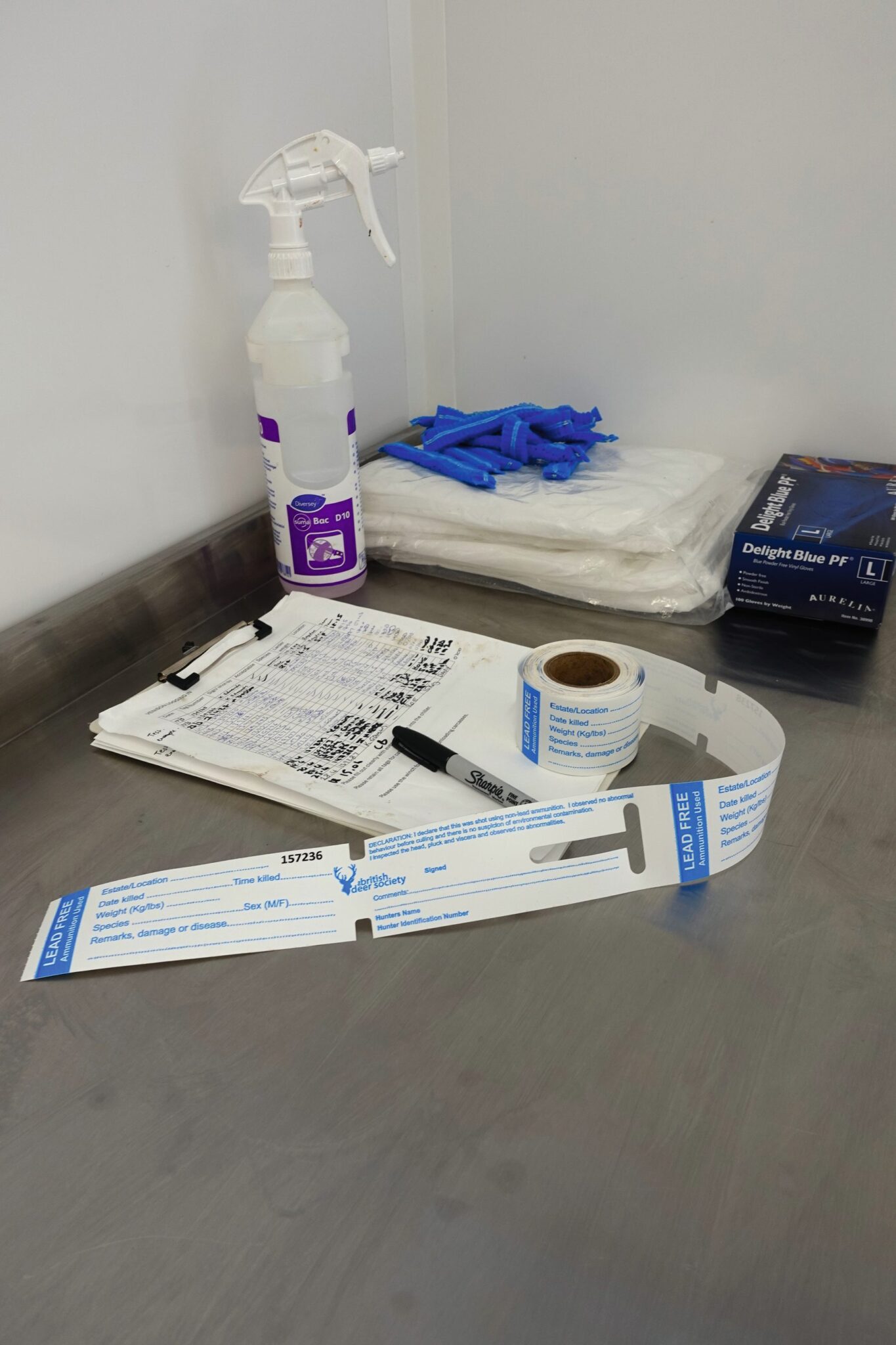
Wednesday is burger night at the Red Rose
With the carcasses stowed in the chiller, my final job was to message head chef Greig and his butchery assistant Albert, to inform them that there was more fine raw material to work with. These particular carcasses would be transformed into the delicious muntjac burgers that are now a regular feature at the Nedging Hall estate’s country pub, the Lindsey Red Rose. Wednesday night is burger night and the muntjac burgers take pride of place alongside crispy chicken and a vegetarian offering.
There are few better places to spend a fine summer’s evening than in a village pub beer garden, and what could be more fitting than tucking into some locally sourced venison as the sun goes down. The Red Rose in Lindsey sits nestled within our deerstalking ground and it is quite possible that the deer on the menu is harvested within earshot – how’s that for a low carbon footprint. To make the occasion even more virtuous, I strongly recommend washing it down with a refreshing pint of Mauldons ale. With the brewery (the oldest in East Anglia) situated just a few miles down the road, it really is the epitome of estate-to-plate dining.
Frequently asked questions
Is there a close season for muntjac in the UK?
No. Muntjac breed year round and have no close season, so they may legally be culled at any time of year, subject to the usual welfare considerations around dependent young.
Why take a neck shot on a muntjac in summer?
Because summer foliage often leaves the neck and head as the only visible parts of the animal. A heart or lung shot taken through tall grass risks the bullet being deflected, so a broadside neck shot at a sensible range is the safer option once the rest of the body is obscured.
What does an estate need to butcher its own venison for sale?
A licence from the local authority, and a facility built to the standard that goes with it: a solid track to the door, hot and cold running water, good drainage, ample lighting and proper chiller capacity, with tags and paperwork kept in order for traceability.
About the author
Keith Edmunds
A current contributor to ShootingUK and Shooting Times, Keith field-tests kit and writes on wildfowling and the practicalities of shooting. His reviews are the long-haul sort rather than the press-day sort: he ran ThermTec's flagship Wild 650 DL PRO dual-lens thermal monocular for three months of spring stalking before writing it up, and put the New Forest Hawthorn ripstop jacket through thorn and briar to see whether a jacket at £114.95 could hold its own against the rest of the shoot-day field. He also writes on the guns and cartridges themselves, from what actually makes a good wildfowling gun to reading a cartridge label properly, and on the tweed-or-technical question that divides the hill, the foreshore and the field.
Related Articles
Stalking diary: a slow roe rut and a young guest's first buck
Chris Rogers finds the roe rut slow to start at Euston, but a tactical stalk gives a young guest an invaluable insight into ethical deer management
By Chris Rogers | 21 August 2026
Uncalled for behaviour: what happens when roe deer calling goes wrong
Calling in roebucks during the rut requires skill and practice. As Jim Old discovers, get it wrong and the results can be unexpected
By Shooting Times | 6 August 2026
Get the latest news delivered direct to your door
Subscribe to Shooting Times & Country
Discover the ultimate companion for fieldsports enthusiasts with Shooting Times & Country Magazine, the UK’s leading weekly publication that has been at the forefront of shooting culture since 1882. Subscribers gain access to expert tips, comprehensive gear reviews, seasonal advice and a vibrant community of like-minded shooters.
Save on shop price when you subscribe with weekly issues featuring in-depth articles on gundog training, exclusive member offers and access to the digital back issue library. A Shooting Times & Country subscription is more than a magazine, don’t just read about the countryside; immerse yourself in its most authoritative and engaging publication.