★ Win four pegs on a Kent simulated game day with JBD Sporting worth £1,000! Click to enter ★

Hide and sika: stalking muntjac and sika through the early-autumn canopy
Stalking muntjac and sika through the early autumn canopy calls for closer shots, ghostlike concealment and superior fieldcraft
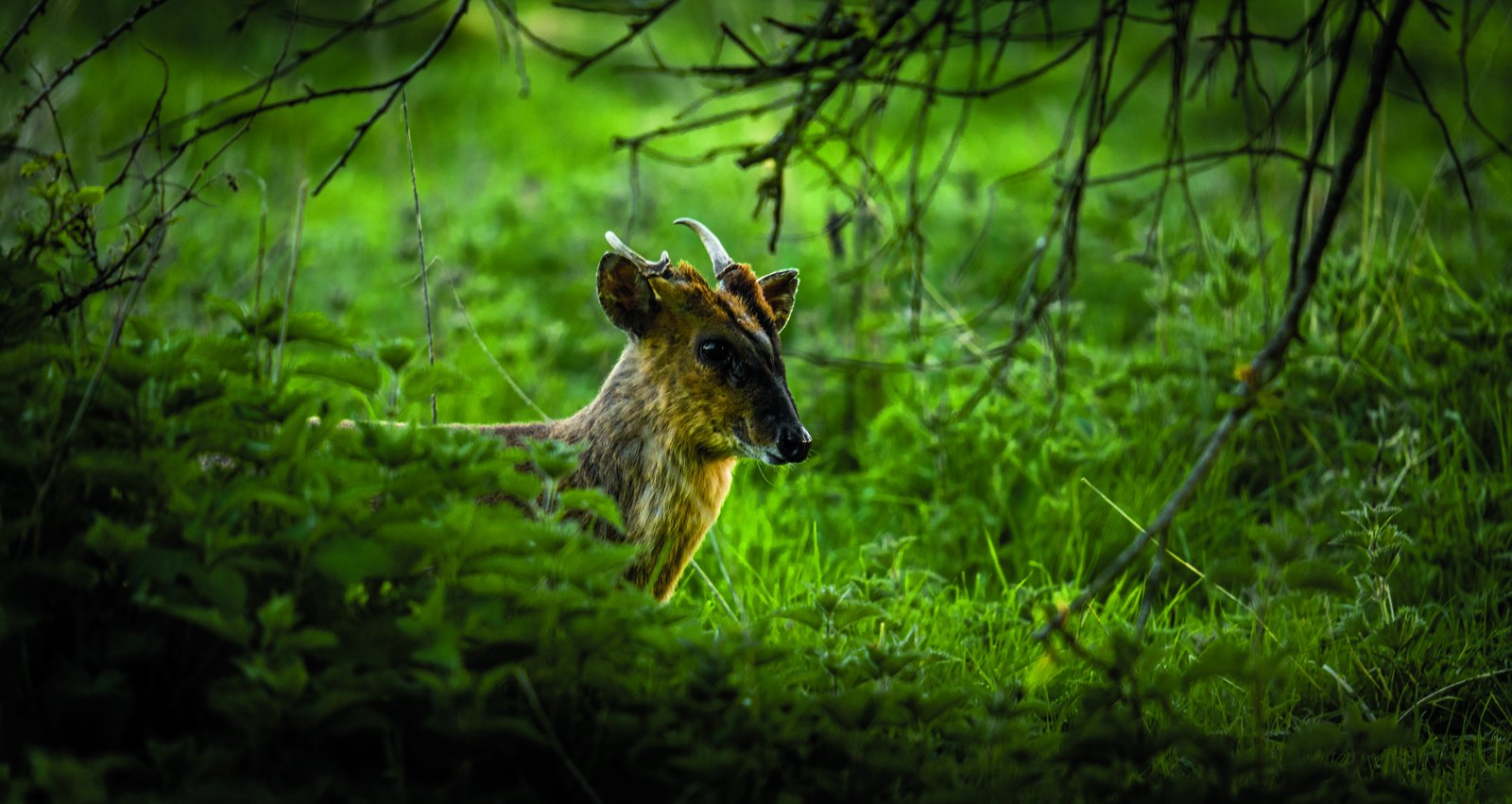 The tiny muntjac do not present much of a target through the undergrowth. Credit: Chris Palmer/iStock via Getty Images

With the roe rut well underway, the stalker’s attention shifts from Britain’s natives to two very different incomers. Muntjac and sika ask for something the open-field roe stalk rarely demands: close-cover craft. In dense late-season canopy the ranges shorten, the shots come faster and concealment matters more than reach.
It is a discipline of patience, reading wind and quiet feet, and of kit chosen for muggy evenings, sudden rain and the constant risk of deer-spooking noise. Timing and the law come first. Peter Jones of County Deerstalking is blunt about midsummer: of all the times of year to pursue sika and muntjac, he rates it the worst. Sika stags are still in velvet, muntjac bucks have cast and are regrowing, and the females of both species are often weaning young.
Early autumn changes the picture. In England and Wales, sika stags come into season on 1 August, once the close season of 1 May to 31 July has passed. Sika hinds, though, remain protected until 1 November. Muntjac carry no statutory close season at all. They breed year-round, so buck and doe alike may legally be taken through the autumn, though a stalker will still pass on any doe with a dependent fawn.
Scotland runs to a different clock. Since 21 October 2023 the Deer (Close Seasons) (Scotland) Amendment Order 2023 has removed the close season for male deer of every species, so sika stags may now be taken there year-round; female seasons are unchanged. In practice, Peter notes, many estates still hold off on their sika cull until at least September, taking them in the open as they break cover.
Where to go depends on the quarry. Muntjac have spread across most English counties, strongest in the east and the central shires and now pushing into Wales and northwards towards the Humber, so a newcomer to stalking them is rarely far from a population. Sika are more localised. Scottish strongholds aside, the English concentrations sit in Dorset, the New Forest and Purbeck, with pockets in Cumbria and the Bowland fells. Both species are naturalised non-natives, and muntjac in particular are a listed invasive species, so it is an offence to release one into the wild.
For a first outing, an accompanied day removes most of the guesswork. Accompanied stalking is widely available; providers such as Peter’s County Deerstalking will pair a newcomer with a guide who knows the ground. A day will typically include a zero check or the use of the guide’s moderated rifle, then a stalk put in at sensible range. Expect a slow foot-stalk into cover rather than a long sit glassing open fields.
To Chris Rogers, deer manager at the Euston Estate in Suffolk, the muntjac is the gift that keeps on giving. The close-quarters interaction is the appeal, he says, with the reward going to those who can take a quick, well-placed shot through a clear patch of cover. His tip is to wind the scope down: low magnification speeds target acquisition and lets you read the deer’s reaction to the shot. It is advice that suits sika too, especially when they slip through thick edges at dusk.
Finding your quarry and staying concealed
Finding the beasts is half the battle. Both species have keen noses, so the approach is always planned into the wind, with a slow, deliberate pace and long pauses to let the cover give up its secrets. Muntjac are famously vocal; the repeated sound that has earned them the name “barking deer” can betray a buck’s whereabouts and it is worth stopping to place.
Sika grow noisier as the rut builds through autumn, the stags increasingly vocal as they hold territory, which hands the stalker a bearing to work towards. Well-used rides, wallows and the muddy margins of cover all reward a high seat set downwind, watching the gaps where one is most likely to step clear.
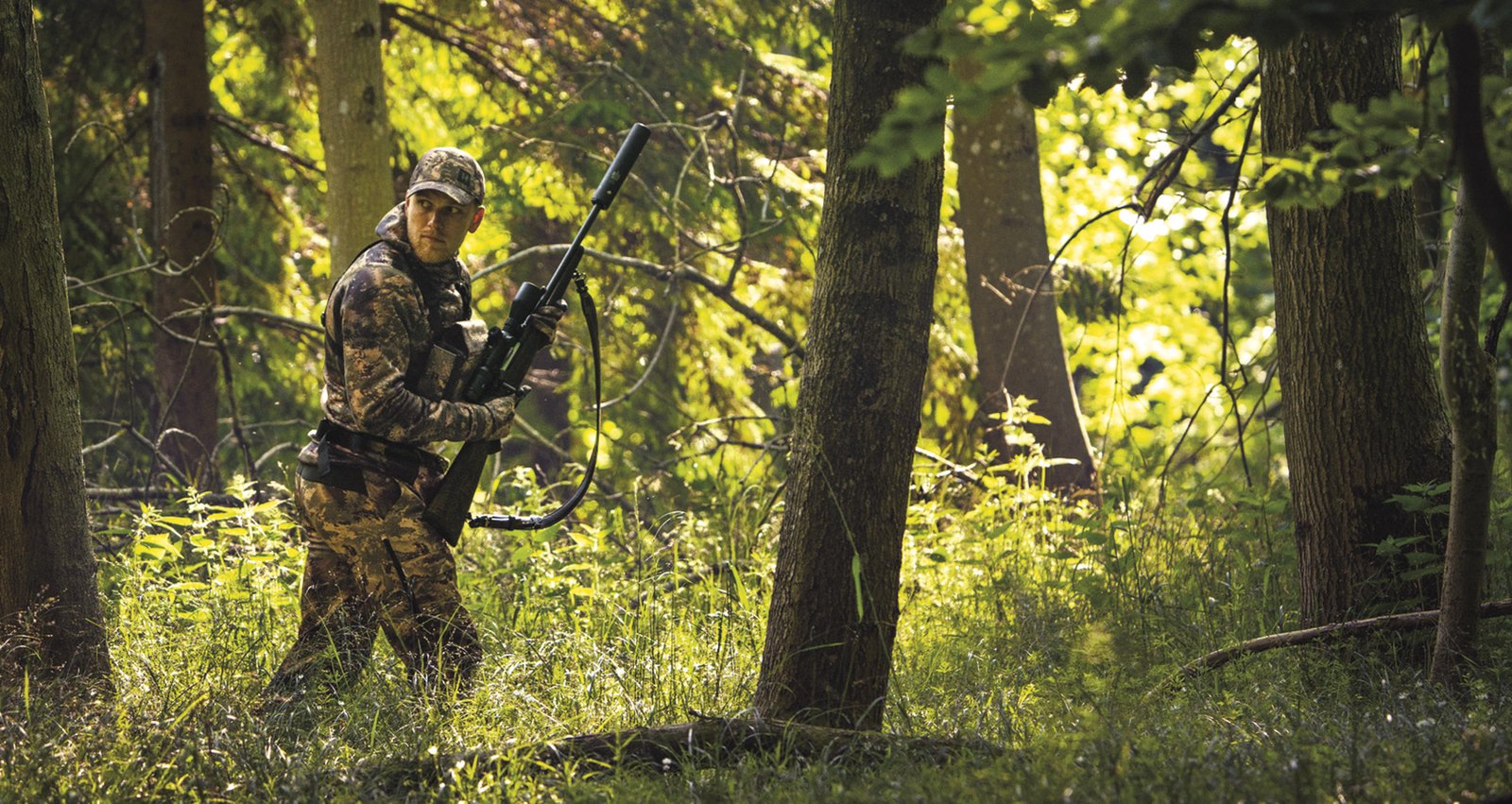
Concealment does the heavy lifting at these ranges. Ashley Shaw of Fine Shooting Accessories stocks American clothing brand Sitka in the UK. He believes that clothing is part of the stalk, not an afterthought thrown on at the vehicle. The brand’s base and mid layers are built for warm-weather stalks: light, moisture-wicking and offered in camouflage patterns that can be matched to the terrain. Developed against the sharp eyes of target species, the concealment patterns are meant for exactly the distances muntjac and sika are shot at. Ashley’s hot pick is the Core Hoody, a light, comfortable layer with a built-in face mask for quick concealment. He suggests weighing the synthetic options against merino, as each will have its own balance of moisture-wicking, breathability and scent management.

Clothing for warm, humid early-autumn stalks
Spencer Tolley looks after Swedish brand Härkila in the UK. He comes at the same problem from the humidity angle. When the air is muggy and the deer show up late, he says, the up-close stalker needs material that is lightweight, breathable and, above all, silent.
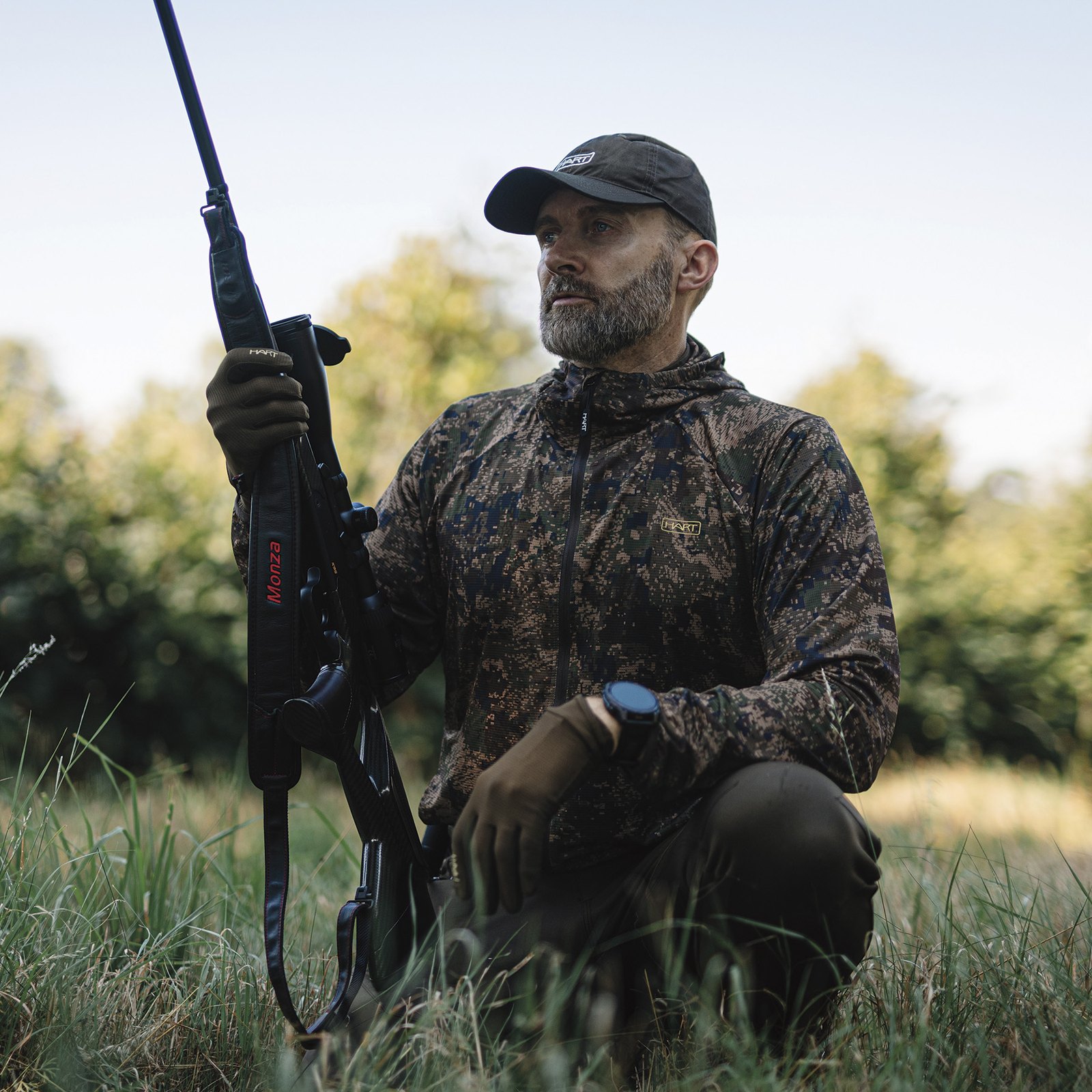
Härkila’s Deer Stalker and Trail collections are built for those conditions: underarm zips for ventilation, brushed cotton that stays quiet through cover and, in the Trail range, a tick-repellent fabric for late evening. Chris Rogers backs the approach from the field; he ditches Gore-Tex lined kit as too hot for late summer and early autumn, and reaches for Härkila’s Hill or Trail trousers and shirt. Peter reinforces the point from a health angle. Even in late summer anti-tick clothing is important to minimise the risk of Lyme disease, and he recommends Hart clothing, available via the S&H Shop.
Ditching a heavy waterproof, though, does not mean getting wet. The Ridgeline Monsoon Smock uses an advanced three-layer construction that combines a 10,000mm hydrostatic head with an MVTR of 10,000 g/m²/24hr. It is 100% waterproof but extremely breathable, offering protection in the heaviest downpours without turning into a sweatbox on steep approaches. When not in use it rolls into a compact bundle that stows easily in a small daypack.
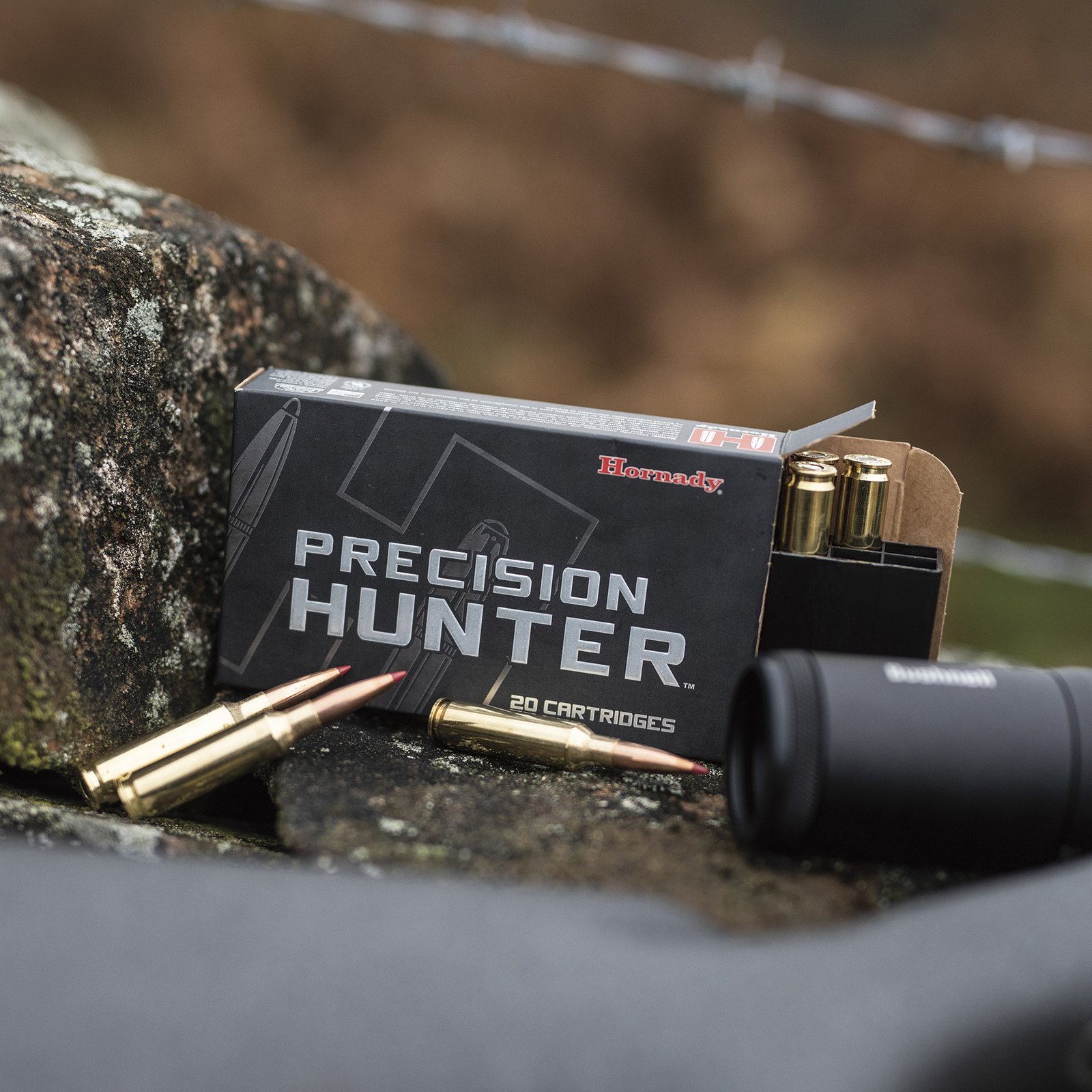
The final variable is ammunition, and here the demand is unusual: one rifle may face a spaniel-sized muntjac at dawn and a rutting sika stag by dusk. In England and Wales the legal floor is a rifle of at least .240 calibre developing 1,700ft/lb of muzzle energy, firing an expanding bullet. Scotland’s 2023 changes cut the minimum bullet weight for the larger species, sika included, to 80-gr. Within that frame, the choice of load matters.
Choosing a versatile round for muntjac and sika
Graham Turner of Edgar Brothers makes the case for Hornady’s Precision Hunter, loaded with the ELD-X. Its appeal, he says, is versatility. At close range in dense canopy the thick jacket shank and InterLock ring keep the bullet from overfragmenting on a light 15kg muntjac, protecting the venison, while the same design drives deep with controlled expansion on a tough 60kg sika stag. One round can thus handle delicate and heavy-bodied quarry.
Andy Norris of Viking Arms points to two options at different ends of the market. For the lead-free stalker, Lapua’s TRX, a copper, controlled-expansion bullet offered in 6.5 Creedmoor, 6.5×55, .308 and .30-06, suits all the deer species. Andy reckons it lends itself to sika in particular, as the dense body structure rewards a projectile with high weight retention and reliable expansion, with performance to spare at longer range. For dependable value he rates Federal’s Power-Shok, a classic soft-point that delivers good knockdown without the meat damage a polymer tip can inflict on smaller quarry such as muntjac.
None of this substitutes good fieldcraft. Muntjac will not just stand broadside and wait to be shot, and the sika stag that has broken from his bachelor group is wary and quick to melt back into cover. The target on a muntjac is small, so range discipline and a steady rest (sticks are worth carrying for the close, quick shot) count for as much as the load, and in thick cover the backstop behind the deer deserves the same attention as the crosshairs. Read the wind, move slowly, wait for the clear gap and let the close-cover discipline, the shorter range, the faster shot, the sharper concealment, do the rest. Early autumn belongs to the patient.
Frequently Asked Questions
When can you stalk sika and muntjac in the UK?
In England and Wales, sika stags come into season on 1 August, after the 1 May to 31 July close season, while sika hinds stay protected until 1 November. Muntjac have no statutory close season and may be taken year-round, though a responsible stalker passes on any doe with a dependent fawn. In Scotland, the Deer (Close Seasons) (Scotland) Amendment Order 2023 removed the close season for male deer of every species from 21 October 2023, so sika stags can be taken there all year.
What is the minimum legal calibre for sika and muntjac?
In England and Wales the legal minimum is a rifle of at least .240 calibre developing 1,700ft/lb of muzzle energy, firing an expanding bullet. Scotland’s 2023 changes set a minimum bullet weight of 80-gr for the larger species, sika included.
Where are the best places to find sika and muntjac?
Muntjac range across most English counties, strongest in the east and central shires and spreading into Wales and towards the Humber. Sika are more localised, with English concentrations in Dorset, the New Forest and Purbeck, pockets in Cumbria and the Bowland fells, and their strongholds in Scotland.
What clothing do you need for close-cover stalking?
Light, breathable and above all silent layers matched to the terrain. Warm-weather base and mid layers, quiet brushed cotton, tick-repellent fabric against Lyme disease and a packable waterproof such as the Ridgeline Monsoon Smock all earn their place when deer show up late on a muggy evening.
Can one rifle and load handle both species?
Yes. A versatile hunting bullet such as Hornady’s Precision Hunter ELD-X is designed to protect the venison on a light 15kg muntjac yet drive deep with controlled expansion on a 60kg sika stag, so a single well-chosen load copes with both extremes.
Related Articles

Shooting
Blackbuck in Argentina: a hunting and conservation success story
Threatened in its native India, the blackbuck runs wild and abundant on the Argentine pampas. Simon Barr hunts it, and finds a lesson in what managed sport does for a species
By Simon K. Barr

Airgun shooting, Shooting
Rabbit control with an air rifle: thermal spotting and summer fieldcraft
Using modern thermal gear and classic fieldcraft, Danny Brookfield spends a summer evening with an FAC air rifle, protecting an arable farmer's oilseed rape from ravenous rabbits
By Danny Brookfield
Get the latest news delivered direct to your door
Subscribe to Shooting Times & Country
Discover the ultimate companion for fieldsports enthusiasts with Shooting Times & Country Magazine, the UK’s leading weekly publication that has been at the forefront of shooting culture since 1882. Subscribers gain access to expert tips, comprehensive gear reviews, seasonal advice and a vibrant community of like-minded shooters.
Save on shop price when you subscribe with weekly issues featuring in-depth articles on gundog training, exclusive member offers and access to the digital back issue library. A Shooting Times & Country subscription is more than a magazine, don’t just read about the countryside; immerse yourself in its most authoritative and engaging publication.