
‘They’re not the big bad wolf’: the shotgun certificate holder who told the police he was struggling
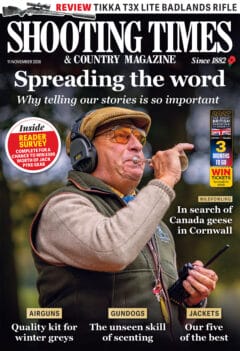
Keen Shot Richard Armer texted his firearms enquiry officer the moment his mental health faltered. What happened next should reassure every certificate holder, writes Selena Barr


For most of us, shooting represents downtime. The Saturday at the clay ground, the evening in a pigeon hide, the beating day or the driven day fixed months ahead and looked forward to through every working week between. It is where the phone stays in the truck and the mind goes quiet, and for many Guns it is what keeps them sane.
That is why one fear does such damage. Put your hand up, the thinking goes, admit you are struggling, and the next knock at the door will be an officer come for your guns. If you are already low, why would you ask for help when the price is the one thing holding you together? It is a vicious cycle that endures because almost nobody who has broken it will say what happened next. One North Yorkshire Gun will.
Richard Armer builds dry stone walls for a living. At 46 he has work booked years ahead on the farms and estates where he also beats and shoots, and where, for a couple of months this summer, the keys to his gun cabinet were held by a gamekeeper friend rather than Richard. The arrangement was his own idea, agreed with his firearms enquiry officer (FEO) within hours of a call to his GP, and it carried him through a bad patch with his certificate intact and the police squarely on his side.

He is also an avid shooter. He beats, shoots game and clays, kept a dog and ferrets even when work left no time for the field, and holds a shotgun certificate; at renewal next year he intends to add a firearm certificate for rabbiting.
From 20 years in the kitchen to dry stone walling
For 20 years Richard was a chef. The money kept a young family going, but the hours were punishing, and a man who had been to agricultural college and done a little keepering was trapped in a job he had come to hate. There were teenagers at home and a house move, and his mental health slid. He went to his GP and was treated, but around 2019 he reached his lowest point, and one day found himself on a bridge over the A1 with the idea of jumping. He stepped back, returned to his doctor and got help.
He stayed in the kitchen until around 2022, then finally walked away. Casual shifts at Catterick racecourse filled the gap, and weekends spent rebuilding walls for an old farmer friend grew into the business he now runs with his wife, Fiona. The licensing department’s notes call it the turning point: long days outdoors, a network of farmers and landowners he could talk to openly, no medication since 2022 and, as one officer recorded, great pleasure taken in beating, game and clay shooting.
How North Yorkshire Police handled his shotgun certificate
North Yorkshire Police knew all of this when they granted his shotgun certificate in February 2023. The depressive illness was discussed at interview and, rather than refuse him, the department set a review for 12 months’ time. In 2024 an officer rang to check in, found him fit, well and off medication, and pencilled in a further review for two years on. That brought Lucy, his FEO, to the house in April this year. She talked to Richard, then asked to speak to Fiona alone, and before leaving gave Fiona her mobile number in case she had concerns. It was not surveillance. It was a safety net, and two months later Richard needed it.
Online abuse, a call to the GP and a message to the FEO
He had built a Facebook page for the walling business, and as it grew, so did the trolls. The digs at his work were daily, from people who had plainly never built one. “I’m supposed to be a rough, tough Yorkshireman. You’re not supposed to get affected by these things,” he says. “But the constant abuse, the constant digs at my work, just started getting to me. I was waking up on a morning riddled with anxiety, waiting to open Facebook.” He stopped enjoying the job he loved. It was Fiona who said it: “Look, you’re not right. There’s something wrong.”
He deactivated the page and rang the surgery, which prescribed antidepressants. Then, that same day, before he had even discussed it with Fiona, he did the thing so many certificate holders dread. “As soon as I hung up the phone to the doctor, I messaged Lucy. She was absolutely amazing. She was so compassionate and helpful, and never once said, ‘Right, we’re coming round and we’re taking your guns.’ She was always about discussing the best option to move things forward.”
Handing the gun cabinet keys to a gamekeeper friend
The best option came from Richard. He offered to take his cabinet keys to another certificate holder, a local gamekeeper he beats for, so nobody need worry about his access to guns while the medication took effect. Lucy, who knows the keeper, thought it a good idea, cleared it with David Edwards, the force’s firearms licensing manager, and confirmed the keys had moved. The keeper was glad to help. He is a supporter of the Gamekeepers’ Welfare Trust, carries its “check in with a mate” sticker in his car and, over the weeks that followed, did exactly that.
Lucy rang in July and found him doing well, the medication settling and a mental health practitioner helping him tackle the root cause rather than the symptoms. In September she visited again, with Fiona present. Richard had been signed off by the practitioner and wanted his keys back. David agreed, noting a proactive and responsible approach throughout and the protective factors of Richard’s attitude and a wife who would speak up. Richard was without access to his guns for a couple of months, before the season, and says he never felt it. “The keys were with my friend and I still had my certificate.”
‘At no point did we think about taking his guns’
“At no point did we think about taking his guns off him,” David says. He is a detective inspector with some 20,000 certificate holders on his books, hundreds of them on medication for anxiety or depression, and every case is taken on its merits. Where someone is having suicidal thoughts, he says, the department will ask for guns to be lodged while treatment takes hold, but that is a world away from a man shooting with a mate on a Saturday. “I’m concerned about people having access at two in the morning, coming downstairs because they can’t sleep, they’ve had half a bottle of whisky because they’ve got stuff on their mind. That’s when I’m concerned about unfettered, unsupervised access to guns.” A certificate holder who is honest about his struggles, he argues, is a safer one, and likelier to see a doctor.
What the law says about mental health and gun ownership
The law is less of an ogre than most shooters imagine. The Firearms Act 1968 turns on whether a person can be permitted to possess a shotgun “without danger to the public safety or to the peace”, and the Home Office’s statutory guidance to chief officers, updated in August 2025, states that having received treatment for certain conditions “does not make them automatically unsuitable to possess a firearm”. On grant the police also ask the GP to place a “firearms held” marker on the holder’s medical record, a reminder to consider telling the police if a relevant condition appears or worsens, and the guidance says plainly that those it protects include the certificate holder and his family, not only the wider public.
Richard’s advice to struggling certificate holders: act now
The police are not there to catch you out. They are there to keep you safe, and Richard wants anyone who recognises himself in this story to believe it. “When a problem’s small, it is easier to deal with. Imagine somebody drops a match in a forest. In the first minute you can stamp on it. The longer you leave it, the bigger it grows and the harder it is to deal with. If you’re picking this magazine up today and you’re struggling, act now. The people closest to you will usually see it before you do. Let them. Then make the call to your FEO. It’s just being responsible. If you’re honest with them, they’re going to be honest with you. They’re not the big bad wolf.”
“If me sharing my story makes one person get the help they need,” Richard says, “that’s good enough for me.”
Where to find help

If you are struggling, talk to someone
Act while the problem is small – one call is all it takes to start
Jamie’s Helpline: 0300 1233088. The Gamekeepers’ Welfare Trust runs this confidential line for gamekeepers, stalkers and gillies and their dependants.
Samaritans: 116 123. Samaritans is free to call, day or night.
Frequently asked questions
Will the police take my guns if I tell them I am struggling with my mental health?
Not automatically. North Yorkshire Police’s firearms licensing manager says every case is taken on its merits, and the Home Office’s statutory guidance states that having received treatment for certain conditions “does not make them automatically unsuitable to possess a firearm”. Where someone is having suicidal thoughts, the department will ask for guns to be lodged while treatment takes hold.
What is the “firearms held” marker on a GP record?
When a certificate is granted, the police ask the holder’s GP to place a “firearms held” marker on the medical record. It is a reminder to the surgery to consider telling the police if a relevant condition appears or worsens.
Who should a certificate holder tell if their mental health dips?
See your GP and tell your firearms enquiry officer. Richard Armer messaged his FEO the same day he rang his surgery, and together they agreed that a fellow certificate holder would hold his cabinet keys until he was signed off. He kept his shotgun certificate throughout.

About the author
Selena Barr
Originally cutting her teeth as Shooting Times news editor two decades ago, her career in sporting journalism has taken her all over the world turning field adventures into reports that focus on conservation and sustainability.
 Closes 15 JanuaryWorth £129.90Win a pair of tickets to the British Shooting Show 2027Enter nowFree to enter
Related Articles

How to apply for a Shotgun Certificate, Firearms Certificate, RFD or Air Weapon Certificate
If you shoot in the UK, the paperwork comes before the gun. Which piece of paperwork depends on what you want to own, what you intend to do with it. The system has shifted twice in the past year
By Shooting Times | 28 August 2026

Six charges in 20 years for buying guns with false certificates
Solicitor General Ellie Reeves has told Parliament that just six offences of producing a false certificate to buy a firearm or ammunition were charged in England and Wales between 2006 and 2025
By News Desk | 25 August 2026
Get the latest news delivered direct to your door
Subscribe to Shooting Times & Country
Discover the ultimate companion for fieldsports enthusiasts with Shooting Times & Country Magazine, the UK’s leading weekly publication that has been at the forefront of shooting culture since 1882. Subscribers gain access to expert tips, comprehensive gear reviews, seasonal advice and a vibrant community of like-minded shooters.
Save on shop price when you subscribe with weekly issues featuring in-depth articles on gundog training, exclusive member offers and access to the digital back issue library. A Shooting Times & Country subscription is more than a magazine, don’t just read about the countryside; immerse yourself in its most authoritative and engaging publication.

