
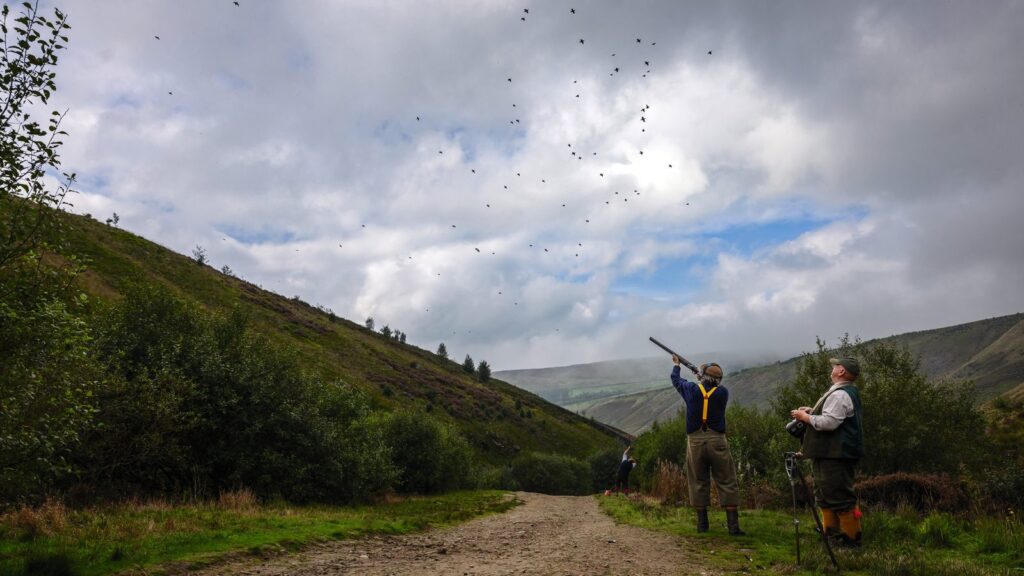
Ian Coley grouse shooting masterclass on technique and butt safety
Olympic coach Ian Coley MBE on what more than 50 years in the butts have taught him: mount under the bird rather than swing, keep your weight forward, never brown a pack, and give the keepers, flankers and pickers-up who make the day a proper thank you


Words: Ian Coley MBE. Photographs: Sarah Farnsworth, unless otherwise credited
My first grouse day was more than 50 years ago, and I arrived full of trepidation. I had shot game before, but nothing like this. From the moment I got into the butts, though, I knew my love of grouse shooting would never leave me. Grouse are totally different from anything else you will have shot, but they are not the impossible birds people make them out to be. In normal conditions they are coming at you, and they are very sporting birds to shoot. What you do have to do is handle the gun differently from the way you would on a pheasant or partridge day – and anyone who runs a moor, loads for guests or picks up behind the line will know how many visiting Guns arrive without having been told that.
There is nothing more exciting than a pack of grouse swirling round, and at times I have watched them pick up other grouse until there is a pack of a hundred or two hundred coming at you. I remember one huge pack coming through into which I shot 17 barrels, with a loader beside me. At one point I let the grouse come back on top of me; they were whistling past my ears, and it was as exciting as anything I have done in a butt.

How should a Gun prepare before a grouse day?
If you can, go to a shooting ground beforehand, particularly one that can simulate shooting both in front and behind. The Ian Coley Shooting Ground, for example, replicates grouse shooting well rather than simply putting up standard targets, and a number of other grounds around the UK do the same. A few lessons are money well spent, and in the days leading up to the big day, practise your gun mount in front of a mirror. More than any other gamebird, grouse arrive fast, and you do not want to be let down by a slow or unsteady gun mount.
What to wear and what to shoot on the grouse moor
Wear natural colours and take your cue from the moor in whichever month you are shooting – think of the purple heather of August and September – and never wear white or light colours. Take clothing for warm days and for cold, wet ones, and good waterproofs whatever the forecast. Carry a midge net; I have seen grown men driven off the hill by midges. Take plenty of water for yourself and your dog, and a stick for walking.
For cartridges and chokes, there is no need for big loads: I use standard game cartridges, one ounce (28g) or one and a sixteenth (30g) at most, through reasonably open chokes. As for the gun, I have never favoured one particular make – any standard game gun will do a perfectly good job. Keep to 28in or 30in barrels.

Where are the safe zones once you are in the butt?
When you arrive in your butt for the first time, take proper notice of what you can see and where your safe areas are. Put your swing sticks in a safe place, far enough forward that you cannot point your gun towards your neighbour, to either side or when you turn to the back. Never step back to the rear of the butt to shoot behind; it is entirely the wrong thing to do. Stay forward, and only turn to shoot behind once the bird has passed through the line to a safe distance, taking the gun out of your shoulder into the safe position first.
Pick a marker out in front at 50 – 60 yards: that is where you are going to mount your gun and shoot your grouse, quickly, from that point, making sure you take it within the normal range of 40 to 45 yards and leaving yourself time for a second barrel at a reasonable distance. It stops you shooting at the bird too close as it comes in.

How do you shoot an incoming grouse?
When they first start on incoming grouse, many people actually shoot in front, because they try to swing the gun as they would at driven pheasant or partridge. You do not have to. It is all done by gun movement: keep the gun moving and look at the grouse. Mount the gun just underneath the bird as it comes straight at you – any movement will bring the gun in front of it naturally, so there is no swing needed.
What I tend to say to people is this: imagine you are trying to shoot at the grouse’s feet rather than its body when it is coming low at you. That is probably quite different from what everybody starts off doing, but it is the way more success comes.
When a pack swirls in, you can easily be faced with a covey of 100 or 200 birds. Pick one bird and stay with it, otherwise you will end up shooting into the middle of the group hoping to hit something. That is known as ‘browning’, and it is both unsporting and ineffective. Keep your weight forward, on your front foot, adjusting left or right as the bird commits.
Be decisive. A grouse covers 20 yards in under half a second, and if you hesitate at all it will be on top of you and through the line. So once it is in your safe zone and in range, take the shot. Trust your eye and pull the trigger. And read the wind: grouse will generally bank and go with it rather than into it, and understanding that piece of fieldcraft will get you more shooting than luck ever will.
Why does fieldcraft matter so much on the moor?
Fieldcraft is absolutely essential on the moor, and every day’s shooting should be treated as a chance to learn more about how grouse behave in different conditions. For a first day in the heather, an experienced loader is invaluable – and a shoot that puts a good loader beside a new Gun is doing both of them a favour.
They are wild birds, and they demand respect. Expect them to move away from people rather than keep coming at them. That can vary: on a Scottish hillside the grouse are more aware of people than on some of the English moors, where they are a little softer, perhaps because they see so many more walkers going through.
A hill behind you breaks up your outline in the butt, so think about what the grouse are seeing as they come to you. Later in the season especially, keep your profile as low as you comfortably can. Get ready and mount the gun smoothly rather than jumping up quickly, or you will push the grouse on to your neighbour and spoil the drive for both of you.

Sportsmanship, keepers and the tip: what the moor expects of a Gun
There is no place on a grouse moor for a greedy Shot who wants to shoot everything that comes his way. If your neighbour has not had a shot and a bird is crossing towards them, good sportsmanship is to let it pass along the line.
And remember, there is no grouse shooting without the keepers, beaters, flankers and pickers-up; theirs is the work behind every drive, so be respectful of them and say thank you properly at the end of the day.
On tipping, I remember a time when we used to say a tip was £5 per 100 birds. Those days are long gone, I am afraid to say. Ask your host what is appropriate, but base it on how much you enjoyed the day and the conditions the keepers battled. Remember that a lot of people have put a lot of work into your day – so please take the time to chat to the team when you see them and show an interest in their work. I cannot emphasise the importance of this enough.
Who picks up your grouse after the drive?
Try to keep account of where your birds fall. It is not always easy if you have been fortunate enough to have had a lot of shooting in a big pack, but you do want to be able to tell the pickers-up how many you have shot and to point them out: “I got one out in front, 20 yards short of that boulder”. We should all take responsibility for picking up our own birds after the drive wherever we can. I see so many people walk away without even trying, and in my opinion that is wrong. It is about respect: for your quarry, and for everybody around you.
Making the most of the day on the moor
A grouse day builds in anticipation from the moment you arrive: meeting the keepers and your fellow Guns, watching the beaters go out, the walk to the butt. Enjoy every one of those moments. And do not get frustrated if you miss. It does not matter what your shot ratio is. You are there to enjoy the greatest place on earth, so enjoy the moment above all else.
Grouse moors are special places. Lately I have become passionate about wildlife photography, and one of the most wonderful experiences I have had on a moor was not with a gun at all but with a camera: going up to a famous moor in late April to photograph the black grouse lek. Waiting in the dawn for them to start their display, and hearing the curlews, the golden plover, the black grouse and the red grouse all calling together in that early-morning silence, was the most precious moment.

When the heather is out in purple bloom it is a magical place, and even in a rainstorm in late November it holds that magic. That is what keeps me going back to the moor, time and again.
Frequently asked questions
What cartridges and chokes do you need for grouse?
Standard game cartridges are all that is needed: one ounce (28g), or one and a sixteenth (30g) at most, through reasonably open chokes. There is no call for big loads, and any standard game gun with 28in or 30in barrels will do a perfectly good job.
How far out should you take an incoming grouse?
Pick a marker 50 to 60 yards out in front and mount the gun as the grouse reaches it, so the shot is taken within the normal range of 40 to 45 yards. That leaves time for a second barrel at a reasonable distance and stops the bird being shot too close.
What is ‘browning’ a pack of grouse?
Browning is shooting into the middle of a pack in the hope of hitting something rather than picking out a single bird. It is both unsporting and ineffective; the right way is to pick one grouse and stay with it.
How much should a Gun tip at the end of a grouse day?
The old rule of thumb, £5 per 100 birds, is long gone. Ask your host what is appropriate, and base the tip on how much you enjoyed the day and the conditions the keepers had to contend with.

About the author
Selena Barr
Originally cutting her teeth as Shooting Times news editor two decades ago, her career in sporting journalism has taken her all over the world turning field adventures into reports that focus on conservation and sustainability.
 Closes 15 JanuaryWorth £129.90Win a pair of tickets to the British Shooting Show 2027Enter nowFree to enter
Related Articles
Upperwood shoot profile: fog-bound grouse, high partridges and the keepers behind a South Pennine shoot
Returning to Upperwood, Matt Kidd discovers the grouse, conservation work and keepering community behind one of the country’s best-known high-bird shoots
By Matt Kidd | 21 November 2026

Smoking Barrels: showing off on social media for a few likes is doing shooting great harm
Showing off on social media for a few likes is doing shooting great harm – so put the phones away and respect those who work in it, says new columnist Tom Payne
By Tom Payne | 21 November 2026
Get the latest news delivered direct to your door
Subscribe to Shooting Times & Country
Discover the ultimate companion for fieldsports enthusiasts with Shooting Times & Country Magazine, the UK’s leading weekly publication that has been at the forefront of shooting culture since 1882. Subscribers gain access to expert tips, comprehensive gear reviews, seasonal advice and a vibrant community of like-minded shooters.
Save on shop price when you subscribe with weekly issues featuring in-depth articles on gundog training, exclusive member offers and access to the digital back issue library. A Shooting Times & Country subscription is more than a magazine, don’t just read about the countryside; immerse yourself in its most authoritative and engaging publication.

