★ Your magazine. Your say. Complete our reader survey with a chance to win Jack Pyke kit worth £500! ★


How to shoot the George Digweed way: footwork, eyes and gun speed
Britain's most decorated clay shot teaches a method built on balance, eye dominance and gun speed rather than measured lead – here is how it works

This guide was originally published in 2019 and fully revised in August 2026.
George Digweed MBE has more world titles than any other clay shot Britain has produced, along with more than 150 international titles, and he is rated among the finest game shots in the country. What makes him worth studying is not the record but the method behind it: an approach to balance, eye dominance and gun speed that runs against a good deal of conventional coaching, and one that has kept him at the top of the sport for decades.
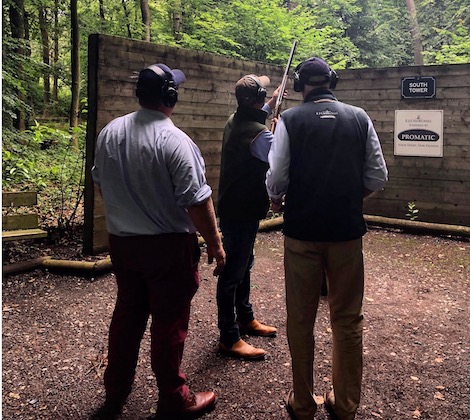
Digweed cannot teach everybody himself, so he spent 18 months working with handpicked instructors at E.J. Churchill to pass on what became known as the George Digweed method. ShootingUK was invited to the ground for a briefing and a session with Digweed-trained coaches, with the man himself watching on. This guide sets out what he teaches, step by step: how he checks eye dominance, how he wants your feet and weight arranged, why he thinks lead is largely irrelevant, and where he tells you to look.
What is the George Digweed shooting method?
The method rests on three ideas that work together. Keep both eyes open and deal with any dominance problem mechanically rather than by squinting. Build the shot from the feet up, transferring your weight onto the back foot as you swing. And forget measured lead, replacing it with gun speed, a swing that comes through the target from behind and a shot taken as the barrels pass the front edge.
None of it is complicated in isolation. The difficulty is that it asks you to stop doing several things most shooters were taught early on, which is why it is easier to learn with a coach watching than from a page.
How to check your eye dominance before you shoot
Digweed starts every session with eye dominance, and he does it simply: a card with a hole cut in it, held out at arm’s length, to see which eye takes over when you look through it.
Shooting with one eye closed is not the answer, he says. You cannot catch a ball that way, and the same applies to a clay: with both eyes open you judge speed and distance far better. Where there is a problem master eye, he treats it with a small patch on the lens of a pair of safety glasses rather than by shutting the eye down altogether.
The placing matters more than the size. The patch needs to be big enough to block out the pupil, and positioned precisely so that it blocks the wrong eye’s view past the bead once the gun is mounted, leaving the rest of your vision clear.
To make the point, Digweed singled out Phil Unwin, then managing director of Ruag Ammotec, who admitted he had not been out in the clay field for a long time. A small sticky patch went on Unwin’s safety glasses. He dry mounted the gun, said he could not really notice it, and still had both eyes on the target.
Why balance and footwork underpin the whole method
“Balance is everything,” Digweed says, and this is where the method really departs from what many shooters are taught. Work through it in order:
- Step 1. Place your feet far enough apart, with your weight evenly distributed to start with.
- Step 2. Align your feet to the line of the target, so that your shoulders stay square as you swing. You will end up almost side-on to the target.
- Step 3. As you swing, transfer your weight onto the back foot.
- Step 4. Push your front hip forward into the shot as you take it.
Get that sequence right and the gun stays on line, the swing stays steady, and you can go a long way back without losing your balance, which is where most shooters run out of movement and stop the gun.
Digweed says the method grew out of watching top shots when he was growing up. He noticed that they all shot off the back foot and transferred their weight, and that once you do the same your body works with you rather than against you.
How gun speed replaces conscious lead
Ask Digweed about lead and he will tell you that if your hand-eye co-ordination is right, lead is irrelevant. What actually breaks the target is gun speed. Swing through the target from behind and take the shot as you pass the front edge, rather than trying to measure a gap in front of it.
Two things let you control that speed without thinking about it. The first is your hold point, which sets how much ground the gun has to make up. The second is where your leading hand sits on the fore-end: further forward slows the swing down, further back speeds it up.
Where to look and where to start the gun
Digweed is emphatic that you should look at a specific point on the target rather than at the target as a whole. A clay is not a single blur, and picking a point on its leading edge sharpens both your focus and your timing.
Start with the gun just out of the shoulder, and then hold your nerve. Do not move until the target is past the barrels, and never go back to meet it. The temptation to set off early is the single thing most likely to undo everything else in the method.
Does the method work for a rusty shot?
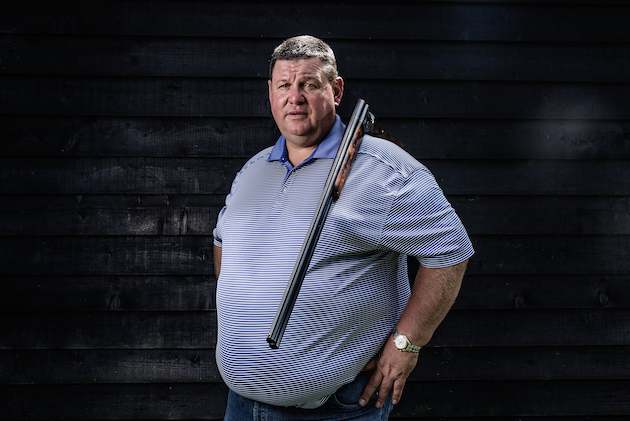
Phil Unwin’s verdict at the end of the day suggests it does. “I haven’t wanted to shoot flying ashtrays for a long time but I’ve had an enjoyable time,” he said. “In fact this is the first time I’ve shot a 12 straight.”
Digweed’s own take, over lunch afterwards, was that the point of teaching it was to open the method up: “It is wonderful to have an opportunity where people can come and shoot a different method and to be able to showcase what I have learnt and perfected over the last 30 years.”
George Digweed’s top tip: stay hydrated on a shoot day
The advice he gives most often has nothing to do with technique. Stay hydrated when you are shooting. He is amused, he says, by people who go out pheasant shooting the day after the night before, when they have been drinking beer and wine, and then “nobody can hit anything because they’re massively dehydrated and the timing is not good”. Stay off the drink until the shooting is finished.
Where to learn the George Digweed method
The method suits game shots as much as clay shooters, which is part of the reason it travels well. The E.J. Churchill George Digweed Academy ran the Digweed-trained coaching described here, and at the time Rob Fenwick, manager of E.J. Churchill, said the ground was “immensely proud to be hosting The E.J. Churchill George Digweed Academy”. The academy is no longer listed among E.J. Churchill’s current offerings, so check what is available before you book.
The ground still runs individual, shared and all-inclusive lessons for all abilities at E.J. Churchill’s West Wycombe shooting ground, as well as in-field instruction elsewhere in the UK. If you want to be taught the Digweed method specifically, ask when you enquire whether a Digweed-trained coach is still on the books.
Frequently asked questions
What are the three principles behind the George Digweed method?
Shoot with both eyes open and correct any dominance problem with a patch on the lens rather than by closing an eye; align your feet to the line of the target and transfer your weight onto the back foot as you swing; and control gun speed through your hold point and hand position instead of trying to measure lead.
Should you close one eye when shooting a shotgun?
George Digweed says no. He points out that you could not catch a ball with one eye shut, and the same applies to a moving target: with both eyes open you judge speed and distance far more accurately. Where one eye pulls the gun off line, he blocks a small spot on the lens rather than closing the eye.
How do you fix a dominant eye problem without closing an eye?
Use a small opaque patch stuck to the lens of your safety glasses. It needs to be big enough to block out the pupil, and placed precisely so that it blocks the wrong eye’s view past the bead when the gun is mounted. The rest of your vision stays clear, so you keep binocular judgement of speed and distance.
Do you shoot off the front foot or the back foot?
The Digweed method shoots off the back foot. Start with your weight evenly distributed and your feet aligned to the line of the target, then transfer your weight back as you swing and push your front hip forward into the shot. It keeps the gun on line and lets you swing much further back without losing balance.
How much lead should you give a clay target?
Digweed argues that lead is largely irrelevant if your hand-eye co-ordination is sound, because gun speed is what actually breaks the target. Swing through from behind and take the shot as the barrels pass the front edge, adjusting your gun speed with your hold point and where your leading hand sits on the fore-end.
Does the George Digweed method work for game shooting as well as clays?
Yes. Digweed is a world champion clay shot and is also rated among the best game shots in the country, and the method is taught for both. The footwork, eye dominance and gun speed principles apply the same way to a driven bird as they do to a clay.
Related Articles
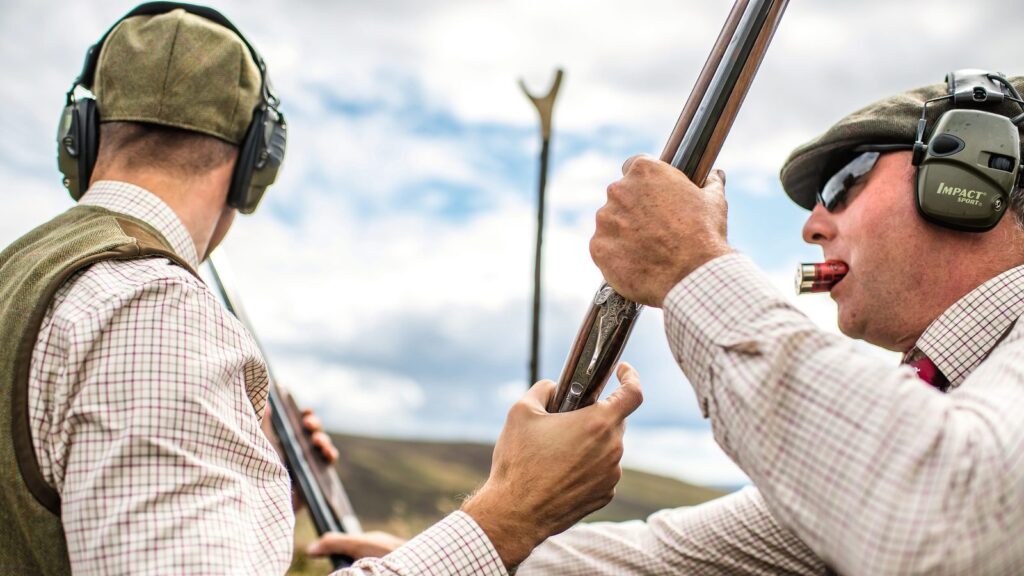
A good loader slows the Gun down and says less: 20 years at the peg, from Ashcombe to Alnwick
Richard Colbourne has loaded at Ashcombe and Alnwick Castle for more than two decades. Talking to Fieldsports Journal, he set out what separates a loader who enhances a day from one who spoils it, and...
By News Desk | 1 October 2026
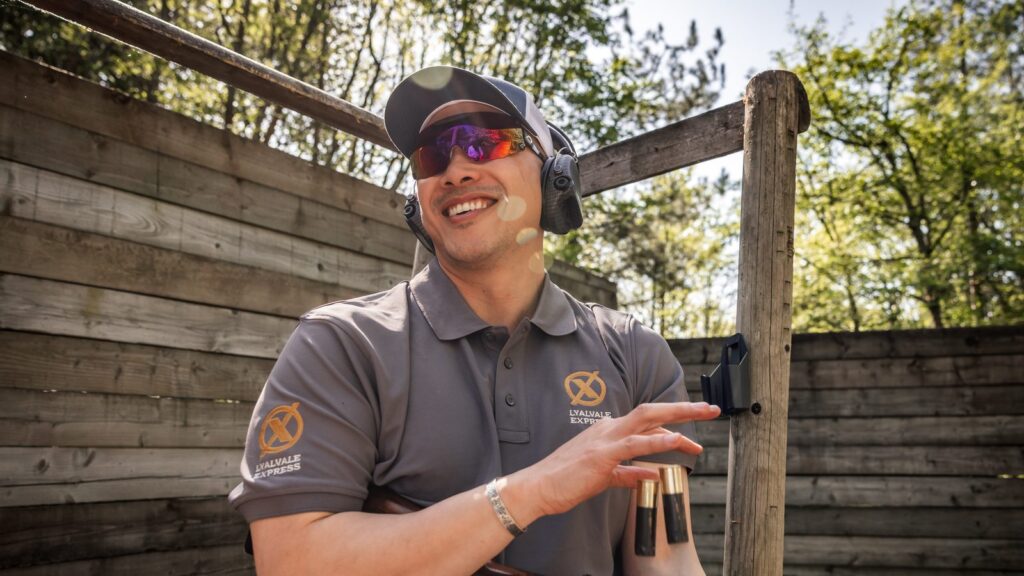
Actor Jason Wong: from Guy Ritchie’s film set to a voice for game shooting
The Star Wars and The Gentlemen actor took up clay shooting because Guy Ritchie told him to. Three seasons on he is shooting registered English sporting, taking driven days and telling the sport’s c...
By News Desk | 1 October 2026
Get the latest news delivered direct to your door
Subscribe to Shooting Times & Country
Discover the ultimate companion for fieldsports enthusiasts with Shooting Times & Country Magazine, the UK’s leading weekly publication that has been at the forefront of shooting culture since 1882. Subscribers gain access to expert tips, comprehensive gear reviews, seasonal advice and a vibrant community of like-minded shooters.
Save on shop price when you subscribe with weekly issues featuring in-depth articles on gundog training, exclusive member offers and access to the digital back issue library. A Shooting Times & Country subscription is more than a magazine, don’t just read about the countryside; immerse yourself in its most authoritative and engaging publication.