

The Countryman: late-season grouse over pointers, and a day in Sutherland with a pointer called Ferdy
Late-season grouse over pointers are a rare treat, and one October day in Sutherland, with a pointer called Ferdy, has never been forgotten


It’s quite a few years now since I spent a late autumn day shooting grouse over pointers.
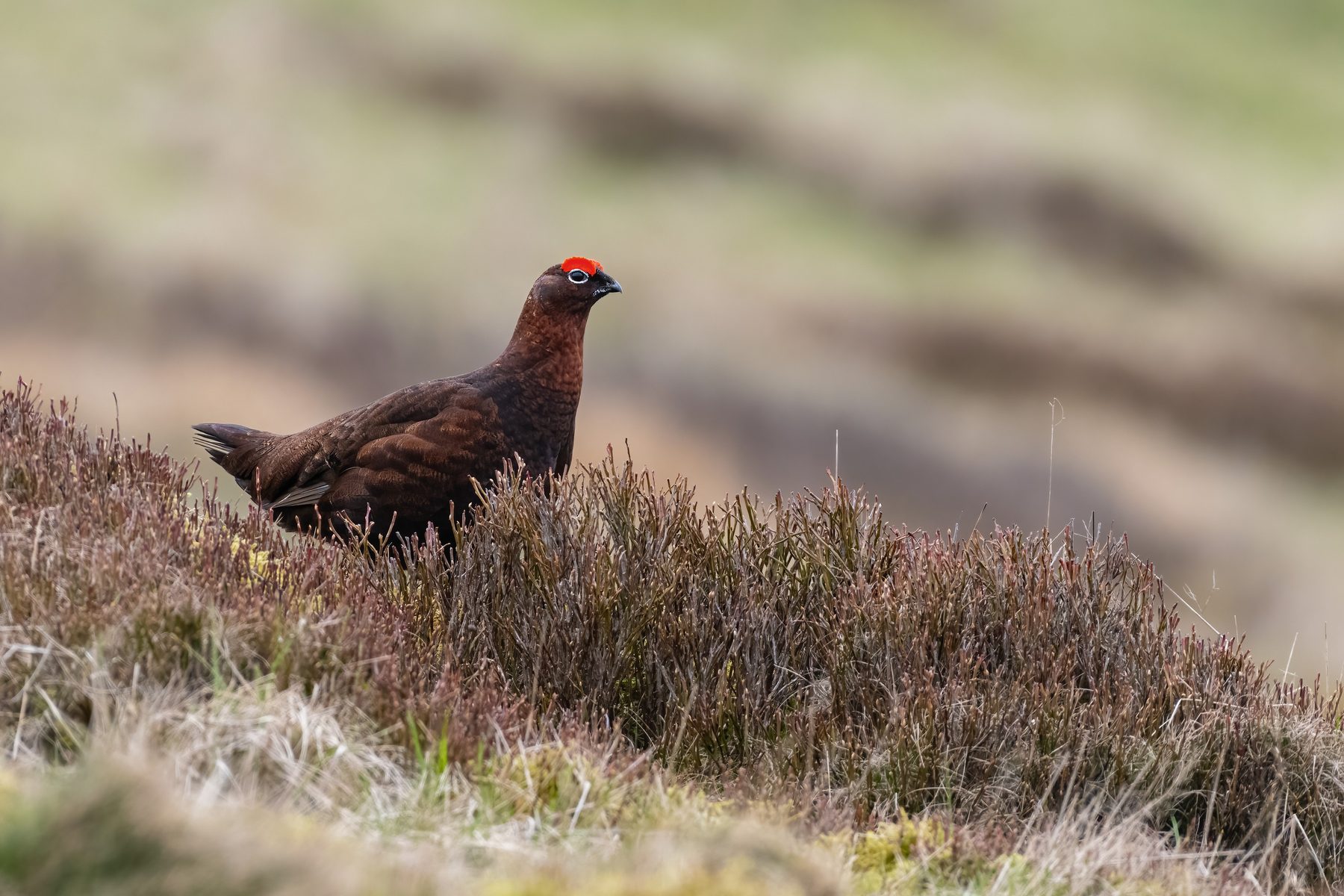
The grouse season runs from 12 August to 10 December, but most forays to the hill in pursuit of grouse are over by the end of September. There are several reasons for this.
Firstly, we would probably have shot as many as the stock will stand by then and, secondly, grouse get wilder and warier as the days shorten. The dogs will still find them and point them, but the grouse are much less likely to sit tightly enough for the Guns to get within shooting distance.
Mostly, though, it is because a shooting day has to be planned well in advance, and the Highland weather – fickle at the best of times – is just not reliable. With the shooting party gathering from several hundred miles away, the odds of being rained off are just too high. Grouse that are jumpy anyway are even more likely to flush wild when the heather is wet.
Autumn grouse days at Loch Choire
When we lived on Loch Choire Estate in Sutherland, autumn grouse days were much easier to arrange. The lodge would be filled with the owners and their guests; the dogs were ready in the kennels and when the weather looked right it was just a matter of loading an Argocat with Guns and dogs and heading off to the hill.
There was plenty of hill to choose from, the estate running to around 32,000 acres with Ben Klibreck towering to 3,153ft in the north and Ben Armine some 850ft lower to the south. And somewhere among all that real estate there were the grouse.
Come the autumn there would be a few snipe and, if you were lucky, the odd woodcock in the little woods of scrubby birch, rowan and alder that struggled to survive among the rocks along the edges of the loch. Mostly we found them there, but there was the odd one out on the open hill for the dogs to point.
There had to be some co-ordination before we set off with the dogs and Guns, because Loch Choire was primarily a stalking estate and most days two stalking parties would be out. The stalkers had first dibs, depending largely on the wind, then we would choose a beat well out of sight and sound.
A sunny October day and a rivalry between breeds
One outing that sticks in my mind was a sunny October day in about 1987. At the time Georgina and I both ran English pointers while our bosses both had German shorthaired pointers (GSPs), and there was, naturally, a certain amount of rivalry between the supporters of the two breeds.
On this day, one boss, Derek Knowles, had decided to take his GSP Meck out to show Lord Joicey (our other boss) what a good dog Meck was, and Georgina was deputed to bring her pointer Ferdy along to fill in when Meck needed a break. I was there to carry the bag, if there was anything in the bag to carry, and act as dog boy and general factotum. We hadn’t brought any lunch since the plan was to barbecue some grouse. To this end we had salt, pepper, butter and some tinfoil, and all we needed were four young grouse or else we would go hungry. So, no pressure…
The day started badly when Meck pointed a pipit, then went downhill rapidly when we disturbed a bunch of stags. This wouldn’t have been a problem if Meck hadn’t had a little weakness for venison. He took off at full speed and disappeared over the hill in hot pursuit. It was time to bring on the sub, and Georgina and Ferdy took over.
Now Ferdy was not the most handsome of pointers, having had a nasty infection as a puppy that left him with a scarred and wrinkled face, but his nose worked perfectly and while he didn’t have the pace of a field trial pointer he was an excellent grouse finder and very careful around his birds.
He worked away steadily, the Guns shot well and by lunchtime we had the required four young grouse in the bag.
Grouse barbecued on the hill
We skinned, cleaned, spatchcocked and seasoned them, greased the tinfoil with the butter then wrapped them up individually. A clump of heather was set alight, the four parcels were dropped into the middle and the fire was kept going with sprigs of heather. I think we left them for about 20 minutes before hooking them out and (perhaps my memory is a bit rose-tinted here) they were the best grouse I have ever eaten.
After making sure the fire was completely extinguished, we set off to work Ferdy back to the Argocat, finding quite a few more grouse on the way. He must have sensed that he was on trial, as it were, because he performed like a little star and we ended with a thoroughly satisfactory bag: all pointed, produced and retrieved by Ferdy. Just as we got back to the Argocat, the errant Meck rejoined us, looking worn out from his exertions. He certainly didn’t drag a stag back with him.
Mr Knowles didn’t say much about the day, but Lord Joicey whispered a few words to Georgina as we were hanging the grouse in the game larder. “Well, Georgina,” he said. “I was told I would see a good dog working today, and I certainly did, but it wasn’t the one I was supposed to be seeing.” I think those words pleased her more than if she had just won the Champion Stake with Ferdy.
Why late-season grouse are such a test
It wasn’t always like that, of course. Some days the grouse were wild and we came back with an empty bag, and sometimes the grouse did their bit but the Guns struggled to find their mark.
An autumn grouse that is strong on the wing and gets up 30 or 40 yards in front is a much more difficult shot than you might think. I have seen some good shots humbled by late-season grouse. Indeed, the first time I went grouse shooting on a late October day on the neighbouring Badanloch Estate, I found it a challenge to say the least.
So, although the odds of you shooting an autumn grouse are probably vanishingly small, if you ever get the chance, jump at it. It will be an experience you won’t forget, even without the alfresco barbecue for lunch.
Frequently asked questions
When does the grouse season end?
The grouse season runs from 12 August to 10 December, but most days over pointers are over by the end of September.
Why are late-season grouse harder to shoot over dogs?
Grouse get wilder and warier as the days shorten, so they are less likely to sit tight enough for the Guns to get within range, especially when the heather is wet. An autumn grouse that is strong on the wing and gets up 30 or 40 yards out is a much harder shot than it looks.

About the author
David Hudson
Photojournalist
David Hudson is a photojournalist and writer whose work has appeared in the sporting press for more than four decades. His interests run to shooting, gundogs, field trials and stalking, and much of his best material comes from years spent working pointers and setters on Highland and Perthshire grouse moors, including a spell at Loch Choire in Sutherland – summer brood counts, dogs to get fit and Guns to brief. He keeps gamebooks going back over 40 Twelfths, and they turn up regularly in his writing: the midges, the mist, the pointer who kept going absent, and the days when everything came right. He is also the author of a shelf of practical sporting titles, among them The Shooting Man's Dog, The Working Labrador, Working Pointers and Setters, Running Your Own Shoot, Pheasant Shooting, Gamekeeping and Grouse Shooting. He photographs most of his own features, which is rarer than it sounds.
 Closes 15 JanuaryWorth £129.90Win a pair of tickets to the British Shooting Show 2027Enter nowFree to enter
Related Articles

Gamekeeper: keepers were snubbed over this summer’s wildfires, and now their fire skills are being lost
Gamekeepers were left out when the Government thanked those who fought this summer’s wildfires, and now their fire skills are being lost, writes Lindsay Waddell
By Lindsay Waddell | 20 November 2026

Hope on the high ground: walked-up grouse with a 16-year-old assistant keeper
Grouse, spaniels and a 16-year-old assistant keeper: a walked-up day in the Yorkshire Dales leaves one Gun with hope for the future, writes Charles Hartley
By Charles Hartley | 12 November 2026
Get the latest news delivered direct to your door
Subscribe to Shooting Times & Country
Discover the ultimate companion for fieldsports enthusiasts with Shooting Times & Country Magazine, the UK’s leading weekly publication that has been at the forefront of shooting culture since 1882. Subscribers gain access to expert tips, comprehensive gear reviews, seasonal advice and a vibrant community of like-minded shooters.
Save on shop price when you subscribe with weekly issues featuring in-depth articles on gundog training, exclusive member offers and access to the digital back issue library. A Shooting Times & Country subscription is more than a magazine, don’t just read about the countryside; immerse yourself in its most authoritative and engaging publication.

