
The Countryman: rich pickings after the harvest as Canada geese share the stubbles
Stubbles being turned in mean busy days with pigeons and corvids, but Alan Jarrett finds Canada geese are also keen to share the spoils


My sporting life is recorded in my diary in two parts: summer (21 February–31 August) and winter (1 September–20 February). Basically the ‘close’ season, and the wildfowling season.
In summer my time in the field concentrates on protecting crops from pigeons and corvids, with sea-fishing thrown in. Winter is the fag end of the summer period, wildfowling, and winter sea-fishing. A busy annual schedule, from which there is enormous enjoyment, as well as a continual learning curve as the seasons and weather change and wild birds change in response.
After the harvest there is invariably a busy period, as stubbles are turned in and the first of the winter sowing gets underway. So it was this year, and even though my best endeavours are used to avoid impinging on the start of my wildfowling, good opportunities cannot be passed up.
As it transpired there had been a mixture of sport anyway, for much as pigeons like the stubble so do other birds including geese. It is also an opportunity to reduce the number of corvids before we move into the winter proper when they may be harder to get on terms with.
Geese on the pigeon stubble
While I was tucked in the pigeon hide, a text message came through, soon followed by a second. The first came from a friend telling me there had been geese on that stubble before I had arrived; the second came from the farmer, asking me to deal with the geese.
By 5pm the pigeon flighting had begun to dry up, and with 123 on the clicker it had been a very good day. My thoughts had been on the geese for the previous hour or so, and it was important that the field was vacated before they arrived and were spooked by an incautious pigeon shooter.
Less than an hour later the truck was parked near the entrance to the field, with field glasses to hand watching for any incoming geese. It was a long wait too, with the time ticking towards a self-imposed deadline of 7pm; at 6.50pm a dozen Canada geese headed into the field and did a single perfunctory circuit before dropping down to feed.
That was enough of a guide, and it was time to head for home and a much-needed meal after a long day in the field. With a big undulating field from which to choose my thoughts that evening were occupied with where to build the hide and place the decoys.
A fair chance on the flightline
Next morning found me on high ground. Despite the darkness I knew exactly how the field would look to any incoming geese, and taking the flightline from that single skein as a marker the hide was built against a hedge, with the decoys on the crest of the field some 35 yards out. If geese came at least that gave a fair chance of being on the flightline in.
It was raining hard. The first rain for weeks. That caused me to wait in the truck until 6am, and even then it was reluctantly into the hide, reasoning that if the geese came they would be late. However, better to be early rather than late, and just as well too, for in the half-light at 6.15am a small skein passed along the far hedge some 150 yards away.
They responded immediately to my calling and turned to the decoys, losing two of their number in the process. Even before there was time to deal with the fallen another skein of about 15 appeared and made the same manoeuvre, followed immediately by a big mob of over 40 geese. These latter broke up at my calling, mostly headed on into the field, with two breaking off and decoying in classic fashion to remain on the stubble.
This was young Meg’s first encounter with wildfowl, and quite a shock for her as she bounded from one goose to another. Most importantly, she was sent for a long dropper, which was secured without further fuss, with the pick-up to follow. Much to my delight after a bit of coaxing she retrieved two of the big birds, holding them in classic fashion as she half-carried, half-dragged them in.
Pigeons on the bean stubble
A couple of days later the venue was a bean stubble, which bordered a large field of recently sown oilseed rape. The farmer was anxious to ‘get the rape away’, and was glad of my presence, and it was easy to see why with several hundred pigeons all over the fields.
This was a case of cursing my ill-fortune, as we were due to take the twins out for dinner at 6.30pm as a prelude to university the following week. This meant packing up no later than 3.30pm, which can often be at the height of action on a good decoying day. Even worse, these fields had been left off my reconnaissance route for the last few days, and the birds had built up without me having spotted them. The best thing to do was to set up early, and hope for the best.
Fortunately, this is a farm very familiar to me, and the flightlines are fairly consistent from one year to the next. Accordingly, the hide was built where the beans and rape met, with decoys placed on both fields and even though this would mean much twisting and turning to watch for all eventualities I knew from past experience that this often worked.
With a wind much stronger than forecast it was soon possible to focus to my left, having repositioned some of the decoys but leaving the rotary some 30 yards downwind of the hide. This allowed good visibility of the decoys for birds using two flightlines, and a nice bag soon began to develop.
It was tricky shooting though, not least because many of the birds came in low against the wind; with a dark backdrop of rising ground, they were often not seen until the last moment. It was a good precursor to the sport hopefully soon to be on offer in the estuary, as they were almost like low-flying incoming teal flaring on the wind at the first shot.
No amount of checking the time could disguise the fact that an excellent day would have to be cut short. At 3.30pm there were 160 in the bag, and even with birds still coming and the fallen scattered everywhere it was time to pack up. But there will be other days.
A small gathering of crows, and five Canada geese
So to another stubble, this time with a small gathering of crows in mind. Sure enough the crows were there, with their black heads peering above the stubble. But surprise, surprise there were also five Canada geese on the field and positioned where they might be approached for a shot.
So it transpired, as by walking past them and gradually reducing the distance it was possible to get within shooting range. Being slightly more gullible early-season geese they responded by waddling slowly away, with the occasional soft note to each other.
At about 30 yards they had enough of the intrusion and with a chorus of deep calls were soon airborne. No true sportsman under such circumstances could have taken a shot; even when they responded to my calling and flew a circuit around me the gun remained unfired, and I wished them luck hoping to see them another day.
Much later in the hide, it was as expected a quiet day. Only two crows had joined the decoys on the stubble, although a few flighting pigeons added to the bag. Then came the unmistakable sight of a pair of approaching geese. These were no gifts, but up and flying hard for who knows where.
They came quickly, high and fast. There was barely time to trade one light cartridge for a heavy goose load, and the familiar thump of 42g brought the expected result as the goose tumbled into the rough ground at my rear.
Soon it would be the estuary first and foremost. But there were these days and others to think back on, and to remember there were all sorts of opportunities to be enjoyed after the harvest.
Alan Jarrett has been wildfowling for more than 50 years and is experienced in every facet of the sport.
Frequently asked questions
Why do Canada geese feed on stubbles?
After the harvest, stubbles hold spilt grain, and as Alan Jarrett notes, much as pigeons like the stubble, so do other birds including geese.
Where should decoys go for geese on a stubble?
Alan Jarrett took the flightline from the skein he had seen the evening before, built his hide against a hedge and set the decoys on the crest of the field about 35 yards out, so incoming geese had a fair chance of being on the flightline in.
About the author
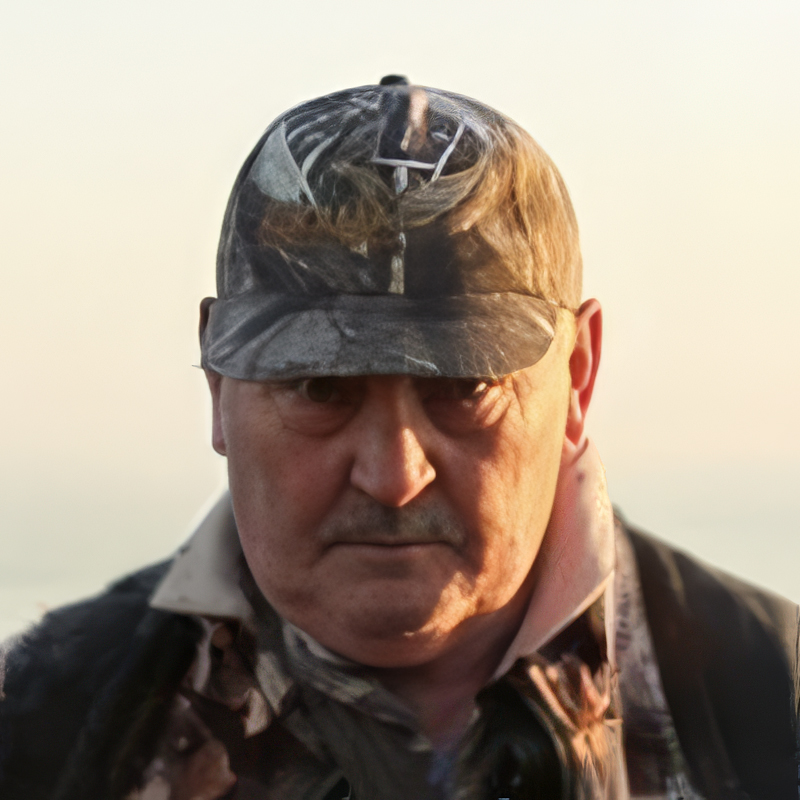
Alan Jarrett
A Kent wildfowler with more than 40 years on the North Kent marshes, Alan is chairman of the Kent Wildfowling & Conservation Association, the largest wildfowling club in the country, and has driven its programme of freehold land purchases across the Medway estuary, the Swale, Essex, Sussex and north Norfolk. He was a founder member of BASC’s wildfowling liaison committee in 1984, was elected to BASC council in 1989, became vice-chairman in 1997 and chairman in 2002. He is particularly fond of tide flighting and decoying duck in the North Kent estuaries, and has shot abroad in South Africa, Canada and the United States. Alan is the author of several wildfowling books, among them Wildfowling: A Winter’s Tale, Wildfowling Ways, Wildfowling Tales, When the Wind Blows and A Wildfowler’s Year, as well as Shooting at Clays.
 Closes 15 JanuaryWorth £129.90Win a pair of tickets to the British Shooting Show 2027Enter nowFree to enter
Related Articles

Jottings for wildfowlers: letting the ducks pass on a September dawn and waiting for geese
Mindful of Arthur Cadman’s old dilemma, Gethin Jones forgoes the ducks on a late-September morning flight and waits for the geese to lift
By Gethin Jones | 12 November 2026

Jottings for wildfowlers: 45 years of conservation at Aldeburgh Town Ponds
For 45 years a Suffolk wildfowling club has looked after a coastal wetland, and now its members are helping to ring migrant birds, writes Graham Downing
By Graham Downing | 11 November 2026
Get the latest news delivered direct to your door
Subscribe to Shooting Times & Country
Discover the ultimate companion for fieldsports enthusiasts with Shooting Times & Country Magazine, the UK’s leading weekly publication that has been at the forefront of shooting culture since 1882. Subscribers gain access to expert tips, comprehensive gear reviews, seasonal advice and a vibrant community of like-minded shooters.
Save on shop price when you subscribe with weekly issues featuring in-depth articles on gundog training, exclusive member offers and access to the digital back issue library. A Shooting Times & Country subscription is more than a magazine, don’t just read about the countryside; immerse yourself in its most authoritative and engaging publication.