★ Your magazine. Your say. Complete our reader survey with a chance to win Jack Pyke kit worth £500! ★


Reading the wind with an air rifle: what a 40-yard drift test shows
Writing in Airgun World, the England international Gary Chillingworth pins a card up a tree at 40 yards to measure how far a crosswind moves his Daystate Blackwolf, then shoots a gusty round at Springfield with his wind-reading advice. What the test tells anyone who takes an air rifle out in the field


A properly windy practice round left one of the country’s most experienced hunter field target (HFT) shooters doubting his own wind calls, and the answer he went looking for applies to any air rifle taken out on a breezy day. Writing in Airgun World, Gary Chillingworth describes a session at Springfield ARC, just outside Chelmsford, in “a steady 15mph with gusts of up to 30mph”, where he missed only one or two of his first 10 targets before the round fell apart.
What went wrong in the wind at Springfield?
The round, as Airgun World tells it, only came right again “once he stopped aiming off and kept his aim point inside the kill”. That was the puzzle. In Chillingworth’s account, “the rifle did not seem to be taking much wind at all, certainly compared with other guns he has shot”, and with the last two rounds of the UK HFT series coming up and more wind in the forecast, he wanted to know exactly what the Blackwolf was doing “before he talked himself out of good shots again”.
The 40-yard card test
The method, filmed for Back to Basics with Daystate on Shooting & Country TV, is simple enough for any shooter to copy on a club range or a quiet field. He waits for a 10 to 12mph crosswind, pins a card with a single black line high up a tree at 40 yards, aims straight down the line and measures how far five pellets drift. The discipline is in the detail: “Use exactly the same pellets, fill pressure and setup you compete with, or the results tell you nothing.” Then it is back to Springfield for a full round in the gusts, with his advice on reading the wind as he goes, from flags and feathers to the trees behind the target.
How much wind should you give a shot?
Chillingworth’s own question is the one every airgunner asks, and he has the standing to answer it: an Essex airgunner who shot for England at the HFT World Championships in 2012 and 2013, he has written for Airgun World since 2008. His advice is to use the first shot as a baseline and adjust from it for longer and shorter targets, and to listen as well as look, because “wind often blows in cycles and can switch direction suddenly”. A feather on the barrel shows the wind at the peg, “but always check the foliage behind the target, as the wind downrange can be quite different”. Targets high in a tree generally take more wind, because “wind moves faster the higher it is, because there is less on the ground to break it up”, and in a strong blow the tree itself can move, along with any support the shooter is leaning against.
Why the margin matters beyond the HFT course
For the keeper on the rat run or the farmer thinning woodpigeons off the rape, the point is the margin. “Wind eats into the space you have to aim at,” Chillingworth writes: on a 25mm HFT kill, holding in the middle leaves plenty of room, but using the bottom of the kill as an aim point for range shrinks the usable width to around 18mm, and a rifle that drifts less in a crosswind leaves far more margin for error. A head shot on a rat or a pigeon offers no more room than that, which is why knowing exactly what a rifle does in 12mph of wind is worth an afternoon with a card and five pellets. His last word is on clothing, and it applies on the pigeon hide as much as the peg: “A hoodie lets a cold wind straight through, and by the end of a long round you can be frozen, which does your shooting no favours.”
What happens next?
The episode is on Shooting & Country TV, and Chillingworth’s full account, with the drift measurements and the gusty round, is in Airgun World, linked first below. The last two rounds of the UK HFT series follow, in whatever wind the autumn brings.
Frequently asked questions
How do you test how much wind an air rifle takes?
Wait for a day that matches the conditions you expect to shoot in, pin up a card with a straight vertical line at a known distance, aim straight down the line and measure how far each pellet lands from it. Use the same pellets, fill pressure and setup you normally shoot with, or the results tell you nothing.
Why does a small kill zone make wind matter more?
On a 25mm HFT kill, holding in the middle leaves room either side, but using the bottom of the kill as a range aim point shrinks the usable width to around 18mm. A rifle that drifts less in a crosswind leaves more margin for error.
How do you read the wind before an air rifle shot?
Use the first shot as a baseline, listen as well as look because wind blows in cycles and can switch suddenly, and check the foliage behind the target rather than only a feather on the barrel, because the wind downrange can differ from the wind at the peg.

About the author
Gary Chillingworth
An Essex airgunner and hunter field target specialist, Gary started competing in HFT with an Air Arms S400. He began photographing and reporting on events, and has written for Airgun World since 2008. He made the English national team in 2012 and 2013, shooting for England at the HFT World Championships, and since 2017 has concentrated on spring guns, winning national and world titles and captaining the Air Arms springer team at the Nationals in 2019. He now produces the Life at the Range video series for Shooting & Country TV, covering technique, competition preparation and kit, and appears at the British and Northern shooting shows.

 Closes 15 JanuaryWorth £129.90Win a pair of tickets to the British Shooting Show 2027Enter nowFree to enter
Related Articles

Nocpix Omni H35R multi-spectrum binocular review: right first time
Ed Jackson tests the Omni H35R, Nocpix's first multi-spectrum binocular, with a look at the cheaper L19R, to see what thermal and 8K digital in one housing can do
By Ed Jackson | 17 October 2026
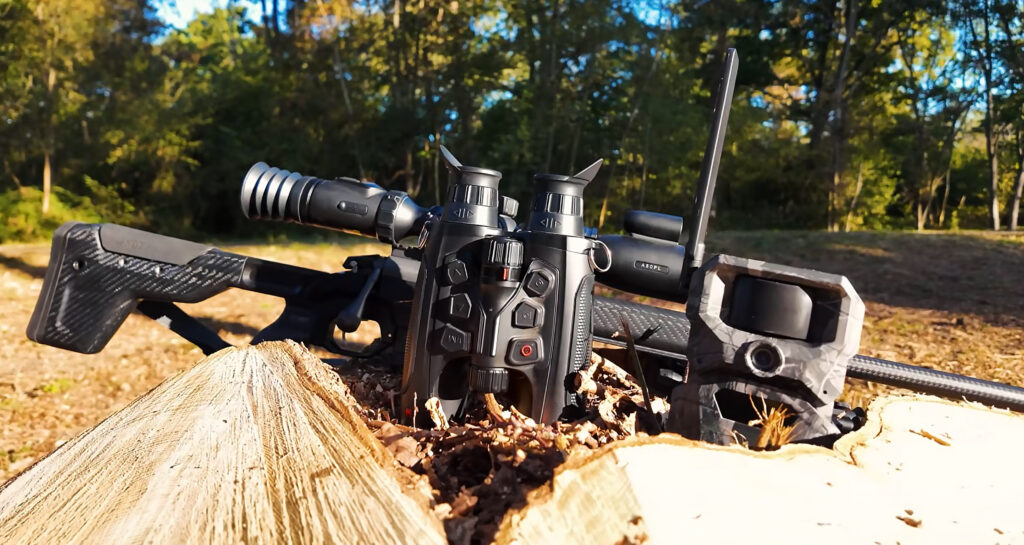
HIKMICRO's three-step stalking ecosystem tested on muntjac
Ed Jackson takes HIKMICRO's three-step detection, observation and shot ecosystem into the high seat after muntjac, to find out whether connected kit really earns its place on a stalk
By Ed Jackson | 11 September 2026
Get the latest news delivered direct to your door
Subscribe to Shooting Times & Country
Discover the ultimate companion for fieldsports enthusiasts with Shooting Times & Country Magazine, the UK’s leading weekly publication that has been at the forefront of shooting culture since 1882. Subscribers gain access to expert tips, comprehensive gear reviews, seasonal advice and a vibrant community of like-minded shooters.
Save on shop price when you subscribe with weekly issues featuring in-depth articles on gundog training, exclusive member offers and access to the digital back issue library. A Shooting Times & Country subscription is more than a magazine, don’t just read about the countryside; immerse yourself in its most authoritative and engaging publication.