★ Your magazine. Your say. Complete our reader survey with a chance to win Jack Pyke kit worth £500! ★


When waders were quarry: memories of a lost wildfowling era
From navigating unregulated foreshores to harvesting waders for pies, Alan Jarrett reflects fondly on a bygone era of wildfowling freedom

Wildfowlers are a hardy breed – and so we need to be at a time when it seems that almost every hand is turned against us. If it’s not the punitive interpretation of firearms legislation, there are attempts to curtail the quarry list and the abolition of lead shot for wildfowl shooting is to become wider ranging by 2029. It is also being made harder to gain consent to shoot over designated land. And then there is the relentless, insidious loss of shooting land due to change of ownership and change of land use.
When I shot my first duck, a mallard, on 6 September 1968, I little imagined that it would be the start of a long lifetime of wildfowl pursuit. Or that those early times of wildfowling with scarcely a care in the world might change. But they have done.
In those early days we relied on shooting Crown foreshore, and various other blocks of unregulated land. Some of those areas were shot probably somewhat dubiously, but as all the locals of the time did so, we had no qualms about joining in.
There were extensive areas of inter-tidal mud in places, where the quality of shooting was at best mediocre. The chances of seeing a duck, far less of shooting one, were very much in the lap of the gods. Even when there were available areas, access was not always straightforward and we had to beware the irate landowner with an agenda of stopping nearby shooting by denying access. Regardless of such circumstances it was easy enough to go out in the dark unhindered, but coming back in the daylight was sometimes a different matter altogether.
A wrecking ball to the quarry list
All these activities were well before the advent of the Wildlife and Countryside Act 1981, which took a wrecking ball to the quarry list. For us in the south-east the loss of such species as the seldom seen bean geese, and the sea ducks such as the scoters, mattered not a jot. The loss of all the shore waders was a different matter, as they were often the bread and butter for emerging wildfowlers hard-pressed to get any worthwhile duck shooting.
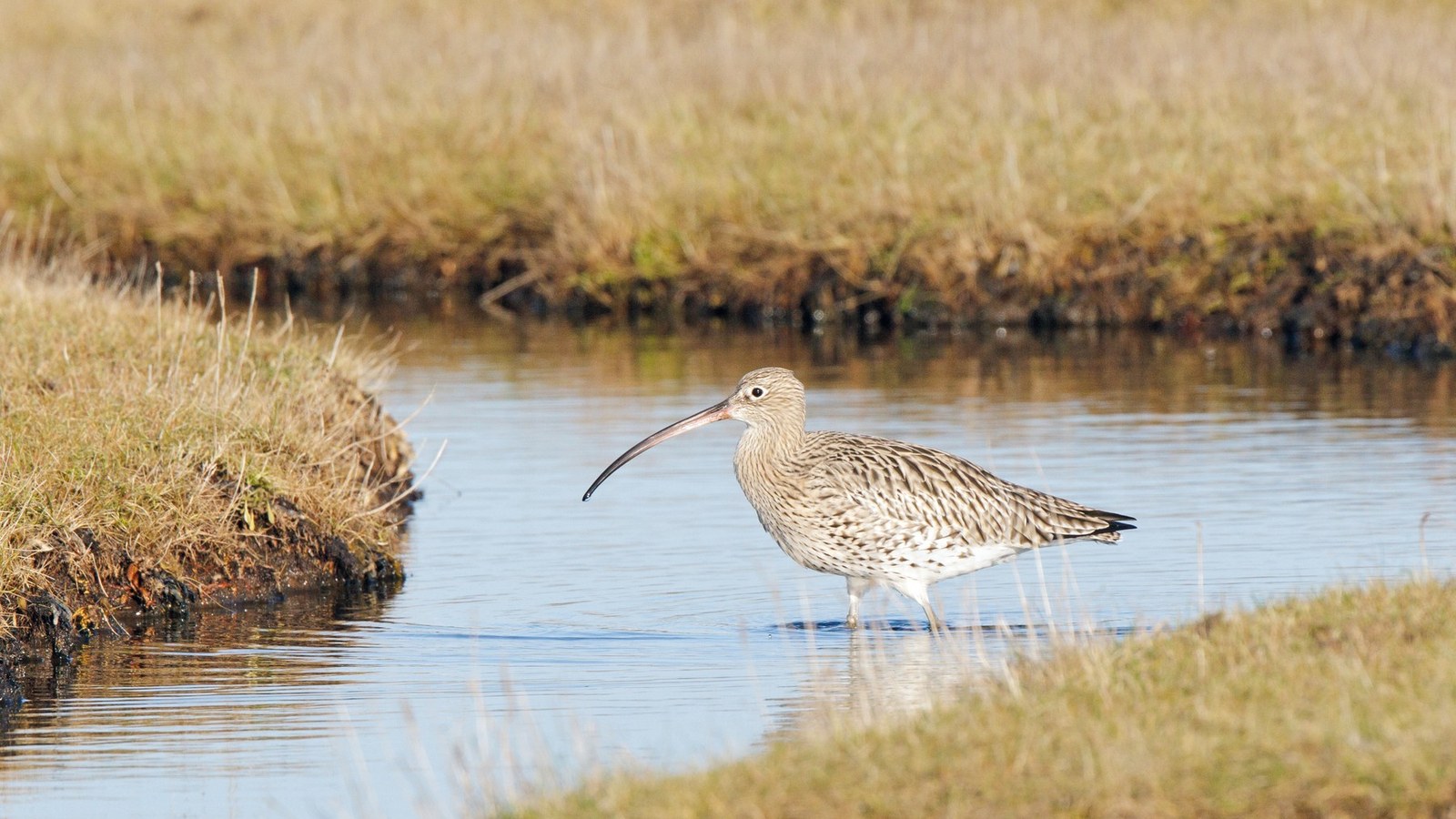
The list was lengthy: curlew, whimbrel, bar-tailed godwit, grey plover, redshank and jack snipe (in mainland UK) all became protected. Given the current population status of many of these species perhaps their protection was the right thing, though it did not seem like it at the time.
In recent years a programme of species restoration has centred on the curlew, a bird which by any measure is an icon of both estuary and moor. Its delightful warbling call features as a backdrop to many a flight, while its presence on the moorland breeding grounds is a pleasure for those who witness it. But for me it was an important and elusive quarry.
During those years, and subsequently, the estuaries seemed full of the big brown birds, and adding in the smaller waders, flighting as the tide flowed and ebbed became a real treat. In fact for me wader shooting was a principal sport, particularly during the early weeks of the season before the main influx of winter migrant ducks and geese.
Thinking back to some of those halcyon days, a number of adventures come to mind, and hopefully they will give readers some indication of the sport that was then on offer. The relative quarry abundance aside, there was a practical reason for wader shooting during the early months of the season – palatability.
Wildfowlers have always rightly prided themselves on the way their quarry is treated, with a meal being the end product of the hunt. Wildfowl provide good high-protein, low-fat food, and we do all we can to ensure that little goes to waste. Early season waders can be good eating, but as the winter progresses the flavour of the meat can deteriorate, for diet plays an important part in the quality of the flesh. Birds grubbing in the estuary can have a strong flavour, which is not to everyone’s taste. That is the time to stop shooting.
Wader pie, the speciality of the house
The speciality in our house was the wader pie. Shot birds were breasted and frozen until there was enough meat for a pie, into which everything went, together with vegetables and various spices. The resultant feast was always a delight for me.
Aside from tide flighting, one good way of enjoying sport was to wait for a really windy day. This would give the opportunity to walk the saltmarshes at low tide, knowing that here and there waders would be hunkered down in creek beds in their search for sheltered feeding grounds.
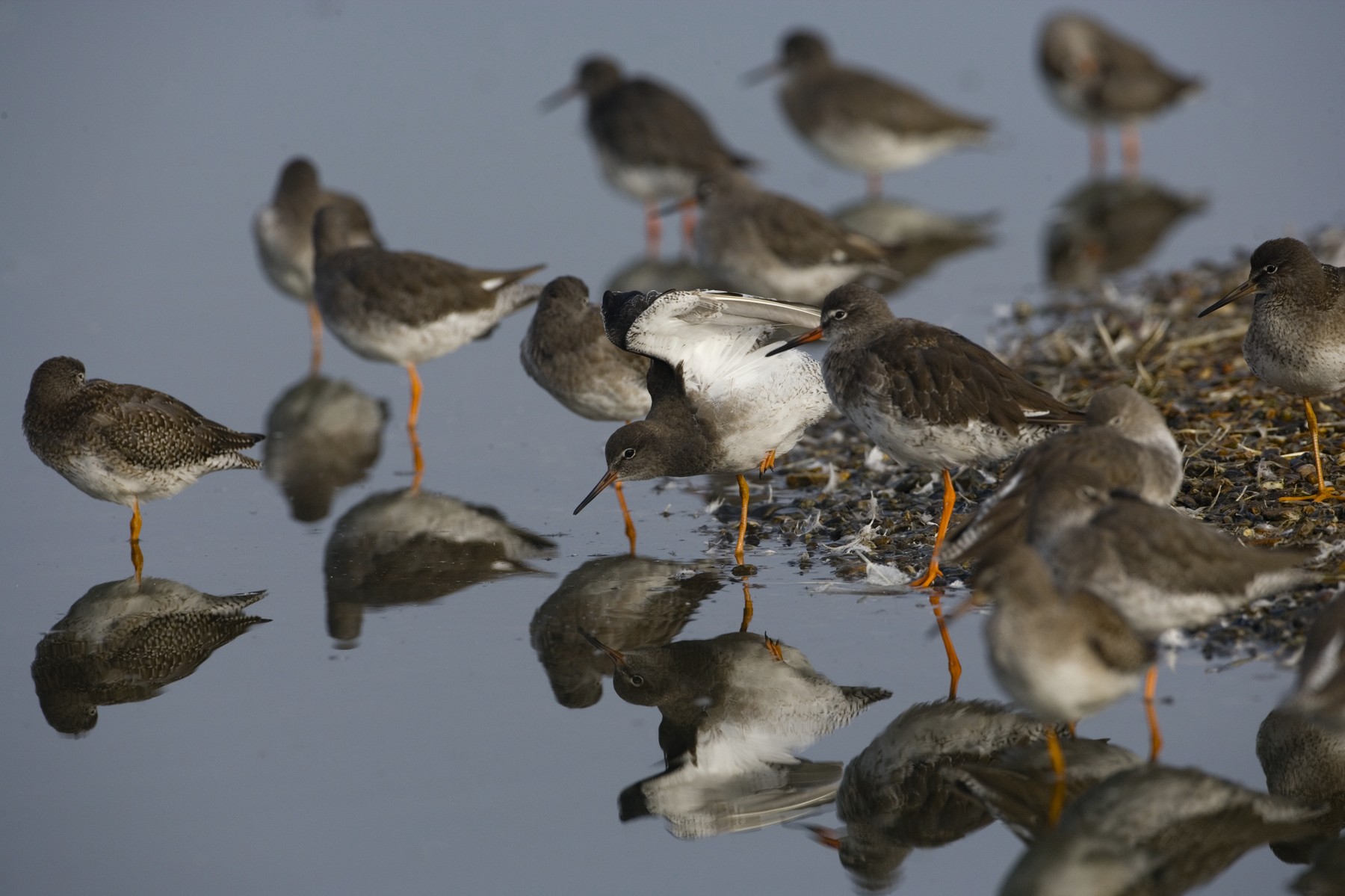
It was a case of remaining alert as each creek approached, hoping that any birds would be close by rather than 100 yards away along the creek. This often worked. There is something quite heart pumping in the sudden flush of redshank or grey plover, which were the main denizens of such places. The redshank in particular would flush with shrill alarm calls, flashing white rump and wing bars, plus the ability to dart this way and that. It was at times possible to get several birds during a walk of an hour or so, and they all went into the next pie.
Flighting the tide
The tide flight was my favourite activity during the early season, and if it was a midday tide it was possible to spend all day on the shore. Flighting for duck was the first and final part of the day, and on one particular day – although nothing came at morning flight – evening flight produced a plump mallard to go with a side-bag crammed with waders.
As the tide began to creep over the mudflats the dog and I took up position on the edge of the saltmarsh. Here some small clumps of spartina grass offered adequate cover if I lay down and didn’t move until the last moment. Gradually the tide crept closer, and in response the waders followed the tide edge, probing urgently for a last meal before the water drove them off for the next four or five hours.
There was, as always, a grand mix of species. In addition to the curlew, redshank and grey plover there were such non-quarry species including dunlin and knot, all thronging the tide edge. I knew that the first shot would flush them all, but birds feeding further along the shore would make their gradual way along the tide edge to give more chances.
After each successful shot the dog would be away, splashing through the shallows to bring the small bird to hand. Once a small pack of teal buzzed the tide edge to make a very welcome addition to the bag. Eventually, with the tide all around me and my hiding place no longer tenable, it was time to plough back towards the sea wall with half a dozen redshank joining the teal in my bag.
After several hours lounging above the high tide mark, the reverse flight began with birds beginning to move before the mud was even revealed by the ebbing tide. This provided an opportunity to pluck out a couple of the bigger bar-tailed godwits as they came down from their roost, and they were handsome birds still bearing plenty of rufous summer plumage.
Back out at the spartina it was possible to bag a couple more redshank as they came dashing down to feed, but as always the return flight was more short-lived as the tide ebbed back, dragging the birds irresistibly after it. Later still I waited by the sea wall for a chance at a duck.
A precious jewel to take home
It had been a thoroughly enjoyable day, made doubly so by a stiff breeze and the constant passage of grey clouds. As the day faded, away to the west beyond some higher ground the cloud broke open and the sun poured through to silhouette a church spire against the dying day.
It was a magical moment, which sadly soon passed as the sun dipped further and the cloud closed in again – a precious jewel to take back home with me. With a whicker of wings that single mallard came to me and joined the array of birds lined out before me to cool. Those early days wildfowling were some of the most memorable and will never be repeated.
Frequently asked questions
When did waders come off the wildfowling quarry list?
The Wildlife and Countryside Act 1981 removed the shore waders from the quarry list. Curlew, whimbrel, bar-tailed godwit, grey plover, redshank and, in mainland UK, jack snipe all became protected species, along with bean geese and sea ducks such as the scoters.
Why did wildfowlers shoot waders in the early season?
Two reasons: abundance and palatability. Before the main influx of winter migrant ducks and geese, waders were often the most reliable sport on the estuary, and early-season birds made good eating – the wader pie was a household speciality. As winter diet changed the flavour of the meat, shooting stopped.
Is anything being done to restore curlew populations?
Yes. In recent years a programme of species restoration has centred on the curlew, an icon of both estuary and moor, whose warbling call remains a backdrop to many a wildfowling flight.
About the author
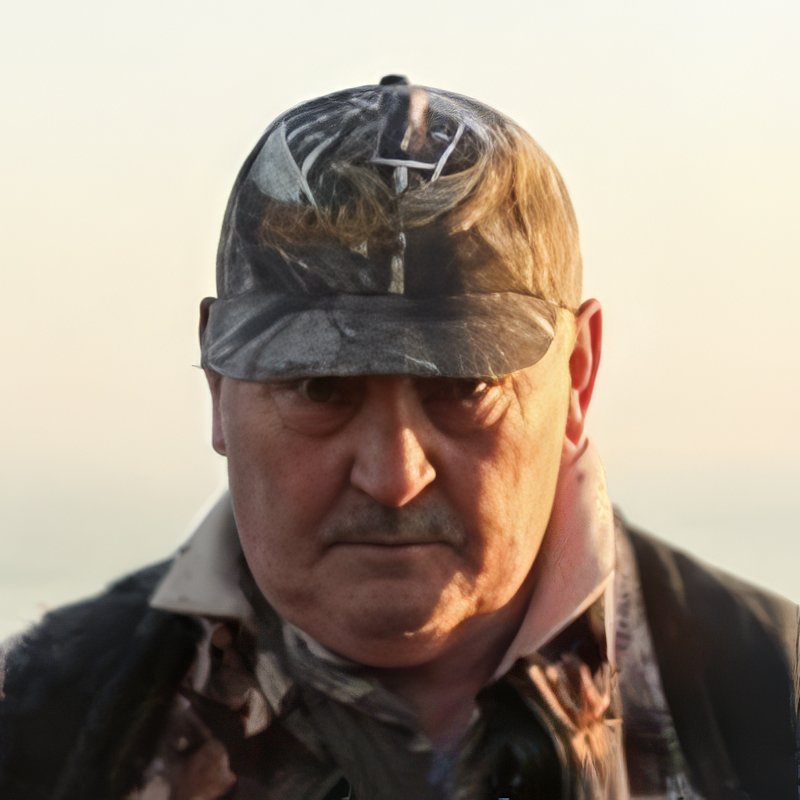
Alan Jarrett
A Kent wildfowler with more than 40 years on the North Kent marshes, Alan is chairman of the Kent Wildfowling & Conservation Association, the largest wildfowling club in the country, and has driven its programme of freehold land purchases across the Medway estuary, the Swale, Essex, Sussex and north Norfolk. He was a founder member of BASC’s wildfowling liaison committee in 1984, was elected to BASC council in 1989, became vice-chairman in 1997 and chairman in 2002. He is particularly fond of tide flighting and decoying duck in the North Kent estuaries, and has shot abroad in South Africa, Canada and the United States. Alan is the author of several wildfowling books, among them Wildfowling: A Winter’s Tale, Wildfowling Ways, Wildfowling Tales, When the Wind Blows and A Wildfowler’s Year, as well as Shooting at Clays.
Related Articles

Shotgun shot sizes explained: what to use for clays, game and wildfowl
Bigger number, smaller pellet – and that is only where the confusion begins. A guide to what the numbers mean, what to load for clays, game and wildfowl, and how the switch away from lead changes ev...
By Selena Barr | 28 August 2026

Which geese can you legally shoot in the UK?
Only four species of goose are quarry in Britain, the list is not the same in every country, and it changed within the past few years. A guide to what you may shoot, what you may not, and how to tell ...
By Selena Barr | 27 August 2026
Get the latest news delivered direct to your door
Subscribe to Shooting Times & Country
Discover the ultimate companion for fieldsports enthusiasts with Shooting Times & Country Magazine, the UK’s leading weekly publication that has been at the forefront of shooting culture since 1882. Subscribers gain access to expert tips, comprehensive gear reviews, seasonal advice and a vibrant community of like-minded shooters.
Save on shop price when you subscribe with weekly issues featuring in-depth articles on gundog training, exclusive member offers and access to the digital back issue library. A Shooting Times & Country subscription is more than a magazine, don’t just read about the countryside; immerse yourself in its most authoritative and engaging publication.