★ Your magazine. Your say. Complete our reader survey with a chance to win Jack Pyke kit worth £500! ★


Post-lead partridges: choosing the right non-lead cartridge
Martin Puddifer investigates choke, pellet size and shot type – and why the right non-lead partridge load is not the biggest one available


The phased transition away from lead ammunition represents one of the most significant changes to shotgun ballistics in modern game shooting. Yet despite growing availability of non-lead alternatives, many shooters remain uncertain about which cartridges will deliver the clean kills their sport demands. Here, two industry leaders – cartridge manufacturer Gamebore and importer Shooting Star – offer their insights into how barrel choke, pellet engineering and gamebird welfare are reshaping ammunition for early-season partridge.
Gamebore’s approach to non-lead ammunition centres on precise ballistic engineering to compensate for steel’s fundamental disadvantage: a density of approximately 7.9g/cm³, compared with lead’s 11g/cm³. That density difference means that a steel pellet sheds velocity and energy more quickly, a challenge that demands careful cartridge design.
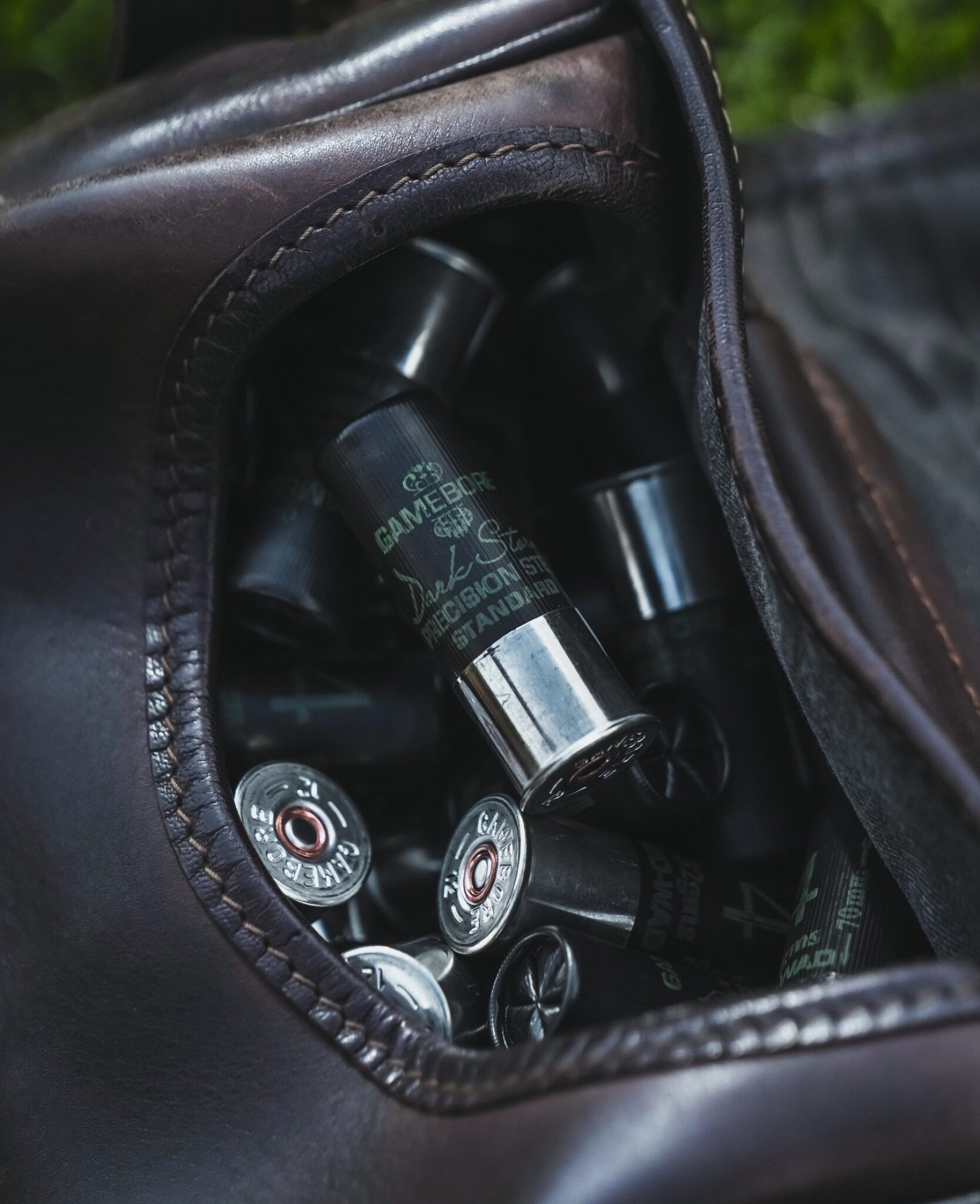
“We don’t simply compensate by driving steel faster,” explains Gamebore’s Lydia Abdelaoui. “Instead, we engineer the cartridge as a complete ballistic system.” That philosophy underpins its Dark Storm Steel and Regal Steel Game ranges, which use purpose-engineered Bio-Wad Rapid technology, injection-moulded in-house with precisely angled petals designed to protect the bore while biodegrading naturally in the field.
Go up a shot size or two with steel
The critical adjustment for shooters transitioning from lead involves pellet size. Gamebore recommends moving up one or two shot sizes when switching from lead to steel. A shooter accustomed to No 6 lead for partridge, for example, should consider No 5 steel instead. The greater mass gives more downrange energy – essential when smaller steel pellets would result in energy loss at typical partridge ranges of 30 to 40 yards.
Muzzle velocity is approximately 1,400fps across Gamebore’s standard steel game range, achieved not through excessive powder charges but through its Quad Seal obturation system – four sealing rings that minimise gas loss and allow the propellant to work efficiently. For shooters attending partridge days where there’ll be plenty of birds, the balance between pellet size, velocity and recoil is critical.
Does steel need a tighter choke?
Gamebore’s research challenges the assumption that steel demands tighter chokes. “Steel naturally patterns more tightly than lead,” Lydia notes. “There is little advantage in automatically using a heavy choke.” Gamebore’s recommendation for traditional game guns firing standard steel at driven partridges is relatively open choking – typically Improved Cylinder to quarter choke – with the warning not to use steel through anything tighter than half choke.
Pattern density and velocity interact in ways that affect carcass preservation. Excessive velocity or unnecessarily dense patterns at close range can damage meat regardless of shot material. By calibrating pellet size, velocity and pattern performance to match expected shooting distances, shooters can achieve sufficient penetration and energy for clean kills.
“The really important point here is matching the cartridge to the quarry and the range,” says Lydia. Steel’s hardness and reduced malleability mean it retains shape through impact, providing effective penetration when balanced correctly. “Rather than deforming significantly, a steel pellet tends to retain its shape as it passes through the bird – and with the correct pellet size, velocity and pattern, this provides clean kills without carcass damage,” she adds.
Shooters are voting with their wallets for HPF3 Blue
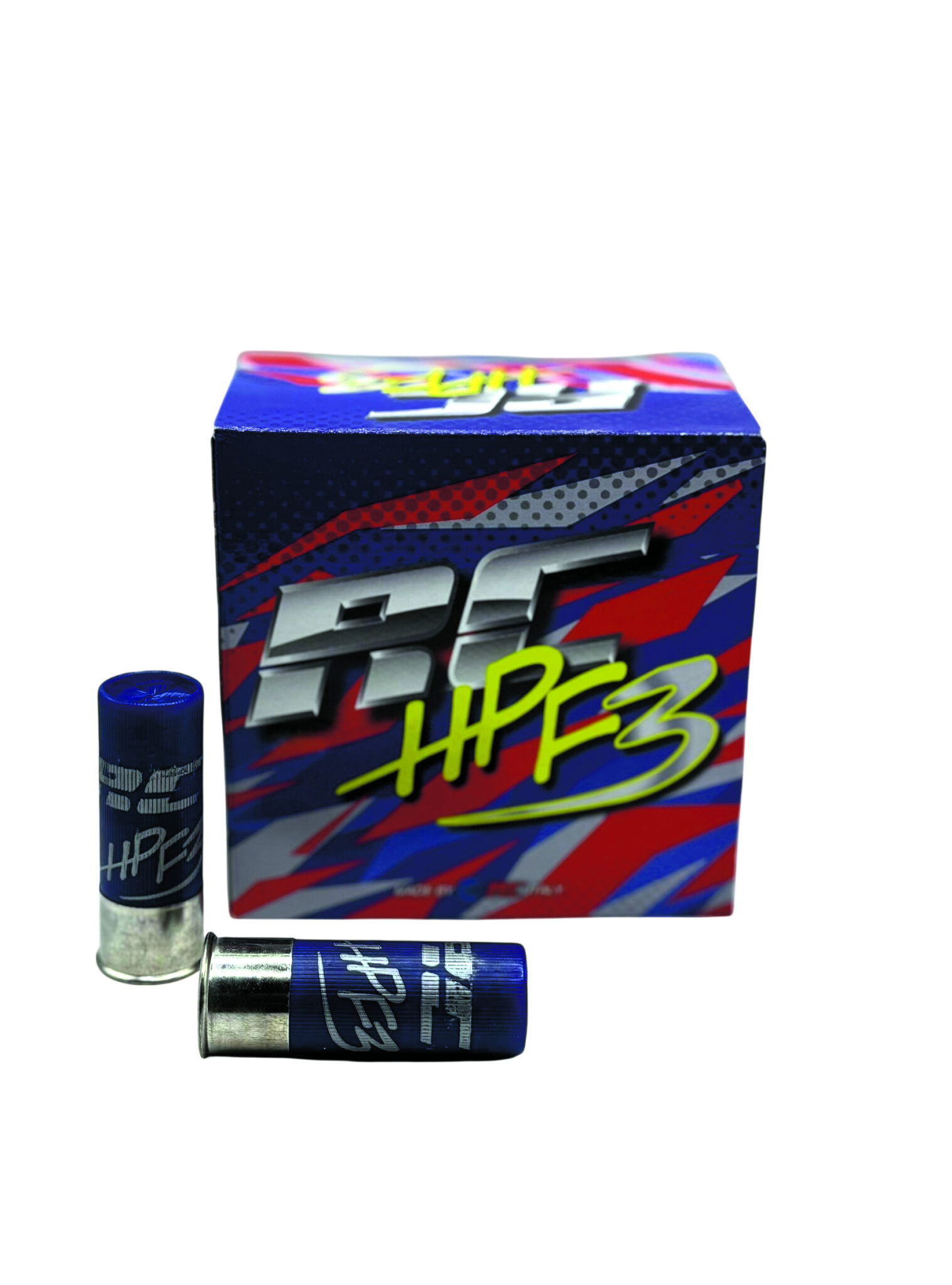
According to Alex Levett-Scrivener of Shooting Star, the importer’s market data reveals a sector in flux. Retail demand for non-lead partridge loads has surged, particularly in the lighter 28g to 32g range. Shooters are also voting with their wallets for RC’s HPF3 Blue shot, which is made from an alloy of bismuth, aluminium, tin and zinc. “Our top non-lead sellers have been HPF3 Blue in 28g, 30g and 32g in No 4 and No 5 shot,” he says. “We’re seeing large uptakes in preference to steel.”
The reason offers important lessons about flexibility and choke. HPF3 Blue has very similar density to steel but behaves differently on impact. The alloy pellets deform on contact, unloading energy into the game in a manner more analogous to traditional lead. This malleability creates practical advantages for shooters constrained by their gun’s choke specification. “Blue can be used in guns with more than half choke,” says Alex – a significant advantage over standard steel.
Yet beneath these product insights lies a deeper challenge – widespread misconception about non-lead ballistics. “Mostly it’s the lack of knowledge or understanding of non-lead products,” says Alex. “There needs to be re-education for a lot of shooters so that they understand what they are using, what pellet counts are and how shot size impacts performance.”
Smaller cartridges, evolving wads
Alex highlights a crucial point about the transition itself. For years, shotgun marketing has pushed shooters towards larger cartridges and bigger pellets. Yet a 28g No 6½ load in lead is arguably perfect for partridge – and its non-lead equivalent might be a 26g No 5½ steel or Blue shot delivering similar pellet counts and weight per pellet.
Alongside shot material, wad technology is evolving rapidly. Both Gamebore and Shooting Star are transitioning towards biodegradable and eco-wad options. Gamebore’s Bio-Wad Rapid degrades naturally, while Alex observes that steel cartridges will feature Novizon biodegradable wads moving forwards.
Crucially, different eco-wad types behave differently: biodegradable wads break down in soil, hydro-soluble variants dissolve on contact with water and paper wads degrade through weathering. Shooters need to understand which technology their cartridges use – both for environmental responsibility and because storage requirements vary.
As the ban approaches, Gamebore and Shooting Star are expanding their ranges for smaller bores. Gamebore intends to extend steel and Bio-Wad technology into 16-bore, 28-bore and .410 ahead of the 2029 season. Shooting Star is already stocking 28-bore and planning .410 loads.
The transition beyond lead isn’t simply a materials swap. It demands understanding ballistics, respecting barrel choke limitations and matching cartridge selection to quarry, range and gun specification. The reward is clean kills, preserved carcasses for the food chain and ammunition that leaves no lead in the landscape.
Frequently asked questions
What size steel shot should I use for partridge?
Move up one or two shot sizes when switching from lead to steel. A shooter accustomed to No 6 lead for partridge should consider No 5 steel instead – the greater mass keeps downrange energy at typical partridge ranges of 30 to 40 yards.
Do I need a tighter choke for steel shot?
No – steel naturally patterns more tightly than lead, so there is little advantage in a heavy choke. Gamebore recommends Improved Cylinder to quarter choke for standard steel at driven partridges, and warns against shooting steel through anything tighter than half choke.
What is RC HPF3 Blue shot?
An alloy of bismuth, aluminium, tin and zinc with a similar density to steel that deforms on impact more like traditional lead. Because of that malleability it can be used in guns with more than half choke – a significant advantage over standard steel for shooters constrained by their choke specification.
When does the wider lead ban take effect?
The phased transition away from lead ammunition runs to 2029, and manufacturers are preparing for it now – Gamebore intends to extend steel and Bio-Wad technology into 16-bore, 28-bore and .410 ahead of the 2029 season, with Shooting Star already stocking 28-bore.

About the author
Martin Puddifer
Managing editor of Shooting Times since 2026, Martin is based in Nottinghamshire and has worked on shooting and fieldsports titles since 2007, writing for Shooting Gazette and Airgun World. He took the editor's chair from Ollie Harvey, and now runs the weekly, from news pages and features commissioning to the magazine's expert panels. At home he has two rescue greyhounds, a breed that gives him a particular sympathy for readers' letters about dogs who take a firm view of what they will and will not do.
 Closes 15 JanuaryWorth £129.90Win a pair of tickets to the British Shooting Show 2027Enter nowFree to enter
Related Articles

Five of the best early-season partridge cartridges
Fast, low-flying autumn partridges demand a light, quick load with plenty of pellets in the pattern, not the heavy stuff left over from last January's cock day. Selena Barr picks five worth loading fo...
By Selena Barr | 28 August 2026

Get the latest news delivered direct to your door
Subscribe to Shooting Times & Country
Discover the ultimate companion for fieldsports enthusiasts with Shooting Times & Country Magazine, the UK’s leading weekly publication that has been at the forefront of shooting culture since 1882. Subscribers gain access to expert tips, comprehensive gear reviews, seasonal advice and a vibrant community of like-minded shooters.
Save on shop price when you subscribe with weekly issues featuring in-depth articles on gundog training, exclusive member offers and access to the digital back issue library. A Shooting Times & Country subscription is more than a magazine, don’t just read about the countryside; immerse yourself in its most authoritative and engaging publication.