★ Your magazine. Your say. Complete our reader survey with a chance to win Jack Pyke kit worth £500! ★


Snettisham: 71 years of visits and a hard look at the RSPB
David Whitby has known this stretch of the Norfolk coast since boyhood, and returns to weigh what the reserve has gained against what it has quietly lost


I recently took a trip down memory lane to the Norfolk coast – Snettisham to be exact. My forebears have been part of this stretch of coast for generations and I have visited it for 71 years.
A broken concrete road winds between rows of caravans and beach huts to end up at the RSPB reserve, a beautiful spot that always conjures a wonderfully warm feeling of being at home. As a small boy I accompanied my father and grandfather here on wildfowling trips before it became an RSPB reserve. Springs and summers were spent cockling, collecting samphire, eel fishing and bird-nesting – not ashamed to admit it.
I always park my modest campervan in the space that says “permit holders only”, with vast mudflats in front and lakes called the backwaters behind. Separated from the sea by shingle banks, the backwaters are old gravel workings that later flooded. In the big flood of 1953 some 300 people perished when moon, tides and wind all came together, causing a dreadful rising tide along the east coast.
It is a bird reserve now, but beyond some excellent viewing hides I see little of what the RSPB has done in the area. Yes, there are fenced no-go areas, essential for ground-nesting birds, but what of actual bird management? I wonder, for example, what would have taken place were the backwaters in private hands. Perhaps it may help to look at how the numbers have changed as I remember them.
How the bird numbers have changed at Snettisham
On the plus side it was wonderful to see spoonbills and avocets, neither of which was evident when I was a boy. There appeared to be good numbers of godwits and shelduck (always there), and I did see oystercatchers and ringed plovers, again always there. I cannot make a comparison on numbers and rose-tinted glasses are often worn, but I do feel that numbers of the last two may well be down – not surprising, as I suspect they are down everywhere.
What was evident is that these precious backwaters with their tiny islands had nothing like the number of terns that there once was. As a very young boy I remember swimming out to look at the island nests and (hang me) get an egg. There were huge numbers and I feared that their diving would scalp me.
Going back a long way, my great-grandfather was a keeper on the adjoining Ken Hill estate. I believe that at one time he was asked by a Colonel Cresswell to monitor tern numbers along that coastline. It came about because the fishermen were blaming a drop in flatfish stocks on the enormous population of terns taking the fry. A report at the time stated that neither the birds of the air nor beasts of the land (including man) could ever influence the fecundity of the sea. Little did they know what lay ahead.
Instead of terns there were large numbers of Egyptian geese, greylags and cormorants, none of which I remember seeing in summers of old. In private hands the Egyptian geese and greylags would be culled, the former under licence, and the cormorants’ island takeover dissuaded. More floating islands should be created and help given to those species in need at the expense of those that are not. Egyptian geese should simply not be present.
A predator imbalance the RSPB now acknowledges
What I found refreshing was an information poster about ringed plover numbers decreasing, the RSPB putting the cause down to disturbance (human) and predation. I am genuinely pleased that it acknowledges the problems of a predator imbalance. It’s such a shame that this organisation could not work more closely with keepers and find a common path for predator control, but frankly it is hardly surprising.
Why release density is the argument we cannot dodge
An old friend contacted me recently asking what I thought of the shoot next to him releasing 90,000 partridges on fewer than 3,000 acres with some 85 days of shooting sold. I think he knows what I think of it, and we all know what the RSPB thinks of it. This high density of release is by no means an isolated case. It is ecologically damaging and somehow we have to remove such elements.
Our critics will not look at the well-keepered shoot in balance with ecology and conservation. Why would they? So when there is a call for all shoots to be licensed, perhaps it is born of necessity and perhaps there should be compulsory limitations placed on released numbers. We seem unable to control things voluntarily.
David Whitby has 46 years’ experience in deer management and gamekeeping.
Frequently asked questions
What are the Snettisham backwaters?
Old gravel workings behind the shingle bank that later flooded, forming lakes separated from the sea. The mudflats lie in front of them.
What happened on this coast in the 1953 flood?
Some 300 people died when moon, tides and wind came together and drove a rising tide along the east coast.
Why does a gamekeeper argue for limits on release numbers?
Because high-density release, such as 90,000 partridges on fewer than 3,000 acres, is ecologically damaging and hands critics an easy target. Whitby’s argument is that if the shooting community will not control it voluntarily, compulsory limits may be born of necessity.
About the author
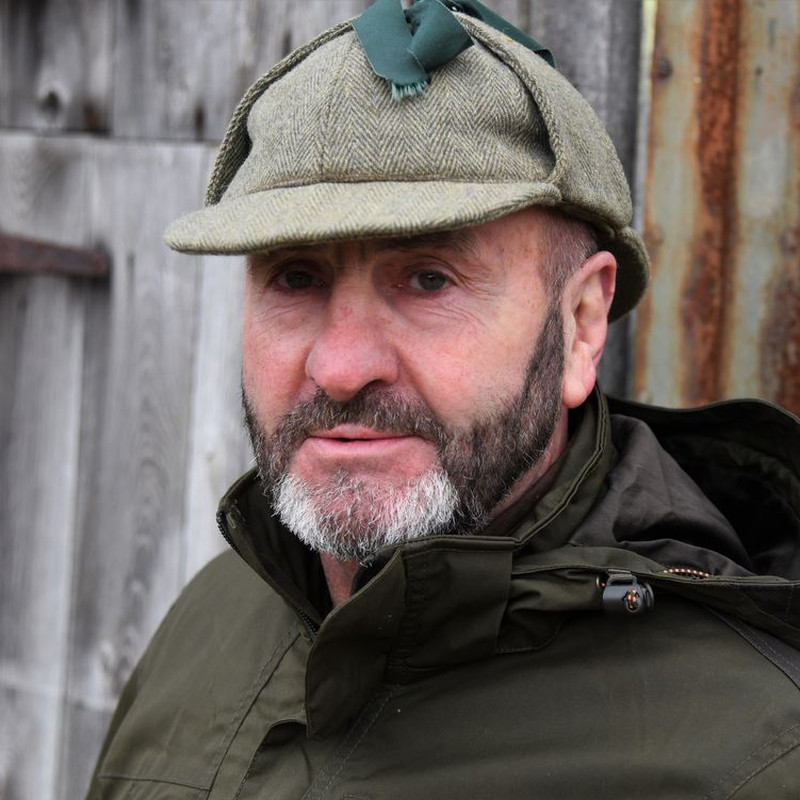
David Whitby
A gundog writer and photographer for Shooting Times, David wrote on training and the working dog's year between 2009 and 2024.
Related Articles

Shoots urged to use every bird as chiller network triples
The Country Food Trust is now running six game chillers around the UK, three times last season's number, and is asking shoots and Guns to make sure every bird shot goes into the food chain
By Shooting Times | 20 September 2026

Six of the Countryside Alliance's 27 'harmful' policies hit shooting
The alliance has published the full list behind its rural reset campaign, and shoot licensing, the burning ban, licence fees, snares, shotgun certificates and GL45 all make it
By News Desk | 17 September 2026
Get the latest news delivered direct to your door
Subscribe to Shooting Times & Country
Discover the ultimate companion for fieldsports enthusiasts with Shooting Times & Country Magazine, the UK’s leading weekly publication that has been at the forefront of shooting culture since 1882. Subscribers gain access to expert tips, comprehensive gear reviews, seasonal advice and a vibrant community of like-minded shooters.
Save on shop price when you subscribe with weekly issues featuring in-depth articles on gundog training, exclusive member offers and access to the digital back issue library. A Shooting Times & Country subscription is more than a magazine, don’t just read about the countryside; immerse yourself in its most authoritative and engaging publication.