★ Your magazine. Your say. Complete our reader survey with a chance to win Jack Pyke kit worth £500! ★


Going the whole hog: a lifetime fond of hedgehogs
They came for the bread and milk and stayed to clear the cellars, and HC Huggins has been fond of hedgehogs ever since, fleas and all
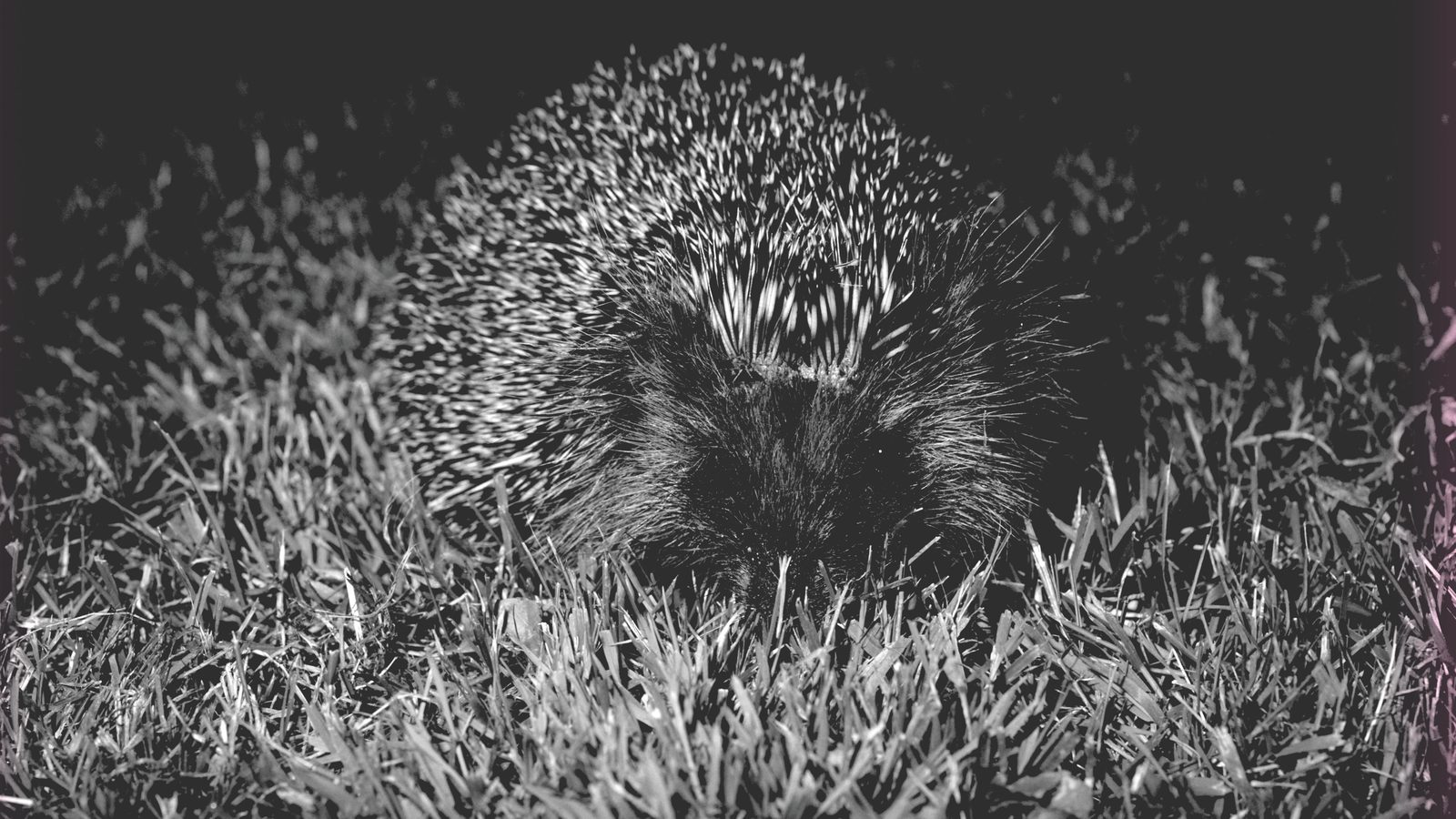

My acquaintance with the hedgehog began at an early age. We lived in a big old house with a large garden entirely surrounded by a brick wall, so harmless animals we wished to keep as pets could be safely given the run of the entire place.
As the fowl were kept in runs, my father always liked to have a hedgehog or two running loose to keep down slugs, snails and caterpillars, which they did so effectively that we often collected bags of snails elsewhere to add to their diet. They soon became quite tame and used to come to the back door at night to consume saucers of bread and milk that were placed there for them.

The cellars, the lobsters and the art of keeping game
The house had the best run of cellars of any in which I’ve lived. These, and the kitchen, harboured great numbers of cockroaches. In the summer and autumn the hedgehogs were collected periodically and given the freedom of the ground floor for two or three days, during which time they made an effective clearance of these pests.
Looking back at those days in cold blood, I wonder we ever kept a “domestic” for much longer than a week. As well as an endless run of pets, which included a pelican that was kept loose in the garden and would sometimes come into the kitchen, my father had several rather odd practices, which would hardly commend themselves today.
One of these was a habit of bringing home live lobsters, which he would turn loose in the coal cellar. Here, they remained quite healthy for two or three days. It was a source of great excitement when he went to find a lobster in a pitch-dark cellar with the aid of a candle – needless to say, oil lamps and candles were our only source of illumination. It was no easy matter to retrieve a creature almost the same colour as the coal from some hollow in which it was ensconced.
Occasionally, to our intense joy, our parent would trip over a lump and drop the candlestick and utter forbidden words as he stumbled about in the dark, striking matches to relight it.
Incidentally, he had one cellar in which he reduced the art of keeping game to a perfection I never can hope to meet again. In these days of refrigerators and other gadgets, it is rarely that I get a bird in the state to which all Father’s were brought – absolutely tender with just the suspicion of highness. I get an odd bird that recalls the past, but it always seems to me a fluke I cannot hope to repeat, like a high duck flighting in the late dusk.
Hedgehogs had only one drawback as pets: fleas. But as they did not leave them unless they were handled, they were not held as of much account. I have never known an animal so infested with fleas as the hedgehog, with the exception of one or two bats.
A hedgehog with a regular beat
Though the hedgehog wanders freely at times, it is usually of fairly regular habits, and sometimes has a fixed beat. When some years ago I lived in a cottage in the country, I used to treacle posts in a big disused chalk pit at the bottom of the garden to attract moths. I went around these the first time in the evening of late dusk and in June one year I met a half-grown hedgehog, just at the mouth of the pit.
For the rest of the year to the end of October, I always met this individual, who grew steadily, in the same place, at the same period of dusk, which suggested that he had a regular beat he began to patrol at a certain hour. I left the house that winter, so I do not know if he reappeared in the spring.
What a newborn hedgehog looks like
Here, hedgehogs are common and are frequently found run over by cars, even in completely built-up areas. The newborn hedgehog is a curious little creature. A few years ago, my golden cocker was found making furious attempts to get under an old disused beehive in the garden. So I shifted it and found underneath a large female hedgehog and five newborns. They were almost cylindrical in shape and looked as if they had been cut out of raw meat with rudimentary prickles scarcely visible on the back.
I replaced the hive and put some saucers of bread and milk under it. In a few days the infants changed shape to become like tiny specimens of the adult, but with pinkish skin and soft white bristles.
Hedgehogs, partridge nests and the odd badger
I am quite fond of hedgehogs. And though I know that they make short work of a nest of partridge eggs if they come across them – anyone who has seen a hedgehog crack a big snail cannot doubt this – most partridges are so “grubbed and stubbed”. As I think it most unlikely that the hedgehog would find any of the three or four nests in a 20-acre grass field, I invariably call off my spaniel and move on, when she turns one out in the hedge bank.
The hedgehog does not have many natural enemies in this country except badger and fox. Some weeks ago, my friend Mr Sparrow, the well-known veterinary surgeon at Rockford, heard a hideous noise on his lawn at about 2am. He went downstairs and switched on the lights and saw a large badger only 10ft away nosing a hedgehog.
The badger, of course, bolted and Mr Sparrow, to make certain which animal was making the noise, prodded the hedgehog with the corner of a broom. The hedgehog was apparently unhurt and wandered off later of its own accord.
This article by HC Huggins was first published in the 1 September 1951 issue of Shooting Times.
Frequently asked questions
Do hedgehogs take gamebird eggs?
They will make short work of a nest of partridge eggs if they come across one. Huggins’s argument is that a hedgehog is unlikely to find the three or four nests in a 20-acre grass field, which is why he calls his spaniel off rather than having one dealt with.
What natural enemies does a hedgehog have in Britain?
Very few, beyond the badger and the fox.
Why were hedgehogs kept loose around a house?
To clear pests. Loose in the garden they kept down slugs, snails and caterpillars; brought inside for two or three days at a time they worked through the cockroaches in the kitchen and cellars.
Related Articles

Sight but not salvation: telescopic sights in 1951
Telescopic sights may magnify the target, but they won't magically transform mediocre marksmen into excellent Shots, warned LR James in 1951
By Shooting Times | 4 September 2026

Simply coincidental? The country mysteries that cannot be explained
A self-opening door in a keeper's cottage, phantom footsteps on an island at Wadhurst Lake and a "railway carriage in the sky" over Leighton Buzzard convince Fred J Taylor that some country happenings...
By Shooting Times | 3 September 2026
Get the latest news delivered direct to your door
Subscribe to Shooting Times & Country
Discover the ultimate companion for fieldsports enthusiasts with Shooting Times & Country Magazine, the UK’s leading weekly publication that has been at the forefront of shooting culture since 1882. Subscribers gain access to expert tips, comprehensive gear reviews, seasonal advice and a vibrant community of like-minded shooters.
Save on shop price when you subscribe with weekly issues featuring in-depth articles on gundog training, exclusive member offers and access to the digital back issue library. A Shooting Times & Country subscription is more than a magazine, don’t just read about the countryside; immerse yourself in its most authoritative and engaging publication.