

Nocpix NITE Pro D50R review: 8K day/night riflescope tested from daylight to dark
Ed Jackson tests Nocpix's £999 NITE Pro D50R on muntjac and roe from a high seat, from daylight through dusk to full darkness, measuring how far it identifies deer at night and how it compares with the Nite D70R

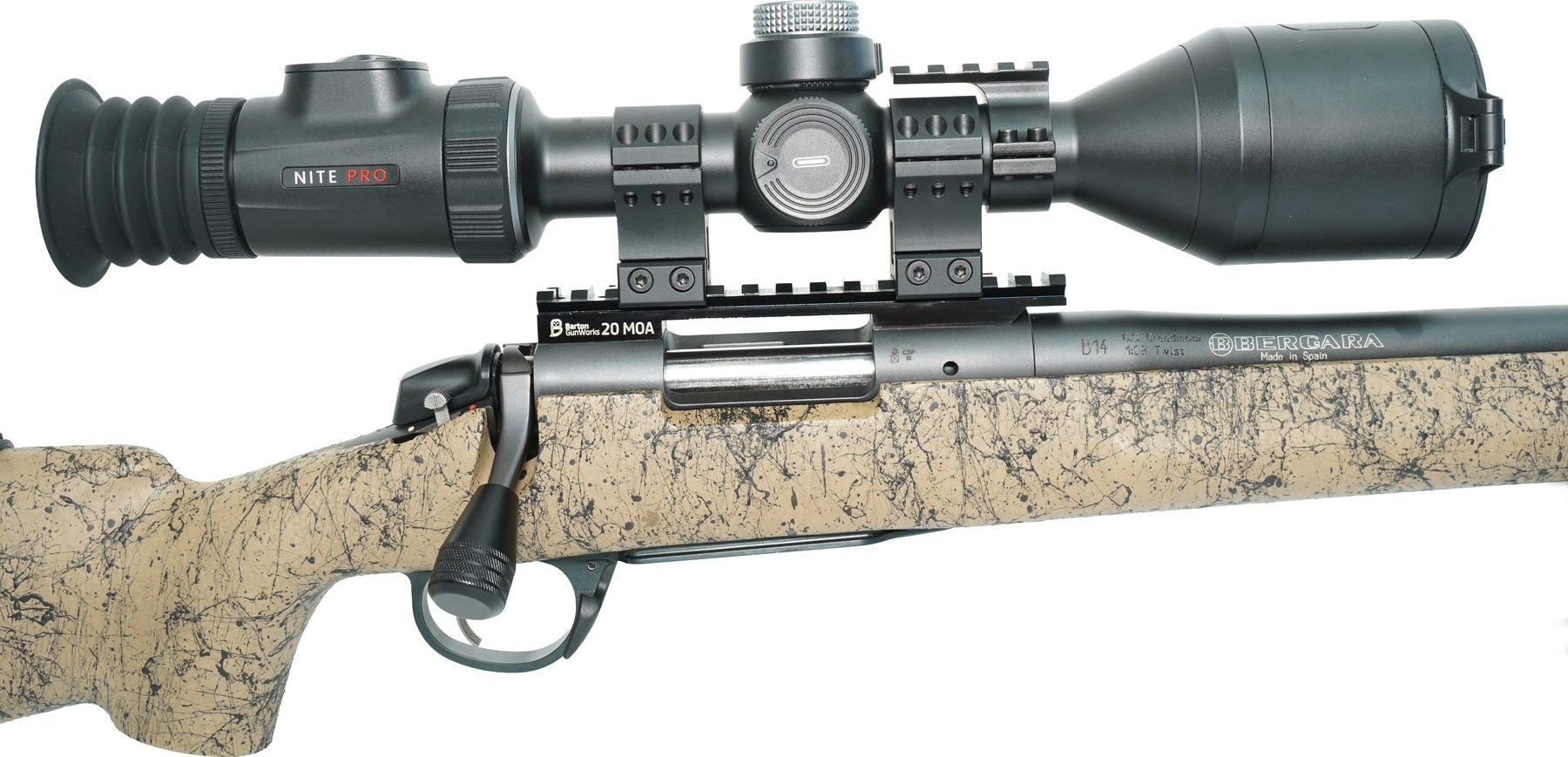
The Nocpix NITE Pro D50R is a £999 digital day/night riflescope with an 8K detector and a laser rangefinder you can line up with the reticle yourself. In my tests on muntjac and roe, it gave superb low-light performance and clear identification to around 180m in the dark with an £80 850nm illuminator. Nocpix has made it simple: you get more, but you pay more, and at around 980g it is heavier than some rivals.
Digital day/night scopes have earned a place on a lot of UK rifles, mine included, because a single optic can take you from broad daylight, through dusk and, with an illuminator fitted, into complete darkness. It’s also a crowded market, so any newcomer needs to give shooters a good reason to look its way.
Nocpix only moved into digital riflescopes this year, and with the new NITE Pro D50R it appears to have thrown the kitchen sink at the category. Top of the list is an 8K detector, which Nocpix bills as a world first for a digital riflescope, and the company is clearly keen to carve out a slot for itself. What I wanted to find out is how it stacks up against the competition.
At £999, the NITE Pro slips in just under the four-figure mark, but that still puts it at a higher price point than some of its rivals, so everything Nocpix has packed into it needs to earn its keep.
Verdict at a glance
You get more, but you pay more – and the daylight image is the closest yet to a traditional scope
Best for: deer stalkers who want one optic from daylight through legal light and, with an IR torch, into the dark.
Most impressed by: the crisp 8K daytime image, superb low-light performance and a rangefinder you can line up with the reticle.
Least impressed by: the fiddly screw-on battery cap and a zoom that is a touch slow to respond.
Price as tested: £999 (October 2026).
What we measured in the field
| Test | Result |
|---|---|
| Clear identification at night | Around 180m with an 850nm illuminator (around £80) |
| Hares among rabbits, at night | Identified at 170 to 180m |
| Muntjac sexed as a doe, at night | 140m |
| Daylight ranging | Cock pheasant in hedge shadow ranged at over 400m, identified at 36x |
| Minimum focus | Around 1m |
| Battery | Five hours’ continuous use without trouble |
| Start-up | A little longer than the quoted one second |
| Field of view at 3x | Wide enough to show a 24in barrel’s moderator, blurred, at the bottom of the picture |
How we tested
Tested by Ed Jackson, Group Reviews Editor at Time Well Spent Group
Ed mounted the NITE Pro on his 6.5 Creedmoor Bergara with a 24in barrel and moderator, zeroed it at 100m and used it from a high seat on his own ground over several hours of scanning, in daylight, through dusk and into full darkness with an 850nm illuminator costing around £80. He judged it against the Nocpix Ace 2 and the other Nocpix optics he has tested recently. Tested in September and October 2026.
Nocpix NITE Pro D50R specification
| Specification | Detail |
|---|---|
| Name | Nocpix NITE Pro D50R digital day/night riflescope |
| Price (RRP) | £999 (checked October 2026) |
| Detector | 8000×6000 (8K), 60Hz |
| Objective | 50mm, F1.25 |
| Magnification | 3x to 36x |
| Field of view | 8.8°x7.4° (15.4x13m at 100m) |
| Display | 2560×2560 AMOLED, 1.03in |
| Eye relief / exit pupil | 60mm / 6mm |
| Dioptre | -4 to +4 |
| Zeroing clicks | 0.3 MOA |
| Minimum focus | Around 1m (measured) |
| Start-up | One second (quoted); a little longer in our test |
| Laser rangefinder | Class 1, 1,200m, built into the objective bell, user-alignable to the reticle |
| Ballistics | Onboard ballistic calculator; profiles built in the Nocpix app over Wi-Fi |
| Power | 3,850mAh internal battery plus replaceable 18650; at least six hours at 22°C (quoted); five hours’ continuous use in our test without trouble |
| Storage | 64GB for photos and video, microphone support |
| Body | Magnesium alloy, IP67, -20°C to +50°C, rated to 7,000J of recoil |
| Tube | 30mm |
| Dimensions | 402x93x81mm |
| Weight | Around 980g |
| IR illuminator | Not supplied |
| Contact | nocpix.uk |
Prices are RRP at the time of publication and may have changed.
Inside the NITE Pro: 8K detector, display and built-in rangefinder
At the heart of the NITE Pro is an 8000×6000 detector running at 60Hz, hence Nocpix’s 8K billing, behind a 50mm F1.25 lens. Magnification runs from 3x to 36x, and the field of view is quoted at 8.8°x7.4°, or 15.4x13m at 100m. You view it all on a 2560×2560 AMOLED display, which Nocpix lists as 1.03in, with 60mm of eye relief, a 6mm exit pupil and dioptre adjustment from -4 to +4. The Light+ algorithm is said to improve performance as the light fades. Zeroing is in 0.3 MOA clicks, and Nocpix quotes a one-second start-up, although I found it takes a little longer than this.
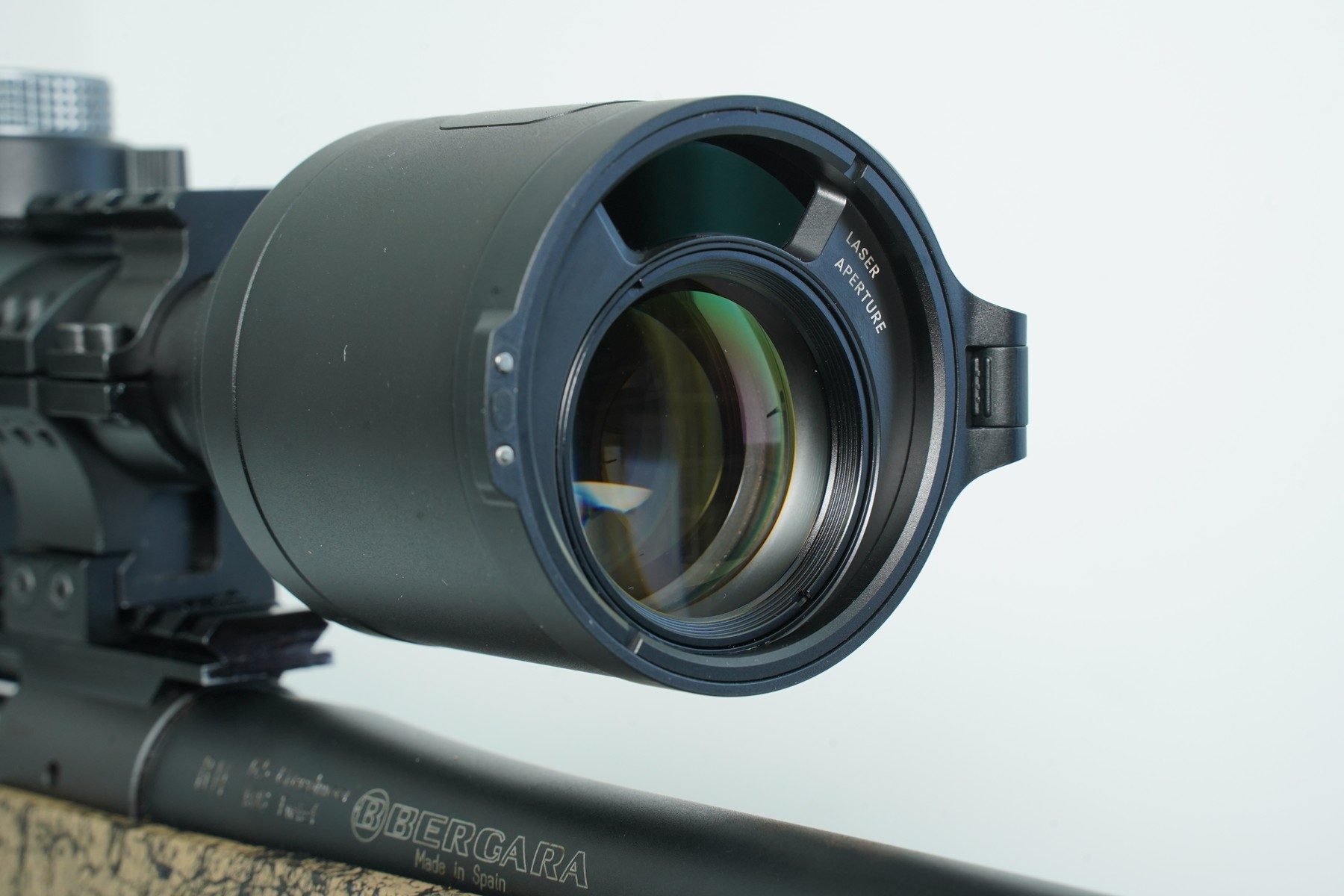
The Class 1 laser rangefinder is built into the objective bell and rated to 1,200m. It feeds an onboard ballistic calculator, and profiles can be built in the Nocpix app, which connects over Wi-Fi, before being sent to the scope.
Power comes from a 3,850mAh internal battery and a replaceable 18650, with a quoted runtime of at least six hours at 22°C. There’s 64GB of onboard storage for photos and video, plus microphone support, and the magnesium-alloy body is rated IP67, for use from -20°C to +50°C and to withstand 7,000J of recoil. It weighs around 980g and measures 402x93x81mm, and the 30mm tube takes standard rings. No illuminator is supplied, so budget for an external IR torch for full darkness.
Can you line up the NITE Pro’s rangefinder with the reticle?
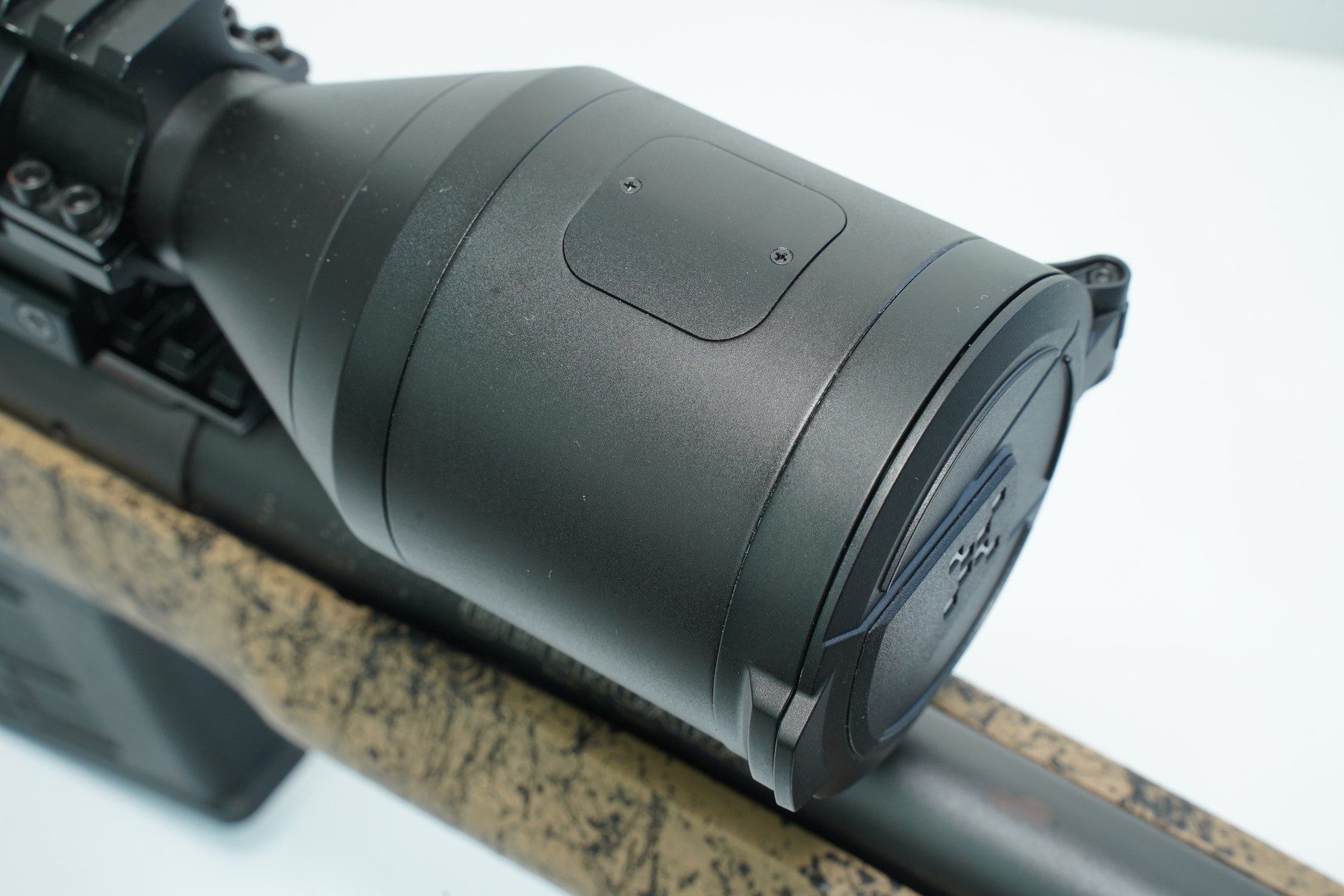
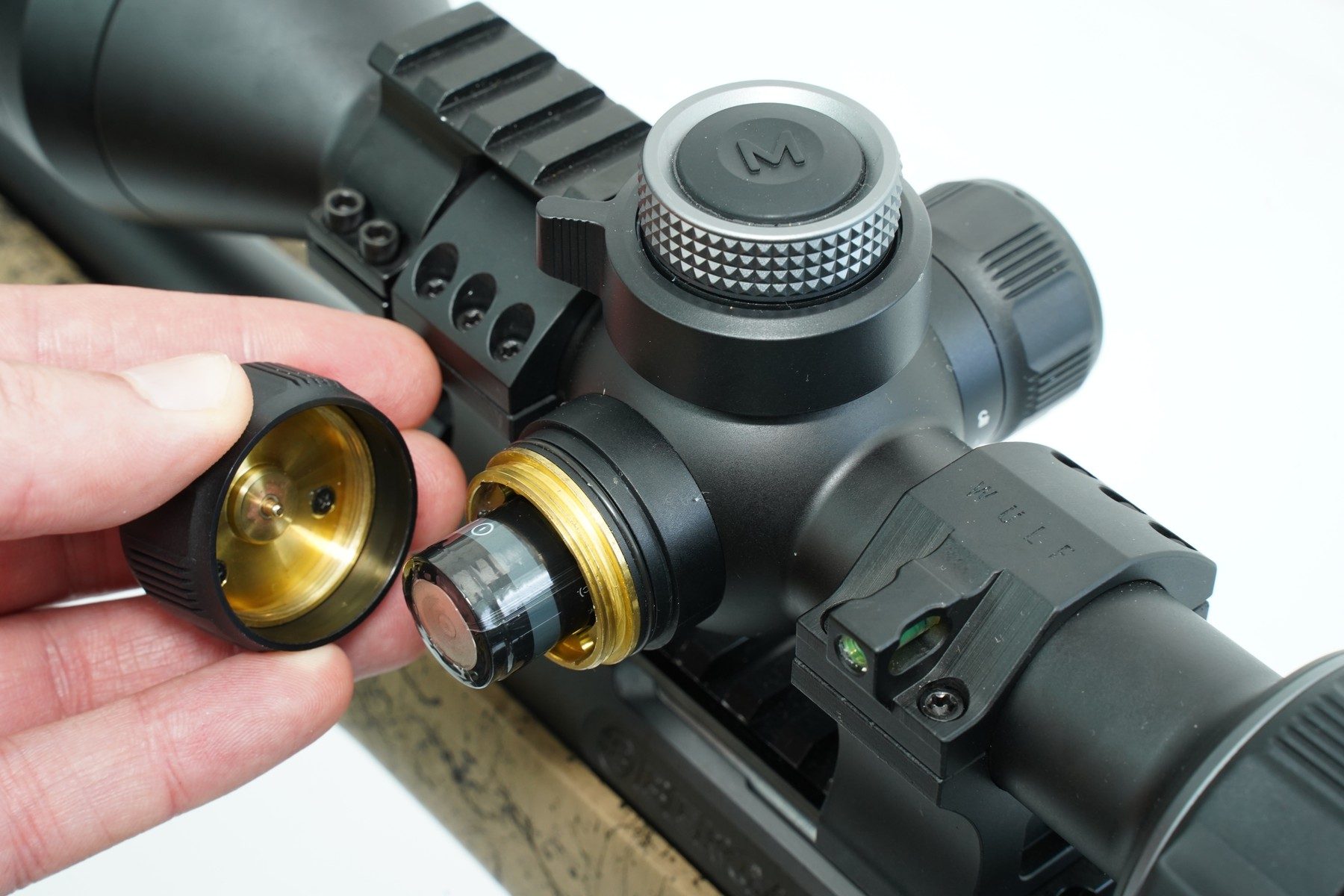
Yes – once you have zeroed, you can move the laser onto the centre of the reticle yourself, which fixes a long-standing gripe with integrated rangefinders. The laser is aligned at the factory, but zeroing moves the reticle, so the two rarely finish in the same place, and on some scopes the gap is big enough for the laser’s aim point to vanish off screen at higher magnification. Here, once you have zeroed with your chosen ammunition, you remove a cover on top of the objective bell, slot the supplied tool into the recess beneath and move the laser onto the centre of the reticle if necessary.
During my test I forgot to do it at first, which was a useful reminder of how irritating it is to aim off for a reading, and of what a big advantage it is once the two are lined up. It’s safer, and much, much faster.
Controls and handling: an Ace 2 layout with central focus
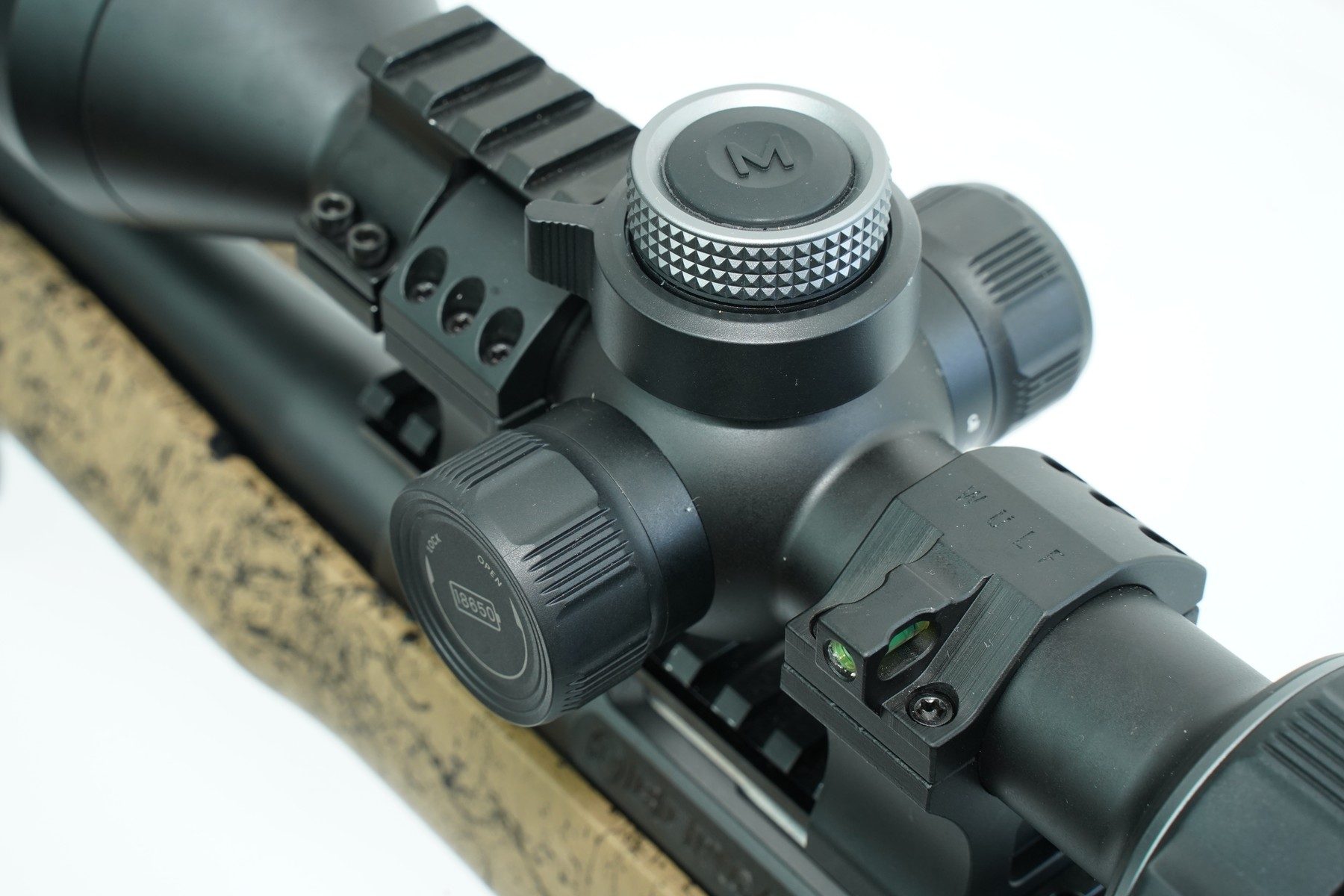
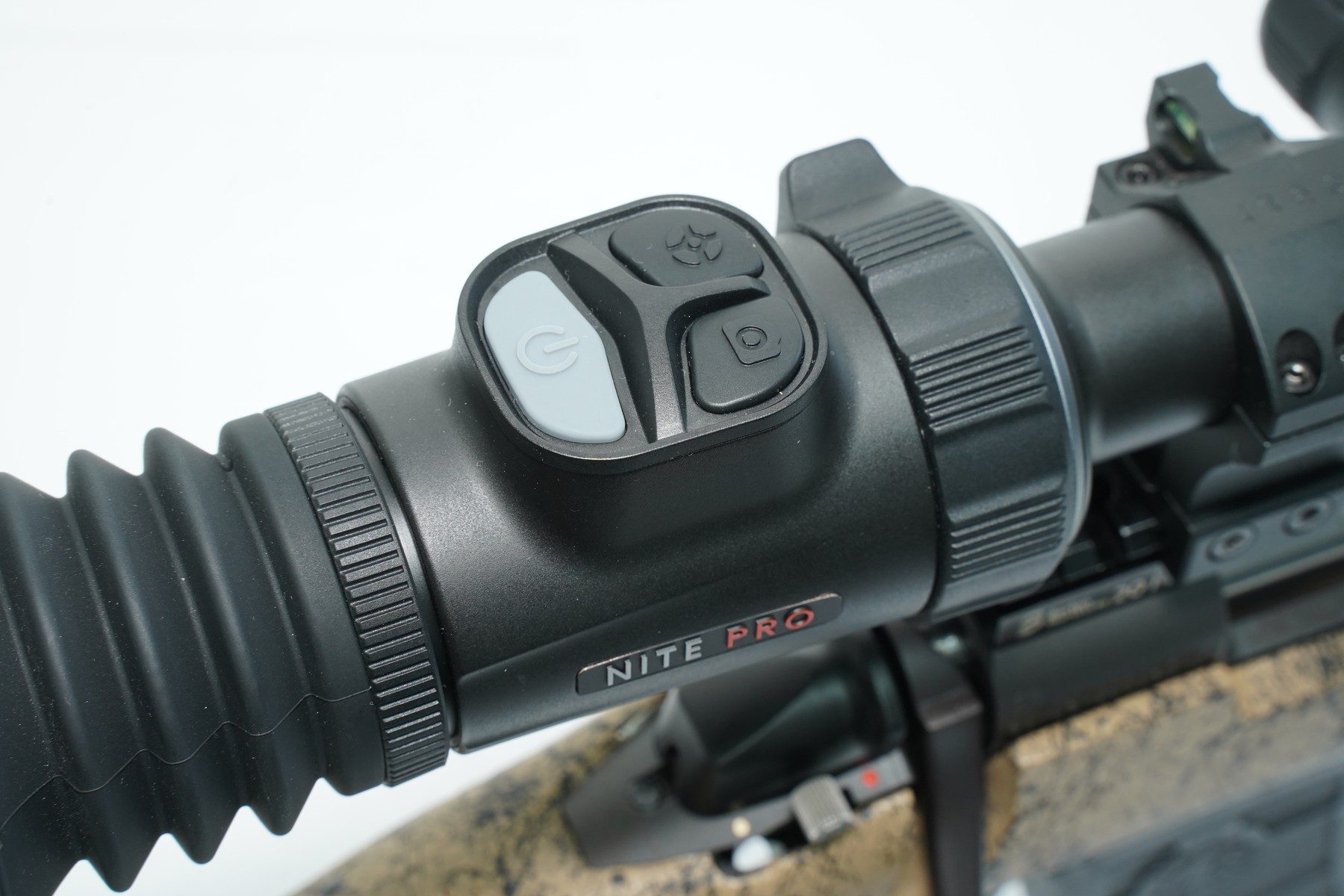
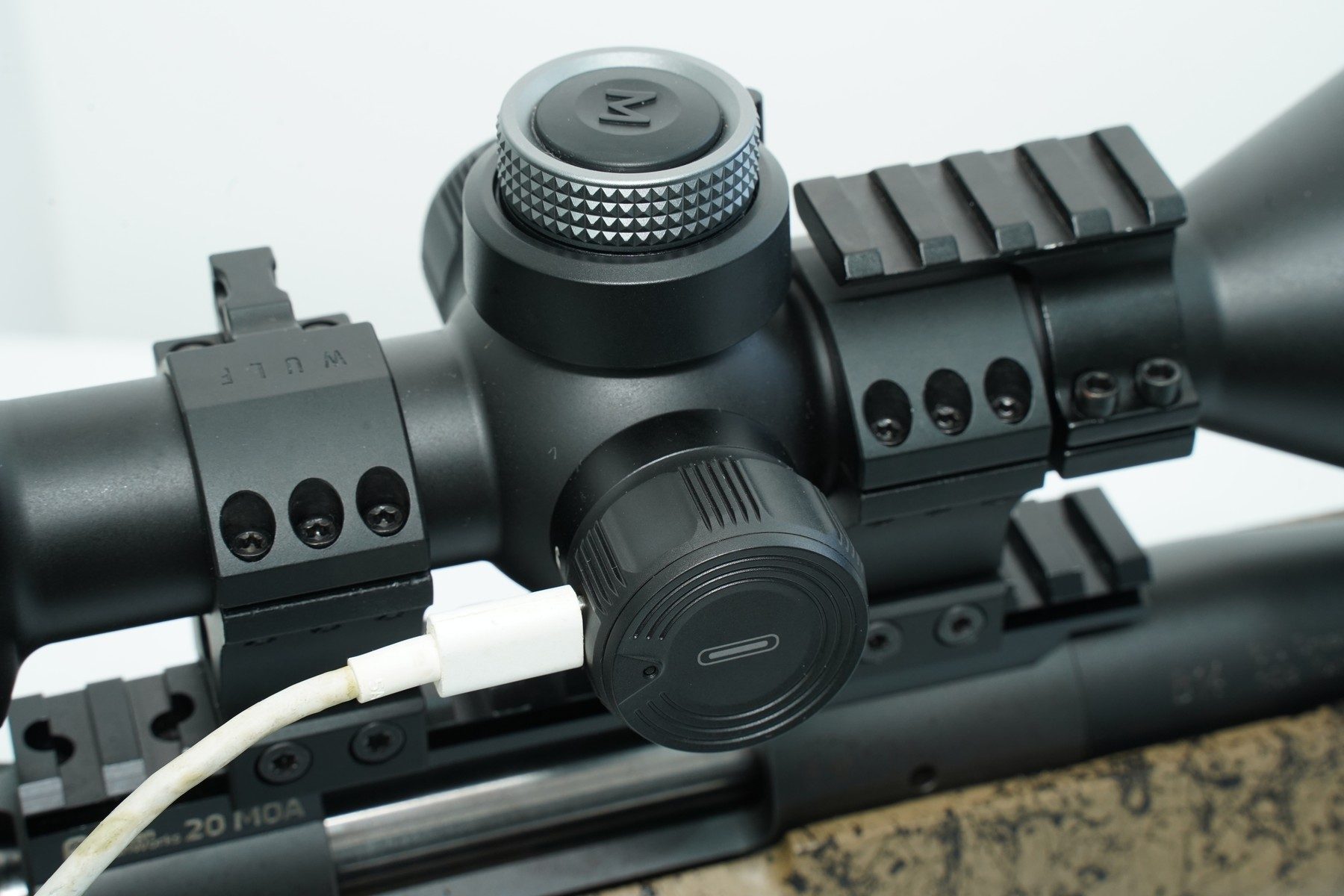
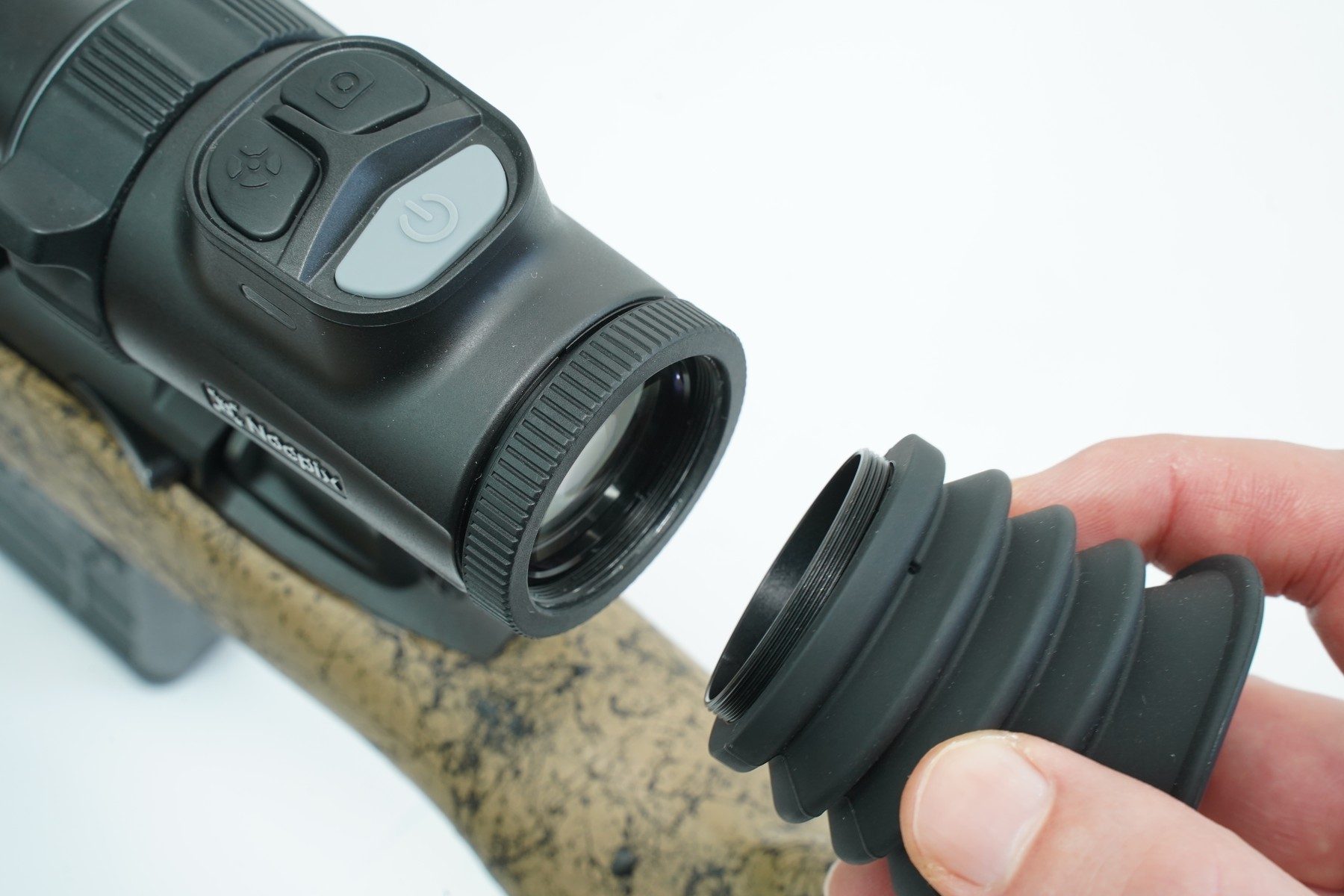
Ace 2 owners will recognise much of the layout. The top turret carries the menu button, with a collar beneath for navigation. Because focus is handled centrally, with a removable plastic throw lever to help, the NITE Pro is ambidextrous. The USB-C port sits in the right-hand turret behind a rotating cover, while the left-hand turret houses the battery, closed by a screw-on cap rather than the sprung push-button lid used on the Ace 2. Magnification is set via a traditional, stepless zoom ring with a small raised fin. In the field, the central focus was quick and forgiving, and dividers between the power, photo/video and rangefinder buttons on top of the eyepiece mean you rarely press the wrong one. The menus are logical, so you’re never hunting for a setting, and the bellowed eyecup is screw-in and removable.
How good is the Nocpix NITE Pro in daylight and low light?
Very good: the 8K detector gives a crisp daytime image and a beautifully clear reticle, and the low-light performance is superb, letting you make the most of legal light. With deer stalking in mind, I wanted to see how the NITE Pro coped across a stalker’s day, so it went onto my 6.5 Creedmoor Bergara and, as with the other Nocpix kit I’ve tested recently, I settled into a familiar high seat in the hope of a muntjac or two.
Zeroing at 100m was made easier by that crisp image and reticle, a growing Nocpix trait. Both help you achieve a precise zero, crucial for confidence in the field, and for me this is where the extra definition pays off and the 8K detector shows its value.
I spent hours scanning every square inch in front of me, working through the magnification range, the settings and the image modes, which include ‘Auto’, ‘Day’, ‘Dusk’, ‘Moon’ (night), ‘Yellow’ and ‘Green’. My rifle wears a 24in barrel and a fairly large moderator, and I know a scope has a low base magnification and a wide field of view when I can see the moderator, blurred, at the bottom of the picture, as I could here. Field of view matters to me, as I shoot a lot of muntjac at close range in woodland, often spotting them first through a thermal monocular or a multi-spectrum binocular. They rarely give you more than a fleeting moment, so anything that slows the transition from thermal to scope costs you. Close work is no problem either, as I found it would focus down to around 1m, which is amazing.
In daylight, the rangefinder, which proved accurate and easy to use, put a pheasant lurking in the shadow of a hedge to my left at over 400m, and once I’d wound the magnification to 36x, I could identify it as a cock bird. The roe does came out in force, seemingly knowing they were off the menu, and I spent much of my stint watching them, with extra detail and colour still showing as the light faded. As so often with digital optics, I used ‘Day’ mode with my own brightness and contrast settings to maximise the image.
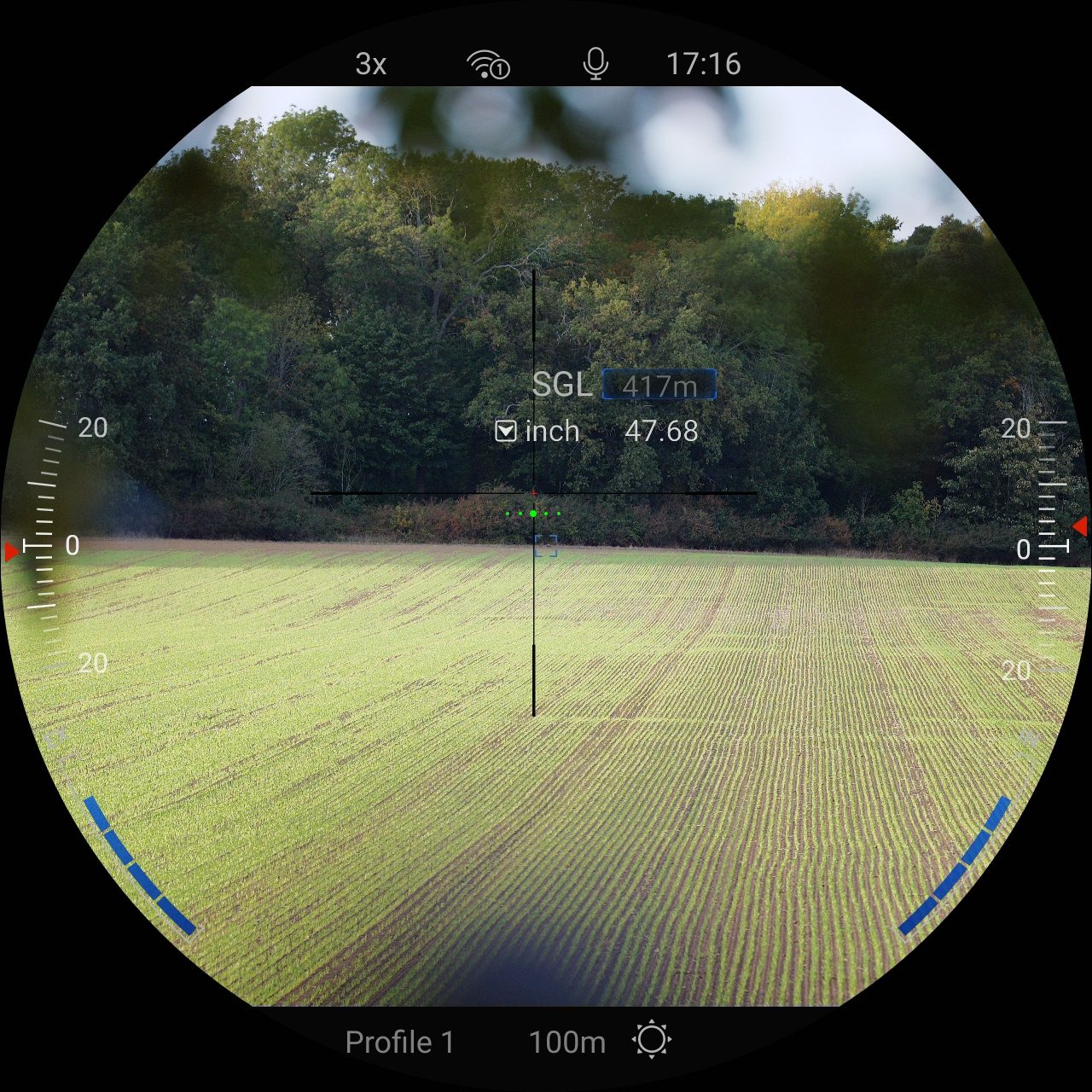
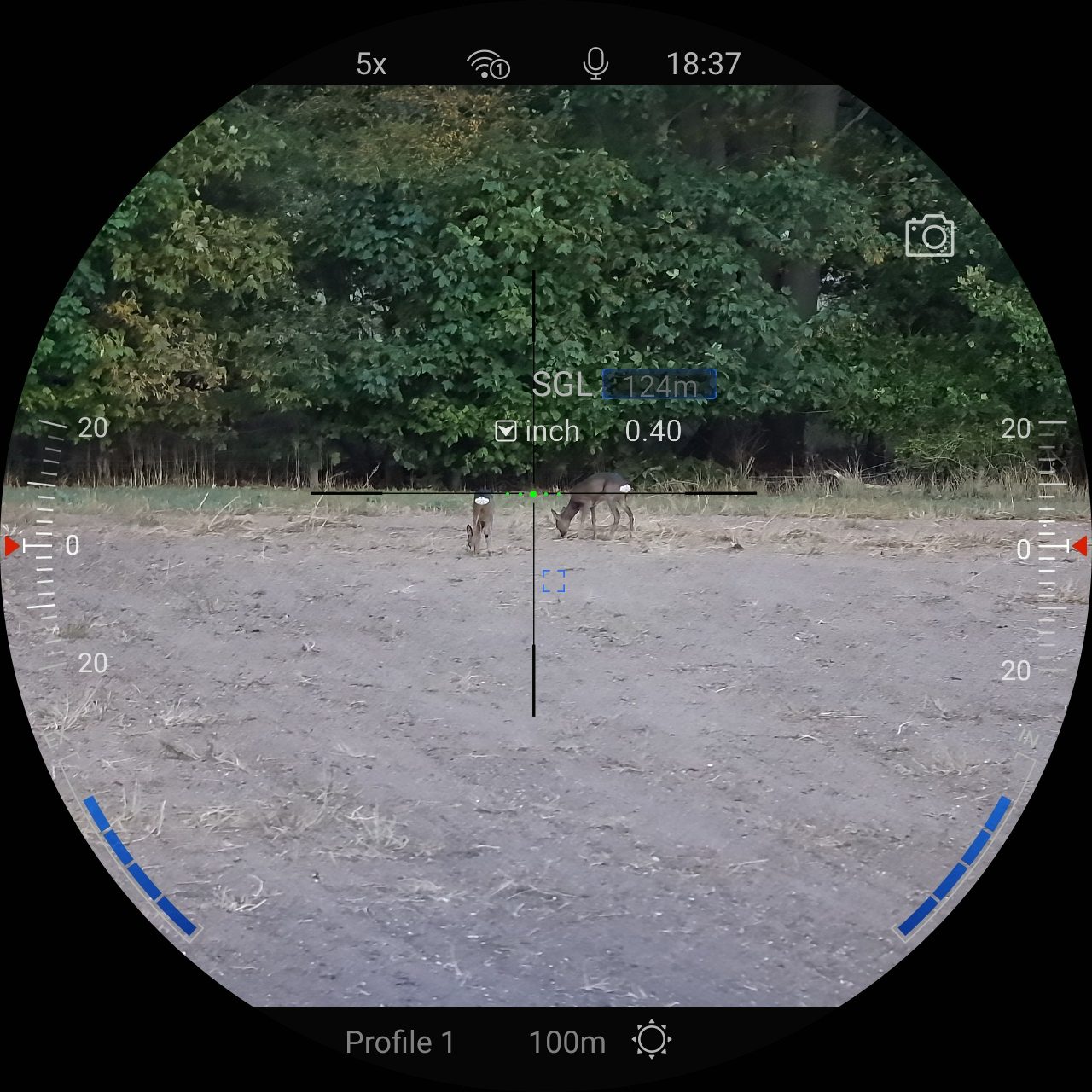
Choosing the right image mode as the light fades
Cleverly, in ‘Day’ mode, the NITE Pro shifts its processing at 12x to deliver a sharper picture. As the light goes, that comes with a noticeable step down in brightness, but switch to ‘Dusk’ or ‘Moon’ and the step doesn’t happen, so it’s simply a case of picking the right mode.
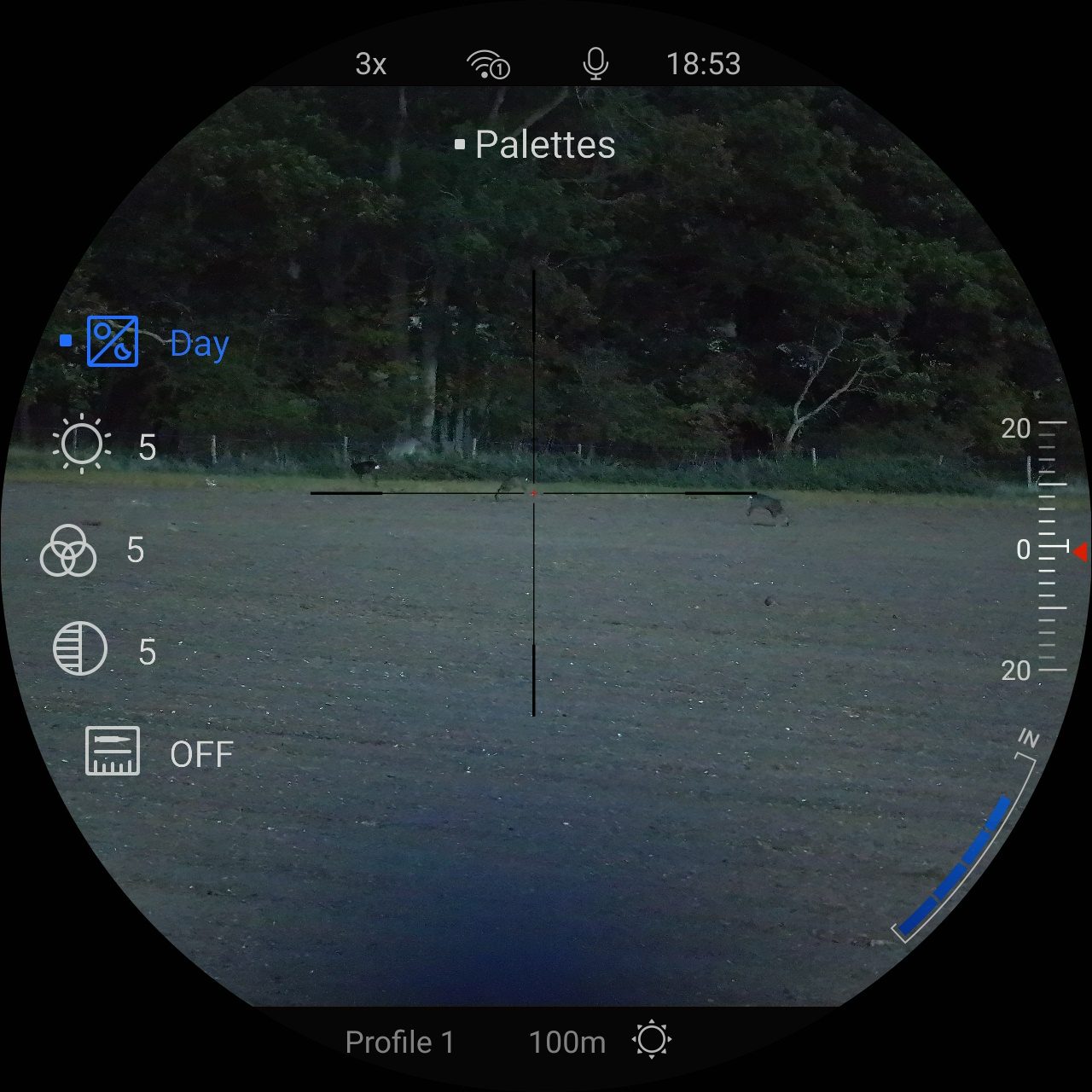
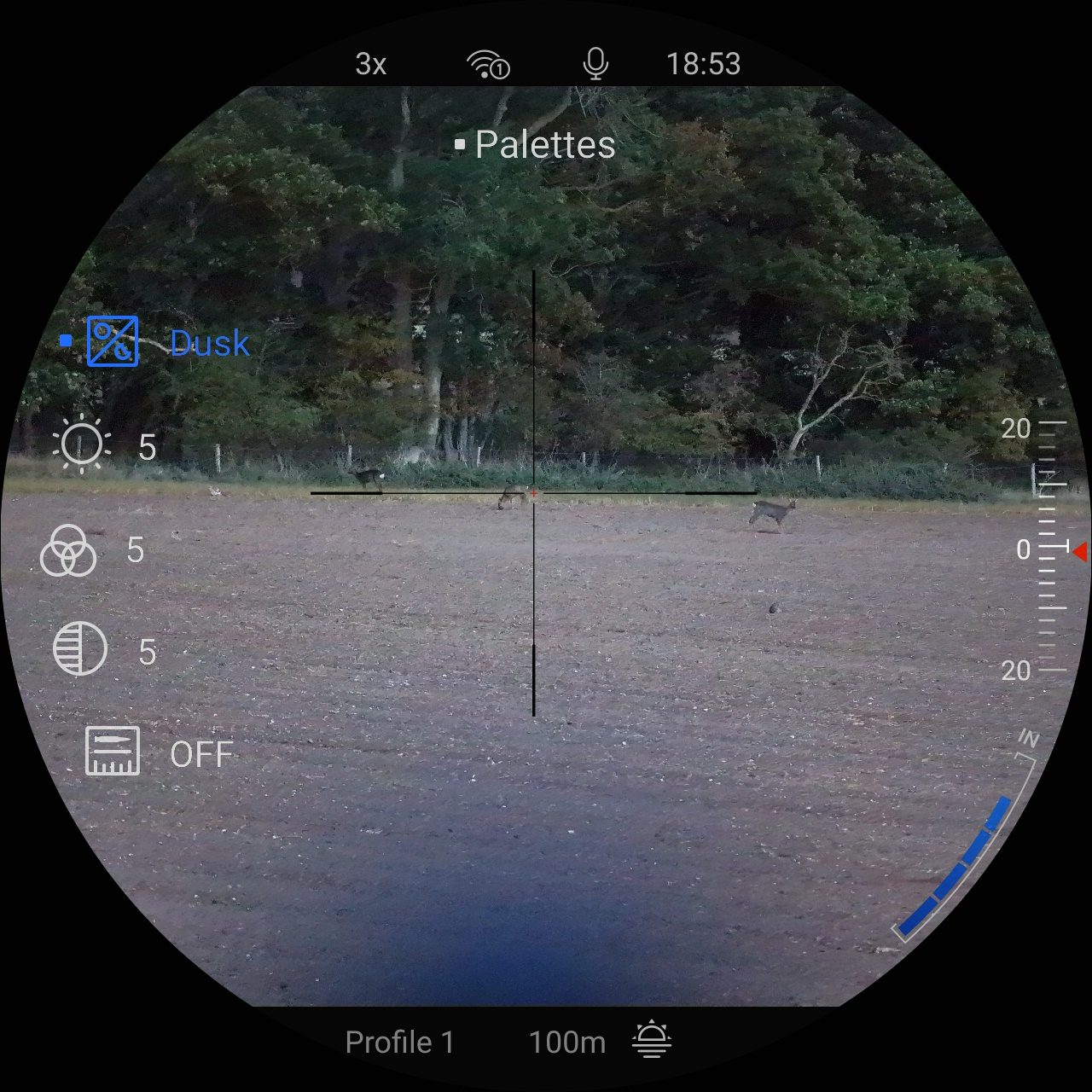
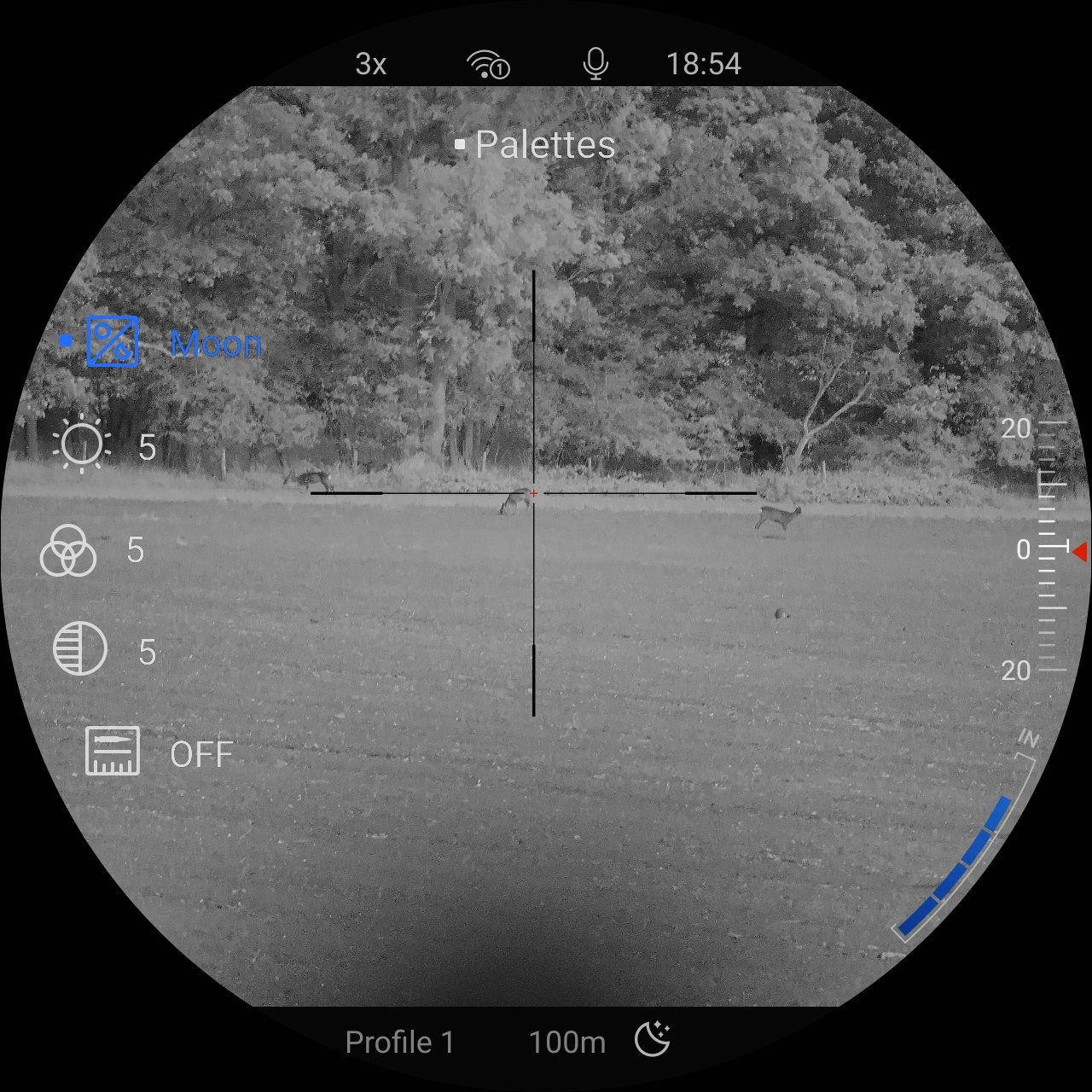
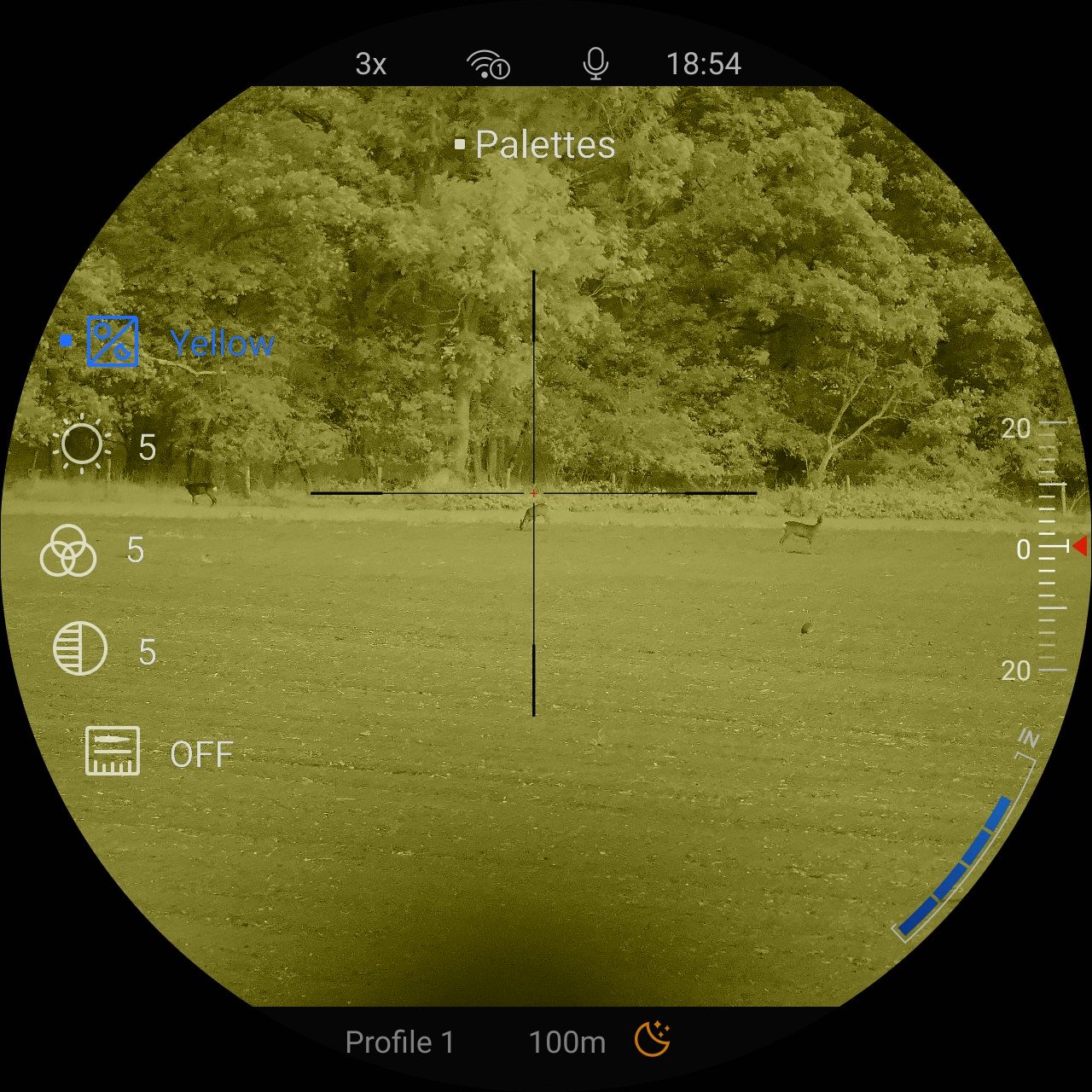
The same scene a minute apart in four of the NITE Pro’s image modes. As dusk arrives, just pick your mode
How far can you identify deer at night with the NITE Pro?
With an 850nm illuminator costing around £80, I’d say you’re good to around 180m for a clear identification. You can see animals much further out, but I picked out hares among rabbits at 170 to 180m and could easily tell a muntjac was a doe at 140m. As always, your choice of illuminator makes a big difference, and I found myself regularly fine-tuning its brightness to get the best from the image.
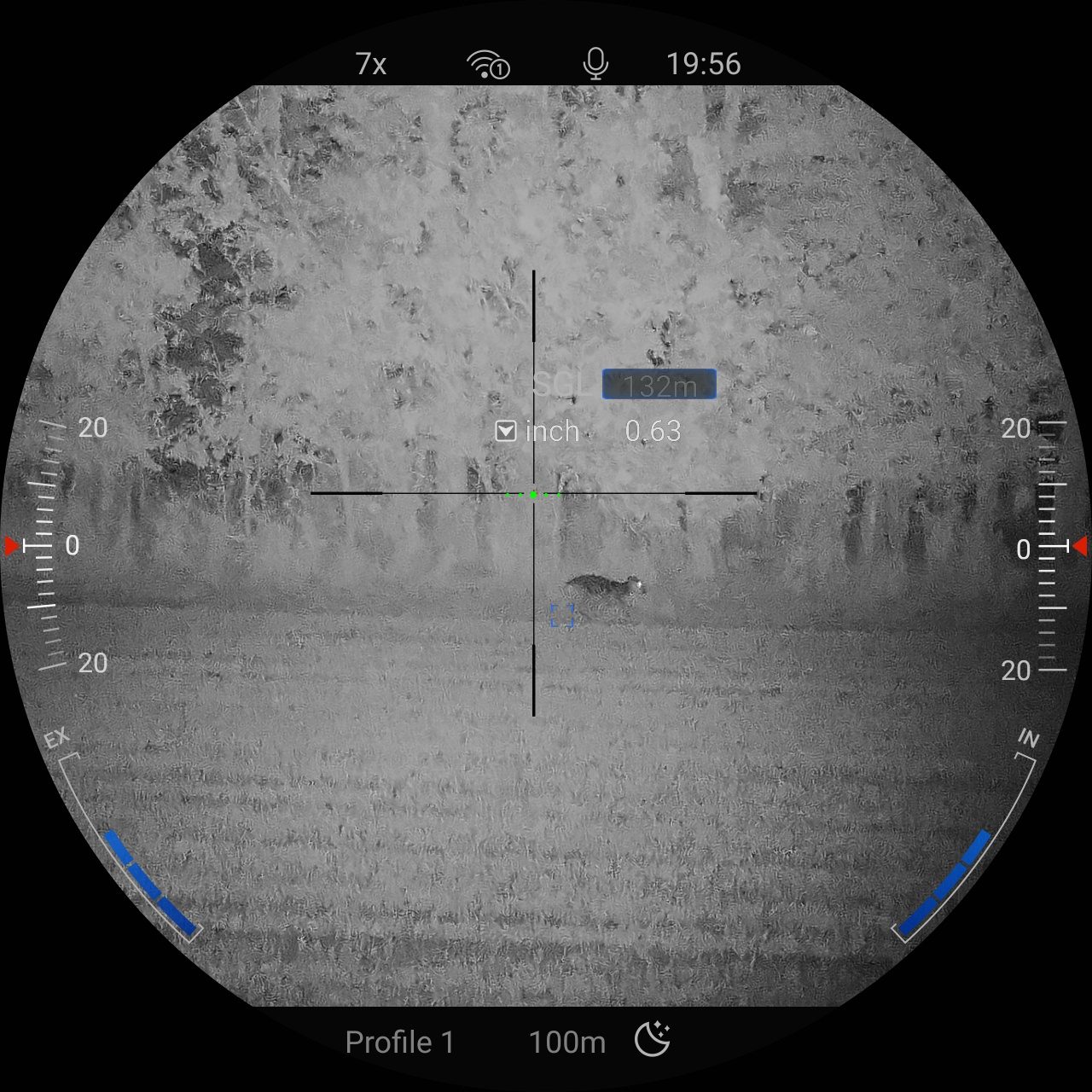
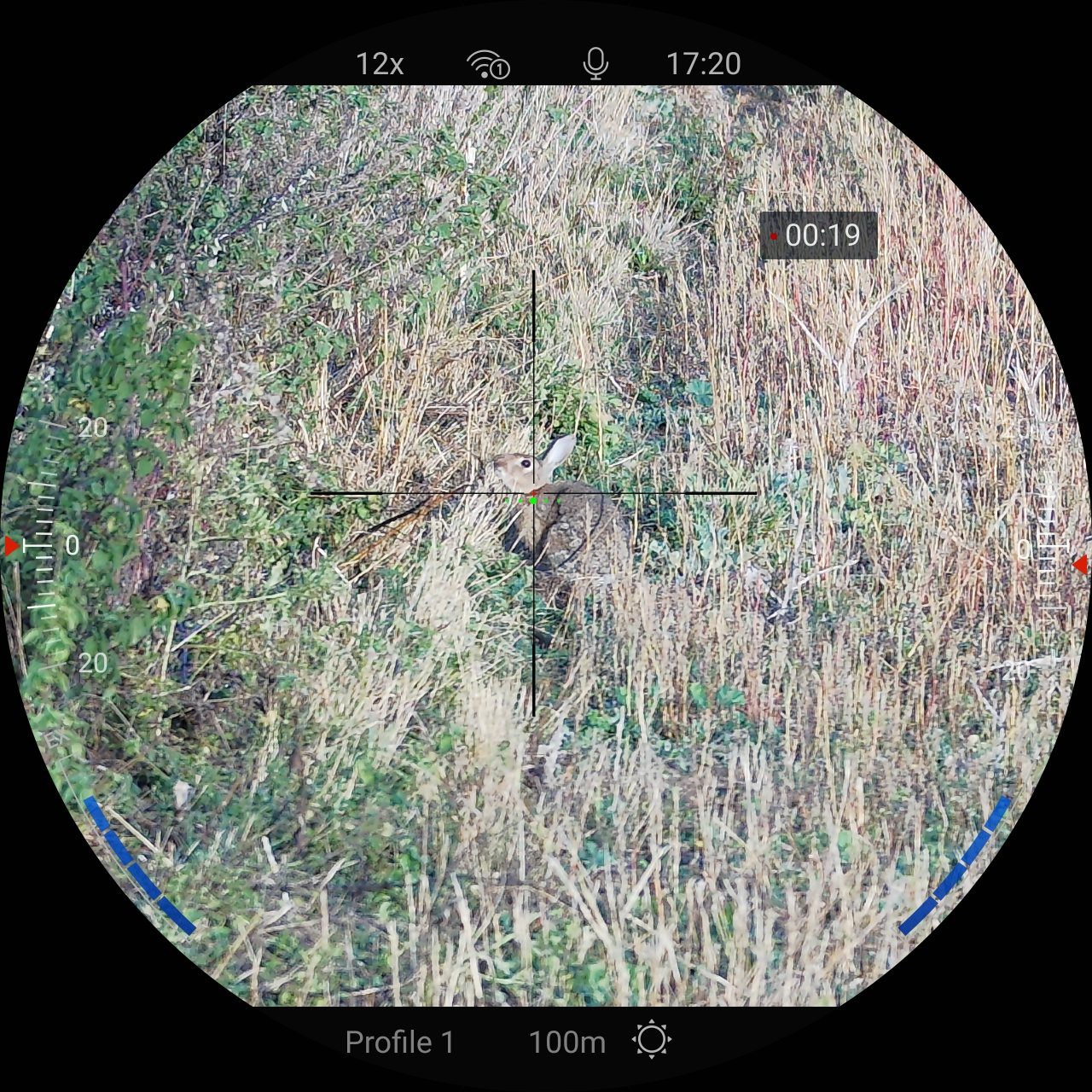
NITE Pro D50R or Nite D70R: which Nocpix day/night scope should you buy?
The NITE Pro costs £200 more than Nocpix’s other digital day/night scope, the Nite D70R, and buys you a higher-resolution detector, a lower starting magnification with a wider field of view, a much closer minimum focus and a lighter body. The D70R keeps the sprung push-button battery lid that the NITE Pro swaps for a screw-on cap. The figures below come from our own reviews of both scopes.
| Nocpix NITE Pro D50R | Nocpix Nite D70R | |
|---|---|---|
| Price (RRP) | £999 | £799 |
| Sensor | 8000×6000 (8K) | 3536×3536 (4K) |
| Magnification | 3x to 36x | 5x to 40x |
| Field of view at 100m | 15.4x13m | 10m |
| Display | 2560×2560 AMOLED, 1.03in | 1920×1200 AMOLED, 0.72in |
| Minimum focus | Around 1m (measured) | 10m |
| Rangefinder | 1,200m, user-alignable to the reticle | 1,200m |
| Recording | Photos and video | Video only |
| Battery access | Screw-on cap | Sprung push-button lid |
| Weight | Around 980g | 1,055g |
Who should buy the NITE Pro, and who should look elsewhere
Buy it if
- you stalk deer and want the daylight image as close to a traditional scope as digital gets
- you shoot muntjac at close range in woodland, where the wide field of view at 3x and 1m minimum focus count
- you use a rangefinder a lot and want it lined up with the reticle
Look elsewhere if
- budget matters more than the extra resolution: you get more, but you pay more
- weight is a priority, at around 980g
- you want an illuminator in the box, as none is supplied
Nocpix NITE Pro D50R strengths and weaknesses
Strengths
- Excellent build quality
- Crisp 8K daytime image and a beautifully clear reticle for a precise zero
- Laser rangefinder can be aligned with the reticle after zeroing
- Central, ambidextrous focus and a traditional zoom ring
- Superb low-light performance
- Wide field of view at 3x, and focuses down to around 1m
- Battery goes in either way round
Weaknesses
- Screw-on battery cap makes battery changes a bit of a fiddle
- No spring-loaded objective cover
- Zoom is a touch slow to respond
- Zeroing profiles cannot be permanently named in the app
- At around 980g, heavier than some rivals
- No IR illuminator supplied
Verdict: more resolution, more control and a higher price
It’s clear Nocpix has thrown everything it has at the NITE Pro. Build quality is excellent, the 8K detector packs in maximum resolution, and the company seems to have listened to shooters, with central, ambidextrous focus, a traditional zoom collar and a built-in rangefinder that let it handle like a conventional scope. Regular software updates show it’s still listening, too, which is great to see. After five hours of continuous use, I’ve no doubt the battery will meet most shooters’ needs. The app did its job, albeit with a few quirks, and above all, it’s a thoroughly enjoyable scope to use.
Niggles are minor. I’m not sure why Nocpix swapped the Ace 2’s quick push-button battery lid for a screw-on cap, which is more secure, perhaps, but turns battery changes into a bit of a fiddle. On the plus side, the battery goes in either way round, a real bonus in the pitch black. A spring-loaded objective cover would speed things up in the field, and the zoom is a touch slow to respond, though that’s common to digital scopes. I also couldn’t permanently name my zeroing profiles in the app, which a future update will hopefully fix.
So, what do I think? Well, Nocpix has made it simple: you get more, but you pay more, and only you can decide whether the extra is worth it for your shooting. For me, any digital scope that gets the daylight image closer to that of a traditional scope has surely got to be the right choice.
Frequently asked questions
How much does the Nocpix NITE Pro D50R cost?
The NITE Pro D50R has a retail price of £999, checked in October 2026. Nocpix’s Nite D70R costs £799.
Does the Nocpix NITE Pro come with an IR illuminator?
No. An illuminator is not supplied, so budget for an external IR torch and a dive board to mount it if you want to use the scope in full darkness. Ed Jackson used an 850nm illuminator costing around £80 for his test.
Is the NITE Pro good for muntjac stalking in woodland?
Yes. Its 3x base magnification gives a wide field of view for snap identification at close range, and Ed Jackson found it would focus down to around 1m, so close work is no problem.
When is it legal to shoot deer in England and Wales?
Under section 3 of the Deer Act 1991, it is an offence in England and Wales to take or kill deer at night, which the Act defines as the period from one hour after sunset to one hour before sunrise, unless a licence or one of the Act’s exceptions applies. A day/night scope helps you make the most of legal light at dawn and dusk. Scotland and Northern Ireland have their own deer legislation, so check what applies where you shoot.
Where can I buy the Nocpix NITE Pro D50R in the UK?
Details of the NITE Pro and UK stockists are available from Nocpix at nocpix.uk.

About the author
Ed Jackson
Group reviews editor for Time Well Spent Group and a former editor of Gun Mart, Ed reviews guns and optics for ShootingUK and is responsible for sourcing the newest products to test, often before anyone else has had hands on them. He works across rifles, shotguns, airguns and thermal and night optics, from the Bergara Premier CIMA Pro to the AirMaks Arms Krait MKII bullpup, and fronts much of the group's video output, including the First Shots series of first impressions and the stand-by-stand coverage from the British Shooting Show at the NEC. He also visits ranges, gun shops and training providers for the titles, and rounds up the best of the new kit each year from the show floor.
 Closes 15 JanuaryWorth £129.90Win a pair of tickets to the British Shooting Show 2027Enter nowFree to enter
Related Articles
Five British game hampers for Christmas 2026, from £32 to £149.95
A letterbox of Dorset venison charcuterie, a frozen box for the cook and a wicker hamper for the whole house: Sporting Gun’s five picks, and why every one sold matters to the people who produce the ga...
By Matt Kidd | 5 November 2026
Inside the Le Chameau factory: how a wellington boot is made
Selena Barr flew to Casablanca to see where her wellies come from, and found a factory of 350 people, a secret rubber recipe, 150 steps to a single pair and a water bath test for every boot before it...
By News Desk | 4 November 2026
Get the latest news delivered direct to your door
Subscribe to Shooting Times & Country
Discover the ultimate companion for fieldsports enthusiasts with Shooting Times & Country Magazine, the UK’s leading weekly publication that has been at the forefront of shooting culture since 1882. Subscribers gain access to expert tips, comprehensive gear reviews, seasonal advice and a vibrant community of like-minded shooters.
Save on shop price when you subscribe with weekly issues featuring in-depth articles on gundog training, exclusive member offers and access to the digital back issue library. A Shooting Times & Country subscription is more than a magazine, don’t just read about the countryside; immerse yourself in its most authoritative and engaging publication.

