★ Your magazine. Your say. Complete our reader survey with a chance to win Jack Pyke kit worth £500! ★


Cut from a different cloth: the outdoor clothing brand with country roots and a conscience
Pete Tyjas meets Hooké founder Fred Campbell, whose conservation-led outdoor clothing has just launched in the UK, to talk country roots, eating what you catch and looking after the places we love

Photographs: Hooké
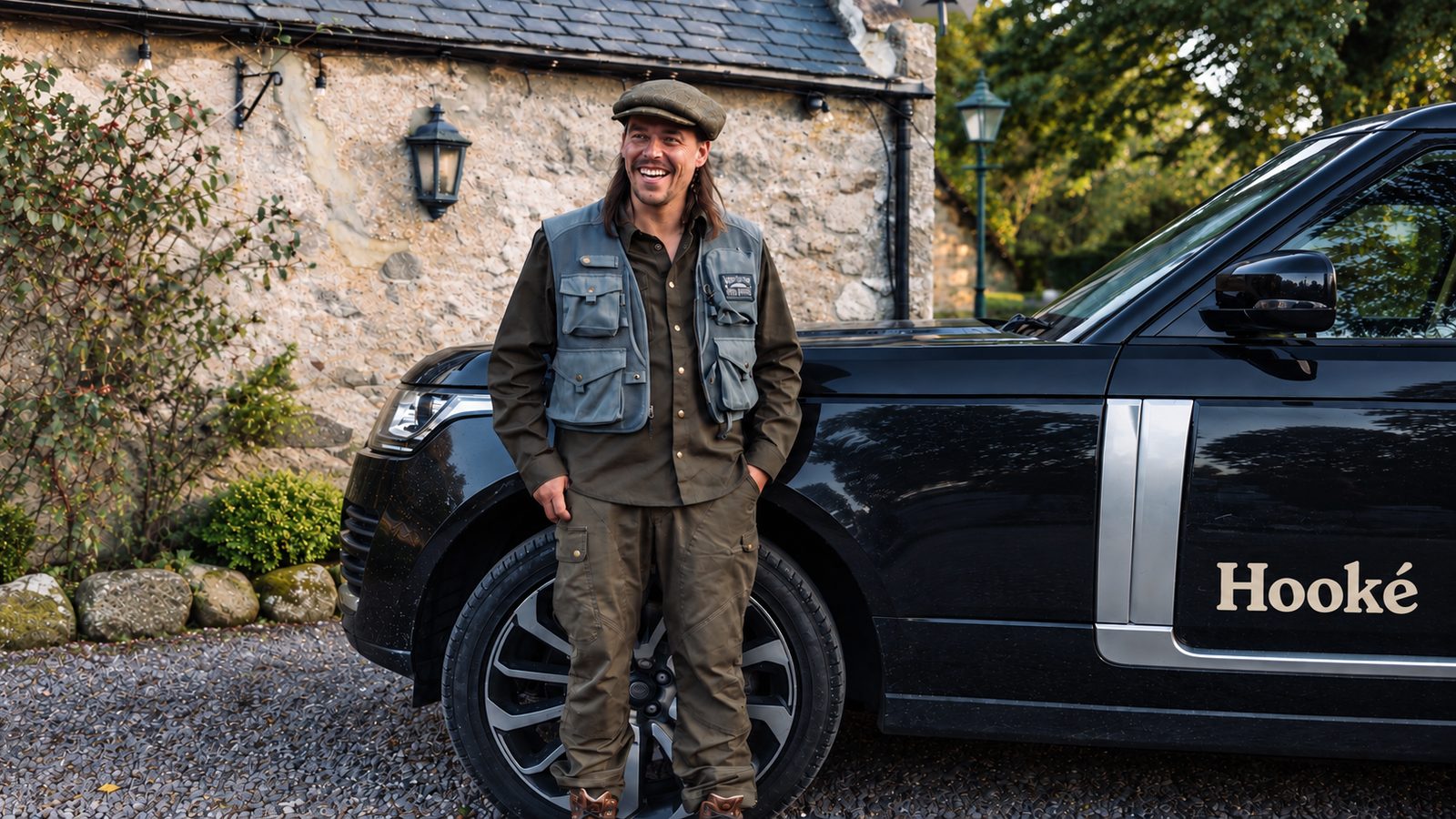
Fred and I are sharing a beer on a sunny Wiltshire airfield, with wing walkers taking off behind us. Wadswick Country Store is nearby which is where one of Hooké’s UK launches is being held, so an airfield it is. He is 10 days into a road trip that has brought him to the UK for the first time to film Scale of Change II and to launch the outdoor clothing brand he built out of his passion for fly fishing, filmmaking and Atlantic salmon. He looks like a man who has not slept much. He also looks like a man who has found something.
Why Hooké has come to the British countryside
“I have this great connection to salmon,” he says, “but here in the UK the species is part of everything. Fly fishing was born here. The people I’ve met on this road trip don’t just care for salmon; it’s their life. And the casting and knowledge of techniques – it’s another world.”
Fred is based in French-speaking Quebec City, in a province he says holds more than 100 Atlantic salmon rivers, and his roots run this way too: his late father was a Campbell of Scottish stock; his mother was born in Inverness – Inverness, Quebec, that is. His father was a trout man, not a salmon man, and Fred thinks he would have been proud to see him here.


A country childhood and eating what you catch
The love of the outdoors began before memory. His maternal grandfather and uncles fished and hunted for the pot as much as for pleasure, and had him in a boat aged two or three. By eight or nine he was catching trout in the streams and eating them; catch and release had not reached rural Quebec. What stayed with him was watching his grandfather canoe down a river, slow where a cold feeder stream came in and drop a small fly on the seam for the big, spooky trout that held there. “I said, one day I will do that.”
Salmon did not follow naturally, as nobody in the family fished for them. Filmmaking drew him into snowboarding and skateboarding, but he always kept the countryside close. Then an entrepreneur called Michel Gravel asked him to make a television series. Over two years of filming, Michel took him to Quebec’s remote far north and showed him salmon on a fly line with the caribou migrating past. “I didn’t even know I had all this on my doorstep. I felt compelled to show it to the world.” Michel has since died. “I owe a lot to that man.”
None of this makes Fred an absolutist. He was raised to value one good fish as a meal, and he has just come back from Nunavik with the Newfoundland chef Jeremy Charles, who feeds people on what the land provides. “It feels right to go out there, catch a char and eat it. Not catch 50 and release 50. Go with the concept of one, and eat it. Isn’t that what fishing has always been about?”

Respect for the water and the wild
The road trip has also confirmed a decision Fred made a month ago. “I told my whole team that we’re never taking a fish out of the water again.” Caught fish should be unhooked in the water and handled as little as possible. He is blunt about grip-and-grin photos. “When the fish comes out of the water it looks really weird. Even though I used to do it a lot, now I look at it and think, why did I do it? And then people say, how big was it? It doesn’t matter. How big do you want it to be?” Social media, he says, is for sharing stories and changing minds, not for bragging rights. Some days, with the water warm and the fishing hard, he would rather not fish at all. “Shouldn’t we just be talking about that? The fact that we’re being responsible and not fishing?”
I have felt the same swing, from the trophy shot towards the reflective picture. Earlier in the day I spent half an hour watching a chalk-stream salmon of about 11lb, and counted it a privilege. Fred thinks the shift is real. He has filmed interviews from Argentina to Japan to Canada this year, and everyone says the same. “The new generation of anglers are reflecting. One young angler I met, Lana Richardson, told me she would rather protect salmon than fish for them.”


Learning the craft from people who have put in the time
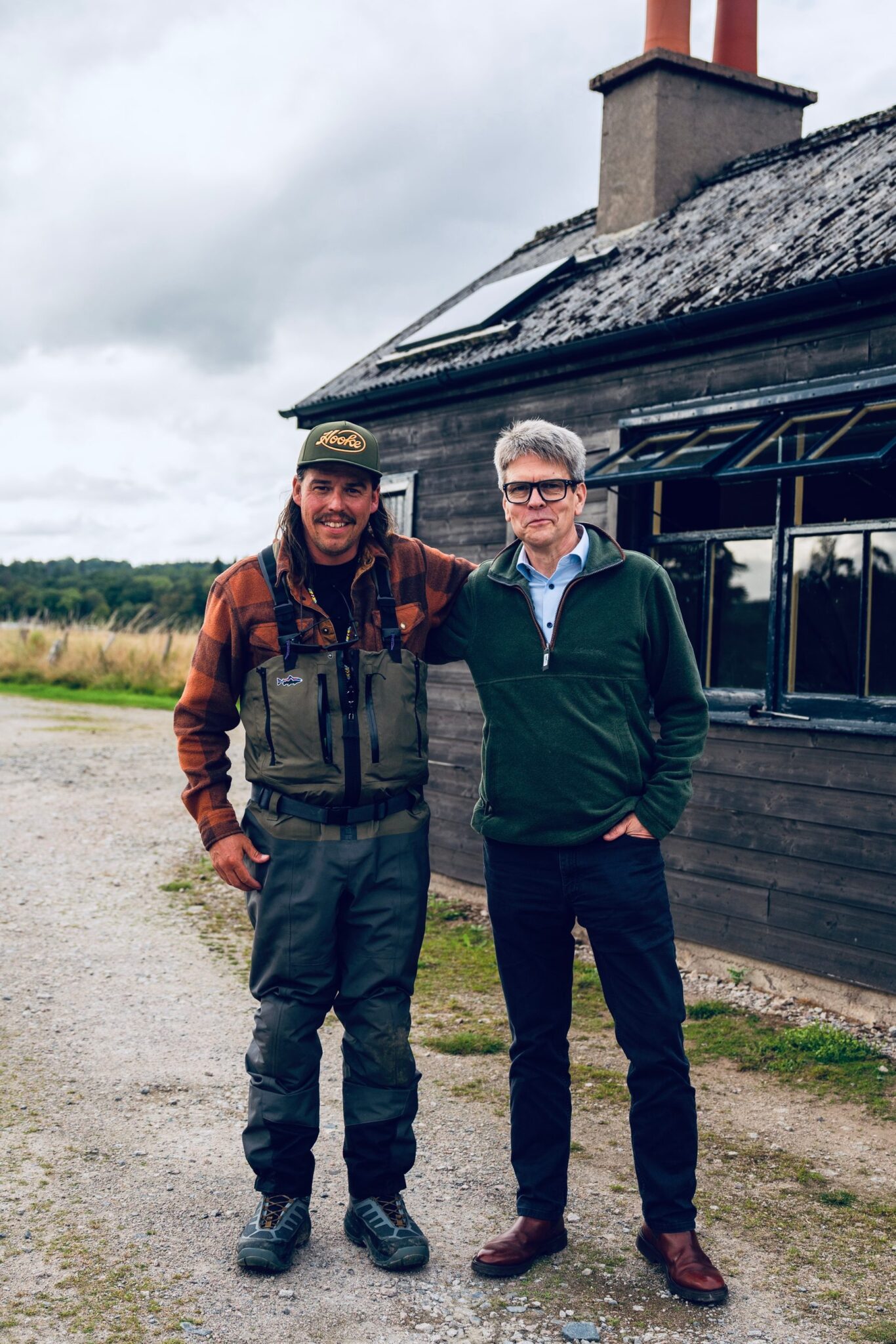
This trip has humbled him. In Scotland he shared a river with Blaine Lyon, the young guide from TwinPeakes on the Dee who is the reigning Spey-O-Rama world champion, and with Will and Al Peake, the twin brothers that have fished double-handed rods since they were boys. “It’s amazing how far you can take the skill, not only in casting but in understanding. Your box of tools is infinite.” Fred is a self-taught caster and cheerfully admits it. “You need to be taught. You’re not going to learn that by yourself. If you go down the route of mastering the art, the whole world opens up to you.”


Clean water, healthy countryside and hope
On the salmon’s wider plight he is an optimistic realist. “The species needs clean water, cold water, a healthy planet to move from its home river to Greenland and back. When you see them decline, that means the riverbanks, the forest, everything around clean water is going bad. Instead of looking at the thermometer in the water, look at the fish. They will tell you.” What keeps him hopeful is the people. In Scotland he met one of the men planting trees along the tributaries of the Dee, where the River Dee Trust’s One Million Trees campaign has passed the halfway mark. “Is it too late? I don’t think so. If we can share those stories and it makes somebody change one little thing, that’s what’s important.”
How a baseball cap became a country clothing brand
Hooké grew out of a humble hat. Fred filmed Atlantic salmon on the Gaspé Peninsula in Quebec, put the film online and watched it go viral. He named the crew Hooké, a designer friend drew a logo and printed it on a baseball cap, and after the next film people inundated him asking where they could buy one. That was 2012. “In that exact moment I said, that’s what I want to do: make great clothes and share these amazing stories.” With Patagonia’s Yvon Chouinard as his North Star, the model was simple: sell the clothes and put the money back into stories and conservation.

Hooké outdoor clothing for country life
Hooké pairs modern, clean-lined designs with a muted, earthy palette of deep greens and wetland tones. The range takes in heavyweight flannel shirts, knit sweaters, hoodies, work jackets, pile fleeces, T-shirts and base layers, along with caps, beanies, gloves and bags. Many pieces carry original wildlife artwork – flying ducks, moose and marshland scenes – by artists including Dan Sheridan and Rob Benigno. Collections are split into fishing, hunting, workwear and outdoor lines, with ranges for women and children as well as men.
Quality and materials are central to the offer. Hooké says its T-shirts are cut from a premium jersey of organic cotton and recycled polyester, while the flannel shirts use a soft, quiet stretch fabric suited to the field. The technical fishing pieces add waterproof and UV-protective fabrics and hidden tool attachments, and the brand says it designs its clothing to last a lifetime.


It is clothing not only for the riverbank, but also for anyone whose days start early and end outside. Every collection carries a collaboration with a conservation body, an ongoing partnership with the Atlantic Salmon Federation and Wildlife Habitat Canada now, because, as a branding man, Fred believes conservation needs to look cool to the young.
Slow fashion with a conservation purpose
Fred is cut from a different cloth, and so is his brand. Hooké is not stack ’em high, sell ’em cheap; it is slow fashion, mindful fashion, two collections a year sold to fund the stories and the conservation work behind them. Buy a jacket or a pair of gloves and you are helping to pay for both. The UK is the newest market after Canada and Japan, and he did not come to Britain just to sell clothes. He came on a pilgrimage to the place where fly fishing was invented, to meet more of his kind. He found them.

Shop the Hooké range
Browse the full Hooké collection at hooke.com.
Frequently asked questions
What is Hooké?
Hooké is an outdoor clothing brand founded by Fred Campbell in Quebec in 2012. It began with a baseball cap printed for his film crew and now sells its clothes to fund films and conservation work. The UK is its newest market after Canada and Japan.
What clothing does Hooké make?
The range takes in flannel shirts, knit sweaters, hoodies, work jackets, pile fleeces, T-shirts and base layers, plus caps, beanies, gloves and bags, split into fishing, hunting, workwear and outdoor lines for men, women and children.
Which conservation groups does Hooké work with?
Every Hooké collection carries a collaboration with a conservation body. It has an ongoing partnership with the Atlantic Salmon Federation and is currently working with Wildlife Habitat Canada.

About the author
Pete Tyjas
A Devon fly fisher based on the River Taw, Pete is the editor of Trout & Salmon, having succeeded Andrew Flitcroft, who had spent 33 years on the title. He guided full time for some 16 years, 12 of them on the hotel water at the Fox and Hounds at Eggesford, before turning to publishing. He founded the online magazine Eat, Sleep, Fish and then the fiercely independent quarterly Fly Culture, which ceased publication when he took the editor’s chair. He continues to present his weekly podcast, sitting down with people whose lives are shaped by fly fishing, and hosts the Trout & Salmon Gathering back at the Fox and Hounds. River trout, grayling and salmon are his passion, though he has fished in New Zealand, the American Midwest and for bonefish.
Related Articles

UK shooting and fishing seasons: every species, every nation
We set out the open and close seasons for game birds, wildfowl, deer, boar, hares and fish across England, Wales, Scotland and Northern Ireland – checked line by line against the legislation itself
By Selena Barr | 25 September 2026

Jottings for wildfowlers: what should the fowler wear on the foreshore?
No camouflage pattern works everywhere, says Gethin Jones, so what should the wildfowler wear – and why do silhouette and movement give you away long before colour?
By Gethin Jones | 24 September 2026
Get the latest news delivered direct to your door
Subscribe to Shooting Times & Country
Discover the ultimate companion for fieldsports enthusiasts with Shooting Times & Country Magazine, the UK’s leading weekly publication that has been at the forefront of shooting culture since 1882. Subscribers gain access to expert tips, comprehensive gear reviews, seasonal advice and a vibrant community of like-minded shooters.
Save on shop price when you subscribe with weekly issues featuring in-depth articles on gundog training, exclusive member offers and access to the digital back issue library. A Shooting Times & Country subscription is more than a magazine, don’t just read about the countryside; immerse yourself in its most authoritative and engaging publication.