★ Win four pegs on a Kent simulated game day with JBD Sporting worth £1,000! Click to enter ★

Tweed or technical: how to dress for every day in the field
The modern shooter no longer asks whether tweed or technical is better, but simply dresses for the job in hand, on the hill, foreshore or field
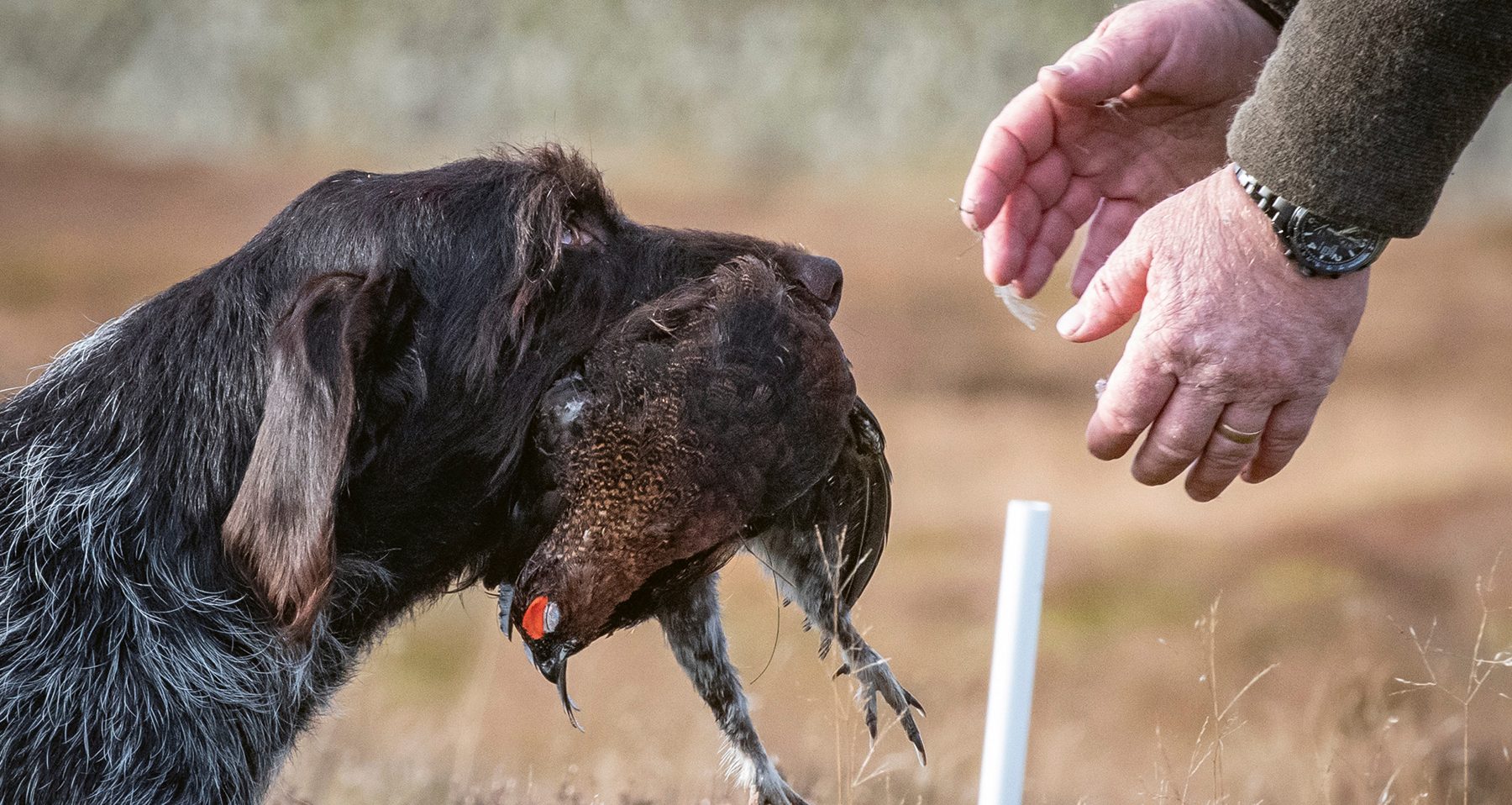
 Windproof, waterproof and breathable, Härkila's Pro Hunter Legacy is made from AirTech fabric with a Gore-Tex membrane

There is no longer a single right answer to the old question of what a shooter should wear, only a right answer for the day in front of them. The field has quietly stopped picking sides. Heritage houses have built waterproof membranes into their tweed, the technical brands are weaving deep greens and cutting coats to sit happily on a peg, and most shooters now own a bit of both. So the right choice is no longer tweed or technical. It is what each discipline demands, and which piece of kit answers it best. Taking the field one job at a time, here is how the leading names would dress you.
Dressing for the open hill
Let’s start on the open hill, where the demands are most extreme and least forgiving. Tweed has dressed stalkers for generations and still has its place, but the way people stalk has changed. “Many stalkers now leave their vehicles at the start of the day with no opportunity to return until the end,” says Spencer Tolley at Härkila. “They need clothing that will keep them dry and comfortable, even after hours lying in wet heather. This is where function takes precedence.”
For those conditions Härkila points to its long-running Pro Hunter range, built for durability and dependable waterproofing, and to the new Velar trousers, made with ThornPro technology for thorn resistance where the ground turns hostile. The guiding aim, Spencer says, is “the finest hunting clothing possible: garments that are silent, resilient, durable and built to perform in the toughest conditions.” The Gore-Tex-lined Kenmore jacket bridges both worlds for stalkers who want the look as well as the protection, wrapping a technical membrane inside genuine British cloth.
Camouflage and concealment
Sitka comes at the hill from the same direction, its range forged in the extreme environments of North America and built first around stalking. Ashley Shaw points to five core camouflage patterns that enable a UK user to match kit to ground, and to the unusual depth of published research behind the colourways and the fabric. “This openness,” he says, “is what, in my opinion, really sets off the range as a technical solution rather than just another coat.”
For genuine concealment work at distance, this is the most specialised end of the market, and the place where pure technical performance earns its keep most clearly. It is also the priciest, so it rewards the stalker who is out often enough to justify it. The classic hill mistake is dressing for the lie rather than the walk in, sweating through your insulation on the climb and then chilling when you settle: layer light and carry a warm top for the wait.
On the driven peg
Move to the driven peg and the priorities flip almost completely. Here presence matters as much as performance, and tweed still rules. “Nothing looks more at home in the British countryside than a well-cut set of tweeds,” says John Sugden at Campbell’s of Beauly, who holds that no technical fabric captures the same sense of heritage, occasion and belonging. That does not make him a purist. “I’ll always reach for my Musto Gore-Tex coat if the weather demands it,” he says, “but I’ll still wear it with tweed plus fours underneath and a good tweed cap.” Wool keeps insulating even when it is damp, which is why his ideal is “a combination of traditional craftsmanship and modern technology”.
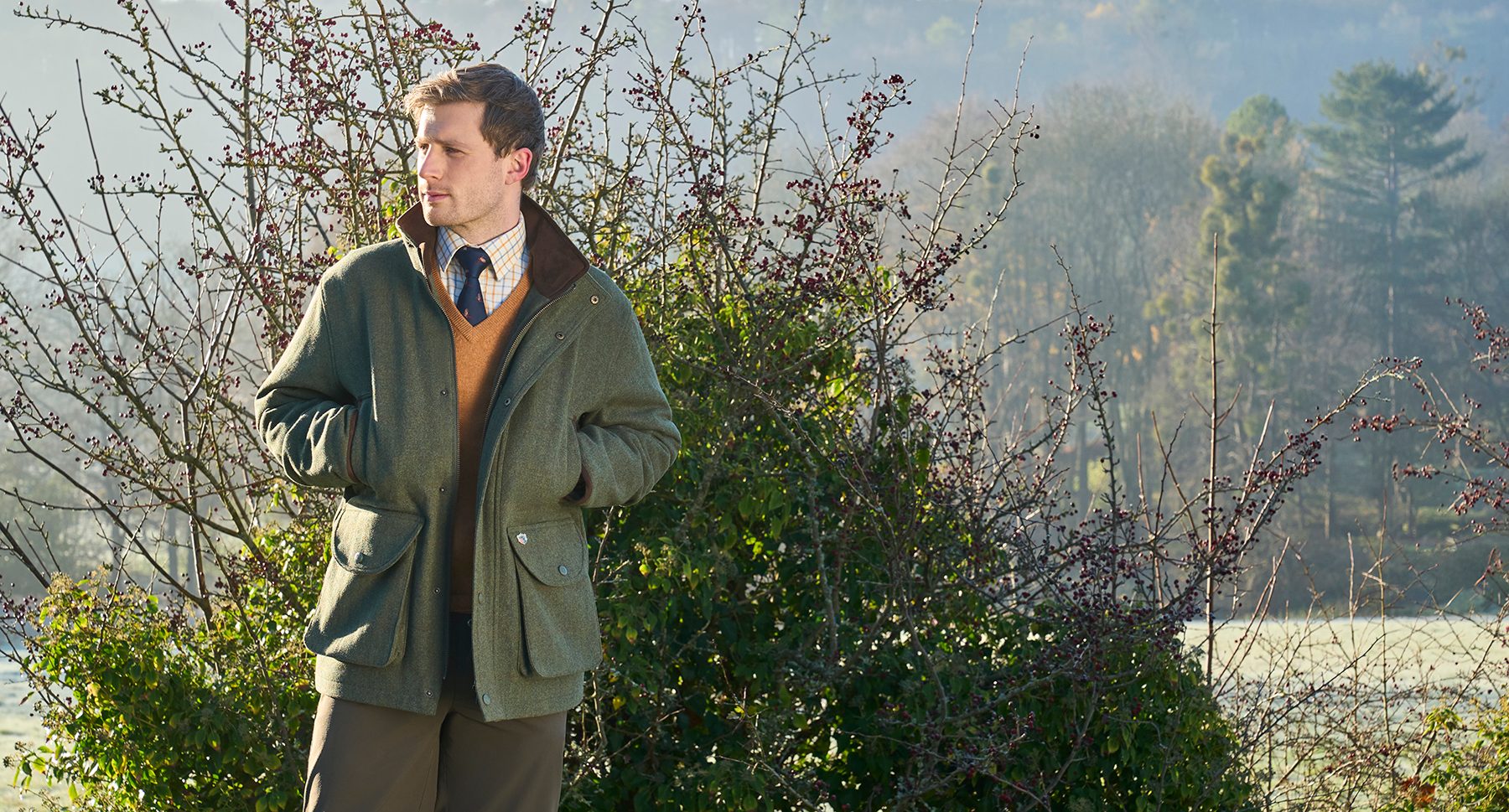
The good news for the peg is that you no longer have to choose between looking right and staying dry. Alan Paine’s Sarah Lloyd says shooters now expect tweed to behave like technical kit. “Customers expect tweed to perform like modern technical outerwear, fully waterproof, breathable and reliably weatherproof,” she says, helped along by the firm’s own breathable membrane. The cloth itself has moved on too, with lighter, more agile tweeds and more ergonomic cuts replacing the heavy, rigid bolts of the past, so a tweed suit no longer means a day spent fighting your own jacket. The look is inherited; the comfort is thoroughly modern. The pitfall here is social rather than technical: full camouflage on a formal driven day reads as costume however well it performs, so keep the concealment kit for the hill, and if a shoot’s dress code is unclear, ask the host rather than guess.
Hardwearing coats for walked-up days
For walked-up days and rough shooting, where you cover ground in changeable weather and push through cover all day, the sweet spot is a hardwearing coat that does a little of everything. Farlows builds exactly that. Jack Gregorie describes its fieldcoats as made in England from 100% wool tweed, woven for the firm in Scotland, with a waterproof membrane liner behind the cloth so that the coat stays windproof and waterproof while the tweed itself remains breathable.
“Tweed is nature’s original performance fabric,” he says, pointing to the warmth, the breathability and the natural oils in the fibre that help shed water. The Farlows Litchfield fieldcoats come with matching breeks and vests, and Jack rates them for a driven day, a walked-up one, a stalk or a winter outdoors.


Versatile all-rounders
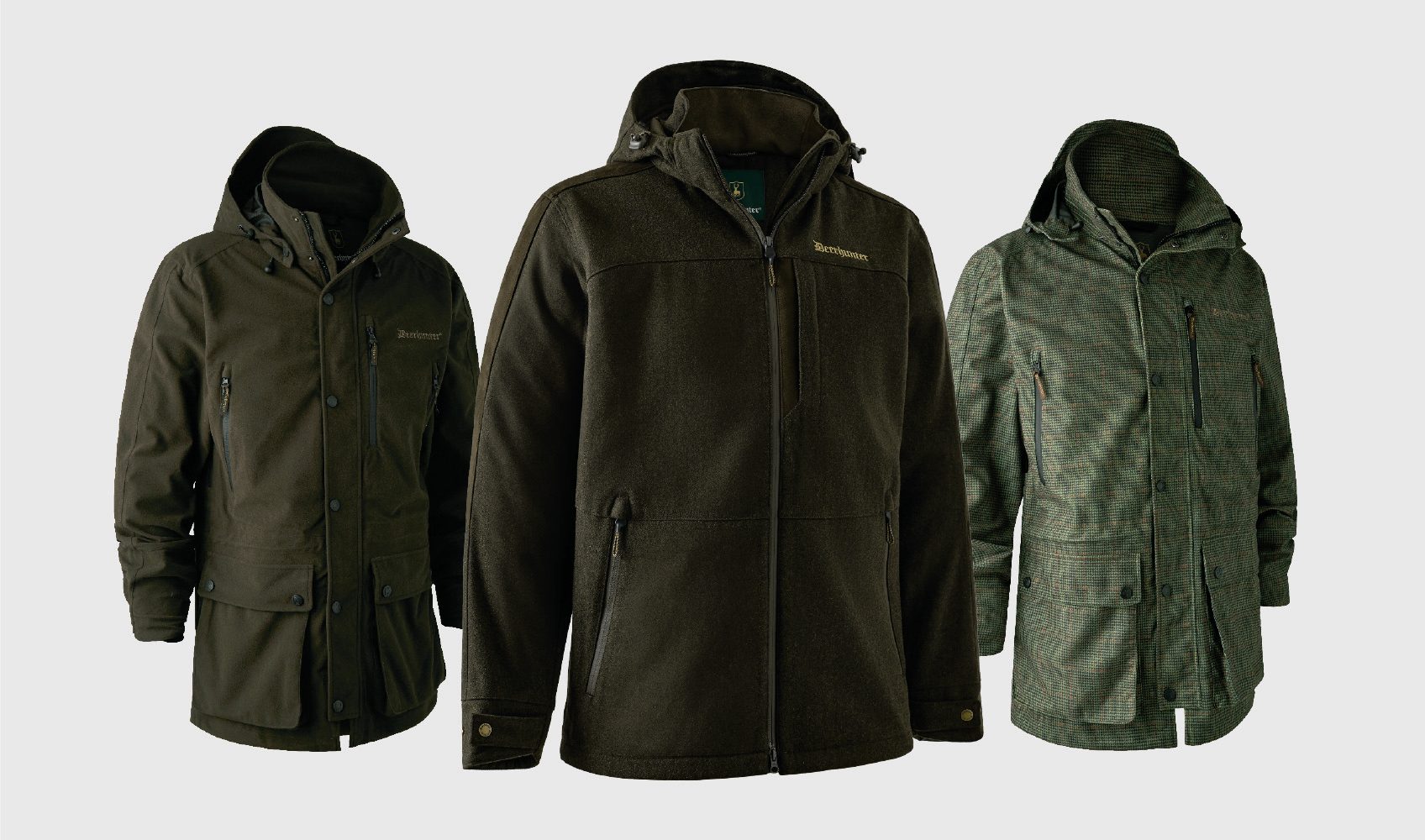
Deerhunter aims at the same all-round brief from the technical side. Its Pro Gamekeeper jacket has become a favourite precisely because it is versatile and hardwearing across a wide range of disciplines, pairing a classic hunting look with modern functionality and protection. It is exactly what the walked-up shooter, never sure what the ground will throw up, needs. The error when rough shooting is dressing as though you will stand still: a heavy coat that suits the peg will cook you and snag on cover by mid-morning, so choose something cut for movement and shed layers early.
On the foreshore
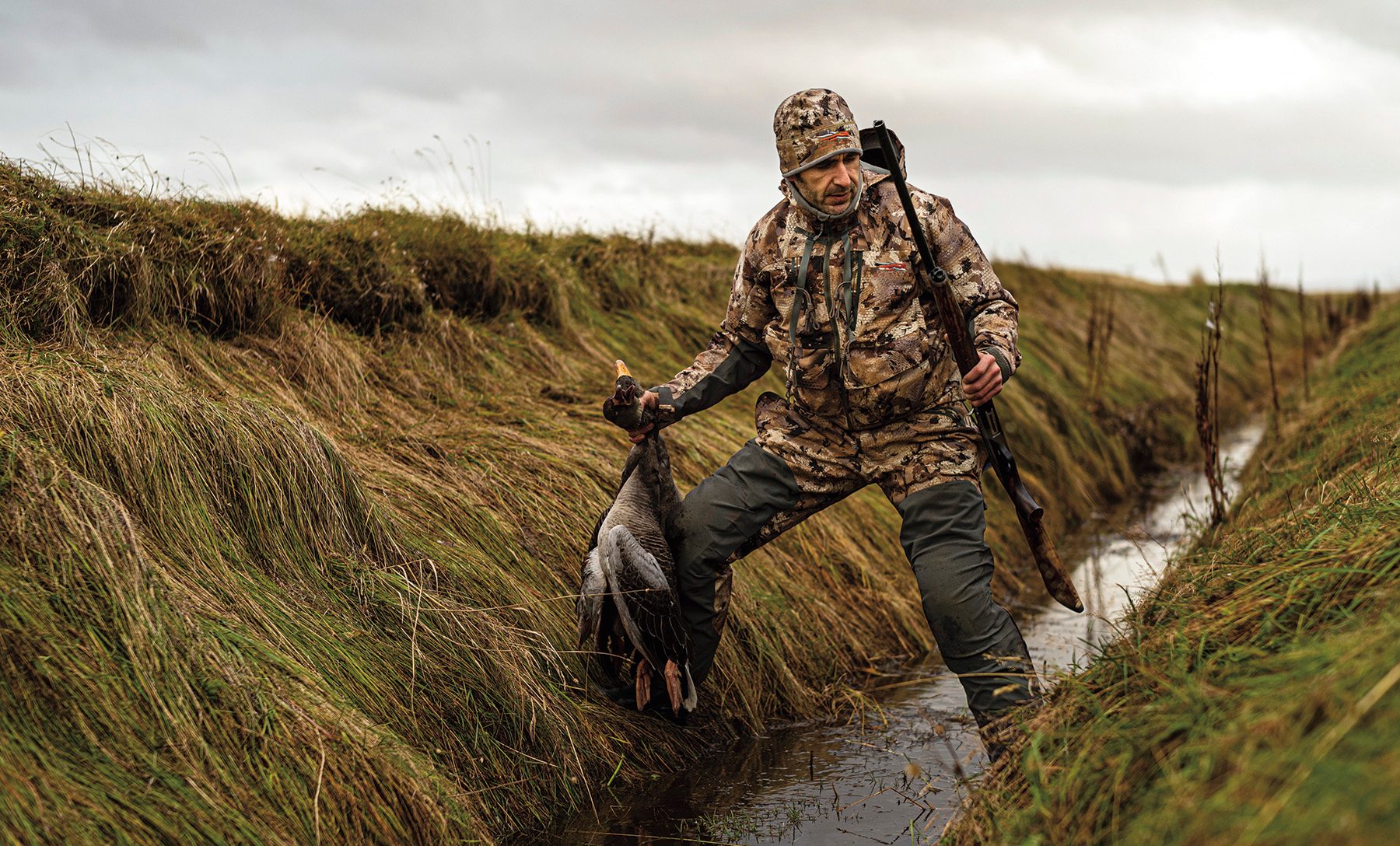
Wildfowling and pest control ask something different again: long, cold, often filthy waits where concealment and sheer waterproofing matter more than anything else. This is camouflage country, and Sitka is at its strongest here, with the same five patterns and the same fabric science chosen to suit the ground and the quarry rather than flatter the wearer. Härkila’s contribution to this end of the sport is durability under punishment: the Pro Hunter principles of resilient cloth and reliable waterproofing come into their own when you are lying in mud below the sea wall rather than walking a line in the sun. Solid dark greens and browns work as well as broken patterns against a muddy foreshore, so a plain technical shell over warm insulation serves as faithfully as full camouflage. The trap on the foreshore is underestimating how cold a static wait turns, so over-insulate well beyond what a walking day needs and put genuine waterproofing first.
Layering for every pursuit
For the shooter who would rather not buy a separate wardrobe for every pursuit, the answer is layers. “Today’s hunters are increasingly building their wardrobe around the activity, the weather and the season rather than choosing between traditional and technical clothing,” says Mai Rane Christiansen at Deerhunter. The Eagle series is built for exactly that, letting you assemble kit around climate and discipline without losing a traditional appearance, while the Tatra line takes the opposite tack. “We chose a different approach by letting the natural qualities of the wool blend speak for itself rather than adding modern membranes,” she says.
The mistake is asking one coat to do everything and ending up with something that is mediocre at all of it. Instead build on a dependable base and mid layer, never cotton, which holds sweat and chills you, and change only the outer shell to suit the day. A technical over-layer thrown on top does the rest, and here Sitka’s move into solid greens and browns earns its place. The Dew Point and Dew Point Pro slip over a tweed suit without jarring, and Ashley is quick to add that you do not need every piece in a range to feel the benefit of it.
There is a longer game worth weighing too. Jack, who also heads sustainability at Farlows, wears tweed himself because it is “a more sustainable, longer lasting product than most modern alternatives”, a coat to keep for decades, not seasons. The technical brands answer it in their own way, designing for long service so that a garment becomes one a shooter keeps for years. Either way, the most useful kit is the kit that lasts.
The thread running through all this is that clothing has stopped dictating to the shooter and started serving them. Dress for concealment on the hill, for presence on the peg, for hard wear in the rough and for the weather everywhere. Then layer a technical shell over a tweed suit, or a wool blend under a membrane, and nobody will tell you that you have broken a rule. Build the wardrobe around the day and you will rarely find yourself caught out, in the field or at the lunch table afterwards.
Coats and companies
- Härkila – Pro Hunter range, Kenmore GTX jacket. harkila.com
- Sitka – Dew Point Pro Covert jacket. sitkagear.com
- Campbell’s of Beauly – Musto Gore-Tex coat. campbellsofbeauly.com
- Alan Paine – Combrook tweed coat. alanpaine.co.uk
- Farlows – Litchfield fieldcoats. farlows.co.uk
- Deerhunter – Pro Gamekeeper jacket. deerhunterclothing.co.uk
Frequently Asked Questions
Is tweed or technical clothing better for shooting?
Neither is better outright. The field has stopped choosing between them: heritage houses now build waterproof membranes into their tweed and the technical brands weave deep countryside greens, so the right choice comes down to the day. Dress for concealment and function on the hill, for presence and tradition on the peg, and for hard wear in between.
What should I wear for deer stalking on the open hill?
Put function first. Modern stalkers often go out for the whole day with no return to the vehicle, so quiet, resilient waterproofs such as Härkila’s Pro Hunter range or Sitka’s camouflage systems earn their keep. Layer light for the walk in and carry a warm top for the wait, rather than dressing for the lie and sweating through your insulation on the climb.
Can you wear camouflage on a driven day?
Better not. Full camouflage on a formal driven day reads as costume however well it performs, so keep the concealment kit for the hill and foreshore and reach for tweed on the peg. If a shoot’s dress code is unclear, ask the host rather than guess.
Related Articles

Gear, Optics
ThermTec Wild 650 DL PRO review: the dual-lens thermal monocular tested
ThermTec's flagship Wild 650 DL PRO is a dual-lens thermal monocular with both a 25mm and a 50mm objective and an unusual orange joystick control. Keith Edmunds tested it over three months of spring s...
By Keith Edmunds

Gear, Gear news, Optics
Fuego DS-X7 review: night vision for under £300
Danny Brookfield tests the Fuego DS-X7, a 4K day and night vision scope with an integrated infrared illuminator, on rabbits and rats with an AirMaks Katran. At an introductory £299.99 it asks a serio...
By Shooting Times
Get the latest news delivered direct to your door
Subscribe to Shooting Times & Country
Discover the ultimate companion for fieldsports enthusiasts with Shooting Times & Country Magazine, the UK’s leading weekly publication that has been at the forefront of shooting culture since 1882. Subscribers gain access to expert tips, comprehensive gear reviews, seasonal advice and a vibrant community of like-minded shooters.
Save on shop price when you subscribe with weekly issues featuring in-depth articles on gundog training, exclusive member offers and access to the digital back issue library. A Shooting Times & Country subscription is more than a magazine, don’t just read about the countryside; immerse yourself in its most authoritative and engaging publication.