
Drawn from the field: sporting artist Jonathan Pointer on capturing a working dog
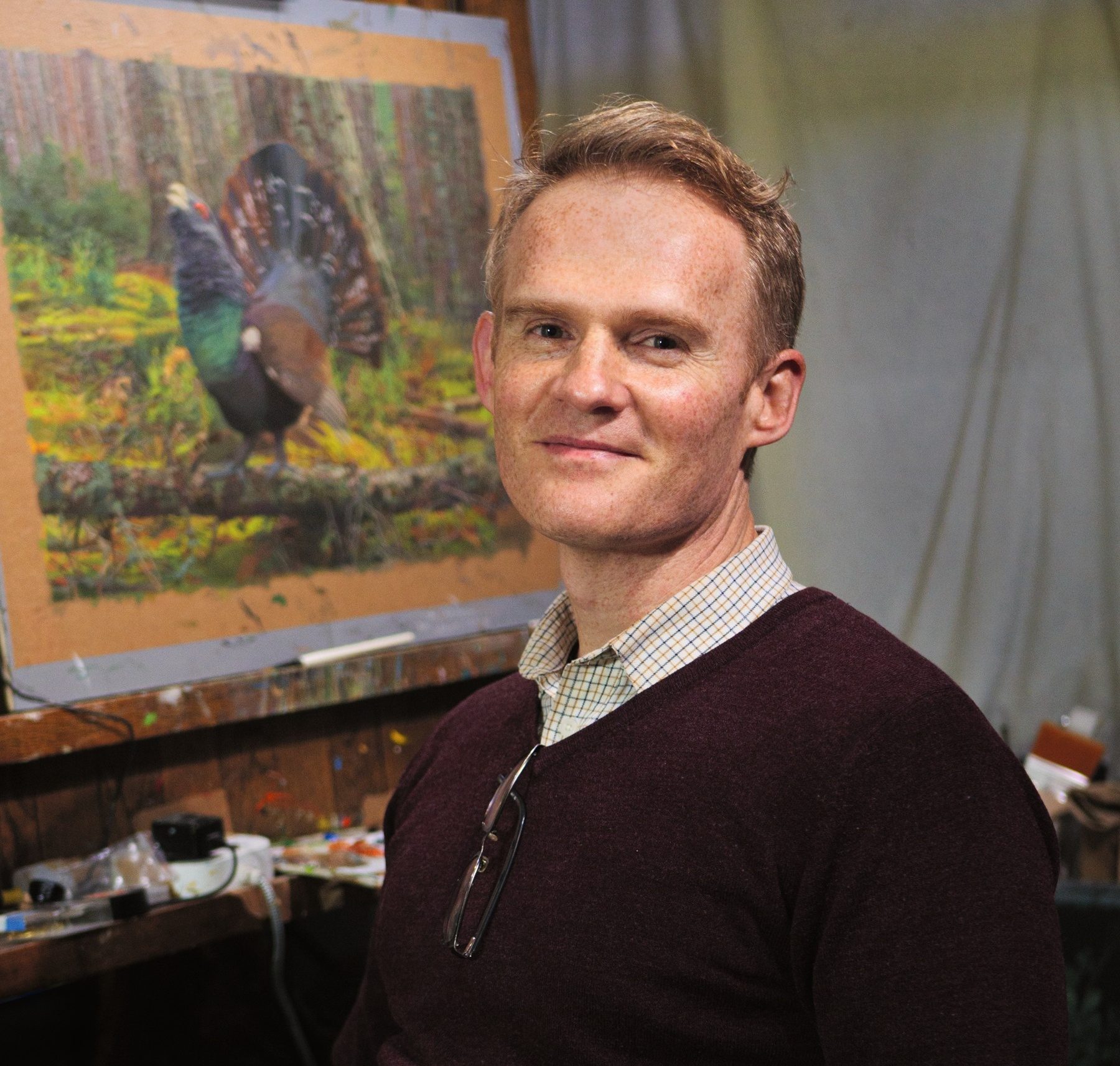
He paints five oils a year, rarely exhibits and sells almost everything by word of mouth, which is why many who know the sporting art world have never seen his work. Jonathan Pointer draws gundogs in the classical manner, head and shoulders, every hair of the coat, and he keeps ornamental pheasants and sits on the board of a game-bird conservation charity. From his conservatory studio in west Wales, he explains how he sets about a dog’s character

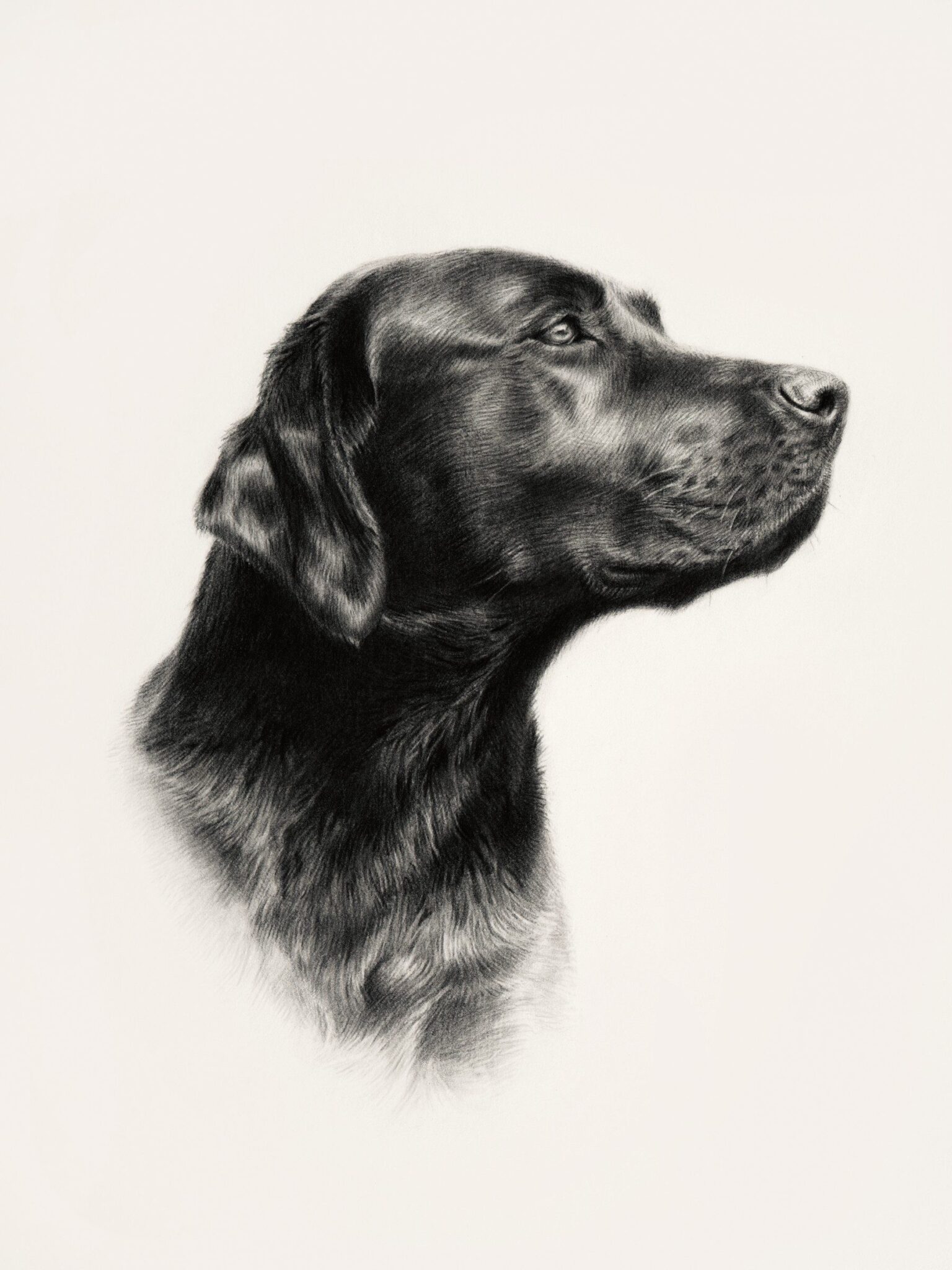
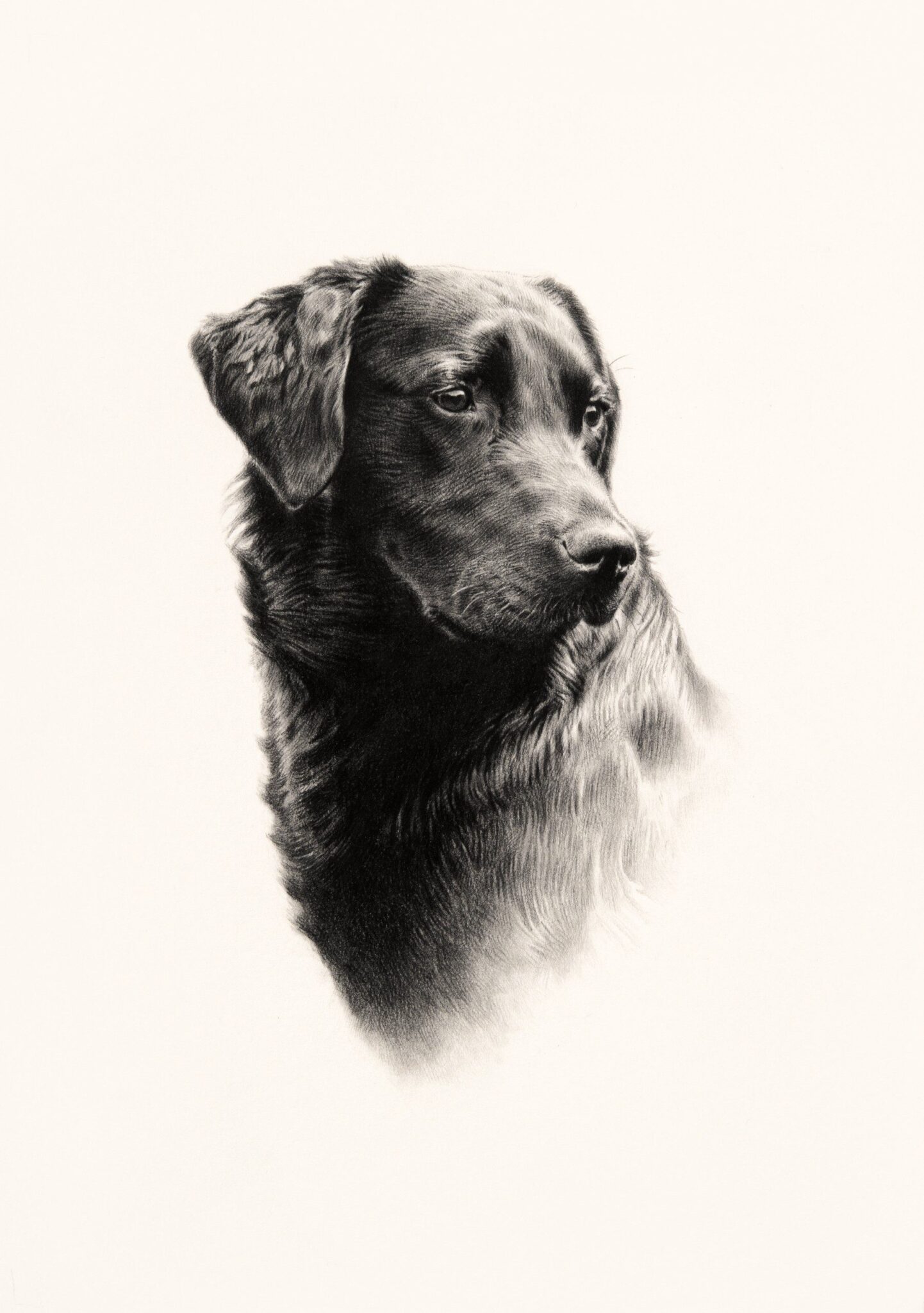
Dogs make such an interesting study that, like my wildlife paintings, I often concentrate on the intimate, framing the head and shoulders just as you might a human sitter. I enjoy portraying the fine intricacies that define the breed characteristics and often lose myself in the complex fur detail that so characterises each breed, such as the woolly ear of a cocker spaniel.
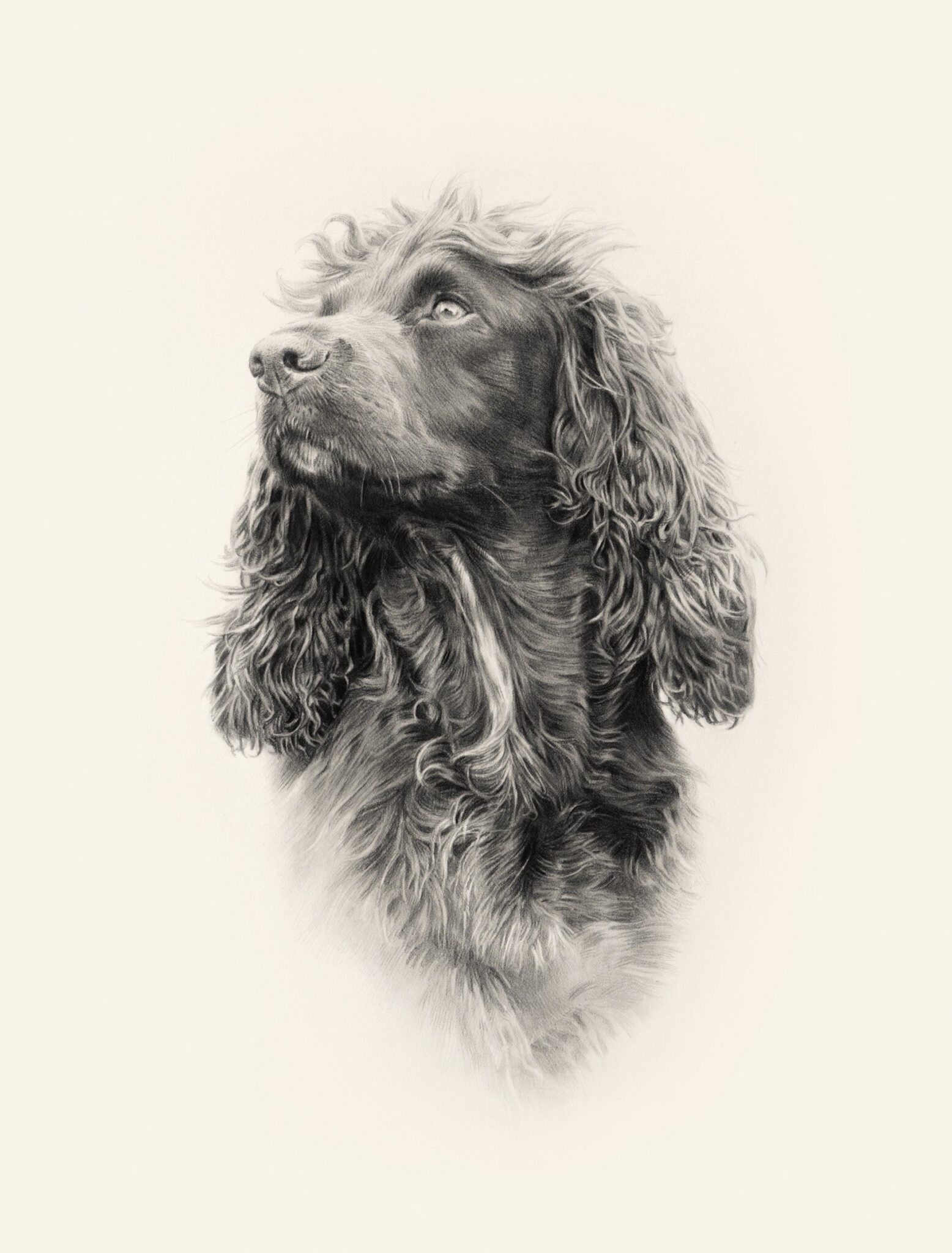
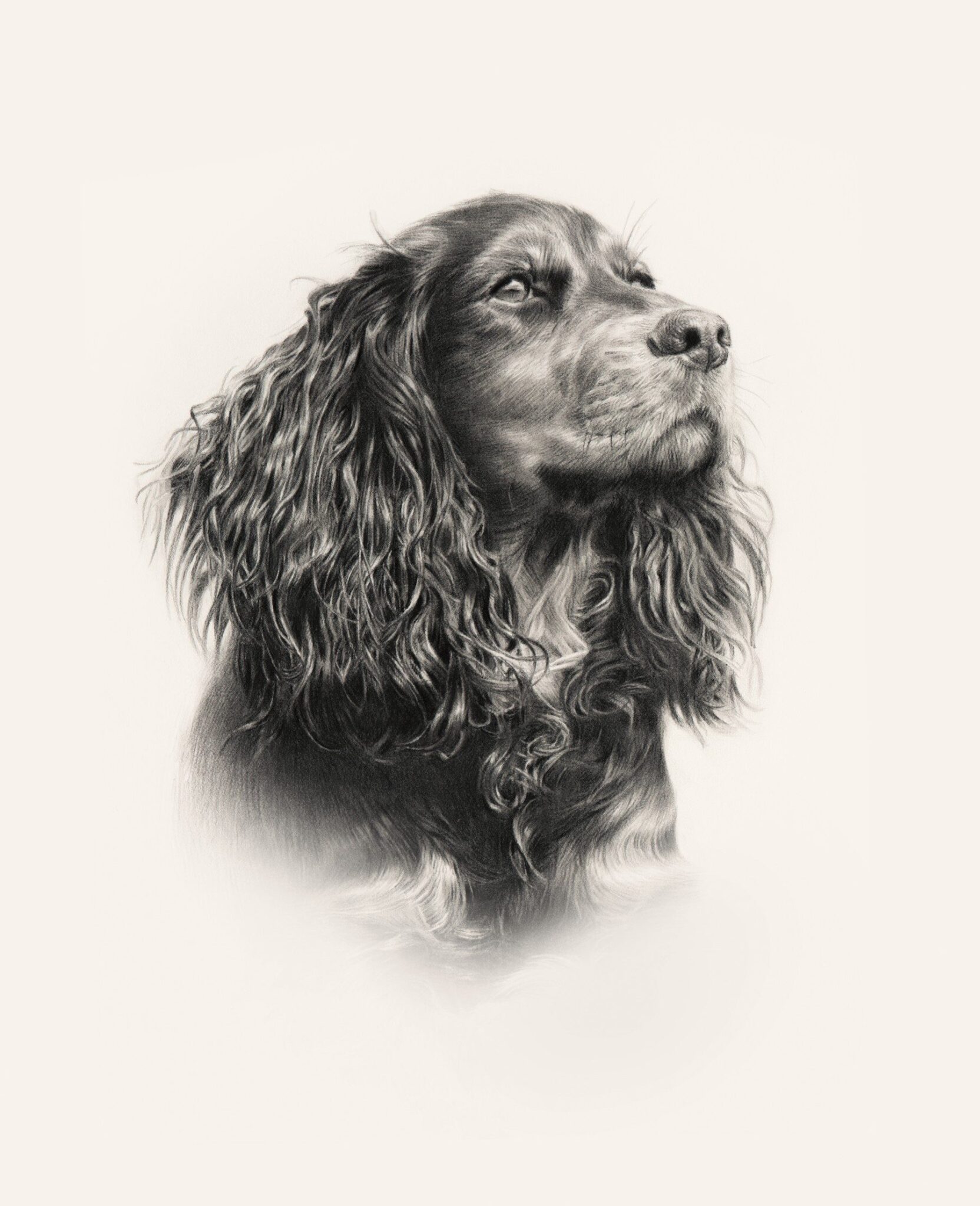
All of my dog drawings are private commissions. I do have plans for larger, more elaborate, narrative works involving working dog breeds, but it’s usually the love of an owner wanting to record their beloved family member that begins an artwork.
Which commissions stay with you?
A few years ago, I was contacted by an estate close to me in west Wales. A lovely lady had three sons, for whom she had kept three pointer crosses from the same litter. I was commissioned to draw each dog separately (which the sons would then be gifted as a reminder of their dogs), and each dog was quite different – smooth-coated, wire-haired. There were three separate drawings, but I often think of these works as one piece, ‘the three brothers’.
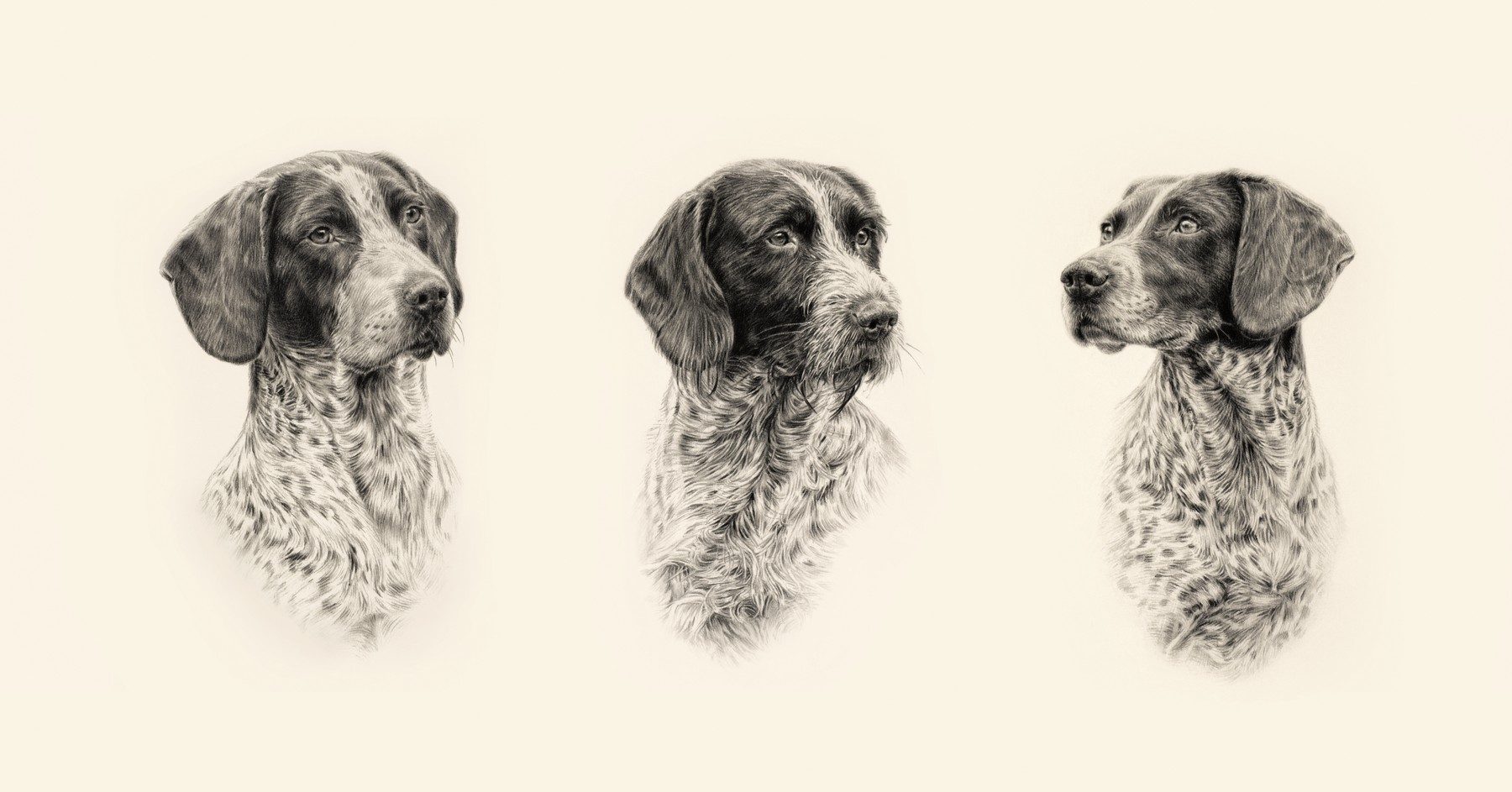
Many of the titles for these artworks reflect the individual character through the names of the animal – Stan, Pippa, Billy, Patti. I always remember the names; it’s a link to the owners and the character of the dog.
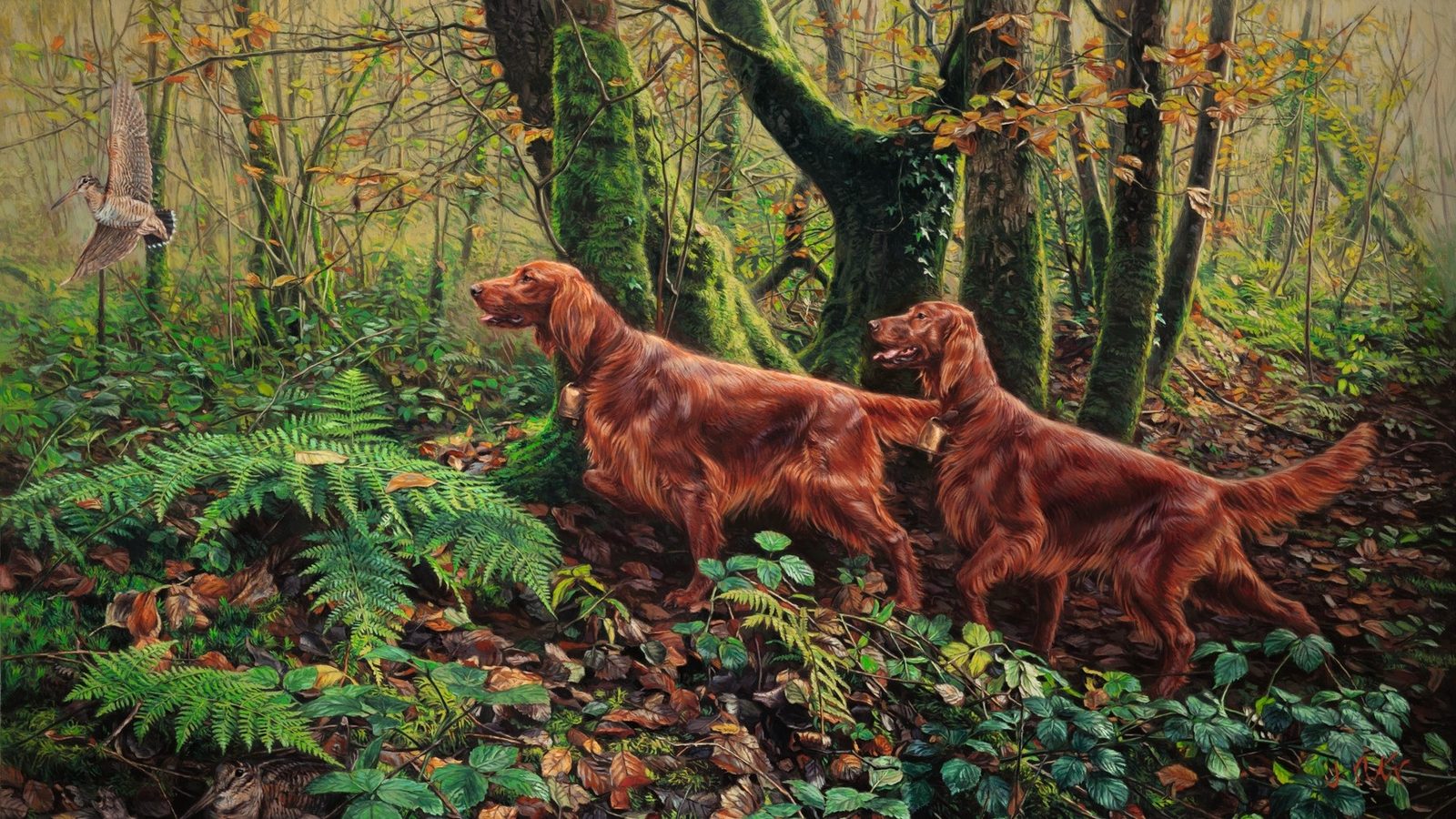
Another recent commission was a modest painting of some splendid Irish setters set within an autumn wood and sporting the large hunting bells so beloved in Europe. The commissioning client actually made these bells, and whilst the commission brief only mentioned ‘Irish setters flushing a woodcock’, it was important that I got the bells just right for the client! Incidentally, whilst the setters flush the woodcock, can you spot a second bird sitting tight in the nearby cover?
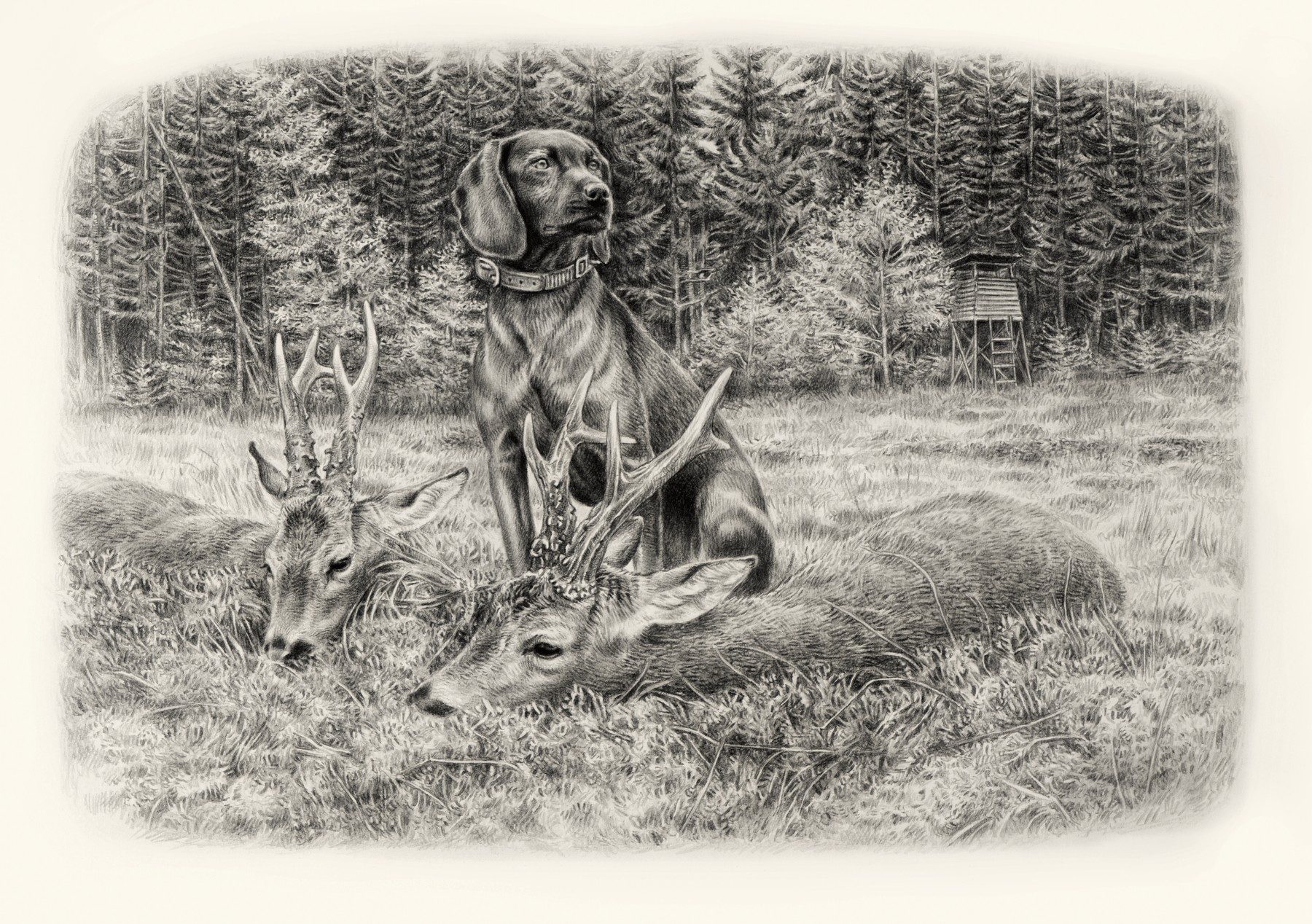
Another commission was a large and very elaborate drawing – a Bavarian mountain hound with two roe bucks, surrounded by the six British deer in their respective habitats. It was the client’s love letter to a dog that had now passed, and reflected the memory of their time stalking together.
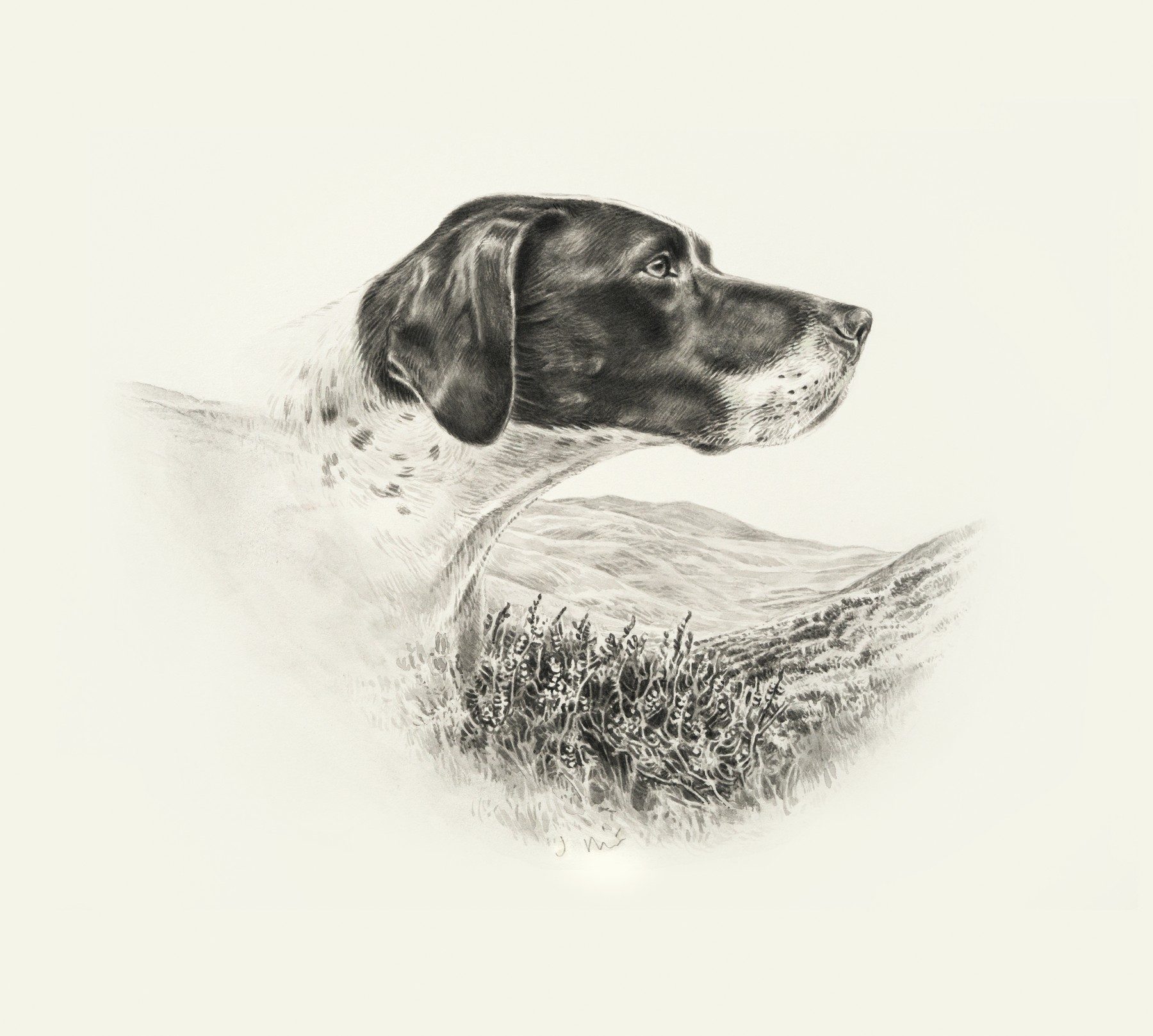
Working dogs are particularly fascinating: the intensity of the animal shivering with suppressed excitement, straining to go at a call and retrieve or work the cover in search of game, the various breeds bred so specifically for each task (such fun to draw Pippa the wirehaired dachshund, a breed originally bred to go down a badger’s hole!). I’ve been fortunate to watch so many well-trained dogs working, and they are always a pleasure to observe and create artworks around.
Who are your influences?
I simply love the natural history art that stems from the great era of nature discoveries – 18th- and 19th-century art, especially before the camera ruined the romance of art! Victorian art, with its Ruskin ‘truth to nature’ – if I have any influence it would be this, especially the Pre-Raphaelites and their followers like Millais, Holman Hunt, John Brett and Arthur Hughes.
I have a phrase I made up: content beats technique. You might be the most perfect technician in the world with flawless brushwork, but it might be deathly boring to look at, whereas something a braver artist might knock out in a naive, unpolished style could be so much more satisfying. Modern wildlife art, including my own work, has been spoiled by the camera. Photos now are so good that you’re often painting something simply because it’s a good photo, rather than because it says something about the subject.
What is on in the studio while you work?
I listen to a lot of audiobooks and YouTube commentary. Books are everything from fiction to history and documentaries – I’m quite curious about everything.
What is the studio like?
When we moved to Wales, our little cottage had a rear conservatory. With the sides lightly curtained and the roof painted opaque white, the lighting is reliable now, but the temperature is not! It’s either freezing cold in winter or boiling hot in summer. I’ve got a big Victorian-style easel that dominates the room, and it also serves as a boot room. There are trail cameras lying around, a table full of feathers I’ve found on walks, plant seeds I plan to sow, and various other natural history-themed objects. It’s quite a mess by anyone’s standards. Angela and I love books, so we have hundreds of art books, photography books on natural history, gardening and writers’ classics.
Is there a dog at home?
No dog presently, but I adore breeds such as cocker spaniels and Jack Russells. I suspect either or both of these will be our next dog. We’ve discussed how practical it would be to get two puppies of the same age and have them grow up together, though I’m reliably informed that’s not practical at all! I do love seeing those videos on social media when an old dog that’s moving around quite slowly suddenly becomes young and playful again when a puppy is introduced.
What was the first piece you sold?
I would suspect that would be something to a family friend when I was a teenager. I recall my mother said, “June would love something with flowers”, so I painted it. Professional selling really started after I left college, when an agent found my business card a year later. They’d landed a huge ‘Birds of the World’ collectible project and called me out of the blue.
Where can a reader see your work?
I show in a few galleries but am quite unprolific compared to my other sporting artist friends. The majority of my output sells privately or is commissioned. I complete just five oil paintings a year. The paintings take so long because I paint the botanical elements very faithfully. Drawings are simpler as they have no backgrounds, but they still take months if it’s a very large and elaborate piece.
What gives you most satisfaction?
It’s so hard being a full-time artist, so unpredictable, that I am grateful I am able to support myself and my wife doing something that feels less like a job and more a creative compulsion. Of the artists I trained with at art college, I am the only remaining full-time artist.
What would surprise people about you?
I am a trustee of the World Pheasant Association, a conservation charity that tries to safeguard the rare Galliformes of the world. I’ve been a trustee for about three years and a member for over a dozen years. I also keep ornamental pheasants – at the moment I have tragopans, which are very beautiful birds with lovely deep red and orange colouring and an amazing display in spring. They are such a privilege to look after and inspire my art.
Jonathan Pointer’s work can be seen at pointer-wildlife-art.co.uk, on Instagram at @pointerjonathan and on Facebook as Jonathan Pointer Art.
Frequently asked questions
Who is Jonathan Pointer?
Jonathan Pointer is a sporting and wildlife artist based in west Wales, trained as a natural history illustrator at Bournemouth & Poole College of Art and Design. He paints around five oils a year, rarely exhibits, and draws gundogs and other working dogs to private commission in a classical style he says would not look out of place in a Victorian studio.
How does Jonathan Pointer draw a working dog?
He frames the head and shoulders as a portrait painter would a human sitter, with no background to distract from the dog, and concentrates on the fur detail that defines each breed. What he is after is the individual dog’s character, from a pointer shivering with suppressed excitement to the woolly ear of a cocker spaniel, rather than a copy of a photograph.
How do you commission a gundog drawing from Jonathan Pointer?
All of his dog drawings are private commissions, and most begin with an owner wanting a record of a particular dog. A large and elaborate drawing takes months. His work and contact details are at pointer-wildlife-art.co.uk and on his Instagram account, @pointerjonathan.
Does Jonathan Pointer shoot?
He does not shoot game himself, though he has shot grouse and pheasants in the past and enjoyed it, and he is a trustee of the World Pheasant Association. He shoots rabbits, rats and squirrels with an air rifle around the ornamental pheasants he keeps, and says the benefits of legal shooting far outweigh the negatives.
 Closes 15 JanuaryWorth £129.90Win a pair of tickets to the British Shooting Show 2027Enter nowFree to enter
Related Articles
Betsy Bradford interview: the gundog artist who picks up and trials
She trained as an architect, picks up on a family shoot, trials her labradors and paints other people’s dogs from a spare room in Oxfordshire. Betsy Bradford talks to Selena Barr about Laura Hill, the...
By News Desk | 11 November 2026
Woodcock over pointing dogs: a Danish day with two English setters
Writing in Sporting Gun, Thomas Nissen followed Jes Andersen’s English setters, Balder and Hector, through 800 hectares of Danish forest and heath: what a pointing dog brings to the woodcock day that...
By News Desk | 10 November 2026
Get the latest news delivered direct to your door
Subscribe to Shooting Times & Country
Discover the ultimate companion for fieldsports enthusiasts with Shooting Times & Country Magazine, the UK’s leading weekly publication that has been at the forefront of shooting culture since 1882. Subscribers gain access to expert tips, comprehensive gear reviews, seasonal advice and a vibrant community of like-minded shooters.
Save on shop price when you subscribe with weekly issues featuring in-depth articles on gundog training, exclusive member offers and access to the digital back issue library. A Shooting Times & Country subscription is more than a magazine, don’t just read about the countryside; immerse yourself in its most authoritative and engaging publication.

