
Betsy Bradford interview: the gundog artist who picks up and trials
She trained as an architect, picks up on a family shoot, trials her labradors and paints other people’s dogs from a spare room in Oxfordshire. Betsy Bradford talks to Selena Barr about Laura Hill, the painting she is proudest of and the dog that changed everything
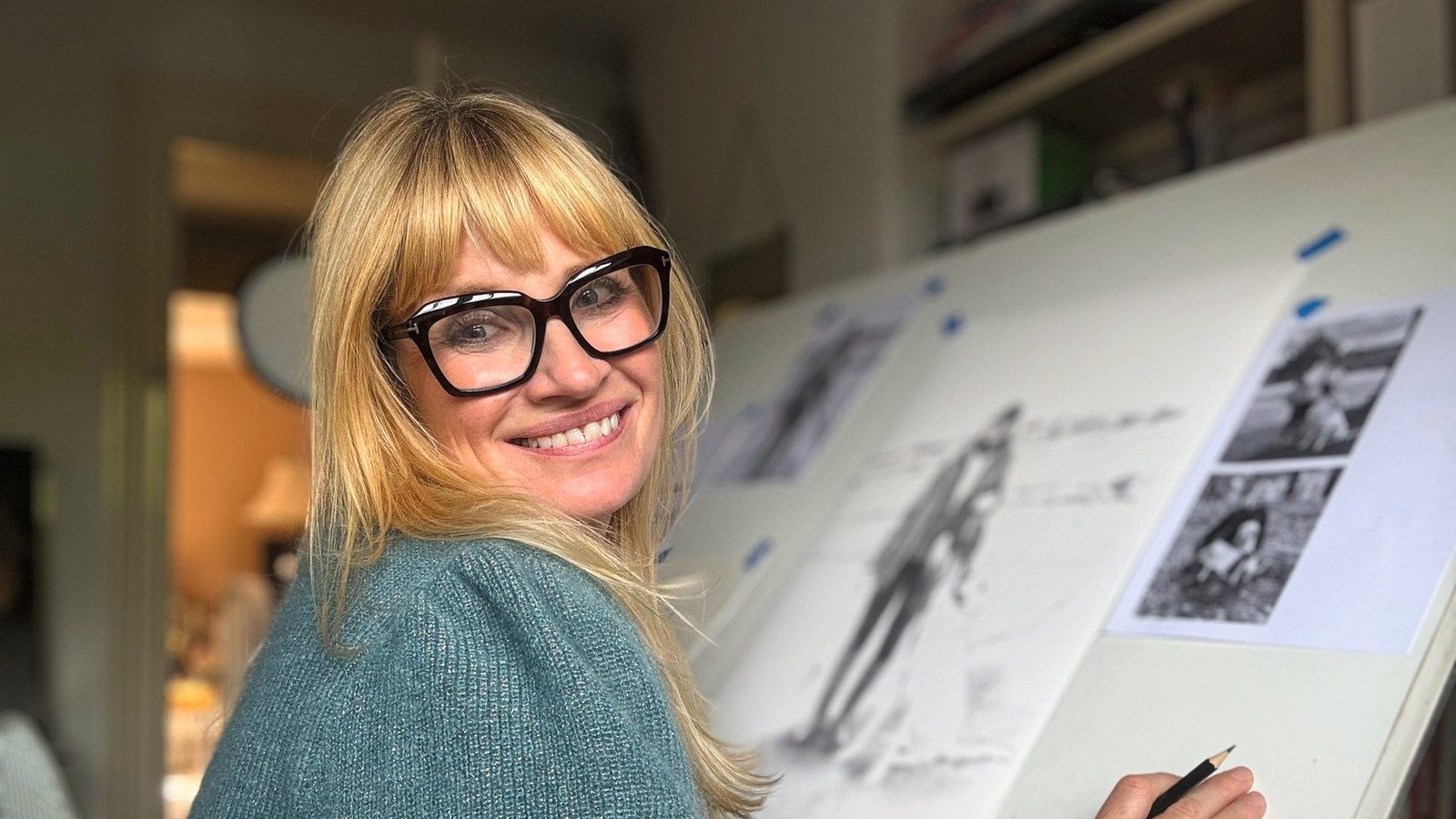

Paintings: Betsy Bradford
In conversation with gundog artist Betsy Bradford
You trained as an architect. How did you end up painting dogs?
There’s quite a backstory. I studied at the Mackintosh School of Architecture, part of Glasgow School of Art, for eight years. I worked in practice briefly and realised you spend a lot of time answering calls and dealing with contractors, and not actually designing anything. I’ve never had anything built that I designed. Then I started drawing just for fun – my own dogs, family, friends – and people said they were quite good. It’s frustrating, but my work now is analogous to the architectural process. I learned to draw very well. I learned to articulate what I’m thinking.
How did you get involved in shooting?
My husband and I came to live in the Cotswolds and got gundogs that needed training, and we became involved by chance through a local family shoot. Now, 12 years later, it is my world. I work and train labradors, I paint other people’s dogs and I paint people in the shooting world. My liberal university friends think it’s bizarre that I go on shoots and pick up, and I can’t convince them otherwise, so we just don’t talk about it. But the people running shoots are doing a crucial job. It’s big and it’s multifaceted, and I understand that so much better now.
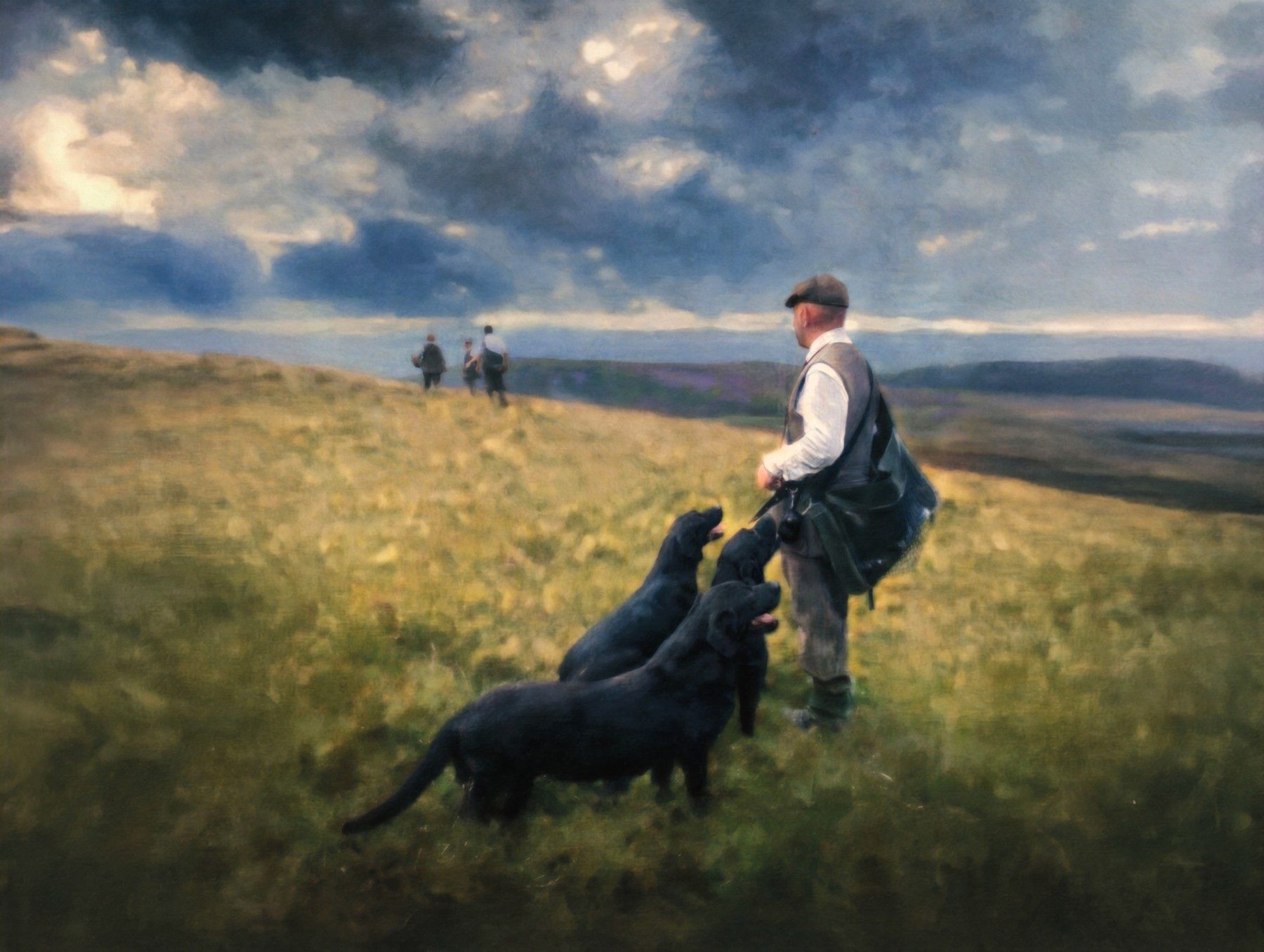
Eight dogs. All labradors?
Only Labs. We just like everything about them. My friends have spaniels and they’re so busy and chaotic. We started off with black and now I love the yellows – we’ve got some fox reds too – but I don’t mind as long as they’re smart. Sound temperament is everything. Four are mine and four are my husband Pete’s, and some are too old and arthritic to work now, a bit hobbledy-wobbly. They’re all trained, they all live in the house and they rule the roost. That’s probably why my dogs aren’t that good. They have plenty of sofa time, living the life.
Introduce us to yours.
Leffe is 10, named after the beer. He’s my first gundog and the first dog I ever drew. He has arthritis in his elbow now. Back in the day he was tricky to handle, mind. You’d say “go back” and he’d go left or right. Then Rollo came along, my red anomaly. He’s seven. He is sensitive and sticky, and I remember a lady in a group telling me he was only fit to be a pet. I was so offended. He was lacking in confidence, and there was a point where I was ready to give up on him. Then I started with Laura Hill, and together we built his confidence right back up. The following season he was out picking up on shoots, handling nicely, and just a happy boy. Seeing that transformation was so heartening. Then there’s Bunny, who I’m trialling, and a pup of seven months from Yorkshire. He was carefully chosen, and my hope is that he’ll carry some of the strengths of his parents. Time will tell.
Bunny has a sad story behind him.
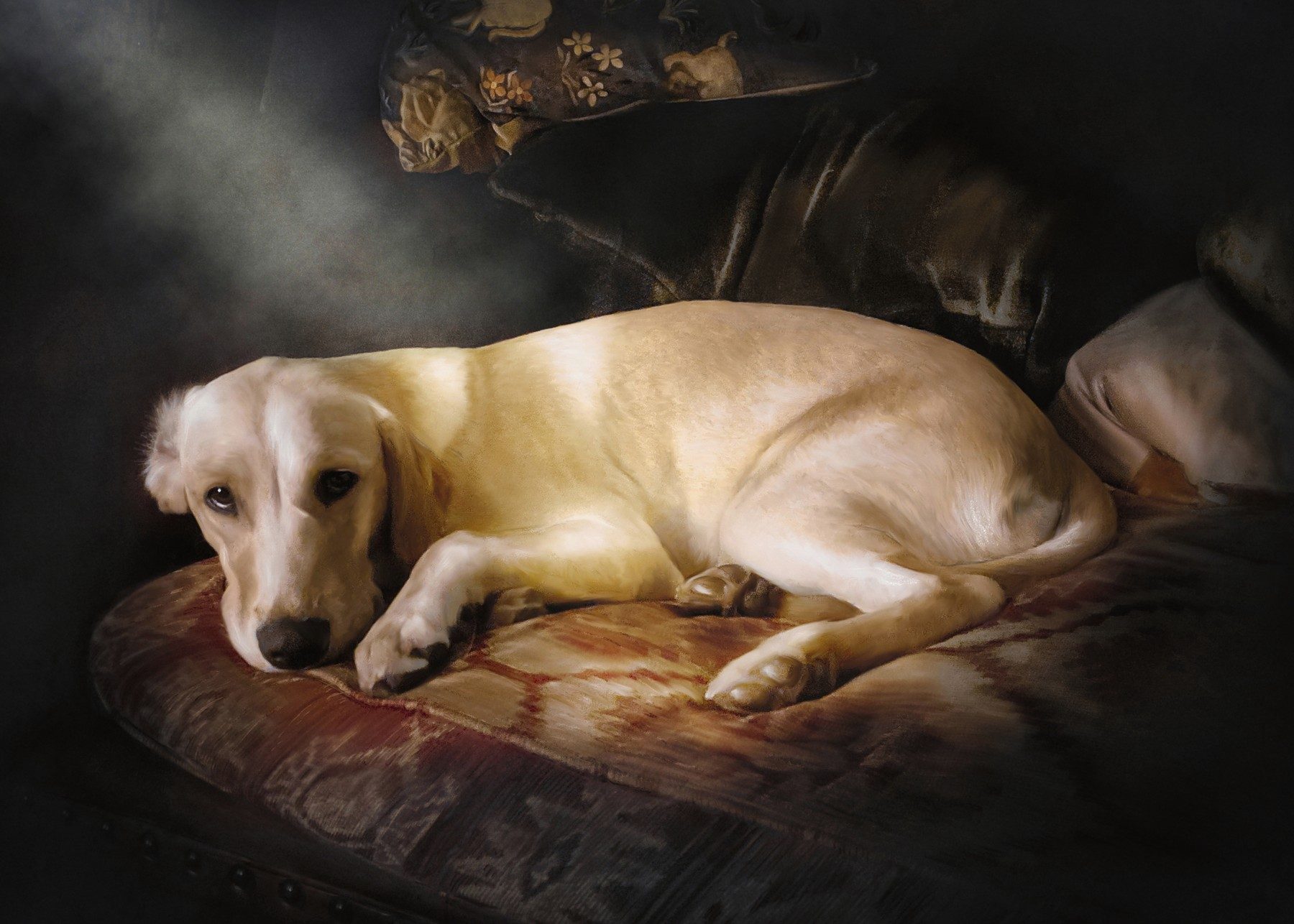
Years ago, I had a beautiful bitch called Pigwig. We went for a walk, there was a gap in the fence onto the train track, and she was hit by a train and killed. She was only two. I had walked that ground every day and I thought I knew it. I cried myself to sleep every night for a year. Bunny is her half-brother, same father. Pigwig was irreplaceable, but I loved her drive, and I thought a half-brother might be a little bit like her.
Who taught you how to train dogs?
A friend bought me Laura Hill’s Advanced Retriever Training book one Christmas, and I read it and thought, my God, I have got to meet this woman. Everything she said made sense, and it was a different approach. I knew I’d been going wrong. I had sticky, needy dogs. I convinced her to give Pete and me a lesson – she might just say I pestered her – and Laura’s been my mentor for five years. My dream was to have a really sound, reliable dog that I could trial, and she helped me achieve that.
Do you beat as well as pick up?
I can’t stand beating. It’s meant to be a rite of passage and that is how I started, but I’d get stuck in the brambles and the laurel, and the keeper would be shouting “keep the line” and I had no idea what he was talking about. So we started picking up locally instead, on a relaxed family shoot, the ideal place to go if you’ve just got a couple of dogs. I feel much more at home when picking up.
Does trialling interfere with a picking-up day?
I want my dogs to go picking up because that’s how they learn their craft, but I don’t like them to go too feral. On a shoot I’m mostly not handling them – they’re doing their work, and I stay quiet. Sometimes we do need to step in, but largely it’s just a case of sweeping on the shoots I’ve picked up on, and I want an excellent game finder for that. If I want to trial a dog, they need that engagement with me, they need to be team players. I only get out on Saturdays, and people think we’re part-timers who are precious about our trial dogs. But we get really stuck in. And this notion that a dog that trials can’t work is absolute nonsense. They just have more connection with us.
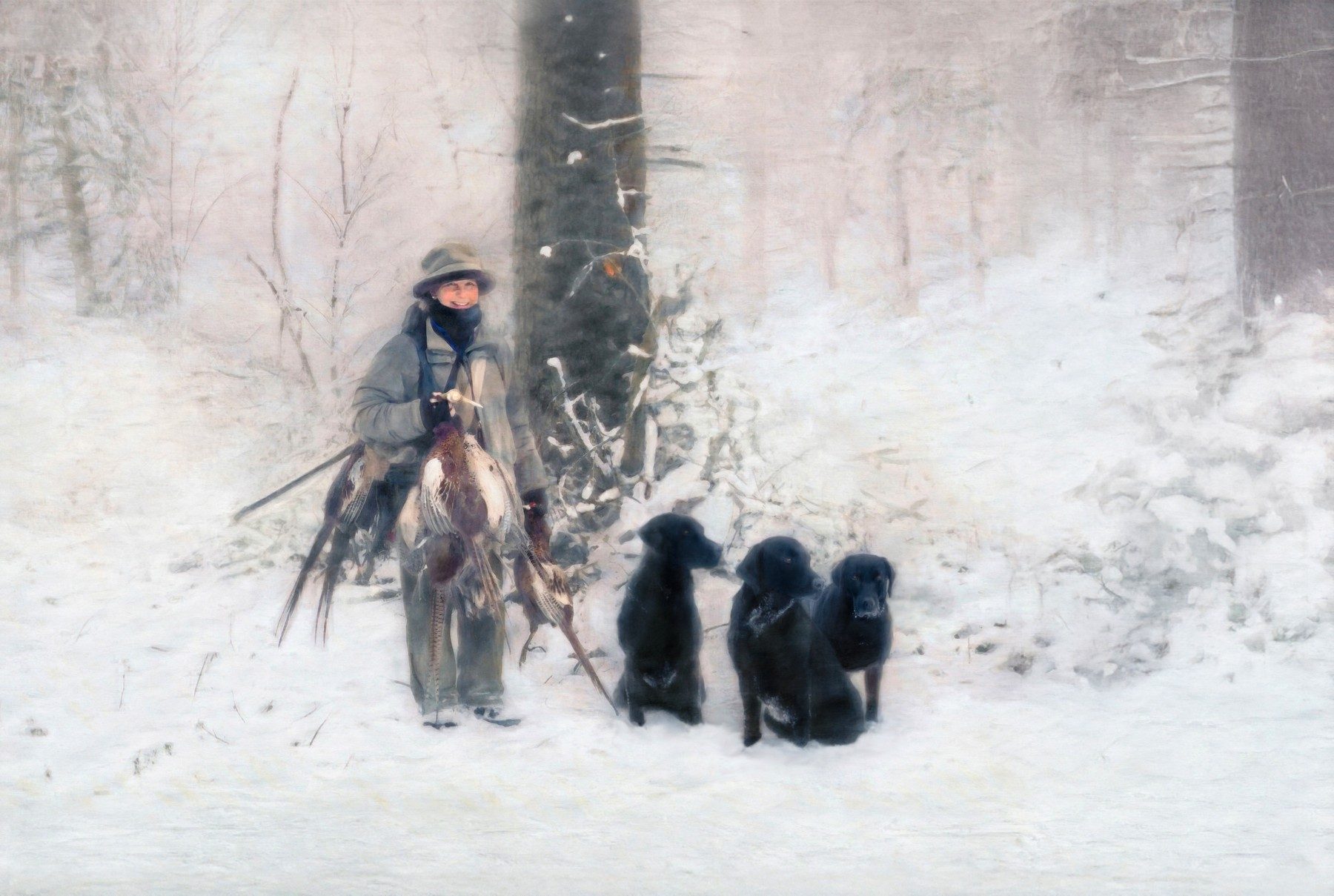
Talk me through the painting.
I work in a small room at home, very organised and tidy. Some artists work in a complete mess, but everything of mine is laid out neatly. I use acrylics. Everything starts as a large-scale pencil drawing. I scan that and reduce it by half, and the reduction gives you a realism that would take a hell of a long time and a lot of skill to capture otherwise. Then it’s printed onto canvas or etching paper, and I paint on top of the scaled-down pencil drawing. It anchors the work. People ask me how I get that realism, and the reduction is the key. I often gloss over this step, because as soon as somebody hears the word “scan” they think there’s a cheat involved. Of course there isn’t. It is painted.
Other artists are using AI. Does that worry you?
I’ve seen what people can create and it’s pretty amazing, and I’m not judging. But for me it’s that art of traditional drawing, that stillness, that focus, understanding how to layer detail into things. It’s a very human process and I like that. For me, that has integrity. What matters to me might be irrelevant to another artist.
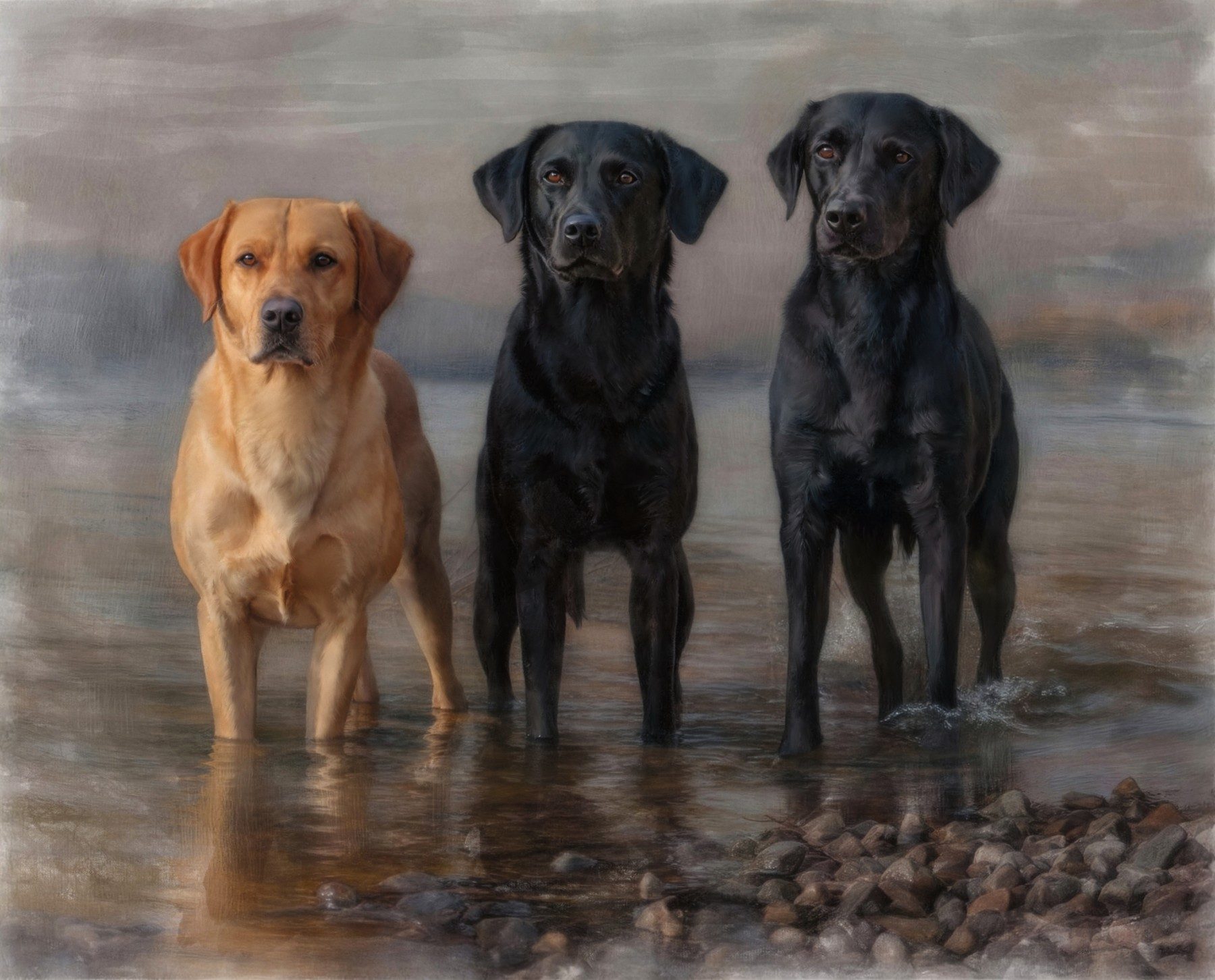
The poses in your work are unusual. Is that deliberate?
It comes from being sent really crappy photographs of their dogs, because people often have no idea how to take a photo. My sister-in-law asked me for some portraits and the angles she provided were just bizarre, and all the dogs were sadly dead, so I had to make it work. Because I understand perspective and technical drawing, I can combine that with a rubbish photo of a dog. I change things, too – clothing, backgrounds. The reality is people don’t always dress for a portrait when they’re out working a dog – I certainly don’t. But people don’t want to see themselves like that in a portrait. I recently painted a wolfhound in an entirely invented room. If somebody asked where my skill lies, that’s it: transformation, knowing what to add and what to take away, creating atmosphere. Sometimes I get a fantastic photograph to work from, but generally I just have a variety of snapshots that I have to use as my reference material. It’s also about understanding my subject matter – understanding what our dogs mean to us, and understanding this wonderful world of shooting.
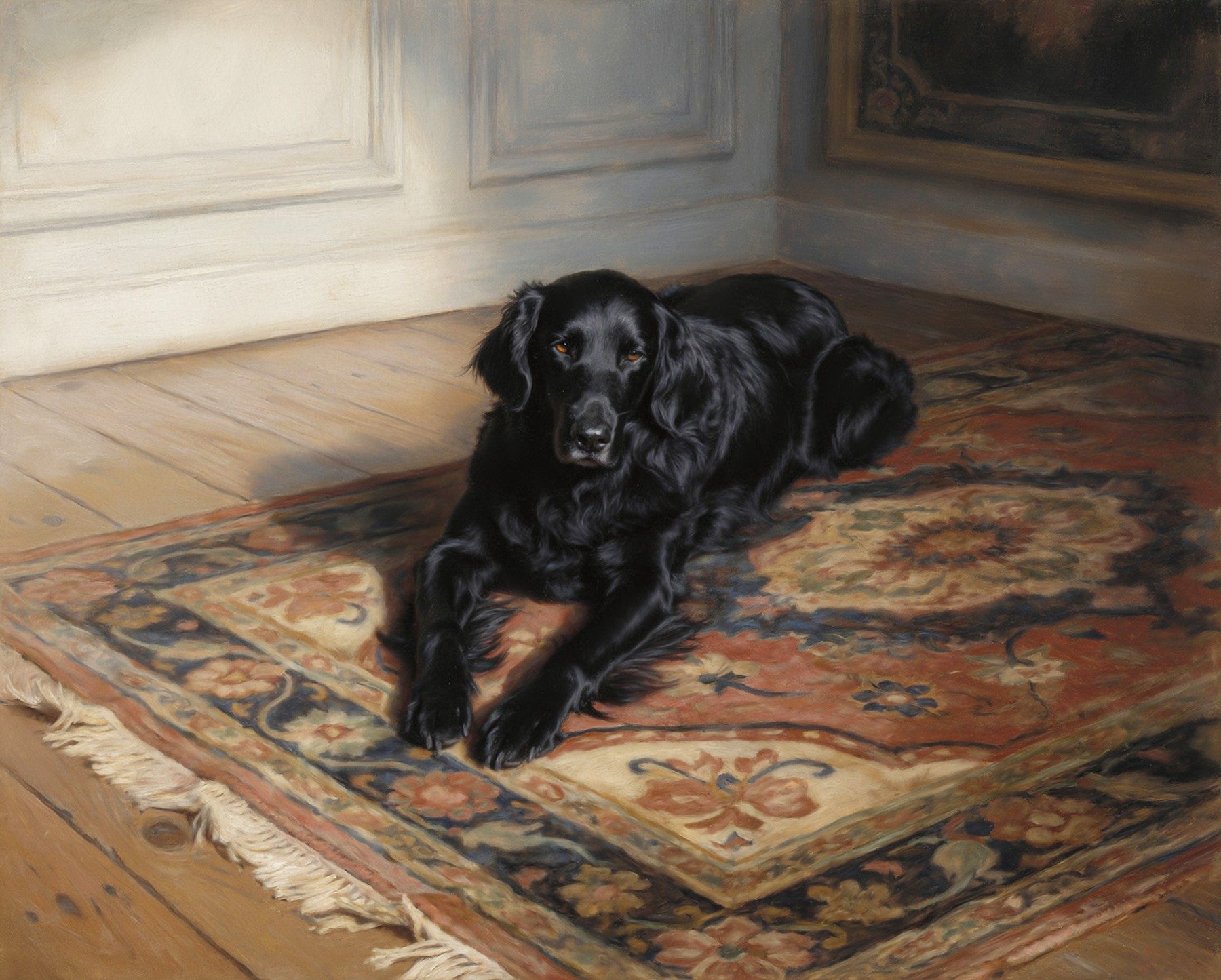
Is there a commission you couldn’t crack?
Yes, and what I learned is that you can’t just have a prescription that somebody else has written and give them what they want. I’m going to contradict myself, because I do believe in chipping away. It’s like training a dog. Things go wrong, and if you keep at it you can usually make something work. But sometimes you can’t polish it and you’ve got to burn it. I never want to come across as an arrogant git, but when you put your name to something, it has to be yours.
Which piece are you proudest of?
The one of Pigwig. I’m not comparing myself to the Dutch masters, but when I first saw those paintings – the dramatic lighting, the dark background, that intensity of the subject – that’s what I like.
Tell me something people don’t know about you.
I like country music, I like singing and dancing, and I’m shameless. I’ll sing anywhere, really badly, and I play guitar really badly. I’m a lot. I said to trainer Jayne Coley at a working test once, “Do you think I need to tone it down?” and she said, “No, just be yourself.” That’s the best advice. What is the point in faking anything? Life’s too short. I like being extra.
Frequently asked questions
Who is Betsy Bradford?
Betsy Bradford is a gundog artist based in Oxfordshire who trained for eight years as an architect at the Mackintosh School of Architecture, Glasgow School of Art. She paints working dogs and the people of the shooting world, and trains and trials labradors.
Does Betsy Bradford pick up on shoots?
Yes. She and her husband Pete pick up on a relaxed local family shoot rather than beating, which she says she cannot stand, and she only gets out on Saturdays. She wants her dogs picking up because that is how they learn their craft, and she trials them too; a dog that trials, she says, can work.
 Closes 15 JanuaryWorth £129.90Win a pair of tickets to the British Shooting Show 2027Enter nowFree to enter
Related Articles
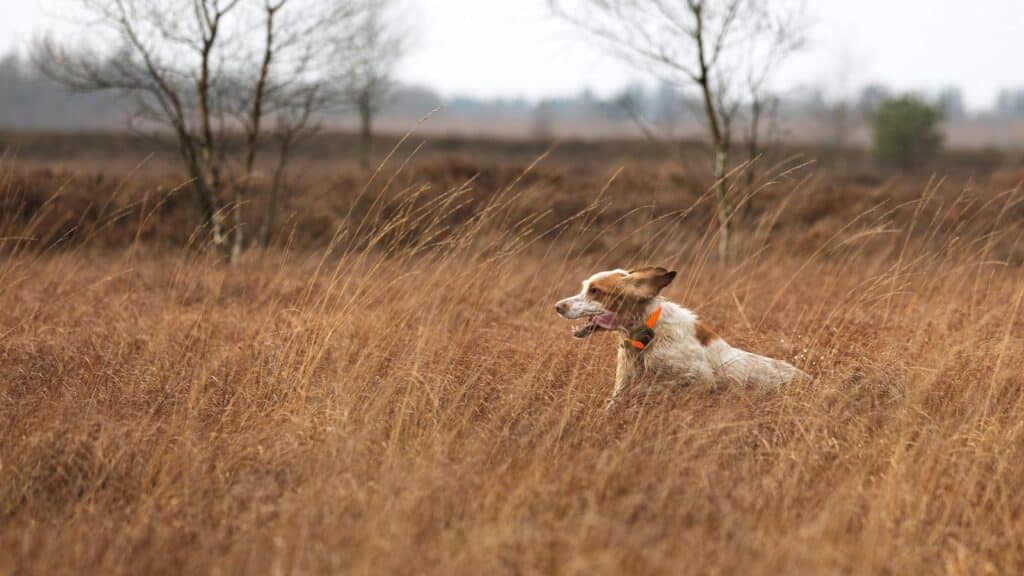
Woodcock over pointing dogs: a Danish day with two English setters
Writing in Sporting Gun, Thomas Nissen followed Jes Andersen’s English setters, Balder and Hector, through 800 hectares of Danish forest and heath: what a pointing dog brings to the woodcock day that...
By News Desk | 10 November 2026

My working terrier journey: what Norway’s elk-hunting laikas reveal about the working terrier
In this extract from his book My Working Terrier Journey, Martin Webber watches West Siberian laikas hold an elk in a Norwegian forest and sees clear parallels with the terrier below ground
By Martin Webber | 4 November 2026
Get the latest news delivered direct to your door
Subscribe to Shooting Times & Country
Discover the ultimate companion for fieldsports enthusiasts with Shooting Times & Country Magazine, the UK’s leading weekly publication that has been at the forefront of shooting culture since 1882. Subscribers gain access to expert tips, comprehensive gear reviews, seasonal advice and a vibrant community of like-minded shooters.
Save on shop price when you subscribe with weekly issues featuring in-depth articles on gundog training, exclusive member offers and access to the digital back issue library. A Shooting Times & Country subscription is more than a magazine, don’t just read about the countryside; immerse yourself in its most authoritative and engaging publication.

