★ Your magazine. Your say. Complete our reader survey with a chance to win Jack Pyke kit worth £500! ★


We test a 10m target air rifle for the garden
Gary Chillingworth swaps his scope for a diopter sight and shoots the sub-6ft/lb Precihole Club Pro Junior from the bench, prone and standing at 10m. What the film shows for anyone starting a young shot, or an older one, on a garden range, and the law that governs it
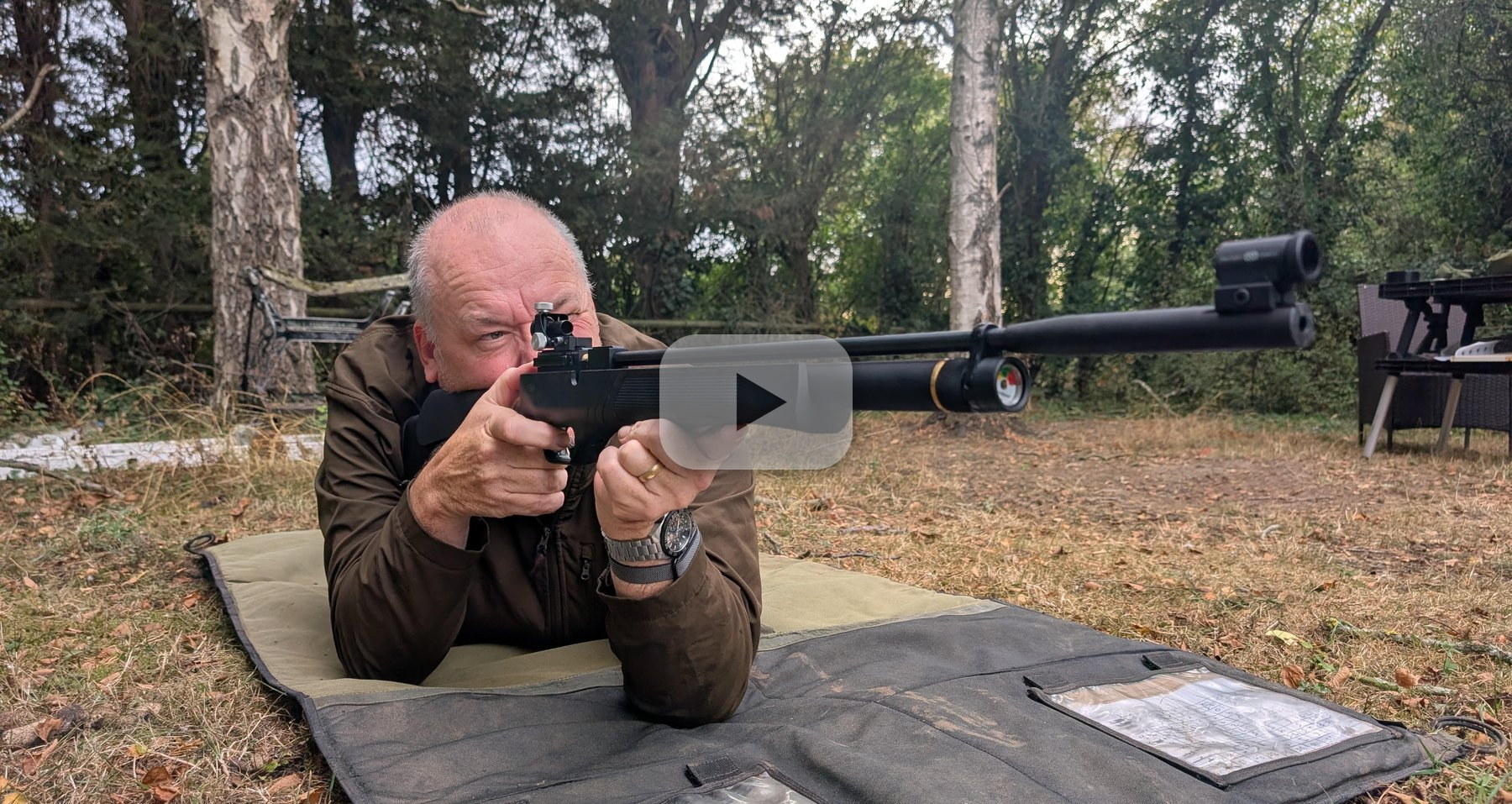

Sister title Airgun World has published a video review of the Precihole Club Pro Junior, a .177 pre-charged pneumatic (PCP) air rifle putting out a little over 5ft/lb and fitted with a diopter sight instead of a scope, shot at 10m in the garden from the bench, prone and standing. For the keeper, the shoot owner or the parent looking for a way to start a beginner at home, the film is less about one rifle than about a discipline: Olympic-style 10m target shooting needs a garden, a pellet trap and a low-powered rifle, and it is the shape of shooting that can be done lawfully at home.
Why a diopter sight rather than a scope?
The sight is the point of the film. “There is no scope and no open sights either. Instead it wears a diopter, or peep sight, that anyone who has shot a .303 Lee-Enfield will know,” Gary Chillingworth wrote in Airgun World. A diopter is a small rear aperture paired with a ring-shaped front element, offering no magnification; it is the sight used in Olympic 10m air rifle competition, and the rear unit on the Club Pro Junior adjusts for elevation and windage in 20 clicks, with interchangeable front elements.
The absence of magnification is the discipline’s teacher. “With no magnification the smallest wobble shows on the card,” Chillingworth wrote, which is exactly why the shape of shooting suits a beginner: every fault in breathing, hold and trigger release is visible on the target rather than hidden behind a scope.
The rifle and its power
Writing in Airgun World, Chillingworth said the rifle “looks and feels very like an Air Arms S200, down to the gold detail at the muzzle, and is almost the same length and weight”. It weighs 2.8kg, measures 992mm and wears an ambidextrous synthetic stock, and Air Arms distributes it in the UK. It is a side-lever PCP with a Precihole barrel putting out a little over 5ft/lb, he wrote, which means plenty of shots from a fill; at 10m, he added, there is no need for the full 12ft/lb legal limit.
That low output is the practical case for the rifle in a garden: more shots per charge, easier topping up with a hand pump, and a pellet with far less energy behind it should a backstop fail. The film follows feedback on Chillingworth’s earlier review of the Precihole Minerva from readers with limited vision who prefer short-range shooting at home.
What does 10m shooting teach an experienced shot?
Chillingworth had last shot a diopter sight more than 30 years ago on a club range beneath Baker Street, Airgun World says, so he started from the bench before moving to prone and then standing. The Club Pro Junior is much lighter than his hunter field target (HFT) competition rifle, the magazine notes, but the same breathing and trigger technique applies, and he is confident that regular practice with it would improve his competition shooting.
Airgun World’s own verdict is that the rifle is designed for juniors and beginners but suits adult shooters whatever their height or experience, and that a 10m card is harder to hit cleanly than it looks.
The law on a garden range
An air rifle producing no more than 12ft/lb needs no certificate in England and Wales; in Scotland an air weapon certificate is required. Under BASC’s guidance, a child under 14 may use an air rifle only under the supervision of someone aged 21 or over, on private premises with the occupier’s permission; a 14 to 17-year-old may borrow one from an adult and use it unsupervised on private land with the occupier’s consent, but may not buy, hire or be given one. It is an offence for anyone to fire a pellet beyond the premises where they have permission to shoot, and where a young shot is supervised, both the youngster and the supervising adult commit the offence if a pellet leaves the garden.
An owner must also take reasonable precautions to prevent anyone under 18 gaining unauthorised access to an airgun, which in a family home means a lockable cupboard or case. On a 10m range a solid pellet trap with a backstop behind it, and a line of fire that stays inside the boundary, are the whole of the safety case.
What happens next
The full film and Chillingworth’s written verdict are on Airgun World’s website now, and the magazine’s verdict is that its low power and diopter sight suit short-range target shooting at home for beginners and adults alike. For a keeper or parent starting a young shot, the checklist before the first session is the law above, the occupier’s permission, an adult over 21 for anyone under 14, and a backstop that will not let a pellet leave the ground.
Frequently asked questions
Do you need a licence for a 10m target air rifle?
Not in England and Wales, provided it produces no more than 12ft/lb; the Precihole Club Pro Junior produces a little over 5ft/lb. In Scotland an air weapon certificate is needed.
Can a child shoot an air rifle in the garden?
Yes, within the rules. Under 14, only under the supervision of someone aged 21 or over on private premises with permission; from 14 to 17, a young person may borrow an air rifle from an adult and use it unsupervised on private land with the occupier’s consent. A pellet leaving the premises is an offence for the shooter and, for a supervised child, the supervising adult too.
What is a diopter sight?
A rear aperture sight paired with a ring-shaped front element, with no magnification. It is the sight used in Olympic 10m air rifle competition; on the Club Pro Junior the rear unit adjusts for elevation and windage in clicks and the front elements are interchangeable.
Related Articles

One man and his dog: squirrel control with a gundog in the making
Danny Brookfield combines grey squirrel control and early gundog training for a rewarding morning on a pheasant estate
By Danny Brookfield | 7 September 2026

Air rifle insurance: what you need, what it covers and what to check before you buy
No law in the United Kingdom requires you to insure yourself to shoot an air rifle. Every farmer you ask for permission will want to know, though, and the club you want to join will require it – so ...
By Selena Barr | 3 September 2026
Get the latest news delivered direct to your door
Subscribe to Shooting Times & Country
Discover the ultimate companion for fieldsports enthusiasts with Shooting Times & Country Magazine, the UK’s leading weekly publication that has been at the forefront of shooting culture since 1882. Subscribers gain access to expert tips, comprehensive gear reviews, seasonal advice and a vibrant community of like-minded shooters.
Save on shop price when you subscribe with weekly issues featuring in-depth articles on gundog training, exclusive member offers and access to the digital back issue library. A Shooting Times & Country subscription is more than a magazine, don’t just read about the countryside; immerse yourself in its most authoritative and engaging publication.