★ Your magazine. Your say. Complete our reader survey with a chance to win Jack Pyke kit worth £500! ★

Hen harrier numbers rose most on brood management grouse moors
Natural England says hen harrier numbers rose fastest on the grouse moors that took part in its six-year brood management trial, but insists illegal killing remains the real block on the bird's recovery
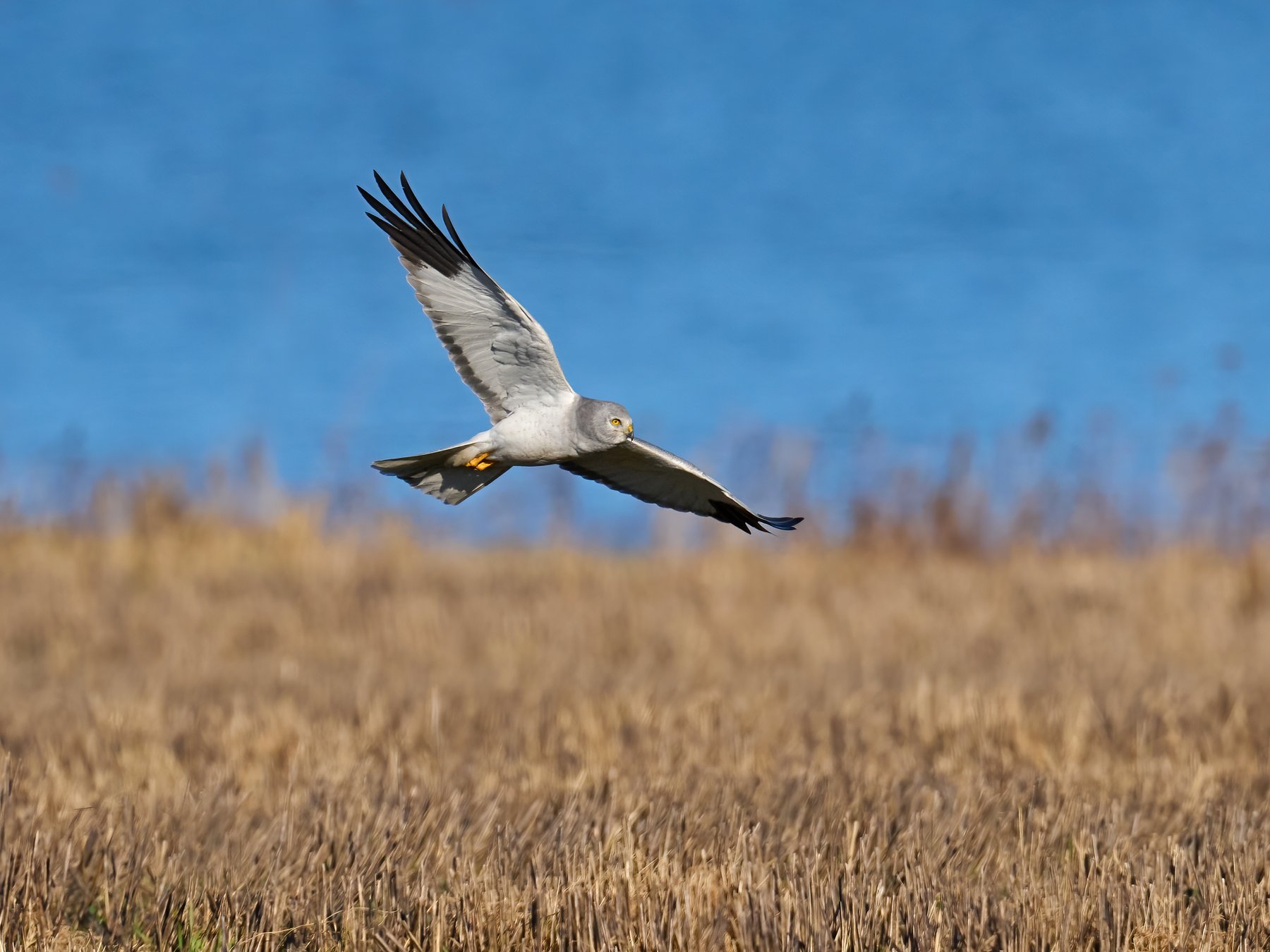

Wild hen harrier numbers in England rose most on the grouse moors that took part in a six-year brood management trial, Natural England has said in its long-awaited evaluation of the scheme. The agency says the results point to less illegal killing in some areas, but warns that persecution remains the main brake on the bird’s recovery.
What was the hen harrier brood management trial?
Brood management involves taking young hen harriers from grouse moors, rearing them in captivity and releasing them back to the wild. It was trialled in England between 2018 and 2024 by a partnership of the Moorland Association, the Game and Wildlife Conservation Trust, the International Centre for Birds of Prey, the Hawk and Owl Trust and Natural England, which led the evaluation.
The aim was to give moor managers confidence that harriers nesting among grouse could be handled legally, reducing the incentive for illegal killing. Fifteen broods were taken, reared and re-released over the course of the trial.
Why does it matter for grouse moors?
Hen harriers take red grouse chicks, and the conflict between the protected raptor and driven grouse shooting has been at the heart of upland disputes for decades. Brood management was proposed as a compromise: allowing broods to be moved off moors where harrier densities were high, in the hope of reducing the incentive for illegal killing while still letting the population grow.
What did the results show?
The number of wild hen harriers nesting in England increased substantially during the trial, with the strongest increases on grouse moors where brood management was available. Population modelling by the British Trust for Ornithology found that the small number of chicks reared in captivity was too few to explain the rise on its own.
Instead, the increase was more consistent with wild birds surviving better and settling to breed, which Natural England links to a reduction in illegal activity in some areas rather than to the captive rearing itself.
What does Natural England say it means?
Natural England concluded that the availability of brood management appeared to have led to more hen harriers successfully breeding on grouse moors. But it stressed that illegal killing remains a significant constraint on recovery, and that the trial did not demonstrate a widespread reduction in it. Future recovery, it said, is likely to need a combination of cooperative management, monitoring, enforcement and surveillance tailored to local circumstances.
The trial also drew on nest monitoring, satellite-tagged birds and wildlife crime investigations alongside the population modelling, and Natural England published two social science studies of moorland managers to gauge how the scheme was viewed by those on the ground. The agency framed the outcome as evidence that working with moor managers can help, but not as a substitute for tackling the illegal killing that continued throughout the six years.
How has the moorland sector responded?
The Moorland Association, one of the trial partners, argues the evaluation strengthens the conservation case for brood management. Its chief executive, Andrew Gilruth, said “the scenario best supported by the available evidence is that having brood management available enabled more hen harriers to breed successfully on grouse moors”.
The association points out that the trial’s licences have now lapsed, and it is seeking what it calls a practical, multi-year conservation licence so that brood management can continue; details are at moorlandassociation.org.
What happens next?
Natural England has published four reports: an overall evaluation, the British Trust for Ornithology population modelling, and two social science studies of moorland managers. They can be read in full on the Natural England Access to Evidence portal at publications.naturalengland.org.uk.
Frequently asked questions
What is hen harrier brood management?
Taking young hen harriers from grouse moors, rearing them in captivity and releasing them back to the wild. It was trialled in England between 2018 and 2024 by the Moorland Association, the Game and Wildlife Conservation Trust, the International Centre for Birds of Prey, the Hawk and Owl Trust and Natural England, and fifteen broods were reared and re-released.
Did brood management cause the rise in hen harrier numbers?
Not directly. British Trust for Ornithology modelling found the small number of chicks reared in captivity was too few to explain the rise on its own. The increase was more consistent with wild birds surviving better and settling to breed, which Natural England links to a reduction in illegal activity in some areas.
Is brood management still running?
No. The Moorland Association says the trial’s licences have now lapsed, and it is seeking what it calls a practical, multi-year conservation licence so that brood management can continue.
Related Articles

Shoots urged to use every bird as chiller network triples
The Country Food Trust is now running six game chillers around the UK, three times last season's number, and is asking shoots and Guns to make sure every bird shot goes into the food chain
By Shooting Times | 20 September 2026
Snettisham: 71 years of visits and a hard look at the RSPB
David Whitby has known this stretch of the Norfolk coast since boyhood, and returns to weigh what the reserve has gained against what it has quietly lost
By David Whitby | 19 September 2026
Get the latest news delivered direct to your door
Subscribe to Shooting Times & Country
Discover the ultimate companion for fieldsports enthusiasts with Shooting Times & Country Magazine, the UK’s leading weekly publication that has been at the forefront of shooting culture since 1882. Subscribers gain access to expert tips, comprehensive gear reviews, seasonal advice and a vibrant community of like-minded shooters.
Save on shop price when you subscribe with weekly issues featuring in-depth articles on gundog training, exclusive member offers and access to the digital back issue library. A Shooting Times & Country subscription is more than a magazine, don’t just read about the countryside; immerse yourself in its most authoritative and engaging publication.