★ Your magazine. Your say. Complete our reader survey with a chance to win Jack Pyke kit worth £500! ★


Managed grouse moors hold twice the curlews, Teesdale survey finds
A survey of Upper Teesdale has found roughly twice as many breeding curlews on blanket bog managed by burning or cutting for grouse as on unmanaged bog, adding to the evidence that moorland keepering supports one of Britain's most threatened waders
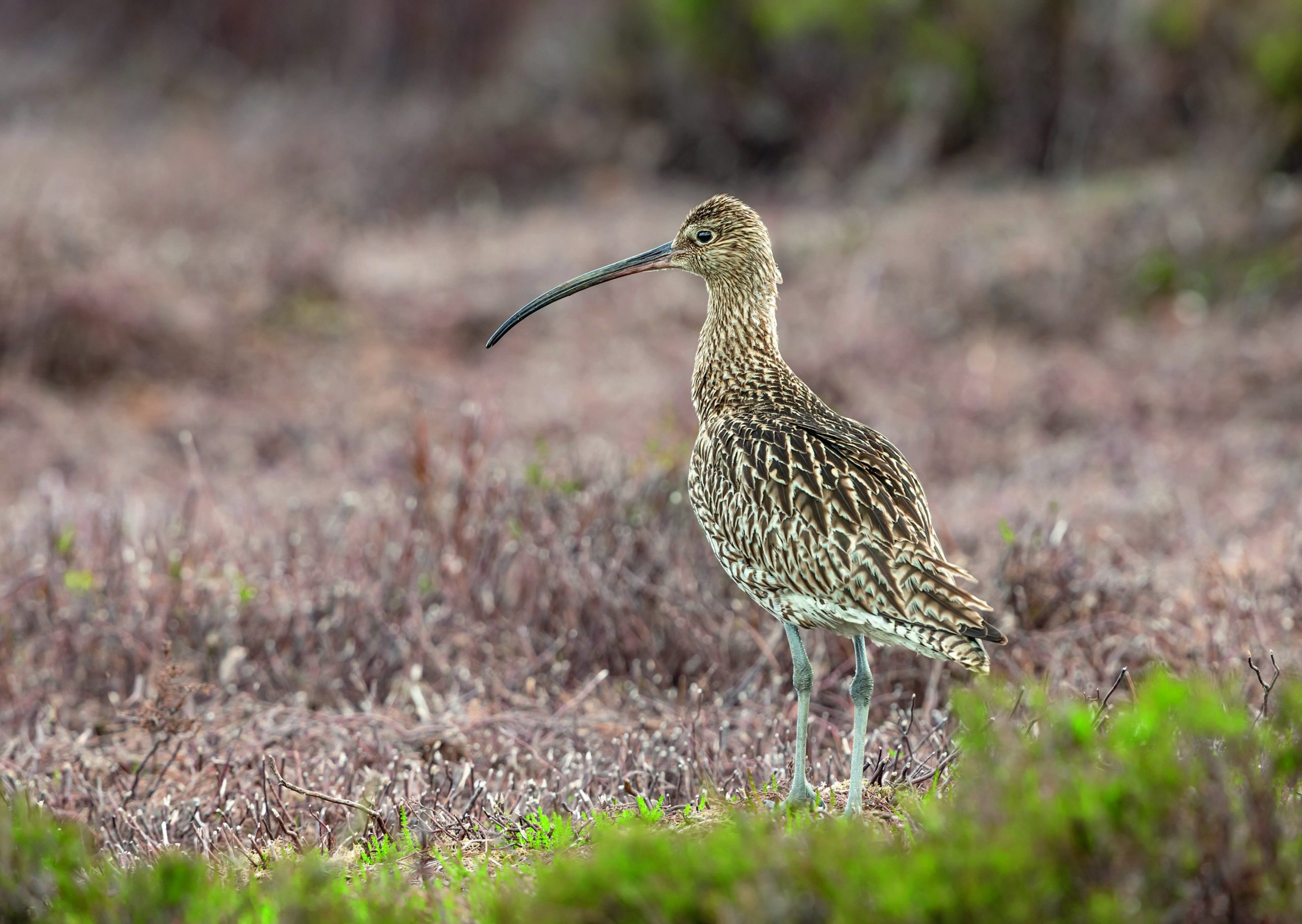

Blanket bog managed by burning or cutting for red grouse held about twice the density of breeding curlews as unmanaged bog, a new survey of Upper Teesdale has found. The result adds to the evidence that grouse-moor management supports the wider moorland bird community, including a wader that is red-listed in the UK and near-threatened across the world.
What did the Teesdale curlew survey find?
The survey recorded roughly four breeding pairs of curlew per square kilometre on blanket bog managed by burning or cutting, against fewer than two pairs per square kilometre on bog left unmanaged. Managed bog also carried a disproportionate share of the birds, holding 23% of the dale’s curlews on 21% of the land, while unmanaged bog held only 8% of the birds across 18% of the area.
Curlews were densest of all not on bog but on rough grazing and grass moor at middle elevations, which makes the gap between managed and unmanaged bog the more striking: even on the dale’s less favoured ground, active management roughly doubled the birds.
The finding carries added weight because of the population it comes from. Upper Teesdale holds 1,764 breeding pairs of curlew, close to 3% of the entire UK total, and counts repeated about a decade apart found the population essentially flat. While national curlew numbers fell by roughly half between 1995 and 2021, this dale held its ground.
Why does moorland management help curlews?
Curlews fare better where moorland vegetation is structurally varied rather than uniform, with a mix of heights and open patches for nesting and feeding. Burning and cutting break up an even sward and create that variety, and earlier research in the North Pennines linked the same management to rising numbers of curlews and golden plover.
On these moors, burning and cutting are carried out to manage the land for red grouse, but their effects reach well beyond a single species. Predator control is part of the same picture: gamekeepers removed foxes and crows across most of the dale year-round, and the curlews here fledged one chick per pair, twice the rate needed to sustain numbers.
What does the survey mean for burning policy?
Burning on deep-peat blanket bog in protected sites has been restricted in England since 2021 under the Heather and Grass etc. Burning (England) Regulations, with cutting put forward as the main alternative. The Teesdale authors caution that if cutting fails to reproduce the vegetation structure that burning created, moorland waders could decline further.
The caution is conditional, but it rests on the survey’s central finding: managed bog, whether burned or cut, held twice the curlews of bog that was left alone. The authors stress their study cannot prove burning alone delivered the difference, nor weigh burning against cutting, but say restricting these tools without a tested replacement bets against the evidence.
What happens next?
The full Upper Teesdale breeding wader survey is available to read in full, and the Moorland Association has published a summary of the findings at moorlandassociation.org. The debate over burning and cutting on blanket bog continues as the Government weighs further restrictions on peatland burning.
Frequently Asked Questions
Are curlews endangered in the UK?
The curlew is red-listed in the UK under Birds of Conservation Concern and classed as near-threatened worldwide on the IUCN Red List. The UK and Ireland hold about a quarter of the global breeding population, and numbers in England and Scotland fell by more than half between the mid-1990s and 2021.
Is heather burning banned on blanket bog in England?
Burning specified vegetation on deep peat over 40cm on protected blanket bog sites has been restricted since 2021 under the Heather and Grass etc. Burning (England) Regulations, unless carried out under licence. Cutting is offered as an alternative, and the Government has since consulted on extending the restrictions.
 Closes 15 JanuaryWorth £129.90Win a pair of tickets to the British Shooting Show 2027Enter nowFree to enter
Related Articles

Rigby opens Grade II-listed London home with museum
The 251-year-old gunmaker has moved to a converted ballet school in Clapham, where visitors can watch guns being made and see Jim Corbett’s rifle at the heart of the showroom
By News Desk | 14 October 2026

Amber Rutter crowned European Skeet champion in Greece
The Olympic silver medallist beat Italy’s Diana Bacosi by a single target in Malakasa, on a week when two GB juniors also took European bronze
By News Desk | 14 October 2026
Get the latest news delivered direct to your door
Subscribe to Shooting Times & Country
Discover the ultimate companion for fieldsports enthusiasts with Shooting Times & Country Magazine, the UK’s leading weekly publication that has been at the forefront of shooting culture since 1882. Subscribers gain access to expert tips, comprehensive gear reviews, seasonal advice and a vibrant community of like-minded shooters.
Save on shop price when you subscribe with weekly issues featuring in-depth articles on gundog training, exclusive member offers and access to the digital back issue library. A Shooting Times & Country subscription is more than a magazine, don’t just read about the countryside; immerse yourself in its most authoritative and engaging publication.