

Moorland Association challenges government wildfire science note
A Government Office for Science wildfire science note says burning can make moors more flammable; the association has written to its authors and the EFRA Committee, and has forced the RSPB to retitle a conference poster
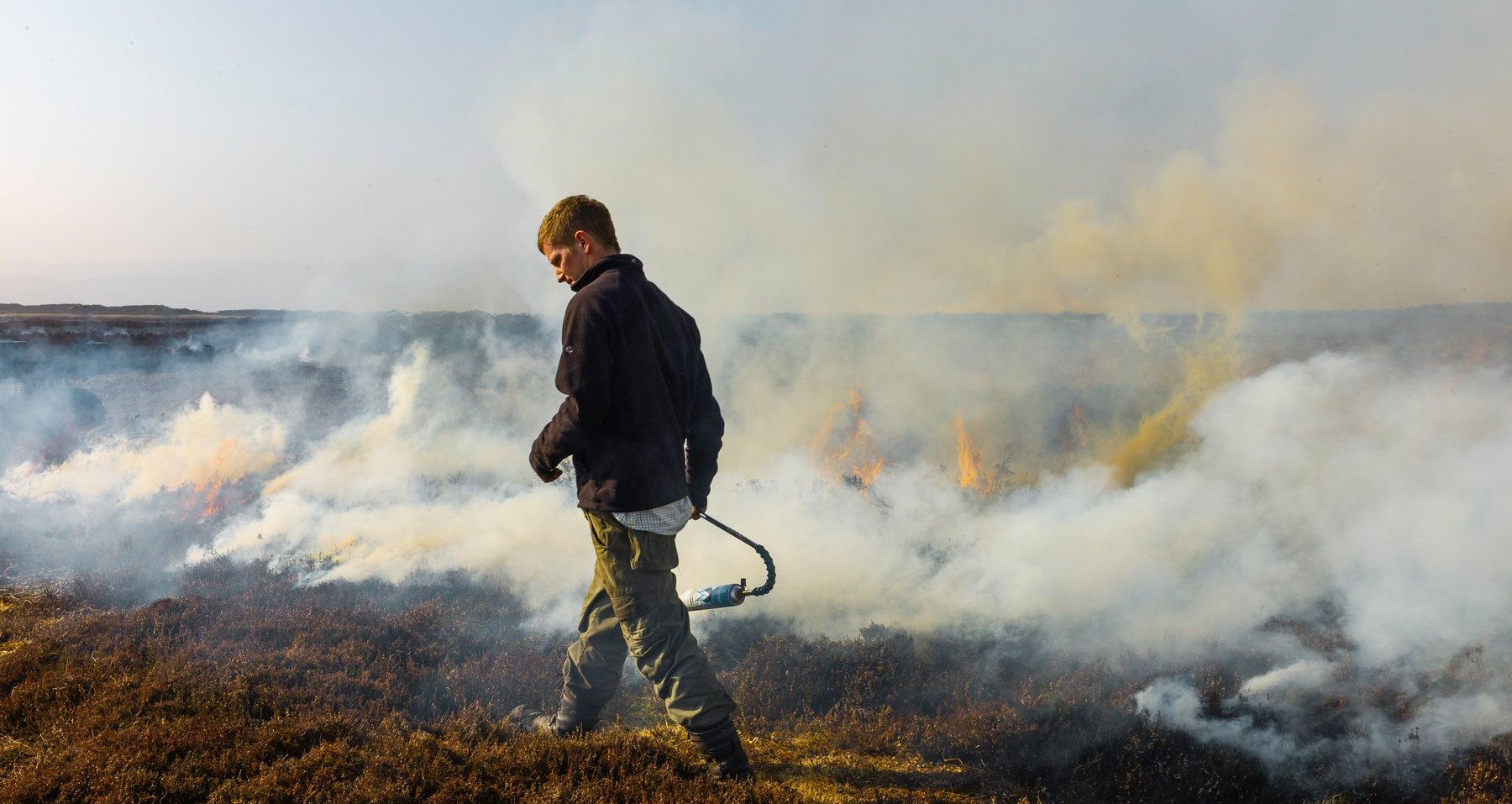

The Moorland Association has formally challenged a Government Office for Science briefing that links prescribed burning to greater wildfire risk, saying it presents contested claims “without adequately reflecting scientific uncertainty”. The note, published on 5 November, draws on a roundtable held on 10 August and chaired by Natural England’s chief scientist, Professor Sallie Bailey; the association says no fire and rescue service and no working upland land manager was in the room.
What does the science note say?
The briefing, titled Impacts of wildfires on UK biodiversity and natural capital, records the combined views of 14 participants from Natural England, the RSPB, the GWCT, the Forestry Commission and a group of universities, and states that it is not a statement of government policy. Among its conclusions are that drainage and prescribed burning in upland habitats “can favour dry-adapted species”, making habitat more susceptible to wildfire and “establishing a feedback loop”, that rewetting drained habitats will reduce their potential to ignite, and that peatland fires may account for up to 90% of UK fire-driven carbon emissions. It also notes that land abandonment creates sites with high fuel loads, that wetter winters are shrinking the window for vegetation management and that mixed grazing is linked to greater fire resilience.
The association’s case against it
Andrew Gilruth, chief executive of the Moorland Association, has written to the Government Office for Science, copying Professor Bailey and the chair of the Environment, Food and Rural Affairs Committee, and has lodged a statutory information request for the roundtable record. The association cites a 2026 study by Ritson and colleagues describing a transition period of elevated fuel loads after burning stops, a northern England experiment in which both burning and cutting reduced heather dominance and fuel loads over five years, and a Scottish study that found 96% of wildfire area lay outside land managed by muirburn.
The same week the RSPB changed the title of a poster presented at the UK Wildfire Conference in Leeds on 10 and 11 November, after the association wrote to its chief executive, Beccy Speight, on 26 October asking for the evidence behind it. The poster had been titled “Prescribed burning increases wildfire severity in UK upland moorland”; it now reads “A comparison of wildfire severity on grouse-moor and non-grouse-moor upland moorland”. The RSPB’s chief operating officer, James Robinson, replied on 29 October that the research was well advanced but not yet published. The association said: “We welcome the change. But changing a title does not answer the questions about the evidence behind it.” It added that “a comparison is not proof of a cause” and asked the RSPB to account for the severity of this year’s fires on its own reserves at Dove Stone, Abernethy and Minsmere.
What happens next
The Government Office for Science has not published a response, and the EFRA Committee is awaiting the Government’s reply to its wildfire report, due by 21 December. In a written answer on 6 November, the Department for Environment, Food and Rural Affairs (Defra) confirmed that the Heather and Grass etc. Burning (England) (Amendment) Regulations 2025 are managed by Defra with Natural England as a consultee on licence applications and fire and rescue services providing advice. The petition to restore controlled burning, launched by a land manager last week, remains open until 23 April 2027. The science note can be read in full on GOV.UK.
Frequently asked questions
What is the Government Office for Science wildfire note?
A rapid briefing published on 5 November 2026 recording the views of 14 roundtable participants on how wildfire affects UK biodiversity and natural capital; it is not government policy.
Why did the RSPB change its poster title?
After the Moorland Association asked for the evidence and methods behind it, the RSPB said the research was not yet published and retitled the poster as a comparison rather than a claim of cause.
Can heather be burned in England this winter?
Only under licence on deep peat and designated sites, under the Heather and Grass etc. Burning (England) (Amendment) Regulations 2025, with Natural England as consultee.
 Closes 15 JanuaryWorth £129.90Win a pair of tickets to the British Shooting Show 2027Enter nowFree to enter
Related Articles
Hunt master given 300 hours and 10-year dog ban for illegal fox hunt
Claire Bellamy, who led a licensed hunt in Renfrewshire, was sentenced at Paisley Sheriff Court under the Hunting with Dogs (Scotland) Act 2023 after a sheriff found the hounds were allowed to chase a...
By News Desk | 11 November 2026
BASC calls for Scottish Outdoor Access Code review after survey
Nearly 500 gamekeepers, stalkers and wildfowlers told BASC that walkers ignoring signs, loose dogs and dawn visitors are disrupting deer and game management, and two thirds rated access authorities in...
By News Desk | 11 November 2026
Get the latest news delivered direct to your door
Subscribe to Shooting Times & Country
Discover the ultimate companion for fieldsports enthusiasts with Shooting Times & Country Magazine, the UK’s leading weekly publication that has been at the forefront of shooting culture since 1882. Subscribers gain access to expert tips, comprehensive gear reviews, seasonal advice and a vibrant community of like-minded shooters.
Save on shop price when you subscribe with weekly issues featuring in-depth articles on gundog training, exclusive member offers and access to the digital back issue library. A Shooting Times & Country subscription is more than a magazine, don’t just read about the countryside; immerse yourself in its most authoritative and engaging publication.

