★ Your magazine. Your say. Complete our reader survey with a chance to win Jack Pyke kit worth £500! ★


Yorkshire Dales curlew eggs rear Ireland’s next generation
Forty eggs from the keepered uplands of the Dales are at the heart of an unprecedented five-year rescue plan for Ireland's vanishing curlew


Curlew eggs collected from the keepered moorland of the Yorkshire Dales are rearing Ireland’s next generation of breeding waders, under the first licensing arrangement of its kind between the UK and Ireland. The first 20 chicks were released in early July, and the programme aims to add 200 birds to the Irish population by 2030.
Why does Ireland need Yorkshire’s curlew eggs?
Ireland’s breeding curlew population is estimated to have declined by 98 per cent since the 1980s, leaving between 100 and 150 breeding pairs, and the bird faces extinction as a breeding species across most Irish counties.
Christopher O’Sullivan, Ireland’s Minister of State for Nature, Heritage and Biodiversity, announced the scheme with agriculture minister Martin Heydon on 3 July. “Now we’re accelerating our actions and giving this vulnerable species the shot in the arm that it needs to survive and thrive in our landscapes,” he said. “This landmark licencing arrangement is in place with UK authorities for the next five years. That means we will add 200 birds to the existing curlew population by 2030.”
What part did Yorkshire’s keepers play?
The 40 eggs were collected in May from what the Irish government calls “the stable curlew population on the Yorkshire Dales”, in a collaboration between the Breeding Waders European Innovation Partnership and the Yorkshire Dales Moorland Group. Yorkshire supports 43 per cent of the UK’s breeding curlew, according to the national park authority, an abundance widely credited to the predator control and habitat management delivered by the area’s keepered moors.
Donal Beagan, the EIP’s headstarting and nest protection manager, said it had been “enlightening to witness healthy breeding wader populations as a result of landscape management in Yorkshire”, adding: “Huge credit to the land managers, keepers and farmers in that area for helping to conserve a stronghold for breeding waders.”
How are the chicks reared and released?
The eggs were transported by the Breeding Waders EIP team for early-stage rearing at the Centre for Species Survival at Dublin Zoo, with chicks moved to specially designed release aviaries at 15 to 20 days old. The first 20 were released on 3 July, some fitted with GPS tags, and further releases follow at locations around Ireland over the coming weeks.
The programme is supported by Ireland’s National Parks and Wildlife Service, and the EIP is co-funded by the European Commission and the Irish Government under the CAP Strategic Plan.
What happens next
The licensing arrangement runs for five years, with the aim of 200 birds added to the Irish population by 2030, alongside habitat work under Ireland’s national Nature Restoration Plan. The full announcement is on the Irish government site at gov.ie.
Related Articles

Curlew recovery hinges on keepered ground, BTO modelling shows
Fencing and predator control are saving nests but not chicks, and the report warns that losing grouse-moor management would halve population growth
By News Desk | 10 September 2026
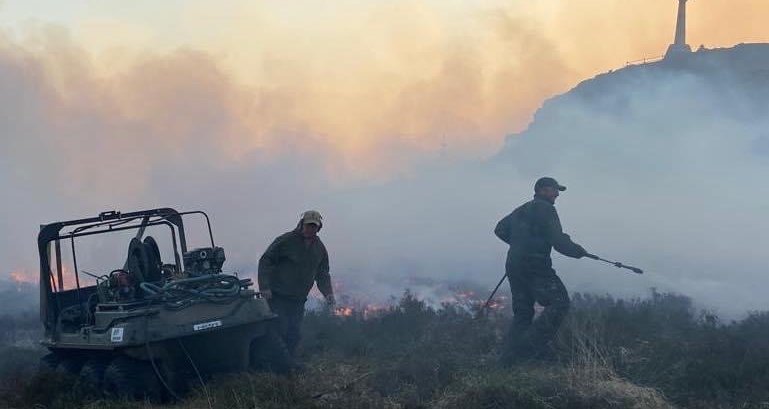
Moorland Association demands statutory wildfire board
The association wants a legal duty to cut fuel loads and gamekeepers formally written into regional fire planning, after a 2025 season it says burned 46,000 hectares
By News Desk | 8 September 2026
Get the latest news delivered direct to your door
Subscribe to Shooting Times & Country
Discover the ultimate companion for fieldsports enthusiasts with Shooting Times & Country Magazine, the UK’s leading weekly publication that has been at the forefront of shooting culture since 1882. Subscribers gain access to expert tips, comprehensive gear reviews, seasonal advice and a vibrant community of like-minded shooters.
Save on shop price when you subscribe with weekly issues featuring in-depth articles on gundog training, exclusive member offers and access to the digital back issue library. A Shooting Times & Country subscription is more than a magazine, don’t just read about the countryside; immerse yourself in its most authoritative and engaging publication.