★ Your magazine. Your say. Complete our reader survey with a chance to win Jack Pyke kit worth £500! ★

Stalking Diary: the clean miss that turned out to be a five-point buck
One shot that appeared to be a clean miss serves as a reminder of why every stalker owes every deer a thorough follow-up, every time. Chris Dalton on discipline, patience and trusting the dog


I would like to return to the subject of the roe rut, not to relate tales of spectacular success or abysmal failure, but to reinforce the importance of deerstalker discipline and the value of the follow-up.
Out with Joe, a regular client from Michigan, we left the truck and headed into a scrubby bank of willows adjacent to a newly drilled turnip field. The young turnips were not only attracting woodpigeons, but in recent days I had noticed that the succulent growth had also caught the attention of the resident roe deer.
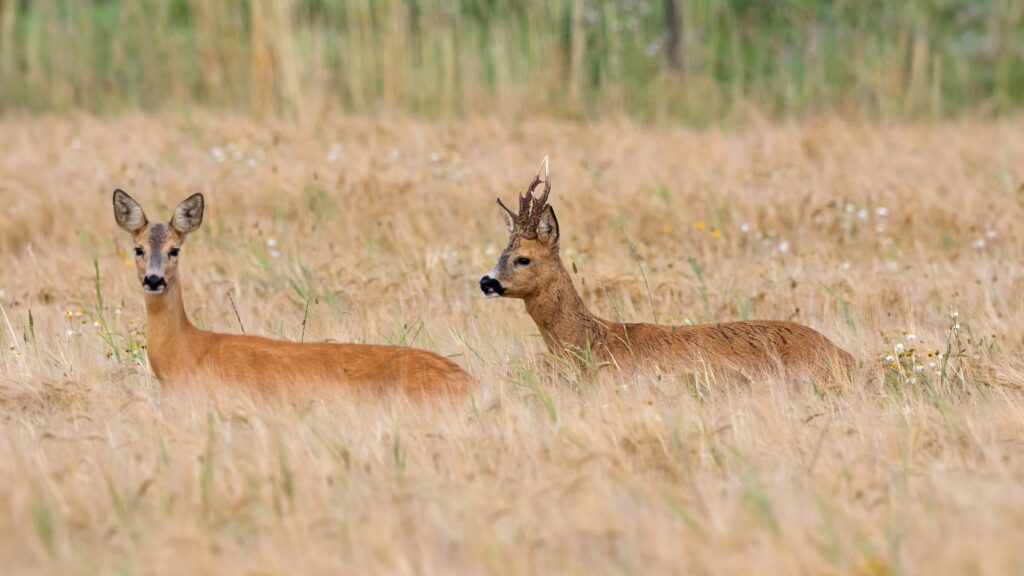
Within a short distance, and before I had a chance to give a few peeps on the roe caller, a doe dashed across in front of us with a roebuck in hot pursuit, both completely oblivious to our presence. The buck eventually turned broadside and stood long enough for Joe to take the shot.

Why an absent reaction is not proof of a miss
Watching through my binoculars, I saw what appeared to be a splash of dirt from beneath the buck. There was no reaction, no telltale sound of the bullet striking and, after pausing briefly, the roe simply ran on, stopped again, sniffed the air and then moved off out of sight. Certain it was a clean miss, I told Joe as much, commiserated with my now deflated guest and, to be honest, for the briefest of moments considered not checking at all.
Fortunately, I remembered how many times I had covered this very subject on training courses. Following the principles of good stalking practice, I insisted that we carry out a careful search of the shot site and the surrounding area. As stalkers, we have an ethical responsibility to confirm the outcome of every shot, regardless of how certain we may feel at the time. Assumptions have no place where animal welfare is concerned.
Always trust your deer dog
I first examined the spot where the buck had been standing, looking for any sign of a strike while paying close attention to the reaction of my dog, Zosia, a veteran of many successful recoveries. She sniffed around and immediately showed interest. Another lesson I have learned over many years is simple: always trust your dog. I cast Zosia off, and before long we were standing over a lovely five-point roebuck in prime condition, wearing a full summer coat.
The shot had been well placed and I am still amazed by the complete lack of an audible strike or any visible indication that the buck had been hit. It was a valuable reminder that deer do not always react as expected when shot, and the absence of an obvious reaction should never be taken as proof of a miss.
The follow-up is not an optional extra
Adrenaline and first impressions can easily cloud judgement, but they must never replace a methodical follow-up. Had I simply accepted my initial belief that the client had missed and walked away, the deer would never have been recovered. That would have been both unethical and irresponsible.
In stalking, the follow-up is not an optional extra – it is a fundamental part of our responsibility. Every shot deserves to be treated with the same care and diligence, regardless of what we think we have seen or heard. On this occasion, the experience served as a timely reminder that our assumptions can be wrong, and that discipline, patience and trust in a good dog remain among the most valuable tools any stalker possesses.

Chris Dalton is the founder of South Ayrshire Stalking.
Frequently asked questions
How long should you wait before following up a shot deer?
The point of this account is that you follow up every shot, whatever you think you saw. Examine the spot where the deer was standing for any sign of a strike, search the surrounding area methodically, and use a trained dog where one is available rather than relying on first impressions.
Can a deer show no reaction at all when it is hit?
Yes. In this case the shot was well placed and the buck simply ran on, stopped, sniffed the air and moved off, with no audible strike and no visible indication of a hit. The absence of a reaction should never be taken as proof of a miss.
What makes a good deer dog on a follow-up?
Experience and a handler who will believe it. Zosia showed interest at the shot site straight away and was cast off from there, which is what recovered the buck. Trusting the dog rather than your own reading of the shot is the lesson Chris draws from years of recoveries.

About the author
Chris Dalton
A South Ayrshire-based full-time deer manager and founder of South Ayrshire Stalking, Chris is a regular contributor to Shooting Times. He comes from a farming background in rural South Yorkshire and continued shooting around the world as a serving RAF officer before moving to Scotland, where he and his wife Anne set up South Ayrshire Stalking at Garryloop, their converted barn and cobbler's cottage near Girvan. The business offers accompanied stalking, deer management training and assessment for DSC 1 and DSC 2 qualifications, and was the first in the UK accredited under the 2% for Conservation scheme. Chris is an assessor for the British Deer Society and a member of the UK trophy measuring team for BASC and BDS. He was named UK Professional Stalker of the Year from 2019 to 2023.
Related Articles
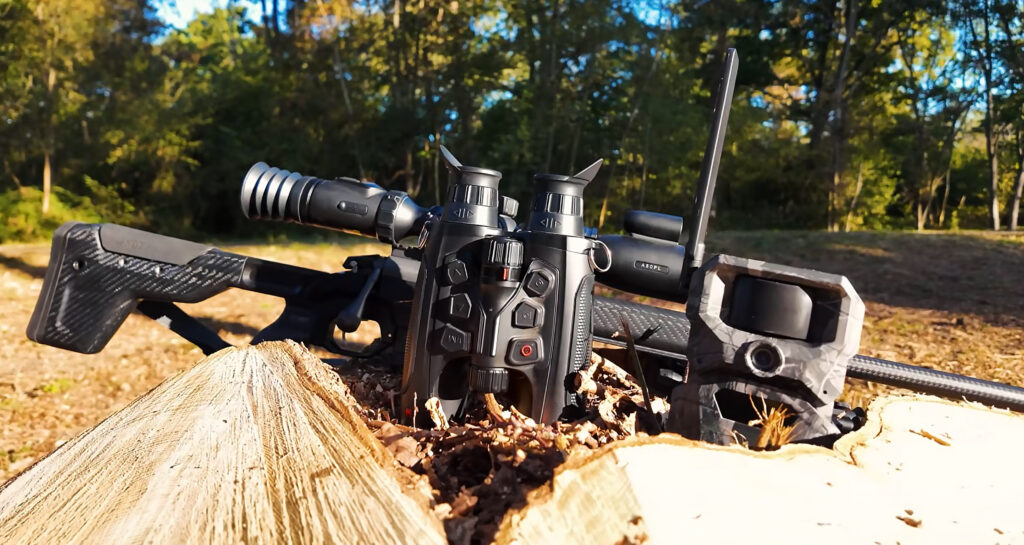
HIKMICRO's three-step stalking ecosystem tested on muntjac
Ed Jackson takes HIKMICRO's three-step detection, observation and shot ecosystem into the high seat after muntjac, to find out whether connected kit really earns its place on a stalk
By Ed Jackson | 11 September 2026
Stalking diary: three bucks on a humid evening in the Borders
The roe rut in the Scottish Borders is following the script at last, and Charlie Blance finds the heat and humidity have the bucks properly riled up. One misty, mizzly evening on the call accounts for...
By Charlie Blance | 8 September 2026
Get the latest news delivered direct to your door
Subscribe to Shooting Times & Country
Discover the ultimate companion for fieldsports enthusiasts with Shooting Times & Country Magazine, the UK’s leading weekly publication that has been at the forefront of shooting culture since 1882. Subscribers gain access to expert tips, comprehensive gear reviews, seasonal advice and a vibrant community of like-minded shooters.
Save on shop price when you subscribe with weekly issues featuring in-depth articles on gundog training, exclusive member offers and access to the digital back issue library. A Shooting Times & Country subscription is more than a magazine, don’t just read about the countryside; immerse yourself in its most authoritative and engaging publication.