★ Your magazine. Your say. Complete our reader survey with a chance to win Jack Pyke kit worth £500! ★
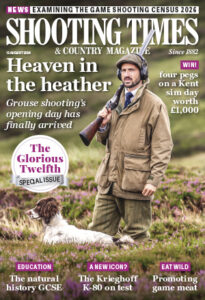

Country Diary: why tending pheasant poults has been the best medicine
Laurence Catlow on a trouble-free release at High Park, and why caring for 325 pheasant poults has proved such strong medicine for a man recovering in mind and body


For the last four weeks or so I have, from time to time, been asking myself why it is that, just as I hoped in my last piece (Country Diary, 26 August), looking after 325 pheasant poults is proving such strong medicine, such healing therapy. Every morning and afternoon I turn up to feed and water my birds and, almost without exception, I return home feeling better than when I set out.
One of the reasons is not difficult to find – this year’s release has gone exceptionally well and, now that a month has passed since the arrival of my birds, serious problems seem every day less likely. My fingers remain firmly crossed but so far losses have been minimal; there have been no signs of disease and no serious signs of pecking.
The warm, rainless weather has kept the pens dry and the poults happy. They have looked bigger and stronger by the day and are now – I am writing on the first day of September – beginning to explore the world beyond the wire in ever greater numbers. This is quite as it should be and pleases me no end.
Hand-feeding in the pens certainly encourages poults to stay put. But the time has come to persuade the unadventurous among them that High Park, with its gorse-covered and wooded banks, its conifer strips and rushy fields, is more or less a paradise for pheasants, especially since it is liberally supplied with wheat-filled hoppers to keep the heartiest appetite satisfied.
It would be difficult not to draw pleasure and fulfilment from such a trouble-free and successful release. But there has been much more than this, because the whole process has seemed more or less perfectly designed for a man recovering from mental and physical illness.
The demands of the work are not overstrenuous, but they are there, with wheat and water to bring to the pens, and as the days have passed I have felt a sense of the body slowly repairing itself, a sense of returning strength.
There has been great comfort in this, and a different sort of comfort has come from my surroundings at High Park. I have walked among my poults while the beck has murmured so softly that it could only bring forth quiet thoughts, and all round me the beginnings of autumn have already been glowing red on hawthorn and briar.
The comfort of two seasons at once
I have picked blackberries for breakfast and, on quiet afternoons beneath the sun, I have felt the presence around me of two seasons at the same time. With autumn already showing in berry and leaf, I have also breathed in the soothing comfort of late-summer peace and thanked God for giving me this place, this peace and a reason to be there, quietly occupied in the middle of it all.
We all know that to spend time under the open sky is good for the soul. To be there with a purpose, to be involved, engaged and absorbed, is better still. It is, I think, for many of us, the reason why we are shooters and fishers. It is most certainly the reason why this convalescent has found this year’s release so hugely beneficial. Being there in nature has been a blessing; being there with work to do, with birds to care for, with purpose and prospect, has been a most wonderful and healing gift.
At the beginning of July, when I found myself lying in a hospital bed in the aftermath of a stroke, the thought of release in less than a month seemed an impossible dream. But it is a dream that, defying expectations, has come true – and it has been better than I dared hope. It has helped enormously to make me once again a contented man, a man who is now looking beyond release to the harvest that will begin in November when friends join me at High Park for the shoot’s first day of the new season. Bring it on!
Laurence Catlow has been a passionate shooter and angler for more than 40 years and has written five books about sport with rod and gun.
Frequently asked questions
Why hand-feed pheasant poults in the release pen?
Hand-feeding encourages poults to stay put around the pen. As they grow and start to explore beyond the wire, hoppers filled with wheat across the shoot help persuade them to settle on the wider ground.
What are the signs of a good pheasant release?
In Laurence Catlow’s words: minimal losses, no signs of disease, no serious pecking and poults that look bigger and stronger by the day before they begin to explore beyond the wire. Dry weather helps by keeping the pens dry.
About the author
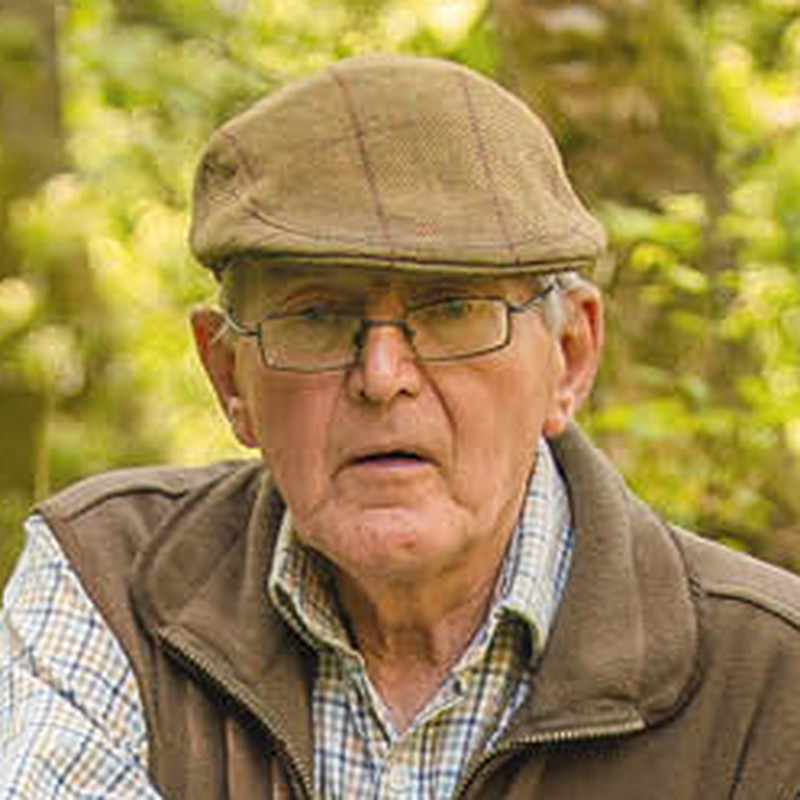
Laurence Catlow
A Cumbria-based writer on shooting and fishing, Laurence lives at Brough on the edge of the Pennines and is regarded as one of the finest and most thoughtful writers on flyfishing of his generation. He has a doctorate in Classics from Cambridge University and was head of Classics at Sedbergh School until his retirement and for many years ran a small shoot of his own, which he keepered himself. He fishes mainly in Cumbria and Yorkshire, though his pursuit of trout takes him to Scotland, Wales, Shropshire and Hampshire. He is the author of Confessions of a Shooting Fishing Man, Once a Flyfisher, Private Thoughts from a Small Shoot, That Strange Alchemy, The Healing Stream and Testament of a Trout Fisher, all published by Merlin Unwin. He writes for Shooting Times.
Related Articles

Redlegs on the old grouse ground: partridge shooting then and now
David Hudson traces partridge shooting from pointers and muzzle-loaders in the roots to a syndicate hill where released redlegs come fast and low over old grouse ground
By David Hudson | 24 September 2026

Game by the tonne, not by the brace
Eat Wild wants game meat sold on an industrial scale, and it has three seasons to build the market before the lead-shot ban lands. Selena Barr meets Tom Peachey, the gamekeeper’s son and gun-trade b...
By Selena Barr | 22 September 2026
Get the latest news delivered direct to your door
Subscribe to Shooting Times & Country
Discover the ultimate companion for fieldsports enthusiasts with Shooting Times & Country Magazine, the UK’s leading weekly publication that has been at the forefront of shooting culture since 1882. Subscribers gain access to expert tips, comprehensive gear reviews, seasonal advice and a vibrant community of like-minded shooters.
Save on shop price when you subscribe with weekly issues featuring in-depth articles on gundog training, exclusive member offers and access to the digital back issue library. A Shooting Times & Country subscription is more than a magazine, don’t just read about the countryside; immerse yourself in its most authoritative and engaging publication.