

Call of the Marsh: filmmaker Dr Robbie Kroger on why Britain’s wildfowlers deserve a global stage
The man behind Call of the Marsh, Dr Robbie Kroger, tells Martin Puddifer why Britain’s wildfowlers deserve a global stage


The story of the people who look after Britain’s wild coastal edges arrived in the heart of Westminster in October, when BASC hosted a landmark screening of Call of the Marsh. Co-sponsored by shadow Defra minister Robbie Moore MP and Lord Glasman, the event drew together MPs and peers from four political parties alongside senior officials from organisations including Defra, Natural England, the Wildfowl & Wetlands Trust, GWCT and the British Trust for Ornithology.
Filmed across the windswept saltmarshes of Lancashire’s Ribble Estuary, the documentary brings the voluntary stewardship of wildfowling clubs into sharp focus. Across the UK, wildfowlers care for more than half a million acres of coastal and wetland habitat, largely unseen and unheralded. Fresh from winning Best Documentary Short at the London Independent Film Awards, Call of the Marsh gives these foreshore custodians a voice in their own words.
Behind the lens is Dr Robbie Kroger, founder of The Origins Foundation. A South African-American based in Tennessee, Kroger holds a doctorate in wetland ecology and aquatic biogeochemistry. Yet his motivation for making the film was cultural as much as ecological.
“I came from halfway around the world because I saw what the story was,” Kroger says. “We were like, ‘We’re coming to tell this story because it deserves to be put on the global stage.’”
For Kroger, the film forms part of a wider international mission to reset the conversation surrounding fieldsports. “We as an organisation have a very simple mission: convey the truth about sustainable use of wildlife,” he explains. “Our whole focus day in and day out is to change the perception around shooting sports and hunters to the public. Not the antis, because you’re never going to change their minds. It’s the middle. If you can show them, ‘here is the result of this activity that people are slandering, that people say is terrible, is evil, shouldn’t be around anymore’ – well, let me show you not only the impact to wildlife, but speak to them from a people perspective. Let me introduce you to people that sound like you, talk like you, look like you.”
How the film came about
Getting the project off the ground required cutting through established barriers. “We do work all over the world, and it’s been a struggle to do work like we do in the UK,” Kroger admits. “If you’re doing great work – whether you’re the GWCT, BASC or Countryside Alliance – we built this organisation to showcase your work.”
The film was sparked after Kroger reached out during a public call for evidence on wetland quarry species, eventually connecting with James Green, BASC’s head of wildfowl and wetlands. What Kroger discovered on the British foreshore astonished his North American sensibilities.
“James had alluded to this story of wildfowlers and quarry species, and how these guys were self-regulating themselves, because if they followed the letter of the law, it would be terrible for their wildfowling,” Kroger recalls. “I fell in love with the idea that this was the antithesis of the perception of hunters. In the UK, the perception of feathered bird shooting are these huge pheasant shoots. These guys were doing a one-bird day, a two-bird day, and they were happy with it. They could do a 20-, 40- or 60-bird day because the Government allows them to do it, but they didn’t. Why? What’s driving these guys to do that?”
A restraint that surprises American duck hunters
Kroger compares this British restraint directly with the hunting culture across the Atlantic. “I’m coming from a duck-hunting world in America which is all driven by your bag limit – you must get your six mallards, you cannot shoot at night, you have to be off the water 30 minutes after dark. It’s intriguing for a duck-hunting community in America to look at that and go: ‘You’re telling me they shoot ducks at night and that’s legal?’ Yeah, that’s legal. ‘Could they stay there all night and shoot as many ducks as they want?’ Yes. Do they do it? No. Wildfowling writ large is not driven by this desire and need to go out there and fill a bag limit. The hunt isn’t made by the number of birds that hit the deck.”
Filming on the Ribble Estuary with no retakes
BASC funded a third of the project, with The Origins Foundation providing the remaining two-thirds. Filming took place on the Ribble Estuary in late January with a specialist camera crew based in Cardiff. The production leaned into observational filmmaking.
“We are the quintessential nontraditional hunting content,” Kroger explains. “There are no retakes. It’s as integrity-driven, as authentic-driven, as organic-driven as you can get it. There’s no product placement, no marketing, no influencing. Who you are, what you do, what you wear, what you use is what we capture.”
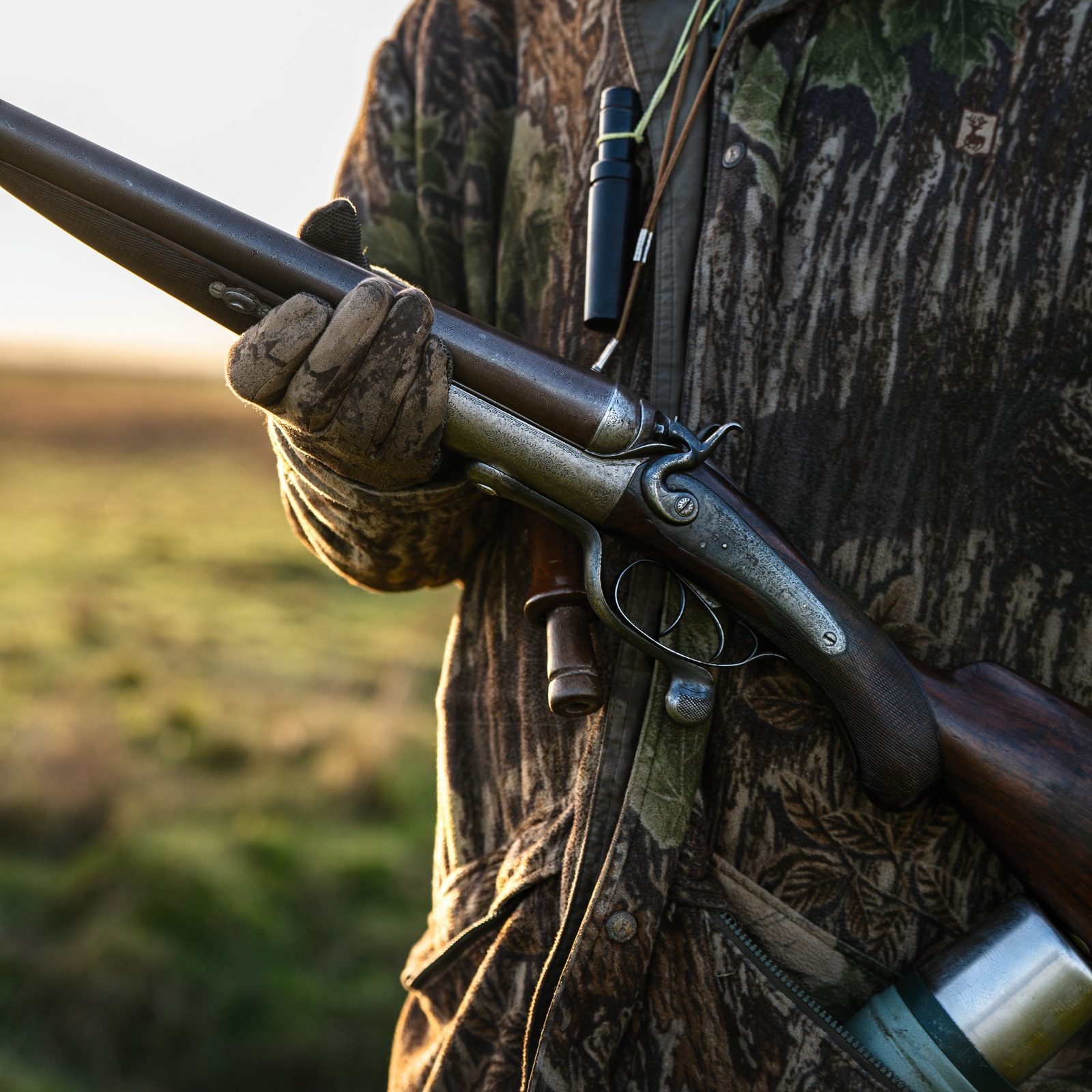
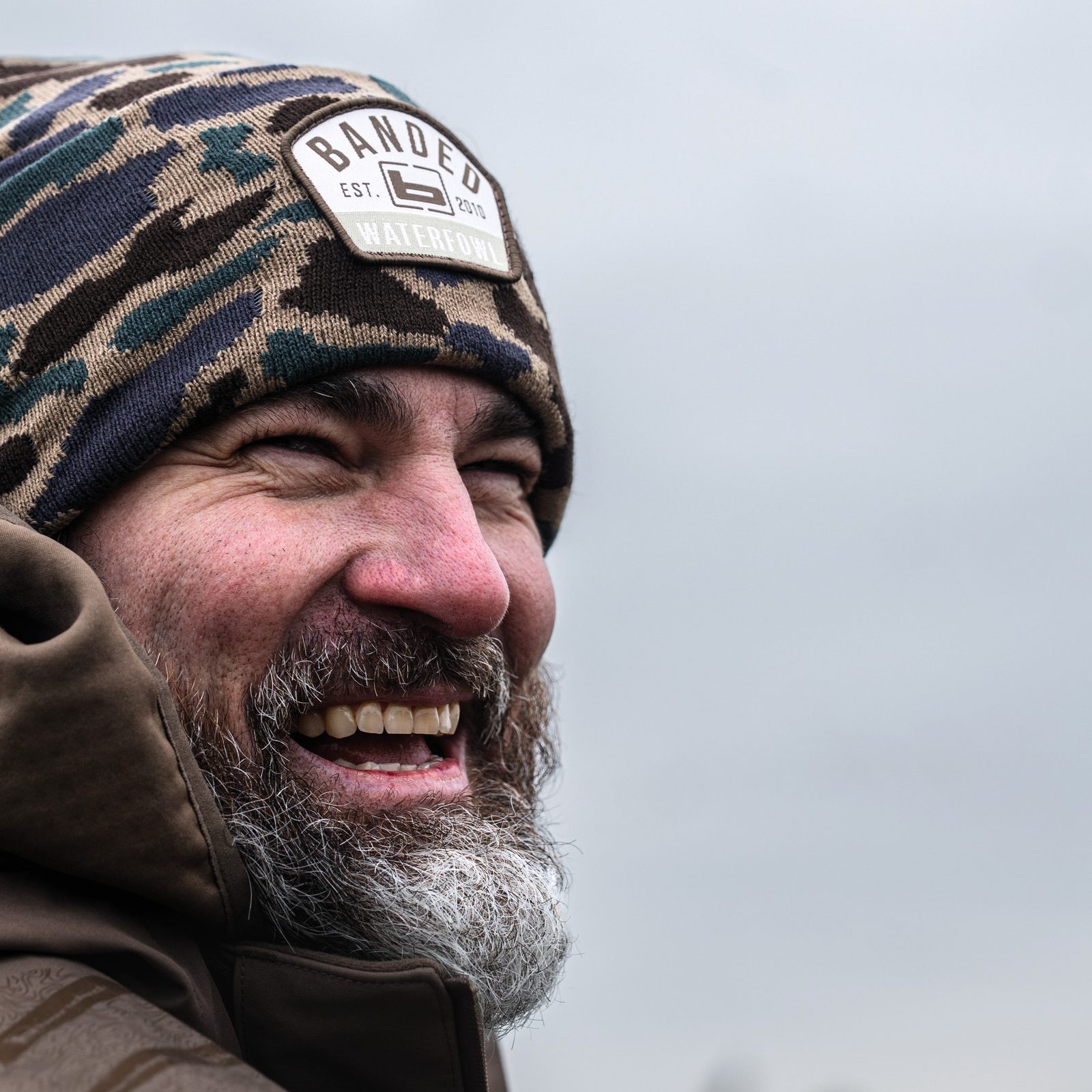
That commitment to reality dictated an editorial restraint rarely seen in fieldsports media. “We are not creating the content for hunters,” Kroger says. “We’re creating the content for someone who has never been exposed to this, or who has been exposed to negative hunting content, like killing shots and lots of killing shots. We’re not going to apologise for that, but when you watch Call of the Marsh, there is one bird being shot in the piece. We put that in purposely because we have to show this is what happens. But do we have 20 birds being shot? No. And do we show that you missed the birds? Yeah, we put that in there too, because it’s part of what we are.”
Instead of rapid-fire action, the film lets the foreshore breathe. “Stylistically, creatively, did we put in there about a minute and a half of silence, of nothing, of literally the marsh waking up, the morning chorus? Yeah, we did,” says Kroger. “Because we wanted to communicate to that person who’s sitting in London: ‘Oh, this is what it’s like when you sit on the Ribble Estuary.’”
Ordinary people, extraordinary dedication
Alongside the documentary, Kroger produced an accompanying portrait poster campaign celebrating wildfowlers like Chris Kelly and Andy Lee. Displayed at the Game Fair, the striking portraits list each subject’s everyday trade: postmaster, joiner, electrician. “Shows that they’re blue-collar, but the title says extraordinary,” Kroger explains. “With ‘extra’ ordinary in parentheticals. So, it’s ordinary people, but they’re actually extraordinary.”
With the film currently submitted to 35 festivals worldwide, Call of the Marsh will see its public release online following next summer’s Game Fair. For an audience far removed from muddy tideways and freezing creek beds, it offers an uncompromising truth: conservation on the wild marsh is carried out by ordinary people with extraordinary dedication.
The trailer for Call of the Marsh can be viewed on BASC’s YouTube channel @BASCfilms. For more information on The Origins Foundation, visit theoriginsfoundation.org
Frequently asked questions
Where was Call of the Marsh filmed?
The documentary was filmed across the saltmarshes of Lancashire’s Ribble Estuary in late January, with a specialist camera crew based in Cardiff.
Who funded Call of the Marsh?
BASC funded a third of the project, with The Origins Foundation providing the remaining two-thirds.
When will Call of the Marsh be released?
The film has been submitted to 35 festivals worldwide and will see its public release online following next summer’s Game Fair. The trailer is on BASC’s YouTube channel.

About the author
Martin Puddifer
Managing editor of Shooting Times since 2026, Martin is based in Nottinghamshire and has worked on shooting and fieldsports titles since 2007, writing for Shooting Gazette and Airgun World. He took the editor's chair from Ollie Harvey, and now runs the weekly, from news pages and features commissioning to the magazine's expert panels. At home he has two rescue greyhounds, a breed that gives him a particular sympathy for readers' letters about dogs who take a firm view of what they will and will not do.
 Closes 15 JanuaryWorth £129.90Win a pair of tickets to the British Shooting Show 2027Enter nowFree to enter
Related Articles

A gift from the marsh: the first of September with the Colchester wildfowlers
The first of September calls wildfowlers back to the Essex saltmarsh, where the bag matters much less than simply being out there. Miles Malone joins Brandon Sharp for the opening flight
By Miles Malone | 12 November 2026

Jottings for wildfowlers: letting the ducks pass on a September dawn and waiting for geese
Mindful of Arthur Cadman’s old dilemma, Gethin Jones forgoes the ducks on a late-September morning flight and waits for the geese to lift
By Gethin Jones | 12 November 2026
Get the latest news delivered direct to your door
Subscribe to Shooting Times & Country
Discover the ultimate companion for fieldsports enthusiasts with Shooting Times & Country Magazine, the UK’s leading weekly publication that has been at the forefront of shooting culture since 1882. Subscribers gain access to expert tips, comprehensive gear reviews, seasonal advice and a vibrant community of like-minded shooters.
Save on shop price when you subscribe with weekly issues featuring in-depth articles on gundog training, exclusive member offers and access to the digital back issue library. A Shooting Times & Country subscription is more than a magazine, don’t just read about the countryside; immerse yourself in its most authoritative and engaging publication.

