★ Your magazine. Your say. Complete our reader survey with a chance to win Jack Pyke kit worth £500! ★


Sport that’s a cut above: rabbit shooting in the harvest field
Graham Mikel leaves the day's work for the last acre of oats, where the tractor and binder are crowding the rabbits into a shrinking island of cover. First published in Shooting Times on 23 August 1952
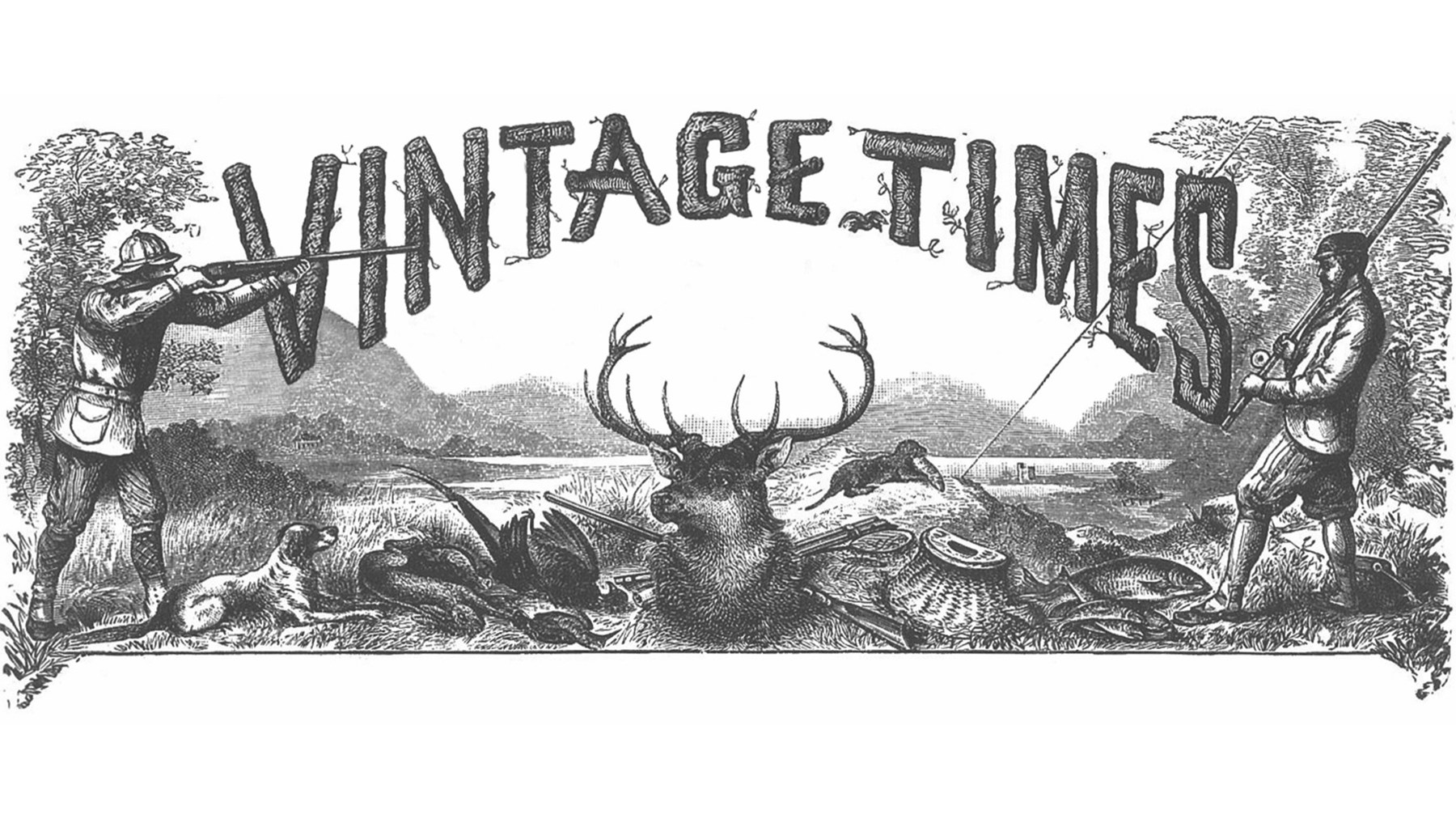

The sound of the tractor and binder had been creeping into my window during the morning – a purring, almost seductive noise. Just the sound of it urged me to be away with the gun and down beside the outfield where Farmer Jones was making his first cut of the year. However, I thought, those oats do not hold many rabbits. Well, not enough to justify my leaving the daily task. So I sat on until it was time to break for lunch.

Up at the Cart and Horses for my pre-prandial pint, Harry Edlin, the landlord, said: “Better get your gun down on old Jones’s bit.” But I shook my head and replied that those oats would not hold many rabbits, at least not enough to lure me to them. Instead, as soon as the meal was over, I took the springer for a walk round the fields, hoping to find a pigeon or two or a young rabbit sitting out.
“Hullo,” said my wife when I returned. “Stan McGrechan, Jones’s hand, has been up and said that Mr Jones asked him to tell you that there are lots of rabbits in the oats they’re cutting – they are starting again at two o’clock.” Well, it was past two o’clock then. And I could hear the noise of the binder once more.
Away from the hog trough, I passed up the bank, through a gap in the hedge, walked along the edge of a rather scabby bit of late wheat and reached the field. The gun had been loaded on the way up, of course, but the few pigeons that clattered out of the elms and oaks were beyond the range of the No 7s in the breech.
As I walked down through the sheaves towards the circling binder, I took my cartridges out as a gesture of my own acknowledgement of the farmer, for I will never shoot unless the owner or tenant knows that I am on his land. The tractor did not slow up but as it rounded the far corner of about an acre of oats, the driver saw me and shouted back to Mr Jones, who waved for me to stay where I was.
So I stayed put, with about 80 yards of oats sweeping away from me downhill, a slight remnant reaching uphill to my left. Round came the tractor and binder and, as I had time to get my bearings, I saw that the far corner from me was covered by a man I recognised and his German shepherd and boxer dogs. Left and behind me, there were two shotguns leaning against stooks that marked the morning’s work. The binder came round, passed by and then was navigating the distant corner again. Down the far narrow side it went, round and back up and alongside – or through – the far side of the oats.
The first rabbit breaks from the thinning oats
I saw the rabbit in the second that it ventured to slip away from the thinning cover of the oats. Uphill it ran, through and among the thrown sheaves until I saw it for a clear moment and fired. Then it ran back towards the corn, and the obstacle of the men with dogs saved me all temptation of wasting another barrel on it. Anyway, I was quite content to see it back in that ever-narrowing area of cover.

It so happens that I had been shooting rather well during the past few months and was, until today, bolstered up with all sorts of confidence. But then I forgot to add that I’ve been shooting well at things flying through the air – magpies, clay targets, jays and pigeons.
My next shot came a minute later when a rabbit bolted from the end of the corn, which I should have been watching. Unfortunately, the earlier rabbit had left me out of position and it was the shout from Mr Jones on the binder that made me realise something was going on. Then I saw the rabbit, a good one, running hard up the field, heard the shout of Mr Jones, “Run, Eric!”, saw Eric – another hand – begin running up the hedge along which he was returning from lunch, and began running myself.
A good rabbit runs hard for the hedge
That rabbit, hoping to reach the burrow in the hedge, turned back to the standing oats as it noticed Eric, swerved as it saw me, turned back again as it heard the cries of Mr Jones, and bolted for the hedge again. At 40 yards, I fired and hit it, but it was one of those unfortunate back-end shots and it turned and came back slightly diagonally at full pelt.
It ran within a yard of my foot, which kicked out to intercept it, and turned over neatly to my second shot when it had gone about 30 yards away from me.
The slight pause that followed allowed Eric to take up Mr Jones’s gun. The remaining oats were covered by one of us at each end, some 80 yards apart, and separated by a strip of cover, which was 10ft wide at my end and 40ft wide at the other.
The next rabbit tried to crawl out on my side. My slight movement turned it back into the oats. Along came the binder and I could see the movement of rabbits in the crops, stems waving gently as they moved about.
The next rabbit I fired at bolted quite close to me and offered an easy shot until that very moment when I was about to fire. Then it reached the sheaves and weaved a strange, uneven course through them. I fired and missed, ran a few yards, stopped, fired again and saw the animal falter. So I ran in, only to see it blunder up and move towards the wood.
Getting to within about 40 yards of it, I fired another shot, which missed as the rabbit turned sharply along the side of a copse, offering Eric an easy shot. But neither that nor his second barrel managed to stop it before it disappeared. We would have to bring the dogs along later.
All thoughts of rabbits were interrupted by a shout, and I turned to see two German shepherds and a boxer hunting joyously through the small patch of oats that remained, while Mr Jones had stopped the tractor and was shouting in a voice that could be heard across the valley, “Take those [expletive] dogs away!”
The dogs were called in and their owners retreated apologetically. Then we began again with a shot here and a shot there until the last small patch was left and Mr Jones took up his own gun while Eric and Stan walked down through the stubbles.

A rabbit came to me and was missed with the first barrel but killed with the second; another came but dodged back before I could fire. Then it broke out near the farmer and some 25 yards away, among the sheaves, Stan McGrechan bowled it over – the only shot he had that day.
You know how it is at a shoot of this sort. I must have fired 12 to 15 cartridges to kill four rabbits. With what Stan and Eric Mitchell picked up, we had eight altogether. It was not a big bag for harvest time, but it might well have been twice as large, given that some 30 or more rabbits bolted from the last acre of oats and it all took place within 30 minutes.
Nothing beats the last acre of a harvest field
You may easily obtain faster and finer shooting. But I doubt whether you’ll get anything more enjoyable than a brief period spent in the harvest fields towards the end of a cut. I have seen more than 200 rabbits killed out of 20 acres of wheat, but this was only the remnant of a field of oats. I have seen as many as a dozen Guns around a field, and many more boys and men with sticks and dogs. But on this occasion, there were only two Guns and two men working the tractor and binder.
When I mentioned the afternoon to Joe, the gardener, that evening, he said: “I heard 27 shots.” Personally, I think we may have fired 27 cartridges between us. But what does it matter? I knew perfectly well that I was shooting badly. And I shall have to do something about that. Next time.
This article was first published in the 23 August 1952 issue of Shooting Times.
Frequently asked questions
Why did harvest time produce so much rabbit shooting?
Because a binder cut the crop from the outside in, so every rabbit in the field was pushed into a shrinking island of standing corn until it had no choice but to run. In this account, some 30 or more rabbits bolted out of the last acre of oats inside about 30 minutes.
Why does a shooter take his cartridges out before walking on to a farm?
It is a visible signal that the gun is empty and that nobody is shooting until the landowner has seen who is on his ground. Graham Mikel unloaded as he walked down through the sheaves towards the binder, because he would never shoot unless the owner or tenant knew he was there.
Why is a bolting rabbit harder to hit than a bird in the air?
A rabbit keeps changing direction, and the ground it runs over gives it cover. One rabbit here turned back towards the oats, swerved, turned again and then made for the hedge; another weaved an uneven course through the thrown sheaves. A Gun who had been shooting well at magpies, jays, pigeons and clay targets found himself missing repeatedly.
Related Articles

A touch of witchcraft: terriers, superstition and dawn beagling
A new terrier soon takes on the ways of the old one, superstition lingers and a dawn meet can still prove utterly irresistible, says Glancer in this piece from 1961
By Shooting Times | 24 September 2026

Going the whole hog: a lifetime fond of hedgehogs
They came for the bread and milk and stayed to clear the cellars, and HC Huggins has been fond of hedgehogs ever since, fleas and all
By Shooting Times | 23 September 2026
Get the latest news delivered direct to your door
Subscribe to Shooting Times & Country
Discover the ultimate companion for fieldsports enthusiasts with Shooting Times & Country Magazine, the UK’s leading weekly publication that has been at the forefront of shooting culture since 1882. Subscribers gain access to expert tips, comprehensive gear reviews, seasonal advice and a vibrant community of like-minded shooters.
Save on shop price when you subscribe with weekly issues featuring in-depth articles on gundog training, exclusive member offers and access to the digital back issue library. A Shooting Times & Country subscription is more than a magazine, don’t just read about the countryside; immerse yourself in its most authoritative and engaging publication.