★ Your magazine. Your say. Complete our reader survey with a chance to win Jack Pyke kit worth £500! ★


Is your dog really to blame? 11 handler mistakes that create problems in gundogs
Our dogs read every move we make, says gundog trainer Ian Cooper, and too often the handler is the one teaching the habits that later need correcting


After almost 30 years of working with gundogs, I’ve learned that when something isn’t right, we usually look at the dog. But before that, every handler should ask: what am I doing?
Dogs are extraordinarily good at reading us. They notice our body position, confidence, timing and consistency. We communicate with them without saying a word – and sometimes we inadvertently teach the very behaviour we later try to correct. Here are the most common mistakes I see handlers make.
Long, infrequent training sessions
Marathon sessions where the dog mentally switches off rarely achieve anything useful. Daily bursts of good-quality work build and maintain the relationship between dog and handler and, importantly, prevent bad habits appearing. Short, successful sessions are far better than continuing until a dog loses concentration or enthusiasm (when handler frustration occurs).
There is value in stopping while things are good. A clever handler learns when enough has been achieved and when to finish training.
Starting with the wrong mindset
If you start working with your dog when frustrated, impatient or stressed, don’t be surprised when the session doesn’t go to plan. In my experience of how packs work, the leader is not the biggest, toughest or noisiest dog – it is the calm, confident one to which the pack responds.
Sending the correct non-verbal messages will put you in the position of respect and once you have the dog’s respect, you will have the dog’s ear. How you approach the dog matters.
Dwelling on mistakes
Dogs live in the moment. Handlers don’t. The dog is not making mistakes to annoy you. You will have a different dog on the shoot day than at training – you feel and act differently, so why shouldn’t it? Not understanding this creates handling changes which can be detrimental.
We worry what everyone thinks. Don’t. Put your relationship with the dog first. Even seasoned dogs develop habits or change behaviour. Don’t carry frustration; put it behind you and move on. Your dog already has.
Too much eye contact
People naturally seek eye contact, and handlers can become preoccupied with this. In a pack, the members look to the leader for direction – if the leader is looking at them, no-one is assessing the situation. To a dog, the absence of eye contact can simply mean that everything is fine and under control.
I use eye contact as a visual reprimand. We all remember “that look” we got as children – it is the same thing. If your dog is behaving in the way you want, just ignore it.
Talking and touching too much
Similarly, dogs don’t need running commentary or frequent pats. When a pack are working, they move as individuals and with purpose. Communication is non-tactile, non-verbal. After the hunt you will see them playing, touching and calling to one another.
Constant chatter can turn your voice into background noise and make important commands less distinct. Dogs see informal touch as play and a distraction. When you’re working, keep communication clear and meaningful. Save play for when you get home.
Not understanding how much information your dog is absorbing
Handlers often think communication begins when they give a command, but it starts long before that. Your dog is watching you all the time: your state of mind, body language, movements, and behaviour are constantly providing information. Be aware of everything you do when you’re working together.
A good example is sending your dog. Don’t just think of the command and your arm. Your stance and movement should support the direction you’re asking the dog to take. Your whole body is communicating with the dog. Use it.
Not correcting unwanted behaviour immediately
Timing is crucial here. If you’re going to correct something, do it at once – or not at all. Seeing unwanted behaviour and addressing it later makes it hard for the dog. It doesn’t understand the delay; the learning opportunity has gone. In fact, it is detrimental to correct later, as it’s perceived as erratic behaviour, making you an unbalanced leader.
And when I say correct, this is not a forceful or abusive correction – we are looking to gain the dog’s respect, not its fear. This is critical.
Trying to achieve too much, too soon
The temptation is to move on to the next stage. Don’t rush – consolidate each step.
Training isn’t a race and dogs don’t all progress at the same speed. Don’t put yourself under pressure – if the dog is not ready to be taken out, leave it at home. You will do more damage acting prematurely. Better to take your time and prioritise your partnership.
You can never go too slowly, but you can go too fast.
Blowing the whistle at the wrong time
Timing is everything. The dog associates the whistle with whatever it is doing at that moment. If we want a whistle to mean something specific, we must be precise about when we use it. Blowing the whistle when the dog is running away will teach the dog to associate the whistle with that activity.
Don’t keep blowing the whistle if the dog is not listening. I blow the whistle when the dog is returning to reinforce the message.
Not preparing properly for gunshot
Once your dog has accepted distant gunfire, that doesn’t mean it will be okay with you firing over its head. I see this repeatedly. Dogs don’t have ear protectors, and this experience can create irreversible damage. At the slightest sign of gun-shyness stop and seek professional help. Enough said.
Boss first, friend second
In conclusion, good gundog training isn’t simply about commands; it’s about learning to communicate in a way the dog understands, building a connection and, from that, developing reliable control. A dog will seldom respond well to a handler it doesn’t respect. Boss first. Friend second.
Ian Cooper is a master dog trainer and canine behaviourist based in North Devon.
Frequently asked questions
How long should a gundog training session be?
Short. Ian Cooper recommends daily bursts of good-quality work over long, infrequent sessions, and stopping while things are going well rather than carrying on until the dog loses concentration.
When should you blow the whistle on a gundog?
Only when you want the dog to link the whistle with what it is doing at that moment. Blowing it while the dog runs away teaches the wrong association; Ian Cooper blows it as the dog returns, to reinforce the message.
When should you correct a gundog?
At once or not at all. A delayed correction confuses the dog and reads as erratic behaviour from the handler, and a correction should never be forceful or abusive – the aim is respect, not fear.
What should you do if a gundog shows signs of gun-shyness?
Stop and seek professional help at the slightest sign. A dog that accepts distant gunfire may not be ready for a shot fired over its head, and the damage can be irreversible.

About the author
Ian Cooper
Ian Cooper is a canine behaviourist and Master Dog Trainer with the Guild of Dog Trainers, based in North Devon on the edge of Exmoor. He grew up beside his father, a gundog trainer who trialled and picked up, and has more than 30 years' experience training and rehabilitating dogs.
 Closes 15 JanuaryWorth £129.90Win a pair of tickets to the British Shooting Show 2027Enter nowFree to enter
Related Articles
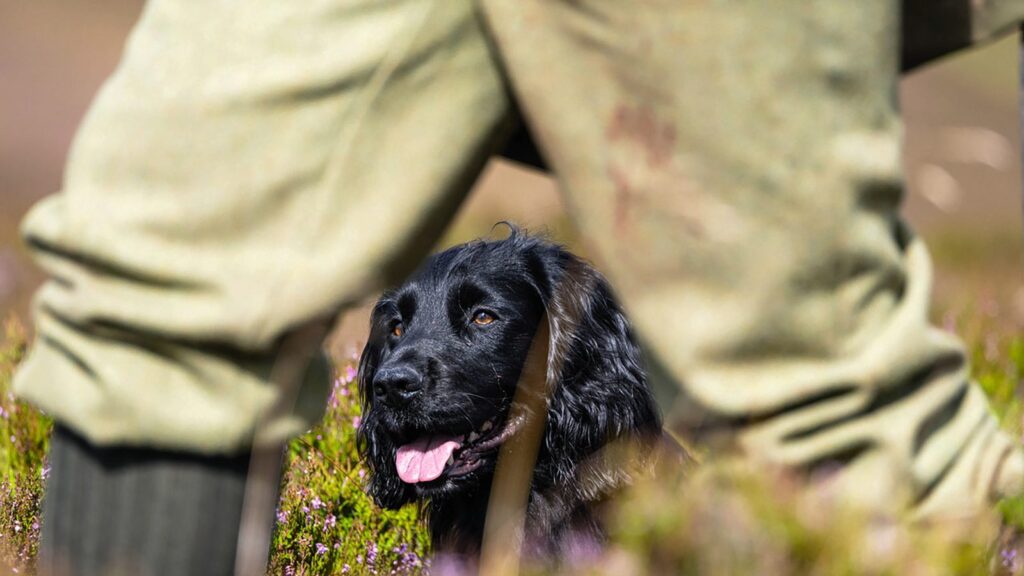
Sporting Life: from breakers to trainers, the keepers who set the standard with gundogs
'Gamekeeper trained' was once a selling point in the classified columns, and Jeremy Hobson remembers the keepers whose spaniels and labradors earned it
By Jeremy Hobson | 6 October 2026

The gun shy labrador that was cured in a season, and how it was done
An expert told Richard Donnelly to pray. A year-old labrador that hid under the bed at the sight of a shotgun was retrieving cock pheasants out of the cattails by the winter. His method, set out in Gu...
By News Desk | 29 September 2026
Get the latest news delivered direct to your door
Subscribe to Shooting Times & Country
Discover the ultimate companion for fieldsports enthusiasts with Shooting Times & Country Magazine, the UK’s leading weekly publication that has been at the forefront of shooting culture since 1882. Subscribers gain access to expert tips, comprehensive gear reviews, seasonal advice and a vibrant community of like-minded shooters.
Save on shop price when you subscribe with weekly issues featuring in-depth articles on gundog training, exclusive member offers and access to the digital back issue library. A Shooting Times & Country subscription is more than a magazine, don’t just read about the countryside; immerse yourself in its most authoritative and engaging publication.