★ Your magazine. Your say. Complete our reader survey with a chance to win Jack Pyke kit worth £500! ★

Gundog training starts on the drive home, says Ben Randall
The free-running pup that looks brilliant in the yard at 10 weeks is the dog squeaking in the beating line at 10 months, argues Ben Randall. Writing in Gundog Journal, the trainer of back-to-back British Cocker Champions sets out foundations that fit around a keeper’s rounds: a crate, a food bowl and a door


Any keeper, picker-up or beater collecting a puppy this autumn has been told to “just let the dog be a puppy”, and Ben Randall thinks it is half right and expensively wrong. Writing in Gundog Journal, the Herefordshire trainer says gundog training begins “the second that puppy is collected and placed into your car”, and that the free-running pup that looks brilliant in the yard at 10 weeks is the dog squeaking in the beating line or running in from the peg at 10 months. His alternative asks nothing of the working day beyond a crate, a food bowl and a door.
Why the drive home from the breeder matters
Randall, who won the British Cocker Championship back to back in 2011 and 2012 and is a Kennel Club A-panel spaniel judge, has heard the let-it-be-a-puppy line for 30 years. “While I agree with some of that, I certainly do not agree with all of it,” he writes. His first lesson is the journey home. “If you simply place the dog in the back of the vehicle on its own and it becomes sick, unsettled and anxious during the journey, then its first association with travelling is already negative.”
The fix is a small crate secured on the back seat and someone sitting beside it, reassuring the puppy with calm touch and quiet interaction, so that the crate and the car become places of safety before the pup has seen the kennel. “That very first experience matters enormously.” For a dog that will spend its working life in the back of a truck between drives, it is not a small point.
What happens to the pup that hunts for itself?
The gundog’s instincts are the point of the animal, and Randall is not out to suppress them. “But my job is not to suppress those instincts – it is to shape, control and develop them.” The puppy allowed complete freedom, running the garden, chasing whatever moves and rewarding itself constantly, arrives at six, eight or 10 months hunting incredibly hard and looking fantastic. “You might even post videos online and people comment on how impressive the dog looks,” he writes.
Then steadiness begins: sit while another dog retrieves, stop hunting on command, handle at distance. “We are asking the dog to switch off the very behaviour it has been rewarding itself with for months.” The result is frustration. “The dog becomes highly aroused. It may begin to vocalise or squeak.” The steadiness goes, the handler applies pressure, and sessions turn negative. “Instead of being a positive presence in the dog’s life, the handler becomes the person who is always saying no. That is exactly what I want to avoid.”
Sit before the bowl, sit for the bird
The Beggarbush foundation programme Randall runs at his kennels starts the day the puppy comes home, and it starts with connection. “The dog learns that everything good in life comes through the handler,” he writes, and asks why a pup that learns every reward comes from its handler would want to disconnect and seek those things elsewhere. The first ritual is the food bowl: the puppy sits before it is fed, from day one, and “by nine weeks old the puppy already understands the sit command, introduced with a quiet whistle cue and a short pause before reward”.
The payoff is years away and exact. “Later in life the exact same command applies when a pheasant lands in front of the dog.” The dog sits, waits for the release command and retrieves, and the seed of that was planted beside a food bowl at eight weeks old.
How does a working dog learn to wait through a drive?
Patience is added in small steps: the puppy sits while food is prepared, sits while another dog eats, stays while the handler leaves the room and returns. It waits before doors, before the garden and before the lead, and it is rewarded for settling on its bed. The reason is the shooting field. “A dog standing on a peg may have to wait for long periods while birds are flushed, shots are fired and other dogs retrieve. If a dog has never learned patience as a puppy, you will constantly be fighting against its natural desire to chase.”
By 12 weeks, Randall writes, the puppy has practised those behaviours hundreds of times, and at five or six months it works with the mindset of a much older dog without losing its drive. “None of this removes the dog’s natural instincts. In fact, it enhances them because those instincts are now channelled through a clear partnership between dog and handler.” When it meets pheasants, partridges, rabbits, ducks, gunshots and other dogs for real, “the dog hunts with you, not for itself”.
What this means for a keeper with a pup in the yard
For the working countryside the consequence is practical: the minute at the bowl, the door and the truck each day is the training, and it fits around the rounds. A pup treated this way, Randall argues, arrives at its first season connected to its handler rather than to its own nose, and the beating line and the peg get a dog that waits. “This is why I start training at eight weeks. It is not about pressure or discipline. It is about building the BG foundations for life.” The full feature, with Randall’s account of the Beggarbush method, is in Gundog Journal.
Frequently asked questions
When should a gundog puppy’s training start?
The second it is collected from the breeder and placed in the car, says Ben Randall, writing in Gundog Journal. The first journey home, in a secured crate with someone beside it, is the first lesson, and sitting for the food bowl begins on the first day at home.
Is it wrong to let a puppy be a puppy?
Randall agrees with some of it and not all of it. A puppy that hunts and chases for its own reward through its early months is later asked to switch off that behaviour when steadiness training begins, becomes highly aroused and frustrated, and its handler is forced into constant correction. Structure from day one keeps the drive but channels it through the handler.
How soon can a puppy learn the sit whistle?
In Randall’s programme the puppy sits before food from its first day and understands the sit command, given with a quiet whistle cue and a short pause before the reward, by nine weeks old.
 Closes 15 JanuaryWorth £129.90Win a pair of tickets to the British Shooting Show 2027Enter nowFree to enter
Related Articles
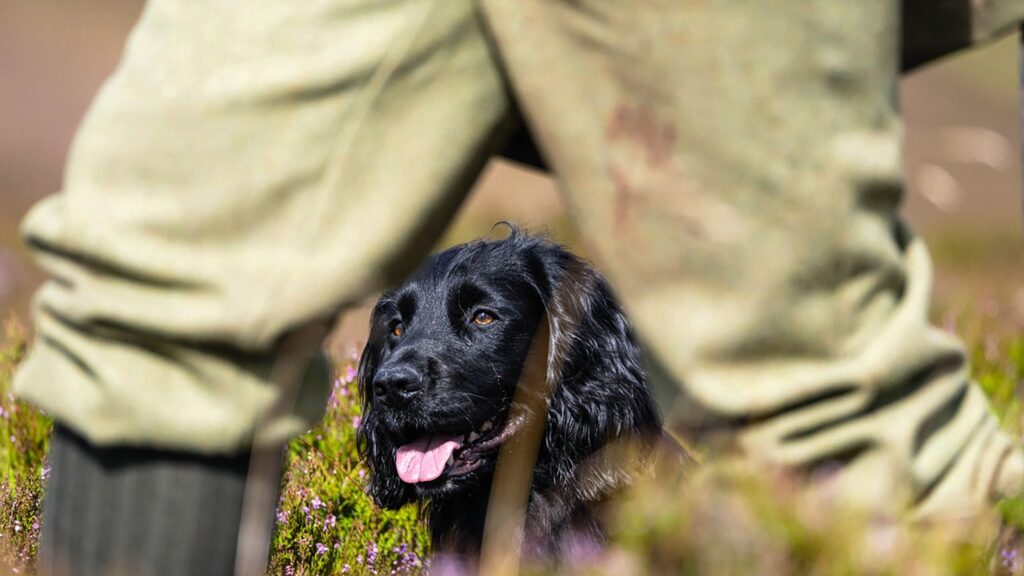
Sporting Life: from breakers to trainers, the keepers who set the standard with gundogs
'Gamekeeper trained' was once a selling point in the classified columns, and Jeremy Hobson remembers the keepers whose spaniels and labradors earned it
By Jeremy Hobson | 6 October 2026

The gun shy labrador that was cured in a season, and how it was done
An expert told Richard Donnelly to pray. A year-old labrador that hid under the bed at the sight of a shotgun was retrieving cock pheasants out of the cattails by the winter. His method, set out in Gu...
By News Desk | 29 September 2026
Get the latest news delivered direct to your door
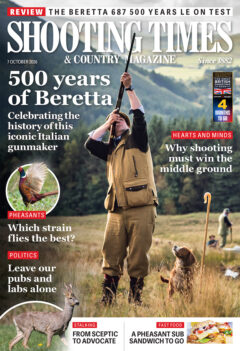
Subscribe to Shooting Times & Country
Discover the ultimate companion for fieldsports enthusiasts with Shooting Times & Country Magazine, the UK’s leading weekly publication that has been at the forefront of shooting culture since 1882. Subscribers gain access to expert tips, comprehensive gear reviews, seasonal advice and a vibrant community of like-minded shooters.
Save on shop price when you subscribe with weekly issues featuring in-depth articles on gundog training, exclusive member offers and access to the digital back issue library. A Shooting Times & Country subscription is more than a magazine, don’t just read about the countryside; immerse yourself in its most authoritative and engaging publication.


 New competitionWin a pair of tickets to the British Shooting Show 2027Worth £129.90Closes 15 JanuaryEnter now ›