★ Win four pegs on a Kent simulated game day with JBD Sporting worth £1,000! Click to enter ★

Work with the breed: a smarter approach to gundog training
Jackie Drakeford explains how understanding the purpose of your dog's breed can lessen training challenges and build a better partnership
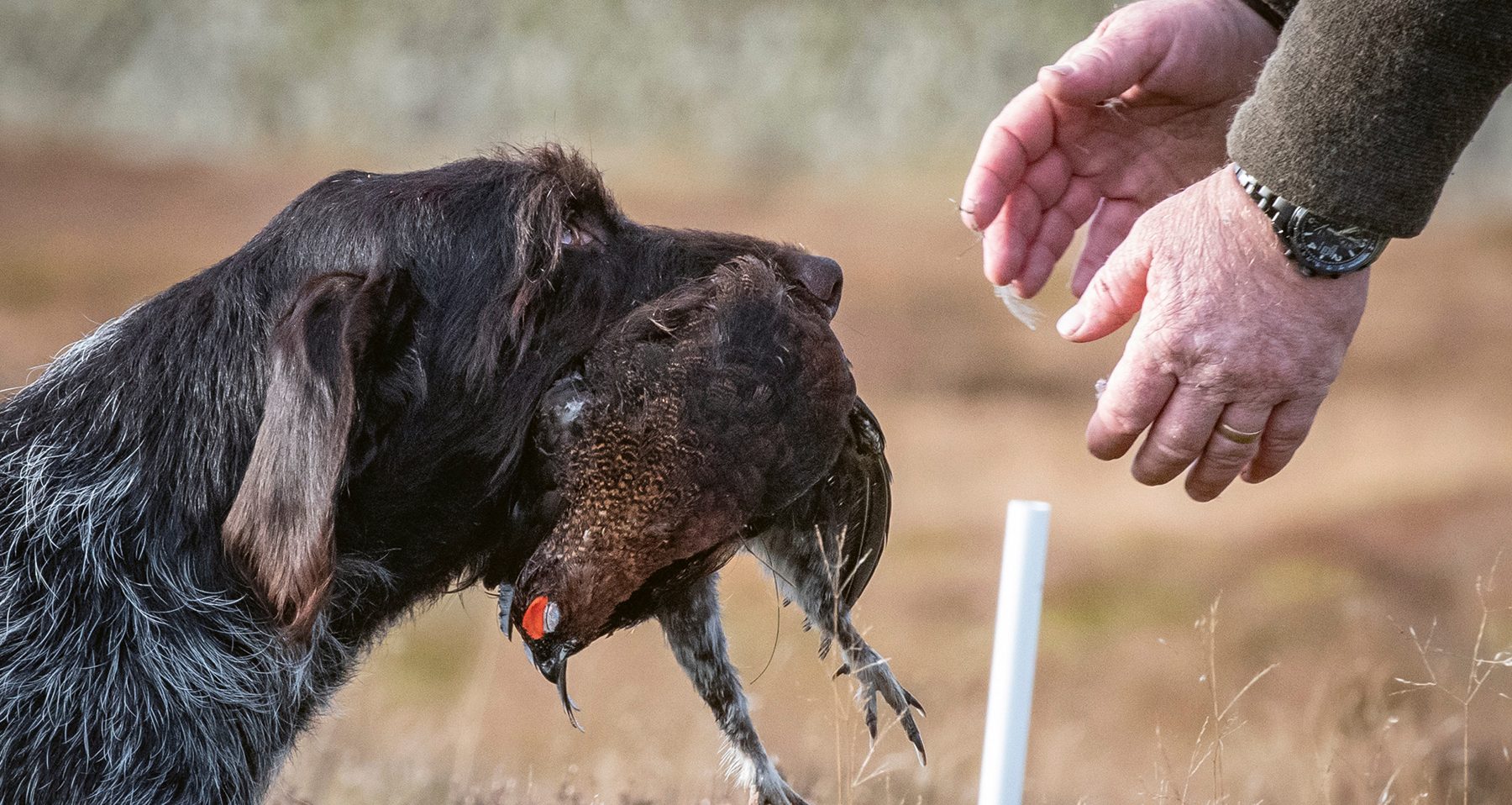 The rewarding result of careful training in the dog's formative period. Credit: Nigel Kirby Photography

If you want to keep training challenges to a minimum, look at what the breed type was originally designed to do, then look at the dog in front of you. You might expect a gundog to be impervious to the sound of shooting, or to respond to the “bang” as a positive because it means there might be a retrieve, but some gundog breeds are very much more sensitive than others. Good breeders introduce loud noises while puppies are still in the nest, and can learn from their dams that they are nothing to stress about.
We need to be aware that a dislike of loud noises can be based in pain if a dog’s hearing is very sensitive. Similarly, if we want our dogs to retrieve, the first retrieve items we expose them to should be easy to hold in their mouths and not made from fabric such as nylon, which can feel bad on newly cut teeth. Leather/suede or canvas offer a much better mouth feel.
Choosing the right retrieve items
We are advised to avoid tennis balls as the fabric covering comes off in dogs’ mouths and might be swallowed. It is abrasive and can cause tooth damage as well, and if we want a dog to retrieve something it needs to be comfortable in its mouth. We also need to avoid fabrics that build up static.
Teething can be a painful process – think of the racket human babies make when they go through that stage – and pups casting their needle-sharp milk teeth need to have safe items to chew, such as raw meaty bones and frozen pieces of vegetable. They might also find carrying a retrieve item painful, so if retrieve training starts to go adrift, it’s better to put it on pause until their mouth is less tender.
How a breed’s instincts affect training
Dogs bred to range out far and have people come up to them may be less easy to recall than those bred to range out, find a retrieve and come back with it. My own experience of HPR breeds is that they are very committed to the H and P but not always signed in to the R. Your experiences may differ.
Terrier types like to go down holes in the ground and bark at whatever they find in there. You won’t train this out – it’s hardwired into them – so be aware of the terrain you are crossing and avoid holes that are big enough for a terrier to fit down. It also means that there is the ability and desire to bark a lot, which is undesirable in a domestic setting or indeed in your vehicle but again, this can’t be trained out.

Silent workers and safety around water
By contrast, other breed types are silent when they work, which means we have always to be aware of where they are, because they won’t tell us. Some can melt away from a good position at heel, leaving us unaware unless we keep our attention on them at all times. Many working breeds in our line of business have a natural affinity with going into water, so can put themselves at risk. Equally, many don’t, so it’s up to us to make their introduction to water easy and safe.
Fear has no place in dog training.
Traits to train out of a gundog
There are traits common to all canines that we don’t want to develop in our gundogs. All dogs have a guarding instinct, but we all know that pain-in-the-fundament type of dog that guards the game cart. Similarly, we have all seen the dog that snatches a retrieve off another dog. Some dogs will try to bully less assertive animals, or those they see as weak because they are elderly or castrated. If yours is such an animal, take action to stop it happening – there is no place in the gundog world for such a creature.
The type of male dog that pees on everything around is a proper nuisance as well and this should not be tolerated. It isn’t his territory to mark and, oddly enough, signifies an underconfident animal. Spayed bitches don’t suffer the mental security loss that male castrates do, but only a fool brings an in-season bitch on a shoot day.
Physical anomalies apart, building a dog’s confidence with appropriate training creates a shoot day partner that is a pleasure to have around. When the dog has a feeling of security from its handler, it’s the basis of good training.
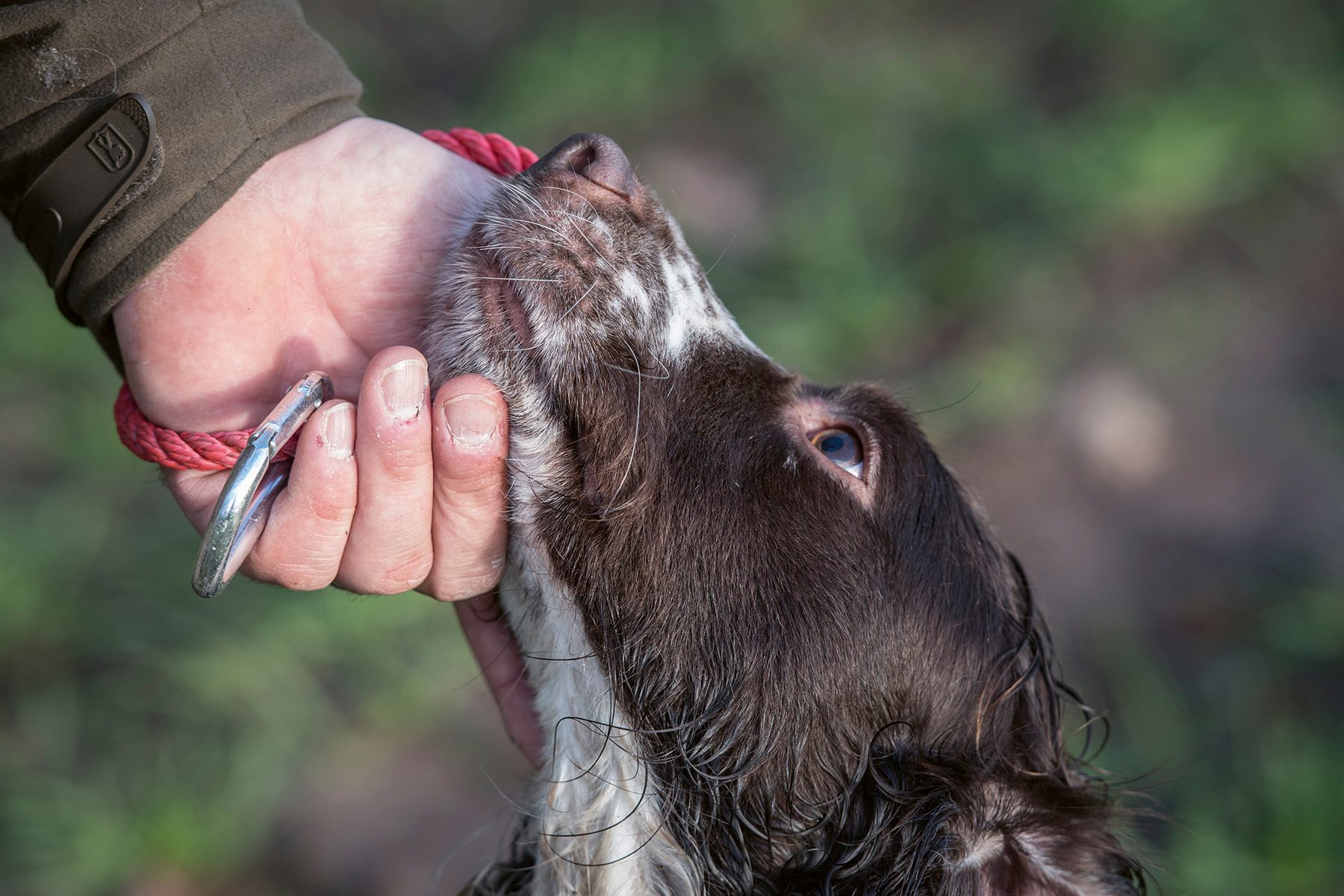
Jackie’s Viewpoint
Channel the dog’s drive
Use your brains and trickery to get the results you want
How often do we hear that a dog is “stubborn” as shorthand for not doing what we want? It’s true that dogs are naturally cooperative because they are a social species, as are we, but if the dog says “No” the best trainers revisit the question instead of increasing pressure on the dog. We all like an easy life, so the key to successful training is to arrange a situation so that what we require from the dog is what it wants to do, rather than challenging what it wants to do as an aggressive experience.
Many breeds are bred for tasks that require persistence, so it should be no surprise that they take that persistence into everyday life. Nobody wants a dog that quits at its job when that job throws up challenges, so why should we expect the dog to quit when we try to make it do something that is contrary to its immediate drives? The key is to fulfil those drives in a controlled environment, which turns obeying us into a positive experience. Thus the “stubborn” dog will enjoy doing as we tell it, because that is what it wants to do anyway.
What if we don’t want it to do that thing? This is when we control the environment in order to control the dog, by making it difficult for the dog to disobey and rewarding it to comply with our wishes. So much of dog training is trickery and if we suppose we have the greater intelligence, it’s up to us to employ that rather than going head-to-head with force.
Jackie Drakeford is a working dog instructor and behaviourist with a special interest in lurchers and terriers.
Frequently Asked Questions
Why does my gundog seem stubborn?
What looks like stubbornness is usually the dog following a strong natural drive rather than defying you. The more reliable approach is to arrange the training so that doing what you ask becomes what the dog wants to do anyway, rather than forcing a confrontation and increasing the pressure.
What are the best retrieve items for a young gundog?
Choose items that are easy and comfortable to hold. Leather, suede or canvas give a much better mouth feel than nylon, which can feel harsh on newly cut teeth. Avoid anything abrasive or that builds up static, and pause retrieve work altogether while a pup is teething and its mouth is tender.
Are tennis balls safe for gundogs to retrieve?
No. The fabric covering can come off in the dog’s mouth and be swallowed, and it is abrasive enough to cause tooth damage, so it is best avoided as a retrieve item in favour of something more comfortable to carry.
Related Articles
Gundogs
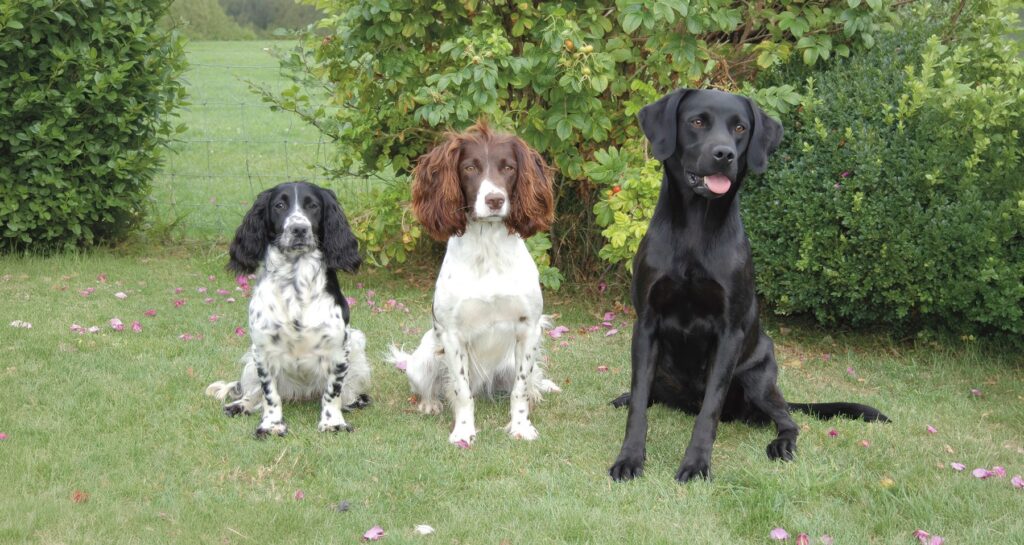
Cocker, springer or Labrador: which makes the best family dog?
The team at Mordor Gundogs have trained and lived alongside Labradors, cockers and springers for years, and each breed has wormed its way into family life in its own unmistakable way. So which one rea...
By Charlie Thorburn
Gundogs
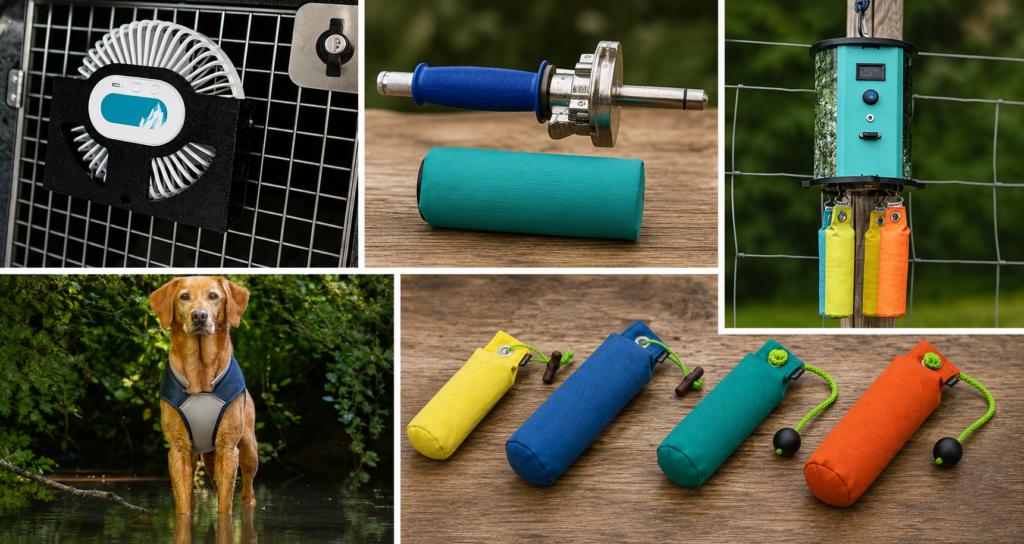
Five of the best summer gundog kit buys for hot-weather training
Our pick of five lightweight, practical products to keep both handler and dog cool and comfortable through summer training, from cooling coats to a remote dummy dropper, rounded up to help you get the...
By Shooting Times
Get the latest news delivered direct to your door
Subscribe to Shooting Times & Country
Discover the ultimate companion for fieldsports enthusiasts with Shooting Times & Country Magazine, the UK’s leading weekly publication that has been at the forefront of shooting culture since 1882. Subscribers gain access to expert tips, comprehensive gear reviews, seasonal advice and a vibrant community of like-minded shooters.
Save on shop price when you subscribe with weekly issues featuring in-depth articles on gundog training, exclusive member offers and access to the digital back issue library. A Shooting Times & Country subscription is more than a magazine, don’t just read about the countryside; immerse yourself in its most authoritative and engaging publication.