★ Your magazine. Your say. Complete our reader survey with a chance to win Jack Pyke kit worth £500! ★


Out-of-control dogs: it’s best to act before the worst happens
The law offers little help when an out-of-control dog charges yours, so reading the danger early is the best defence, insists Jackie Drakeford
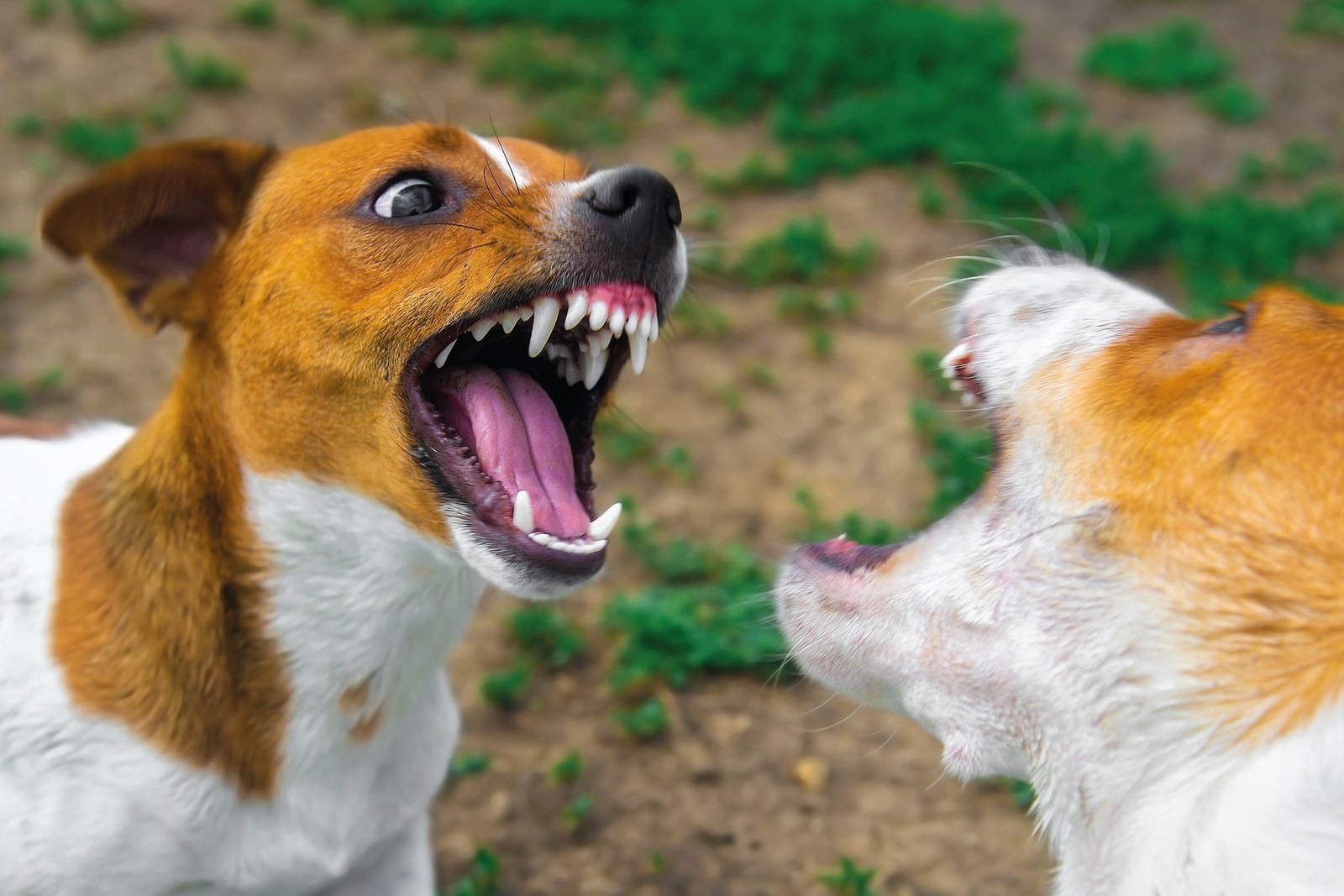

We’ve all been there. We’re walking our well-behaved dogs when an uncontrolled lump of a canine charges at us, displaying body language indicative of wanting to blast us off the planet. Every district has one, usually accompanied by a useless handler intoning that it “only wants to play”, or revelling in the macho prospect of having a dog that makes other dog walkers fear injury.
Sometimes the dog has previous and has actually caused harm in the recent past, or has something of a reputation in the local area. It isn’t difficult for a human to be injured by being knocked into or over by a dog, and a good-tempered, well-trained dog can undergo trauma and become fearful or combative after being subjected to such an attack.
You don’t have to be a dog walker, either. I used to ride an ex-racehorse by permit in some woods and was once charged at by a banned breed of dog that wanted to take him on. Horses can be lethally quick to defend themselves, but the rider has to be able to sit on the result. Again, traumatising a previously dog-proof horse can have lingering repercussions. Most dog walkers are aware of this, behave responsibly and cause no trouble, but we all know with animals that it only takes one unhappy experience to colour their attitude forever.
What the law says about a dog dangerously out of control
Despite the law – and the long fingers of the Dangerous Dogs Act 1991 (DDA), which covers dogs “dangerously out of control” in any place, public or private – there is often little recourse for the law-abiding citizen and well-behaved dog in the initial stages of any dispute. If the offending dog can be identified and located – and most of us are concentrating too hard on damage limitation to take names and addresses even if the owner of the offending dog is willing to part with such information – the dog warden may visit or send a letter.
But most people don’t like to make a fuss. A particular dog may be well known in a district, but not a lot seems to happen before someone, or their dog, gets injured. Being concerned that you might be injured appears to carry little weight.
Also, in close-knit communities, people can be reluctant to shop their neighbours, because we all have to live with each other, and damage is usually the result of incompetence or lack of awareness rather than malice. People can be genuinely of the opinion that their uncontrolled mutt “just wants to play” when it charges up to other dogs that have been minding their own business. Sustained attack can have a damaging effect on the temperament and social attitudes of nice-tempered, well-controlled dogs, which may feel they have to defend either themselves or their handlers when they meet dogs of this ilk.
Under the DDA, an offence is committed if a dog injures someone, or behaves in a way that makes someone fear injury, and a court could also decide a dog is dangerously out of control if it attacks someone’s animal.
The Dogs Act 1871 allows a complaint to a magistrates’ court by any individual or authority that a dog is “dangerous and not kept under proper control”. Breaking up a dog fight takes skill as well as nerve; a lot of information we come across on how to do this is dangerously inaccurate. Aside from physical injury – and we have to be careful not to get our delicate and vulnerable hands involved – the psychological impact of witnessing such an event can be profound.
Reading the body language of an approaching dog
Observing the body language of approaching dogs is very wise when we meet them out on walks. And essential to our own skill set is being able to recall our own dogs and take them out of fighting distance when observing an approaching mutt with a chip on its shoulder. It’s sad that we have to do this, but we can’t rely on other people to understand quickfire body-language signals that some dogs emit when approaching others. It’s about so much more than snarling mouths and raised hackles. Some dogs are so combative that they wag their tails when contemplating attacking another.
Jackie’s Viewpoint
A lid on the boiling pot
Knowing what is going on inside your dog’s head is vital
Two of the best dog-training aids are the lead and the door. Put the dog on the lead, close the door. To that I would add, draw the curtain. A dog on a lead is under close control whatever plans it has for running off or tackling another dog, and a dog behind a closed door or gate can’t rush out and pile into another dog that was just going by.
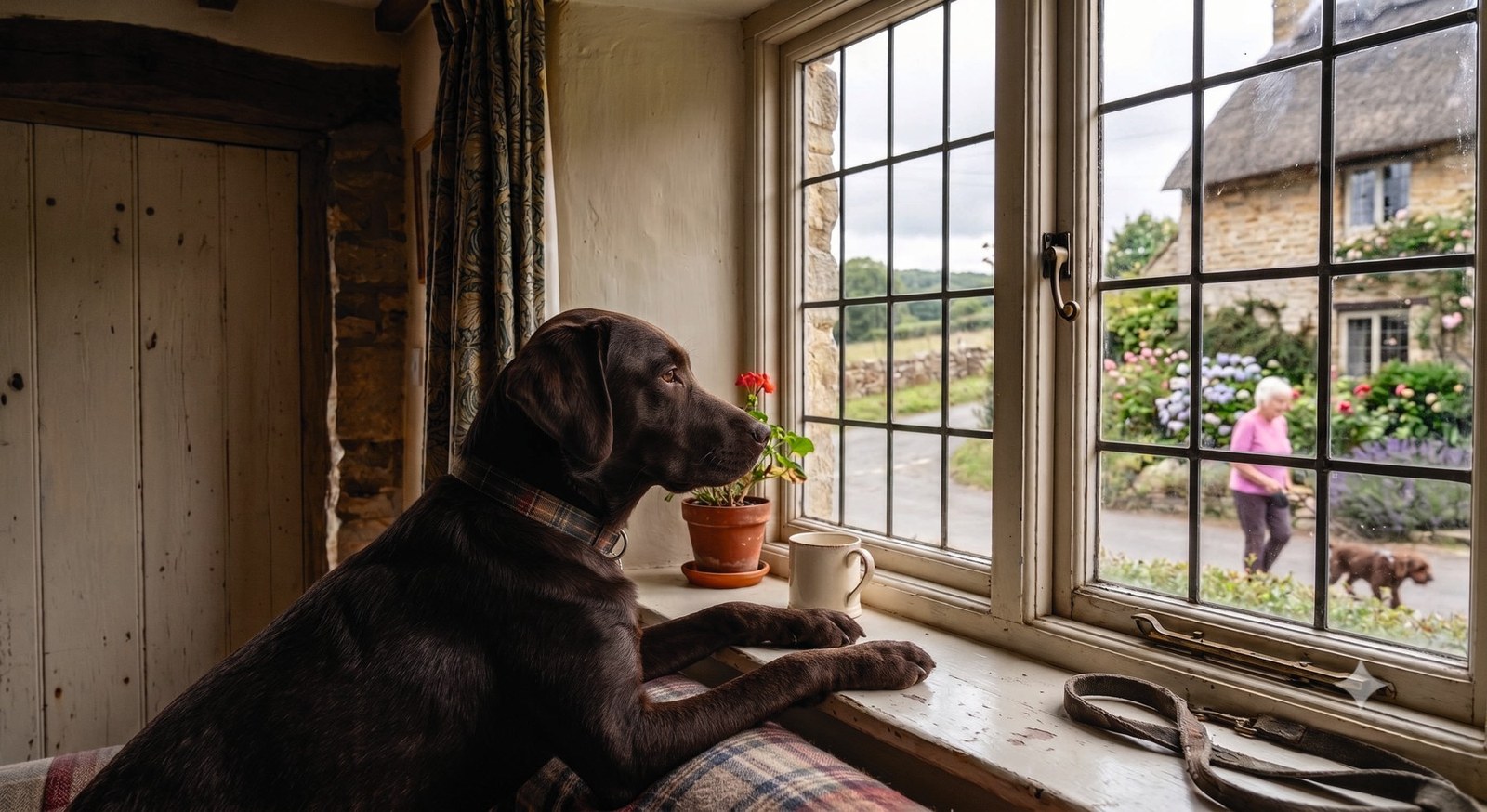
A dog that sits at a window all day can often work up a head of steam just from watching other dogs and people passing by what it considers to be its territory. Such dogs can become so stressed by being unable to guard their space that they do their damnedest to burst out of the house and tackle any passing dog. Often their owners don’t understand that they are keeping the lid on a boiling pot and the dog will take any opportunity to escape from the house and vent its stress on a dog walking past with its owner.
We can’t change dogs’ instincts, but we can manage them responsibly. No dog, however lovable towards its human family, should have unfettered access to the outside world; the path through the home to the outside doors can and should be blocked by a closed door, stairgate or similar obstacle that denies random egress to whatever is passing by outside. Thus when the door is answered to callers, the dog is safely confined and can’t barge past and run out into the road.
If its stress levels are kept low by preventing it from watching passers-by crossing the house boundaries, a problem of which its owners were possibly unaware can be forestalled. Of course, some dogs remain perfectly calm sitting at the window watching the world go by and need not be prevented from doing so just because others find it stressful and therefore become reactive. Knowing what is going on in your dog’s head at any time is a key management skill.
Jackie Drakeford is a working dog instructor and behaviourist with a special interest in lurchers and terriers.
Frequently asked questions
What counts as a dog being dangerously out of control?
Under the Dangerous Dogs Act 1991 an offence is committed if a dog injures someone, or behaves in a way that makes someone fear injury. The Act applies in any place, public or private, and a court could also decide a dog is dangerously out of control if it attacks someone’s animal.
Can you take action over a dangerous dog without using the Dangerous Dogs Act?
Yes. The Dogs Act 1871 allows a complaint to be made to a magistrates’ court by any individual or authority that a dog is “dangerous and not kept under proper control”, which is a separate route from the 1991 Act.
Why does a dog that sits at a window all day become reactive?
Because it works up a head of steam watching other dogs and people cross what it regards as its territory, and becomes stressed at being unable to guard that space. Managing window time, and blocking the route through the house to the outside doors, keeps the stress low and heads the problem off before it starts.

About the author
Jackie Drakeford
A Sussex-based countryside writer with a special interest in lurchers, Jackie was born and brought up in the New Forest and has had a lifelong interest in horses and working dogs. She is well known as a lurcher showing and obedience judge and judges at ferret shows too, works, trains and occasionally breeds her own working lurchers, and is involved in lurcher rescue. A Kennel Club accredited instructor and behaviourist and a founding member of the GEM Ferret Care Group, she is a widely respected author of dog-care titles, among them Understanding the Working Lurcher, The House Lurcher, The Working Lurcher: The Traditional Skills and Working Ferrets, and has hunted with lurchers from the south coast to the northernmost tip of Scotland.

 WinCloses 15 JanuaryWorth £129.90Win a pair of tickets to the British Shooting Show 2027Enter nowFree to enter
Related Articles
Sporting Life: from breakers to trainers, the keepers who set the standard with gundogs
'Gamekeeper trained' was once a selling point in the classified columns, and Jeremy Hobson remembers the keepers whose spaniels and labradors earned it
By Jeremy Hobson | 6 October 2026

The gun shy labrador that was cured in a season, and how it was done
An expert told Richard Donnelly to pray. A year-old labrador that hid under the bed at the sight of a shotgun was retrieving cock pheasants out of the cattails by the winter. His method, set out in Gu...
By News Desk | 29 September 2026
Get the latest news delivered direct to your door
Subscribe to Shooting Times & Country
Discover the ultimate companion for fieldsports enthusiasts with Shooting Times & Country Magazine, the UK’s leading weekly publication that has been at the forefront of shooting culture since 1882. Subscribers gain access to expert tips, comprehensive gear reviews, seasonal advice and a vibrant community of like-minded shooters.
Save on shop price when you subscribe with weekly issues featuring in-depth articles on gundog training, exclusive member offers and access to the digital back issue library. A Shooting Times & Country subscription is more than a magazine, don’t just read about the countryside; immerse yourself in its most authoritative and engaging publication.


 New competitionWin a pair of tickets to the British Shooting Show 2027Worth £129.90Closes 15 JanuaryEnter now ›