★ Win four pegs on a Kent simulated game day with JBD Sporting worth £1,000! Click to enter ★

Angus Glens estates deliver £6.6m boost, report finds
A first-of-its-kind report from seven grouse moor estates records 854 jobs, 68 rural homes and 82.5% of spending staying with local firms
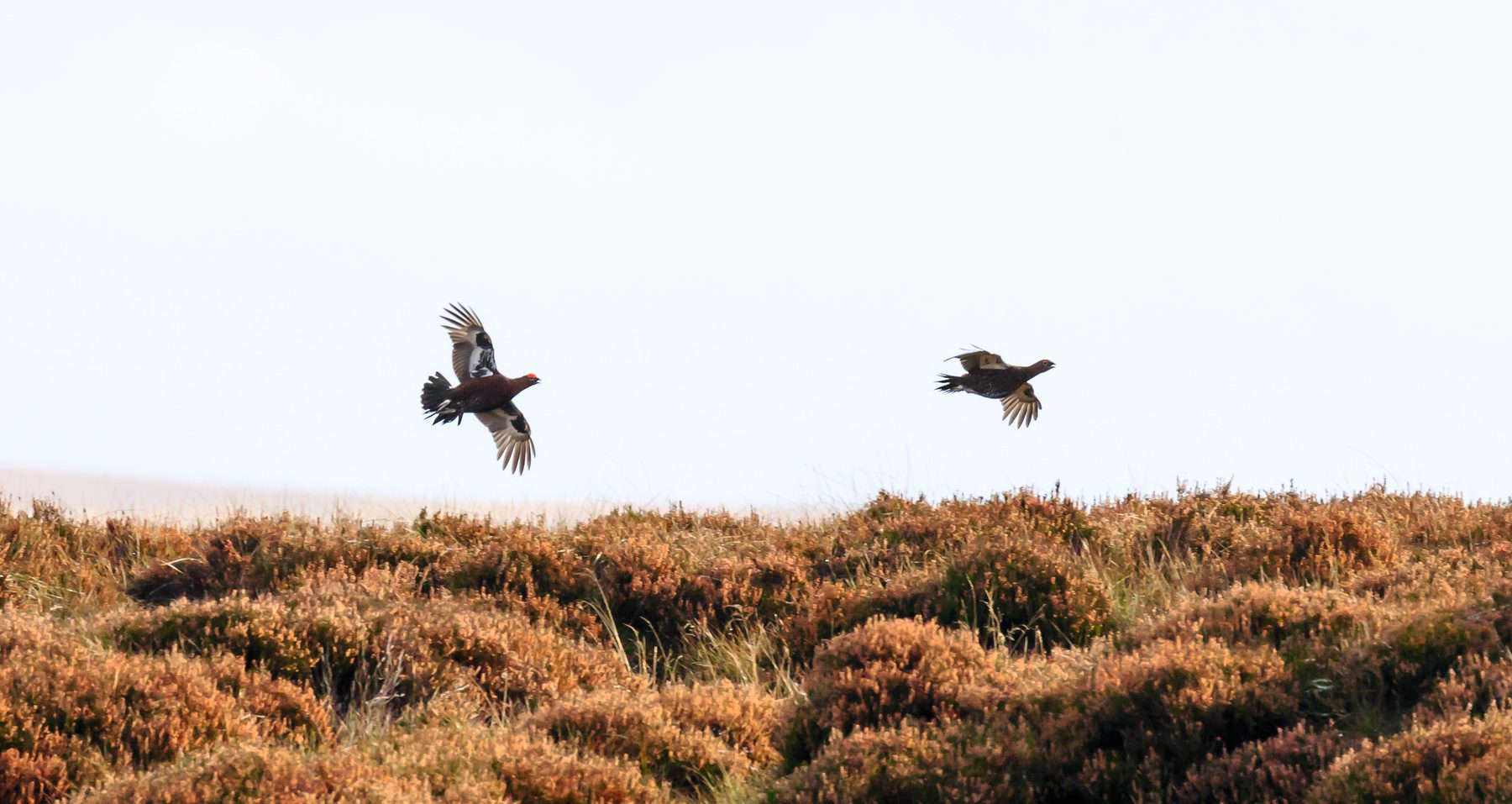 Pair of Red Grouse flying low over moorland heather. Credit: Richard-P-Long/iStockphoto via Getty Images

Seven Angus Glens estates contributed £6.6m to the rural economy in 2025 while supporting 854 jobs and abundant upland wildlife, according to a report published on 4 August by the Angus Glens Moorland Group and Scottish Land & Estates (SLE). The study is the first comprehensive evaluation of the economic, environmental and social impact of moorland management across the seven landholdings.
What did the report find?
Moorland Management in the Angus Glens covers 54,715 hectares under management during 2025. Across the seven estates it records 86 full-time and 768 seasonal jobs, 68 homes provided in rural areas, and annual expenditure of £6.6m, of which £3.66m went on employment and £2.94m on contractors, goods and services.
The vast majority of that spending on goods and services, 82.5%, stayed with local businesses. The 2025 season brought 84 grouse shooting days, with an average of 54 seasonal employees needed per shoot day on each estate, underlining the grouse sector’s role in seasonal work in the region.
Steve Mitchell of Maryton Garage near Kirriemuir said: “The estates here are fantastic for the area, loads of local businesses benefit. We service all the estate vehicles, the gamekeepers’ vehicles and 4x4s for guests who come for the shooting season. It’s a big part of our business.”
What does managed moorland deliver for wildlife?
Detailed ecological monitoring on one estate recorded 102 bird species, 145 species of butterfly and moth, 19 mammal species and 146 plant species. Sixteen bird of prey species are widely distributed across the estates, with white-tailed eagle, golden eagle, buzzard, red kite, peregrine falcon and kestrel recorded on every one.
Key upland waders and gamebirds, including curlew, black grouse, skylark, lapwing and oystercatcher, are found in abundance, species in severe decline across much of the rest of the UK.
Iona McGregor, regional co-ordinator of the Angus Glens Moorland Group, said it was the first time the group had produced a full report on how integrated land use benefits wildlife, recreation, the economy and rural livelihoods. “Many people have the impression that all the land is dedicated to country sports but in fact a wide range of activities are undertaken, from woodland creation to biodiversity enhancement, farming and sustainable tourism,” she said.
Why does the report matter now?
The publication lands with rural communities, biodiversity recovery and wildfire resilience high on the public policy agenda. Ross Ewing, SLE’s director of moorland and strategic projects, said upland estates were “creating jobs, providing homes for rural workers, supporting local businesses and enhancing the natural environment”.
Dawn Black, the SNP MSP for Angus North and Mearns, said the report showed the estates “are not single-purpose enterprises, but multi-functional landholdings delivering real benefits for people, rural communities and nature”.
What happens next
SLE says it will discuss the findings with policy-makers and members of the Scottish Parliament in the coming months. Mr Ewing said land managers could keep delivering for the environment and the economy “as long as the policy direction is clear and there is backing for practical measures which have proved successful – such as wildfire prevention practices and habitat management”.
The full report, Moorland Management in the Angus Glens: Economic, Environmental and Social Impacts from 2025, and its executive summary can be read on the Scottish Land & Estates website.
Frequently asked questions
How much do the Angus Glens estates contribute to the local economy?
The seven estates spent £6.6m in 2025: £3.66m on employment and £2.94m on contractors, goods and services, with 82.5% of the goods-and-services spend going to local businesses.
How many jobs do the Angus Glens estates support?
The estates provided 86 full-time and 768 seasonal jobs in 2025, with an average of 54 seasonal employees needed per grouse shoot day on each estate across 84 days.
What wildlife was recorded on the Angus Glens estates?
Sixteen bird of prey species were recorded across the estates, with white-tailed eagle, golden eagle, buzzard, red kite, peregrine falcon and kestrel on every one, alongside curlew, black grouse, skylark, lapwing and oystercatcher. Monitoring on a single estate recorded 102 bird species.
Related Articles

Recall: the command your shoot day depends on
The grouse moor opens on 12 August and the partridge days follow, which makes August the month a shaky recall becomes everybody's problem. Gundog Journal's step-by-step guide sets out how to build the...
By News Desk

Hare coursing spreading west into Wales, warns CLA
Gangs pushed out of the eastern counties by Operation Galileo are appearing in the Midlands, the South West and Wales, just as harvest leaves hares exposed on the stubbles
By News Desk
Get the latest news delivered direct to your door
Subscribe to Shooting Times & Country
Discover the ultimate companion for fieldsports enthusiasts with Shooting Times & Country Magazine, the UK’s leading weekly publication that has been at the forefront of shooting culture since 1882. Subscribers gain access to expert tips, comprehensive gear reviews, seasonal advice and a vibrant community of like-minded shooters.
Save on shop price when you subscribe with weekly issues featuring in-depth articles on gundog training, exclusive member offers and access to the digital back issue library. A Shooting Times & Country subscription is more than a magazine, don’t just read about the countryside; immerse yourself in its most authoritative and engaging publication.