★ Your magazine. Your say. Complete our reader survey with a chance to win Jack Pyke kit worth £500! ★


Yorkshire keeper calls for united front to save the curlew
A head gamekeeper has urged farmers, estates and conservationists to work together and face up to predator control if the curlew is to be saved


One of Yorkshire’s best-known gamekeepers has called for farmers, sporting estates and conservation groups to work together on curlew conservation, warning that recovery will fail unless the sector faces up to predator control. Ian Sleightholm, head gamekeeper on the Bolton Estate, made the plea at the Great Yorkshire Show on 15 July 2026.
What did the gamekeeper call for?
Sleightholm, head keeper on the 12,500-acre Bolton Estate in Wensleydale and a familiar face from the More4 series The Yorkshire Dales & The Lakes, urged the Government, sporting estates, conservation groups and individuals to “sit at the same table” on curlew recovery.
He said many farmers needed both education and long-term financial incentives to manage land for waders. “There’s so much pressure on farming, and if you offered farmers the chance to take land for food production or bird protection, they’d pick the first,” he said, calling on ministers to fund schemes that make wader management worth a farmer’s time.
Why is predator control central to the argument?
Sleightholm said the subject that stalls conversations is predator control. “I sit on curlew groups, who talk about protecting the birds, but sometimes, as soon as you bring up the fact that we might need to eliminate the predators of the curlew, the conversation stops,” he said. “Nature is cruel sometimes, and often you have to take a life to save one.”
His comments echo the case made by gamekeepers and the GWCT that legal predator control, alongside habitat and food, underpins wader recovery. A survey of Upper Teesdale reported this month found roughly twice as many breeding curlews on moorland managed for grouse as on unmanaged ground.
What is the Bolton Estate doing for waders?
Red-listed since 2015, the curlew has become a symbol of the wider debate over how Britain’s uplands and in-bye land are managed. On the Bolton Estate, keepers use thermal drones to locate nests and keep farm machinery clear of sitting birds during the breeding season.
Sleightholm said progress depended on everyone pulling in the same direction: “We need to start having conversations from the top down about how we can help, because unless we’re united on this and everyone is on the same page, it won’t work.”
Curlew numbers in the UK have roughly halved since the mid-1990s, and the birds are an Annex I priority for conservation, with the uplands of northern England holding an internationally important share of the breeding population. Conservationists and shooting bodies alike accept that nest predation by foxes and crows is a major driver of poor breeding success, though they differ on how far lethal control should go.
Related Articles

Curlew recovery hinges on keepered ground, BTO modelling shows
Fencing and predator control are saving nests but not chicks, and the report warns that losing grouse-moor management would halve population growth
By News Desk | 10 September 2026
Moorland Association demands statutory wildfire board
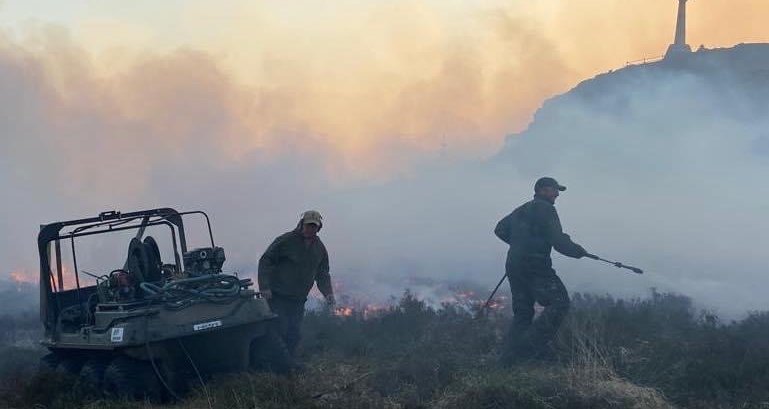
The association wants a legal duty to cut fuel loads and gamekeepers formally written into regional fire planning, after a 2025 season it says burned 46,000 hectares
By News Desk | 8 September 2026
Get the latest news delivered direct to your door
Subscribe to Shooting Times & Country
Discover the ultimate companion for fieldsports enthusiasts with Shooting Times & Country Magazine, the UK’s leading weekly publication that has been at the forefront of shooting culture since 1882. Subscribers gain access to expert tips, comprehensive gear reviews, seasonal advice and a vibrant community of like-minded shooters.
Save on shop price when you subscribe with weekly issues featuring in-depth articles on gundog training, exclusive member offers and access to the digital back issue library. A Shooting Times & Country subscription is more than a magazine, don’t just read about the countryside; immerse yourself in its most authoritative and engaging publication.