★ Your magazine. Your say. Complete our reader survey with a chance to win Jack Pyke kit worth £500! ★

Old Long Mountain: how a big commercial Welsh shoot keeps its family feel
Writing in Fieldsports Journal, Ben Palfreyman follows guest editor John Henderson to his last day of the 2025/26 season on the Powis Castle Estate, where host Will Horner runs a Cambrian Sporting shoot on a minimum of four drives, serves the main meal when it is dark and fines everyone, himself included, for charity. For shoot operators and keepers it is a working model of scale without the commercial feel, and of cover and predator control that pay the wild birds back
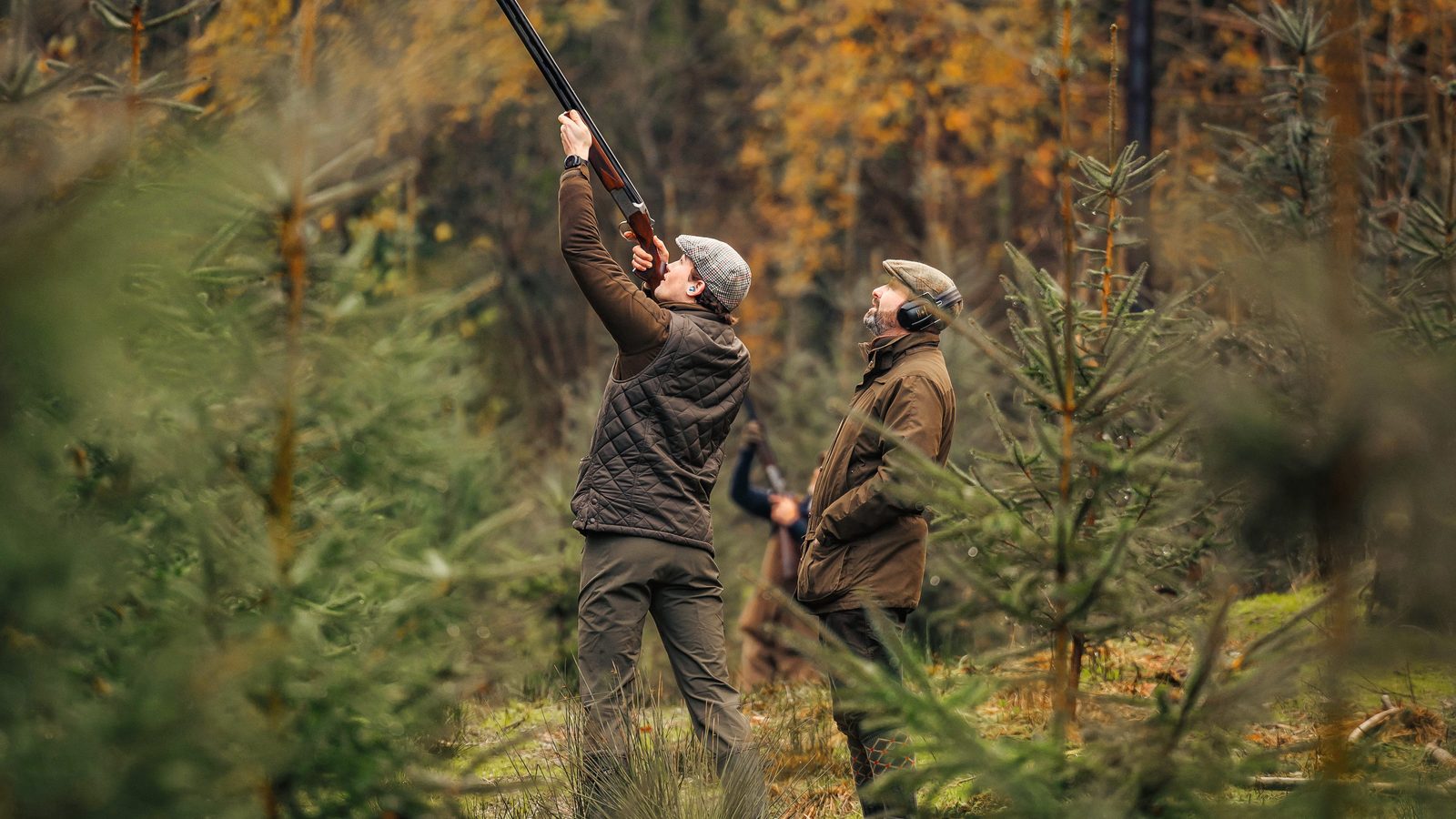

Old Long Mountain sits in the hills of mid-Wales above the River Severn, on the Powis Castle Estate with views towards Welshpool, and it is where Fieldsports Journal guest editor John Henderson chose to spend his final day of the 2025/26 season. Writing in Fieldsports Journal, Ben Palfreyman follows that day with host Will Horner, and for anyone who runs a shoot the piece is less a travelogue than a working model of how a large commercial operation keeps the feel of a family day.
Horner describes the ground as “a beautiful landscape of sweeping valleys, ancient oak and ash woodland, and open hillside alive with skylarks, goshawks and pheasants”. The shoot is run by Cambrian Sporting, and Palfreyman reports that Horner hosts it from well behind the line, conducting the day by radio rather than standing among the pegs.
Why does Old Long Mountain eat when it is dark?
“The shoot is commercial in the sense that it’s run well and efficient, but I don’t want it to have a commercial feel,” Horner tells Fieldsports Journal. He would rather the teams think of the place as a big family, and the phrase he reaches for is “a really relaxed, well-run family shoot”.
The timetable is built around that. “We always do a minimum of four drives, and if we need more, we’ll do more,” he says. “We shoot when it’s light and we eat when it’s dark; that’s why we always serve the main meal at the end of the day. This way, there’s no stress.” For a shoot manager juggling daylight in December the model has a practical logic beyond hospitality: the birds are shot in the best of the light, and there is no long lunch to squeeze the last drive against the dusk.
What do Paradise, Beeches and The Rhallt each ask of the Guns?
Paradise is the drive teams ask about before they book. “Paradise gets all the plaudits, because it’s our most well-renowned drive – and rightly so. It couldn’t be more British if it tried,” Horner says. Palfreyman describes a long, sweeping grass valley with the birds coming from a wood of ash and beech, and Horner points out what that means for the line: “While the birds are coming out of the wood, you do get a lot more time to see them coming than on some of our other drives.”
Beeches is the host’s own favourite, and his reasons are a keeper’s reasons. “It’s consistent, it’s a spectacle, and it’s really good from a management point of view; we can move birds up and down the line to give people as even a spread of shooting as we can,” he says. It is the drive he uses to close a day, and he watches it from the same spot every time: “I’ve got a little tree stump at the back where I sit… I’ve had many fond moments sat on that stump watching birds come over. It’s a special place.”
The Rhallt joins the programme from November, once the leaves are down, with the Guns on a forestry track and the birds curling along the tree tops. “It can divide the crowd, I’ll be honest, as not everyone is comfortable shooting in amongst trees,” Horner admits. “What I love about it is that it catches out even the most incredible shots. You’ll watch someone who is genuinely a brilliant Gun absolutely crumble under birds that are very hittable, but technically very difficult because of the trees.” His case for keeping it is variety: “The modern British pheasant shoot is done so much in the open, so it’s quite nice to throw it in as a curveball. I think that variety is really important.”
Where do the fines go?
Every team at Old Long Mountain shoots under a fines system, and Palfreyman reports that the offences run from forgotten cartridges to gates left open and second helpings. “I’m very partial to fining people, in a very, very light-hearted manner, of course,” Horner says. “The rule is that I make the rules, and that is the most important thing for everyone to remember.” Nobody is exempt: “Anyone deviating from that will be fined. I quite happily fine myself as well; in fact, my love of this traditional shooting practice has actually cost me a fortune over the years.”
The money does real work. This season’s proceeds went to Birmingham Children’s Hospital, to Ronald McDonald House, which looked after Horner’s wife and newborn son, and to the Game & Wildlife Conservation Trust, while an optional levy on the day supported Eat Wild, the campaign to get more game on to British plates.
What does the keepering do for the wild birds?
Palfreyman reports that most of the game cover at Old Long Mountain is a stewardship-compliant wild bird mix of sunflowers, triticale, quinoa, millets and sorghum, chosen as much for the wild bird population as for the pheasants. “Yes, it helps with stewardship and it helps the game, but come and see those covers during the winter and they are absolutely full of little wild birds,” Horner says. “Through the hungry gap of the colder months, the wild birds flourish off that. It’s there for them as much as anything.”
The fox, corvid and grey squirrel control that comes with a keepered shoot pays out to the ground-nesters, Palfreyman writes, with curlews and plovers among the beneficiaries. Woodcock arrive from late November in good numbers and are not shot at all, and Horner reports a slight increase year on year. Three or four goshawks are a regular presence, alongside red kites, buzzards, sparrowhawks, little owls, tawny owls and merlin, and the smaller birds of the covers include goldfinches, greenfinches, linnets, sparrows, dunnocks and skylarks.
Horner does not pretend the open Welsh hill photographs as well as a lowland field margin. “It’s harder to achieve that on an open Welsh hill, but there is a huge amount of unseen work going on that does a lot of good,” he says. “We are a big, commercial shooting enterprise and we know that, but everything is aimed in the right direction as best we can manage. We’re trying to do it right. We’re trying to fight the good fight, really.”
What happens next
The pheasant season opens on 1 October, and The Rhallt returns to the Old Long Mountain programme once the leaves are down in November, so the teams booked for the winter have the full set of drives ahead of them. The full feature, with Matt Kidd’s photographs from John Henderson’s day, is on Fieldsports Journal now.
Frequently asked questions
Where is the Old Long Mountain shoot?
Old Long Mountain is in the hills of mid-Wales above the River Severn, on the Powis Castle Estate with views towards Welshpool. It is run by Cambrian Sporting and hosted by Will Horner.
What are the main drives at Old Long Mountain?
Paradise, a long grass valley where the birds come out of ash and beech woodland and the Guns get more time to see them; Beeches, the host’s favourite, used to close a day and to spread the sport evenly along the line; and The Rhallt, shot from a forestry track from November, where the birds curl along the tree tops.
Are woodcock shot at Old Long Mountain?
No. Woodcock arrive from late November in good numbers and are not shot at all, and Will Horner reports a slight increase in their numbers year on year.
What happens to the fines on a shoot day at Old Long Mountain?
They go to charity. This season the proceeds went to Birmingham Children’s Hospital, Ronald McDonald House and the Game & Wildlife Conservation Trust, and an optional levy supported Eat Wild.
 Closes 15 JanuaryWorth £129.90Win a pair of tickets to the British Shooting Show 2027Enter nowFree to enter
Related Articles
Where to shoot simulated game: seven UK venues for the summer and the syndicate
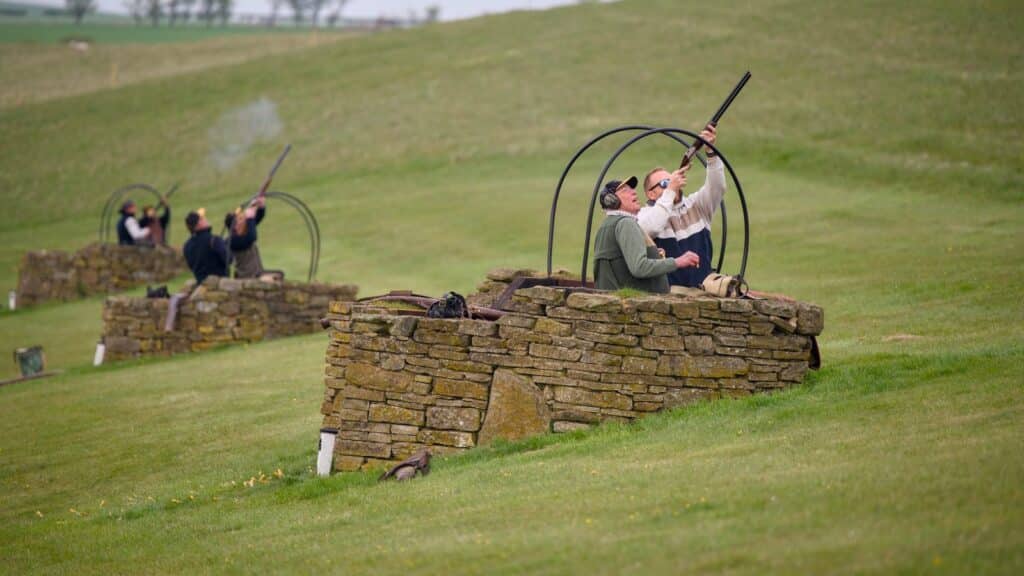
A simulated game day puts the clays where the birds would be, and for the shoot owner, the keeper and the syndicate Gun it is the honest way to earn from the ground and get the swing back between seas...
By News Desk | 7 October 2026
Picker-up at eight, first bird at 12: how a father passed shooting on
Writing in Fieldsports Journal, Jamie Culpan recalls being pressed into service as his father’s picker-up on the West Coast of Scotland after the family dog died, and the syndicate family day, four ye...
By Jamie Culpan | 7 October 2026
Get the latest news delivered direct to your door
Subscribe to Shooting Times & Country
Discover the ultimate companion for fieldsports enthusiasts with Shooting Times & Country Magazine, the UK’s leading weekly publication that has been at the forefront of shooting culture since 1882. Subscribers gain access to expert tips, comprehensive gear reviews, seasonal advice and a vibrant community of like-minded shooters.
Save on shop price when you subscribe with weekly issues featuring in-depth articles on gundog training, exclusive member offers and access to the digital back issue library. A Shooting Times & Country subscription is more than a magazine, don’t just read about the countryside; immerse yourself in its most authoritative and engaging publication.
 New competitionWin a pair of tickets to the British Shooting Show 2027Worth £129.90Closes 15 JanuaryEnter now ›