

Country Diary: ticks are building on a Galloway grouse hill, but hiding indoors is no answer
Tick numbers are rising on Patrick Laurie’s grouse hill with no obvious host to blame, and a trip to hear the stags roar brings the problem home
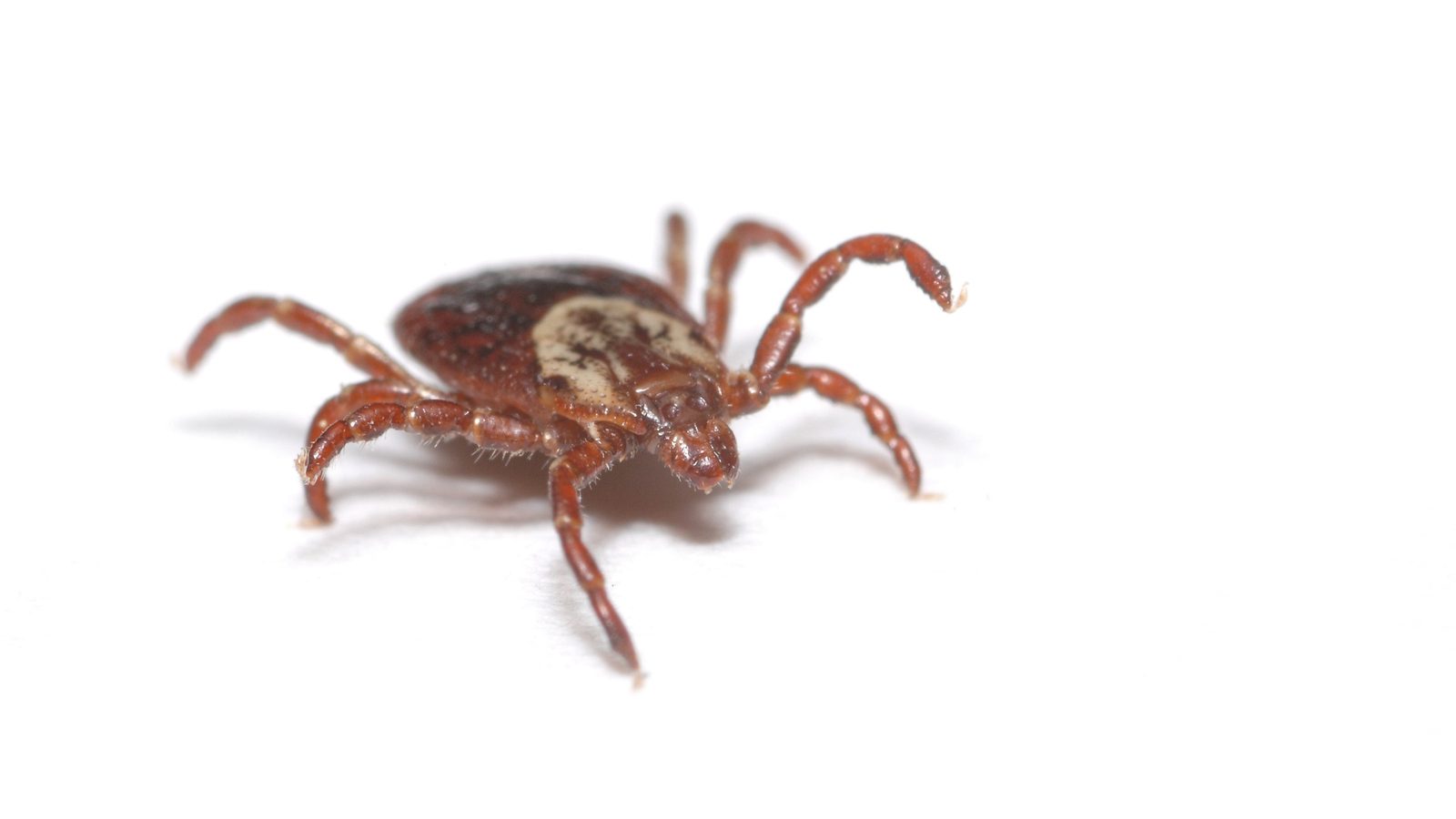

I noticed several ticks on the dogs when we got home from our day at the grouse. The hill isn’t particularly bad for ticks, but their numbers have slowly been building over the last few years and I’d say we’re heading towards a problem. There aren’t any sheep on that ground, and while it’s said that roe deer are particularly bad for spreading parasites, I’ve rarely found many ticks on animals which I’ve hung in the larder. I certainly find ticks on foxes and stoats, but never so many as I found on the dogs this year.
What’s more, catching up the occasional brood of grouse or wader chicks, I’m aware that ticks are sometimes present around the eyes of young birds, but nothing like as bad as I’ve seen on other moors elsewhere. There are no hares or rabbits nearby, and this then raises the question of where these ticks have come from and how their numbers are increasing without any obvious host.
Why are tick numbers rising in Britain?
Everybody has got a theory on different tick populations, and I’m sure that everybody is differently right, but it seems hard to believe that there are many hard-and-fast rules to explain the rise of ticks in Britain. It’s certainly true that milder winters and wetter springs contribute to an increase in tick numbers, but local conditions vary so much that while some hills like mine are seeing an increase in tick numbers, neighbouring hills are experiencing no change whatsoever.
As a trial this year, I cut a load of bracken on my in-bye fields to use as bedding for cattle. One of my neighbours commented that I was asking for trouble with ticks, but I have never noticed ticks on this particular piece of land. He made the association that bracken equals ticks – and he’s generally right to see one and think of the other.
It’s not quite so simple as that, and some bracken has no ticks at all. My cattle have been bedded on bracken for a month now, and I have seen no sign of ticks anywhere… touching wood as I type that.
Roaring stags above Newton Stewart
Ticks became obvious again in September when I took my son to see stags roaring in the hills above Newton Stewart. I used to go and see the beasts when I was his age, and this is the first year he’s been big enough to make the seven- or eight-mile trek out to the wild, dramatic corries where the monsters hold their hinds.
We saw our stags and enjoyed the spectacle of three big 14-pointers squaring off 100 yards away. We stalked into them along the bottom of a peat hagg and then cheered them on quietly through the lenses of our binoculars.
Afterwards, it thrilled my son to be shown a wallow where the stags had been splashing themselves in smelly mud. There is something about urine-stained wallows which appeals to the sensibilities of a six-year-old boy, and I noticed that this was the main thing he wanted to tell his teachers about when he went into school the next morning. Their disgusted expressions were exactly the response he was going for.
The following night, I picked a tick off my son’s neck – and an hour later, I picked a second one off his cheek. They were tiny little nymphs, and I might not have seen them if they hadn’t made a little red mark on his skin.
Ticks, Lyme disease and the panic indoors
For some reason I am much less interesting to ticks than he is, because I had none at all. I mentioned the ticks to his teachers and was surprised to note their panic – for them, ticks were frightening disease vectors to be avoided at all costs.
I know that Lyme disease is no joke, but it’s the new reality – and while I completely agree that ticks are a major issue which needs to be taken seriously, they are also an unavoidable fact of life, particularly in rough country like Galloway.
The response to ticks is not to stop going outdoors – if you tried to hide from ticks around these parts, you’d never get anything done. Instead, the response is surely to be sensible and cautious and to carry out thorough checks when you get home. Sadly, the days of not having to care about this issue are over.
Patrick Laurie manages a programme to promote farming and conservation, with a particular focus on wading birds and black grouse, and runs a farm in Galloway.
Frequently asked questions
Does bracken always mean ticks?
Not always. Patrick Laurie has bedded his cattle on cut bracken for a month with no sign of ticks, though he accepts that bracken and ticks often go together.
What should you do about ticks after a day in rough country?
Carry out thorough checks on yourself, children and dogs when you get home. Nymphs are tiny and may only show as a small red mark on the skin.

About the author
Patrick Laurie
Based in Galloway, livestock farmer Patrick writers on farming, fishing, conservation and Scotland.
 Closes 15 JanuaryWorth £129.90Win a pair of tickets to the British Shooting Show 2027Enter nowFree to enter
Related Articles
Gamekeeper: why a smooth shoot day starts with gates, bridges, vehicles and the dogs
Partridges are flying well at the Honeycombe Shoot, but Mike Appleby says a smooth season rests on the work done before it – gates, bridges, vehicles, spares and the dogs
By Mike Appleby | 10 November 2026

From the Game Farm: why game farmers are uniting in a new European Game Farmers’ Group
As political threats loom in Brussels, Dominic Boulton explains how game farmers from across Europe are setting up the European Game Farmers’ Group, with a little help from FACE
By Dominic Boulton | 10 November 2026
Get the latest news delivered direct to your door
Subscribe to Shooting Times & Country
Discover the ultimate companion for fieldsports enthusiasts with Shooting Times & Country Magazine, the UK’s leading weekly publication that has been at the forefront of shooting culture since 1882. Subscribers gain access to expert tips, comprehensive gear reviews, seasonal advice and a vibrant community of like-minded shooters.
Save on shop price when you subscribe with weekly issues featuring in-depth articles on gundog training, exclusive member offers and access to the digital back issue library. A Shooting Times & Country subscription is more than a magazine, don’t just read about the countryside; immerse yourself in its most authoritative and engaging publication.

