

Lochnell: how an Argyll family shoot restarted with coastal partridges
Covid and a retiring keeper had closed the family shoot at Lochnell. Archie Cochrane restarted it with partridges instead of pheasants, pegs on the beach, a beating line in its twenties and a local club at about £650 a year, and the Scottish Country Sports Tourism Awards named it Best Sporting Estate. He talks to Matt Kidd about what a restart takes

Photographs: Cerys Country Photography, unless otherwise credited
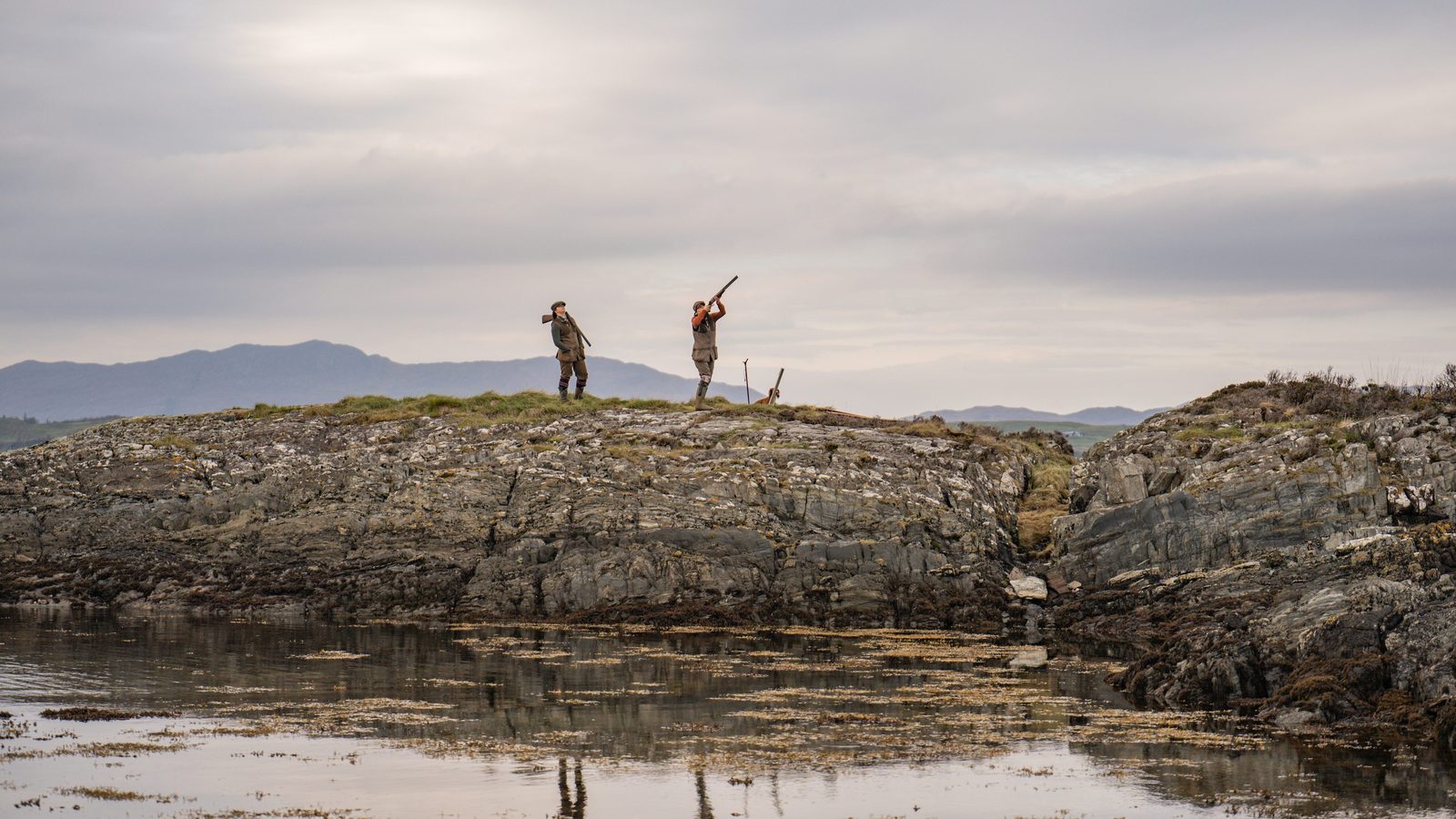
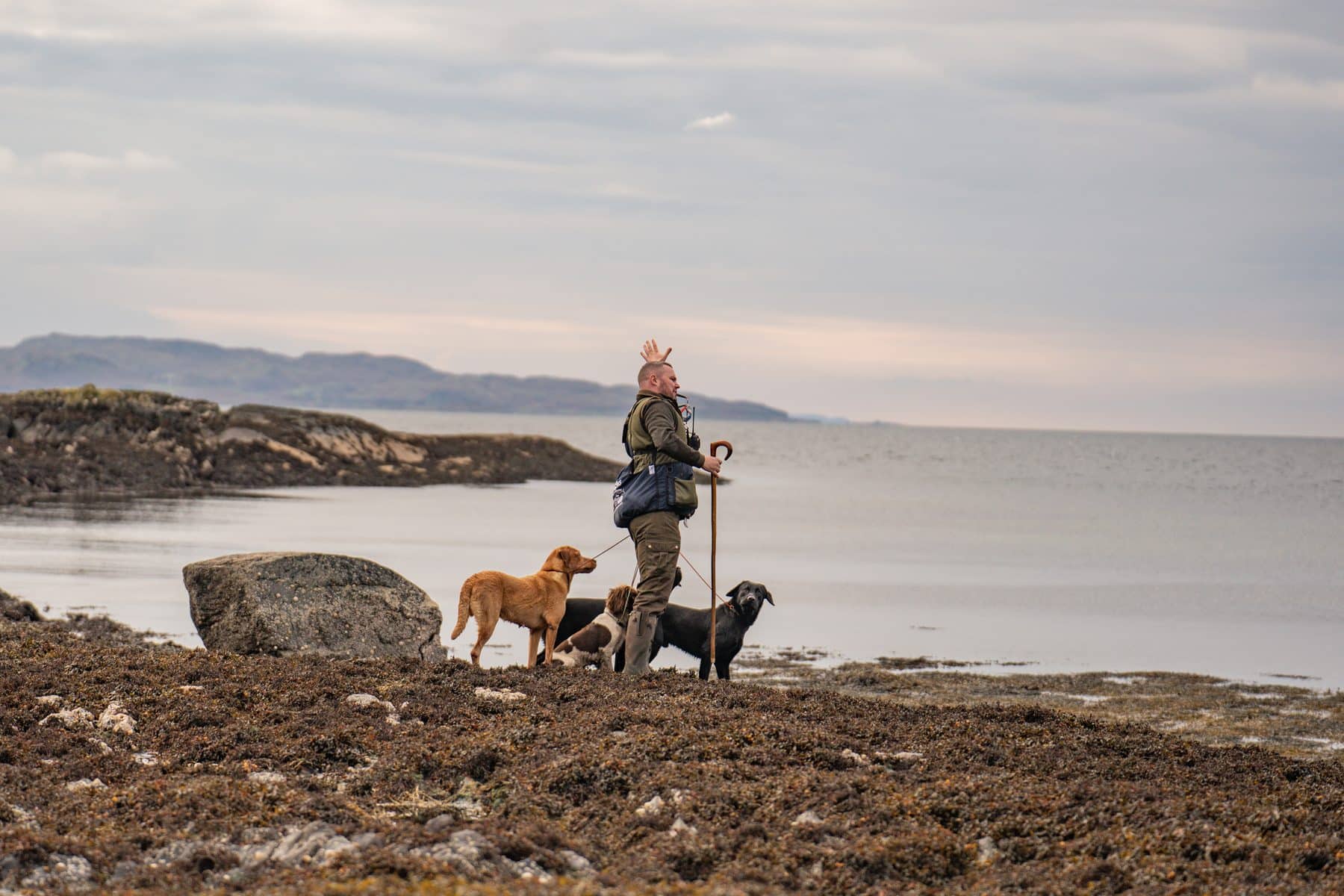
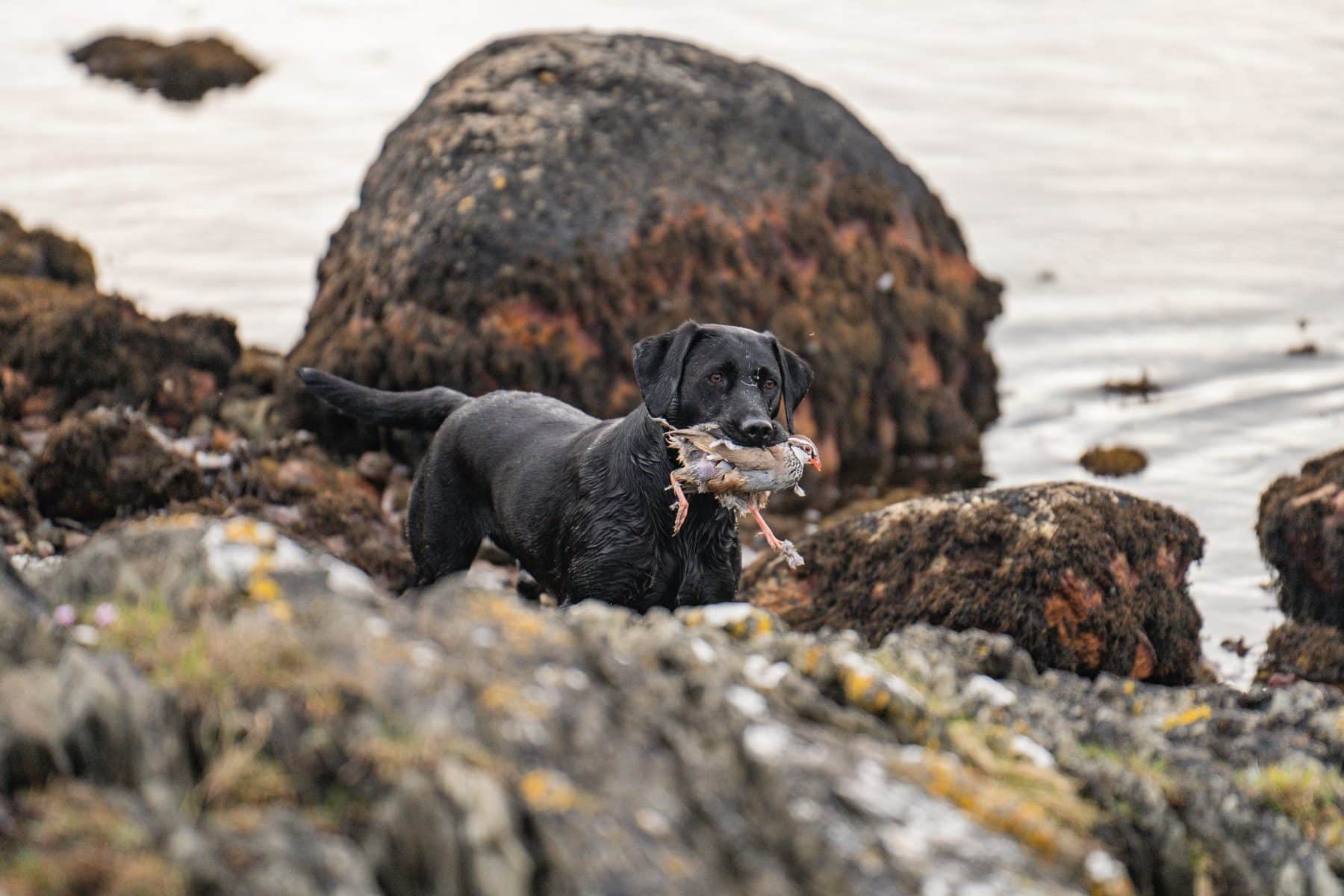
A peg on the beach with the tide at your heels, partridges crossing rocky gullies and coastal cliffs, and dogs that swim into the waves for their retrieves: Lochnell, on the Argyll coast, is about as far from a lowland pheasant shoot as a driven day gets. The dogs have earned the name “salty sea dogs”, and the autumn colour of the Atlantic rainforest behind the pegs is the backdrop to all of it.
It is also the shoot named Best Sporting Estate at the Scottish Country Sports Tourism Awards 2026, presented at the Scottish Game Fair. For Archie Cochrane, who restarted it from nothing, the award was recognition of a deliberate choice. “It was really nice to be recognised by people who do a lot of shooting all over the UK,” he says. “The actual amount of birds you shoot is less and less important. It’s about who’s there on the day, the interaction between the Guns, the beaters and the pickers-up, the sense of community, the views, the conservation and the food.”
Restarting a shoot that had stopped
The Cochranes have been at Lochnell for more than 120 years, and shooting there was always a relaxed family affair, pheasants with a few partridges through the winter. Covid and a retiring keeper brought it to a natural end. Archie’s father, who took on Lochnell at 21 after his own father died young, left the question of a restart to his son.
“Dad was happy for me to restart, but it was on me to organise it,” Archie recalls. “I wanted the balance to be right, to make sure it was a big part of estate life and community life. It was never going to be the big economic driver on the estate, but an important part of it.”
He also decided it would not be the old shoot put back as it was. “We’re a north-west Highland estate, so it’s not natural driven shooting country,” he says. “Friends who’d shot here always talked about how special the setting was – the rare woodland, the topography and the views. That made me realise there was a real opportunity to rethink what we could offer and make more of what we have here.”
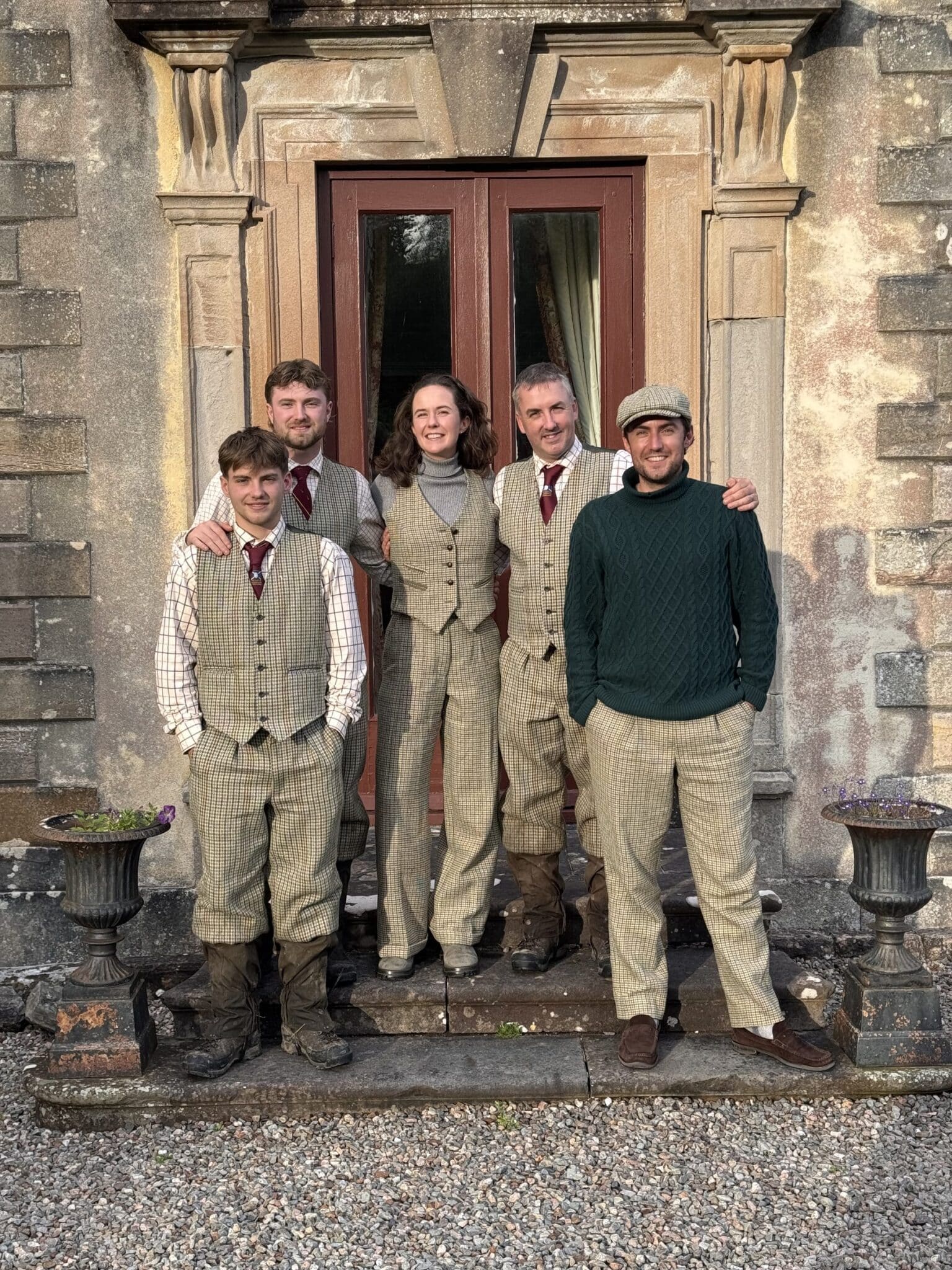
The keeper came back with the shoot. Stephen Sloss first arrived at Lochnell as a 16-year-old apprentice in the 1990s, having written to estates across the area. “My father replied and gave him the opportunity,” says Archie. “Stephen then went on to spend 20 to 30 years stalking for the Forestry Commission, where he was one of its top shots, culling hundreds of red stags a year to keep numbers down.” During Covid he approached Archie’s father about buying a plot of land to build a house and bring his family back to the area, and with the shoot closed he offered to help get it going again. Today Stephen and his sons, Daniel and Matthew, run the keepering and the stalking.
Partridges on the shore
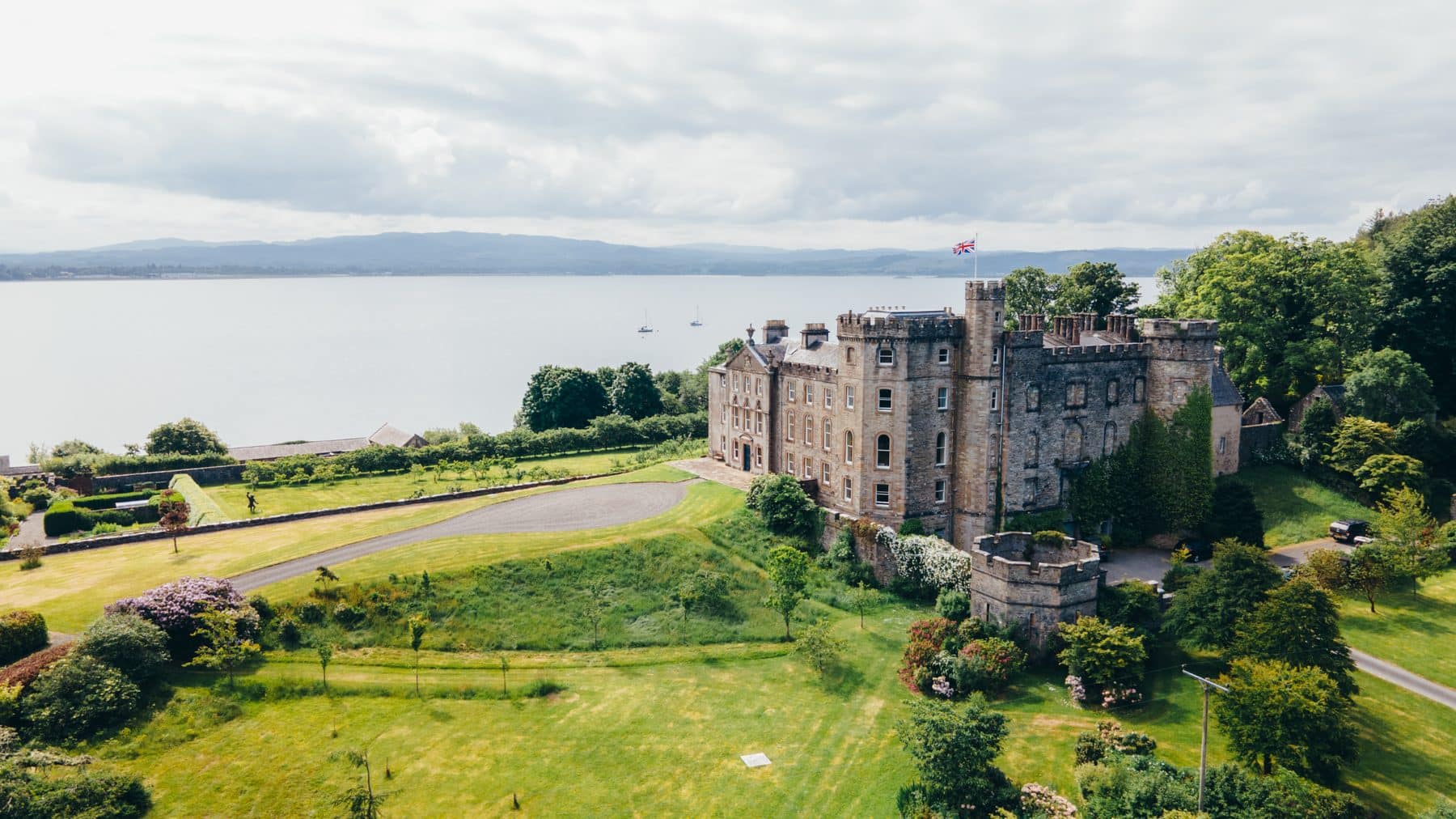
Lochnell sits on a peninsula running out into the Firth of Lorn, north of Oban and south of Fort William, looking across to Lismore, Mull and Kerrera. “We’re surrounded by the Atlantic on three sides,” says Archie. “It’s about as close to an island as you can get while remaining connected to the mainland.” The estate runs to roughly 2,000 acres, more than 600 of them Atlantic rainforest. The low-ground shooting is on the coast, through native woodland, heather, bog myrtle and broken, rocky ground, while the red deer are stalked on a separate block of more conventional hill.
“We don’t put any pheasants down now,” says Archie. “We put partridges down and we shoot from 1 September right through to the end of October, and then we stop the driven shooting.”
Between 15 and 20 modest driven days go into those two months. Archie prefers the early season, when a day can still be wet but is usually warmer and there is daylight enough to see the place, and it lets visiting teams put partridges together with stags in the rut, or a roe when in season. “A lot of our teams come up and shoot partridges on the Friday or Saturday or, often, back-to-back,” he says. “Though we get many Guns come up on, say, a Tuesday and shoot stags on Wednesday and Thursday.”
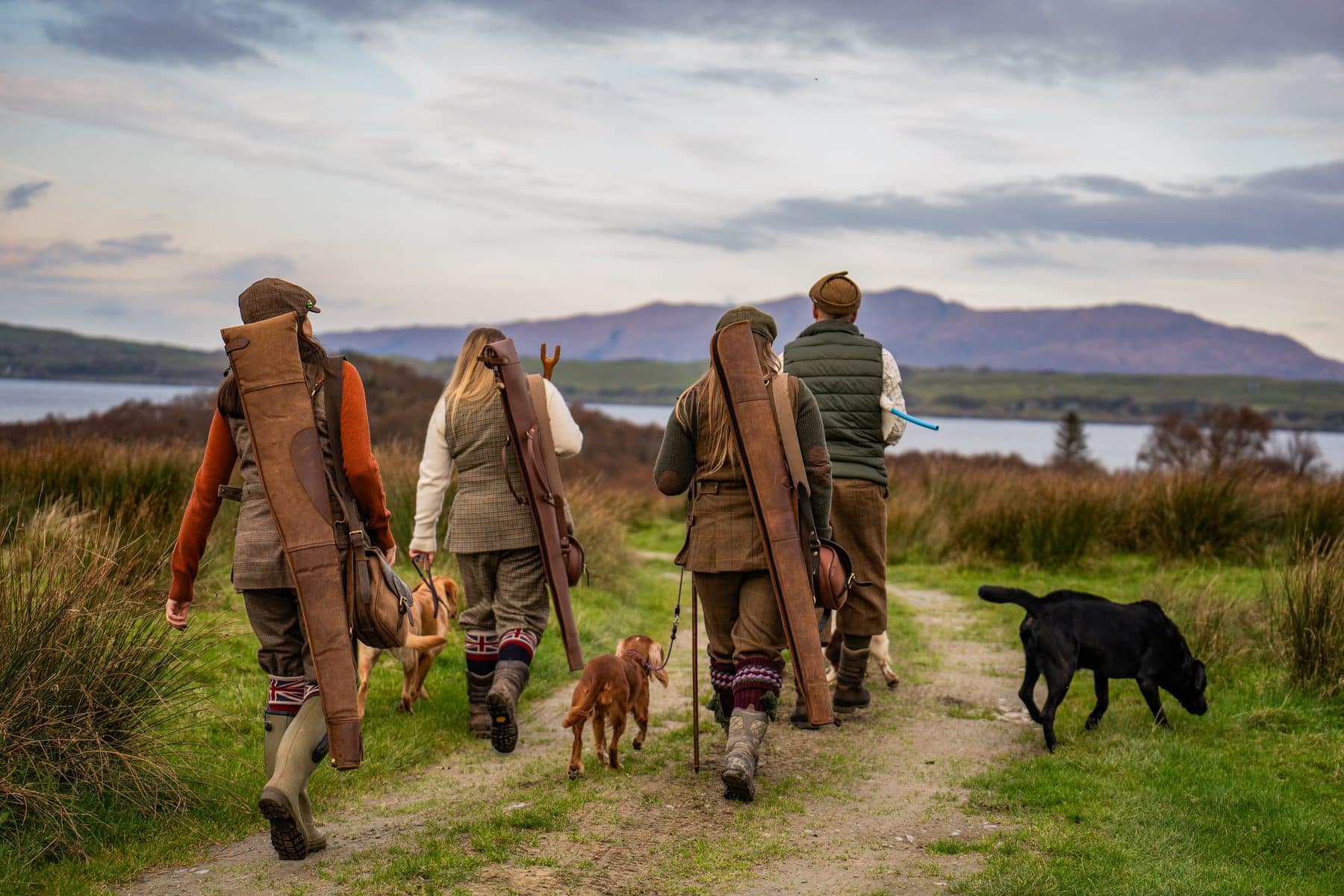
The day begins at the front of the castle, with Stephen standing in as shoot captain when Archie is not there to host. Family teams stay in the castle and other parties use accommodation elsewhere on the estate. “We have probably 10 or 12 drives in total, and we alternate them depending on the weather conditions,” says Archie. A typical day takes in five or six of them, for a bag generally between 100 and 200.
Some drives push birds out over the cliffs for height and a testing overhead shot. Others, generally in the trees, send partridges along the contours of the smaller hills and gullies for the quicker, more instinctive shooting Archie likes best. “I’d liken it to the style of traditional Spanish partridge shooting,” he explains. “A little bit more ducking and diving than high birds setting their wings.”
Lighthouse, named for its view of Lismore Lighthouse, is one of his favourites. “Your back is towards the lighthouse and the birds are driven out towards it,” he says. “Then the Lismore drive, which is like a return drive, is also fantastic. You have two lines of Guns, one below the cliffs and the other on the shore below that as back Guns. It’s really quite special.
“Many of the pegs on the drives are either on the beach or on the cliffs overlooking the sea,” he adds. “I would even say a large proportion of the retrieves are from within the waves.” Whatever the west-coast weather does, the coastal drives stay on the card. “It’s beautiful in all weather. It might just mean the birds move a bit quicker,” he laughs.
A beating line in its twenties
Daniel and Matthew have brought their friends and other young people into the beating line too, aspiring keepers and members of the local shinty community among them. “Our beating line is predominantly teenagers and people in their 20s,” says Archie. “Everyone comments when they come: ‘I love how young all your beaters are.’” He puts the average age of those beating and working dogs well under 40, on a shoot scene where, as he points out, most beating lines are in their 60s.
A club for local Guns
Local Guns have a way in as well. “Shooting is only going one way in terms of cost,” says Archie. “A peg can easily cost over £1,000, and a day these days is £6,000 or £7,000-plus, if not a lot more.” The Lochnell Shooting Club, set up last year, is closing on 20 members. “Members can join for about £650,” he says. “For the whole year, they get a mixture of walking and standing days, a bit of woodcock shooting, duck flighting and rough days throughout the season.”
Farmers, beaters, local keepers and fathers and sons make up the membership, and many of them turn out on the driven days too. Some club shooting falls in September and October, but the programme really gets going once the main driven season is over, with smaller driven days, walked-up shooting and flighting through the winter.
“If we don’t foster the local community, everything else falls by the wayside,” says Archie. “Beaters don’t have a reason to bring on their dogs. If they don’t have a reason to bring on dogs, there’s no gundogs. If you don’t have gundogs, you don’t have beating lines, kids don’t get involved.” School visits, apprenticeships and hands-on training bring young people into wildlife management, conservation and food production by the same route.
Venison sausage rolls and oysters at elevenses
The Sloss family run Forest Field & Glen, putting every deer and head of game off the estate through their own larder and supplying the local community from it. “Everyone who comes to shoot is probably having venison sausage rolls in the morning, shot by Stephen and his boys, and often eating partridge in various forms that have been shot in previous weeks,” Archie explains.
“We have our own oyster farm,” he says. “At elevenses we provide fresh oysters from the beach, and Guns can shuck them in the field.” Guns can gather their own from the shore, often minutes after watching the dogs bring birds out of the sea, and with a glass of Chablis beside them it is an elevenses few shoots could match. Lunch, taken between the last drives or at the end of the day, is always back at the castle chapel, where the local cook serves more game as pies and stews.
Sea eagles, red squirrels and the rainforest
Archie is plain about why conservation has to be part of it. “If you don’t have conservation efforts, you’re going to be slapped on the wrist incredibly harshly, and quite rightly so,” he says. “If you don’t have youth engagement, nobody’s going to be coming on your shoot day in 20 years’ time.”
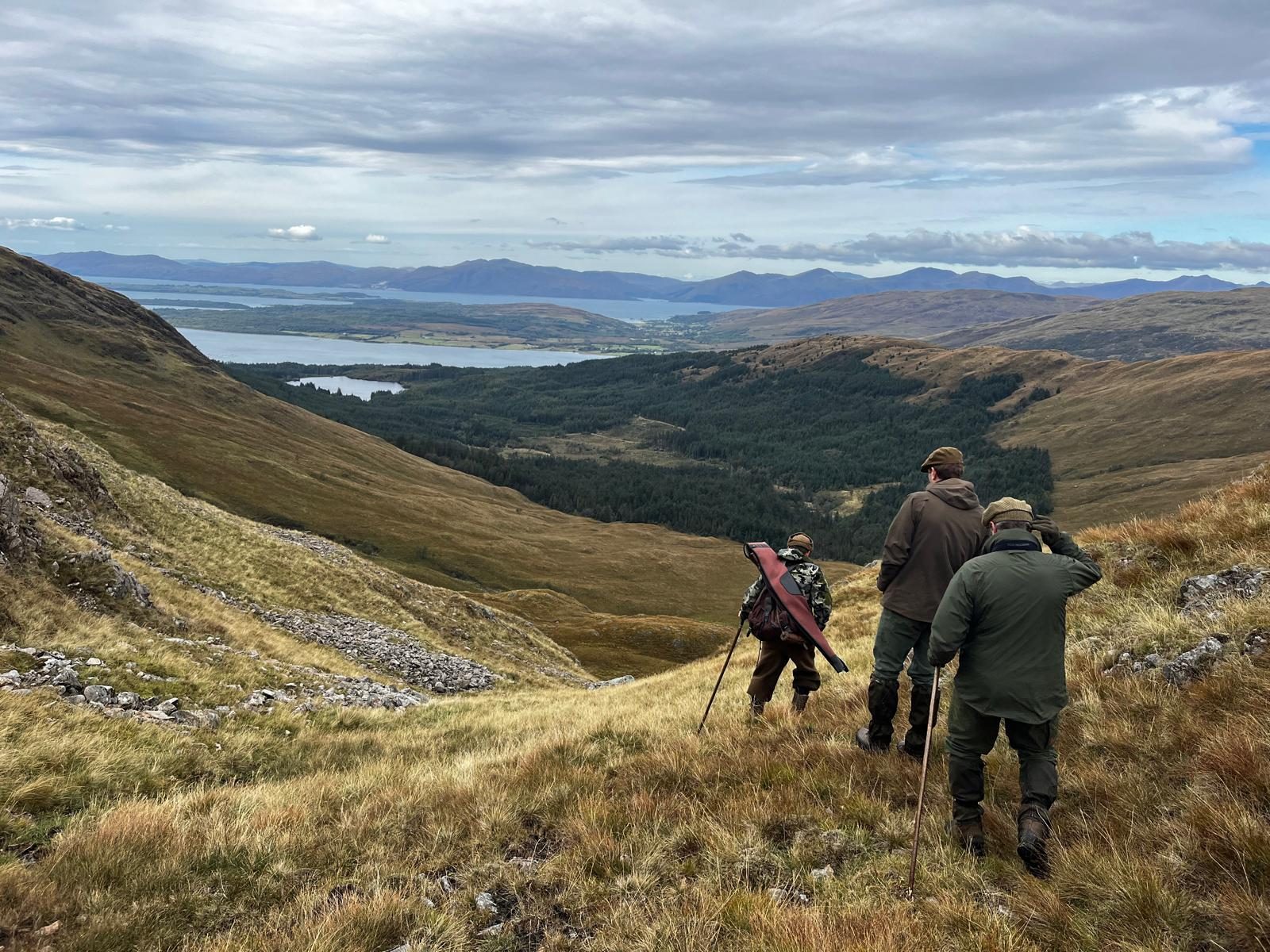
“Thanks to the hard work from the team, we’ve got an exploding population of red squirrels,” he says. “We also have two nesting pairs of sea eagles on the estate, which are spectacular. It’s not every day that a Gun can see a sea eagle flying overhead.” The eagles take the odd partridge. “Often we’re feeding them very expensive bird food,” he jests. “I’d always much prefer to have them and pay that price, than not have them.”
The Atlantic rainforest is native woodland that was never planted, damp and thick with mosses and lichens. “If you think about an English oak, which is kind of big and grand, Scots oak is much more knobbly, adapted to the weather,” says Archie. Keeping it takes real work. Deer management holds browsing pressure down so the native trees can regenerate, and invasive rhododendron has to be cut and burned. “It’s a very expensive and arduous task to undertake,” he says. “You have to, though, otherwise they will just take over native woodland.” Grants exist for Atlantic rainforest, but the support is patchy and complicated to reach, so the estate gets on with the job and recovers what cost it can.
More than one business on the ground
The shoot sits alongside the estate’s other enterprises. The Croft Collective, its hospitality brand, is developing crofts, bothies and cabins: one croft already looks over a private bay towards Mull, Scandinavian-style timber-and-glass hideaways are planned, and a five-bedroom house beside the castle’s walled garden is being done up for sporting guests and holidaymakers. The castle chapel and grounds take about 12 weddings a year, and filming, fashion shoots, oyster and seaweed farming and a boatyard storing up to 80 sailing yachts over the winter all add to the income.
“Particularly in Scotland, shoots are dropping like flies,” says Archie. “For estate owners, restarting a shoot rather than shutting a shoot is a bit of a statement.”
Frequently asked questions
Where is Lochnell?
Lochnell sits on a peninsula on the Firth of Lorn in Argyll, north of Oban and south of Fort William, looking across to Lismore, Mull and Kerrera. The estate runs to about 2,000 acres, more than 600 of them Atlantic rainforest.
What shooting does Lochnell offer?
Driven partridges from 1 September to the end of October, 15 to 20 days a season with bags generally between 100 and 200, and red stag stalking on separate hill ground. No pheasants are put down.
How much does the Lochnell Shooting Club cost?
Members join for about £650 a year, which brings a mixture of walking and standing days, some woodcock shooting, duck flighting and rough days through the season.
 Closes 15 JanuaryWorth £129.90Win a pair of tickets to the British Shooting Show 2027Enter nowFree to enter
Related Articles
Gamekeeper: why a smooth shoot day starts with gates, bridges, vehicles and the dogs
Partridges are flying well at the Honeycombe Shoot, but Mike Appleby says a smooth season rests on the work done before it – gates, bridges, vehicles, spares and the dogs
By Mike Appleby | 10 November 2026

From the Game Farm: why game farmers are uniting in a new European Game Farmers’ Group
As political threats loom in Brussels, Dominic Boulton explains how game farmers from across Europe are setting up the European Game Farmers’ Group, with a little help from FACE
By Dominic Boulton | 10 November 2026
Get the latest news delivered direct to your door
Subscribe to Shooting Times & Country
Discover the ultimate companion for fieldsports enthusiasts with Shooting Times & Country Magazine, the UK’s leading weekly publication that has been at the forefront of shooting culture since 1882. Subscribers gain access to expert tips, comprehensive gear reviews, seasonal advice and a vibrant community of like-minded shooters.
Save on shop price when you subscribe with weekly issues featuring in-depth articles on gundog training, exclusive member offers and access to the digital back issue library. A Shooting Times & Country subscription is more than a magazine, don’t just read about the countryside; immerse yourself in its most authoritative and engaging publication.

