★ Your magazine. Your say. Complete our reader survey with a chance to win Jack Pyke kit worth £500! ★


Redlegs on the old grouse ground: partridge shooting then and now
David Hudson traces partridge shooting from pointers and muzzle-loaders in the roots to a syndicate hill where released redlegs come fast and low over old grouse ground


Photographs: David Hudson
I am writing this on the Glorious Twelfth and wishing that I were out on the hill instead of sitting in the office, but by the time you read it we will be into September and the partridge season will have started. Back when I was growing up in Suffolk, partridges – wild grey partridges – were an everyday sight in the fields around the village and there would be several driven days before the more serious business of pheasant shooting took over. Back then the fields were mostly still quite small with hedgerows punctuated by mature oak, ash and elm, and the coveys would pour over the hedges and flare as they saw the Guns waiting on the other side.
It was classic driven partridge shooting with the birds flushed from root crops and stubble fields and, in Suffolk, tending to hold close to the ground rather than challenging the Guns with their height. It could be dangerous at times: I nearly got shot once when I was sitting on my bicycle watching a drive. The Guns were in a field to my left and the beaters were approaching from my right, leaving me very much in the line of fire. I heard a charge of shot whipping through the tree above me and quickly decided that it would be a good idea to get away to a safer spot.
I don’t know what sort of numbers were shot on a typical day, but they would have fallen way short of the bags taken at one time on the great manors of East Anglia, where it wasn’t unusual for the count to run into several hundred brace for one day’s driving. Go back a couple of centuries from today, though, and in the muzzle-loading era the numbers were much more modest. Those were the great years for pointers and setters quartering the roots and stubbles and pointing the coveys for the likes of Lieutenant-Colonel Hawker to take their modest 20 or 30 brace.
I suspect that the dogs back then would have been slower and steadier than the bird-dogs we work today. Faced with several thousand acres of moorland thinly populated with grouse, you need a dog that can cover a lot of ground in a short time, which means that pace and stamina are important qualities. In the spring and autumn pointer and setter trials, held in the big arable fields of Norfolk, pace is almost as important as it is on the moors during the summer, but back in the Colonel’s day, with fields of just a few acres, steadiness and bird sense were probably more important than sheer speed and the ability to cover huge areas of ground.
Long stubbles and grey partridges over dogs
The grey partridge differs from its red-legged cousin in that it will tend to sit tightly when it is pointed whereas the redleg is more likely to run and flush out of range. Stubbles were left much longer then, providing good cover for the partridges, and were not ploughed or cultivated as soon as the crops had been harvested as is often the case today. It would also be important that your dogs didn’t break fence and jump or wriggle through the hedgerows if they winded birds on the other side.
The Gun, decked out in his frock coat and billycock hat, hung around with a gamebag, powder and shot flasks, was hardly equipped to squeeze through a thorn hedge. No doubt there is still the odd place where grey partridges are shot over pointers and setters, but the vast majority of partridges shot this autumn will be driven redlegs – and great sport they can provide, especially where the terrain allows them to be driven across a valley with the Guns way below them.
Loading for a great Shot in the Borders
I was lucky enough to be the loader for one of the best Shots I have ever seen in action a few seasons ago. It was in the Scottish Borders on the fringes of what would once have been a grouse moor. The partridges were flushed from gamecrops on the top of the hill above a steep valley. Some flew straight across, high above the Guns, and offered some very sporting shooting. However, it was the birds that decided against route one which looked more difficult to me.
They came from both sides, crossing in front of the Gun, curling and either dropping or rising as they saw the line of Guns and heard the shooting. “My” Gun dealt with them with what to me looked like practised ease, so it was with some surprise that I heard him say “Never shot so badly in my life” as I was putting the gun back in the slip and starting to collect the spent cartridges.
Later I came to understand what he meant as he hit his best form on the drives that followed and knocked the most difficult birds down with minimal effort, making it look all too easy. If I ever manage to shoot as well as he did on that first drive I will be delighted but, to be fair, he probably does more shooting in one season than I have done in my whole life.


A syndicate hill where the redlegs come fast and low
I hope to be shooting – or at least shooting at – a few partridges myself this autumn. Our little syndicate releases a few redlegs onto a hill that was once a grouse moor before farming and forestry took it over. There are still patches of heather on parts of the hill, but the majority of the ground is covered with white grass, rushes and bracken. There is a little burn that separates the hill ground to the west from the grass fields to the east and the hill itself is mostly undulating with one deep gully where the Guns stand for the first two drives. It calls for snap shooting here, as the partridges appear suddenly over the skyline and are gone within seconds.
In many ways the shooting is more reminiscent of driven grouse than the traditional idea of partridges driven over arable fields and hedges. They come at you low a lot of the time and curl as they cross the line, sometimes swinging round and going back over the beaters or slipping out beyond the end Gun, either at the top or bottom of the hill. They almost always fly along the contour of the hill, sometimes crossing the drystone dyke into the forestry but rarely going over the burn and into the grass fields, though a few of them will take up residence there later in the year.
Pointers on a narrower beat
In a nod to the old days we have also tried a couple of times to shoot them over our pointers and setters once the driven days have finished. We had just a couple of Guns out and worked the dogs over a narrower beat than we would have done on the open hill, though they were still taking in a lot more ground than in the old days of 10-acre fields. They found the partridges with no problems, but the redlegs lived up to their reputation and were very quick on their feet. A covey of partridges can make much faster progress through a bracken bank than a pair of elderly Guns, and though we saw quite a few birds they were mostly too far ahead to have any chance of shooting them. We might have done better if we had tried it earlier in the season before they had got wild and wary after being chased around on the driven days.
The real plus of releasing partridges, though, is that it extends the season by a couple of months and allows us to be out shooting on what we hope will be warm, sunny autumn days. And when you sit down a day or two later to a roast partridge, basted with rowan jelly and with a couple of rashers of crispy bacon that were draped over the breasts to stop them drying out, plus some roast potatoes, parsnips and peas, you have a meal fit for the gods. I am already looking forward to it almost as much as to the first day’s shooting.
David Hudson is a photo-journalist with a passion for shooting, gundogs, field trials and stalking.
Frequently asked questions
What is the difference between a grey partridge and a redleg over dogs?
A grey partridge tends to sit tightly when a pointer or setter points it, whereas the red-legged partridge is more likely to run and flush out of range, which makes redlegs much harder to shoot over dogs.
Why do shoots release red-legged partridges?
Most partridges shot in Britain today are driven redlegs, and releasing them extends the shooting season by a couple of months before the pheasant days, with sport on warm autumn days.

About the author
David Hudson
Photojournalist
David Hudson is a photojournalist and writer whose work has appeared in the sporting press for more than four decades. His interests run to shooting, gundogs, field trials and stalking, and much of his best material comes from years spent working pointers and setters on Highland and Perthshire grouse moors, including a spell at Loch Choire in Sutherland – summer brood counts, dogs to get fit and Guns to brief. He keeps gamebooks going back over 40 Twelfths, and they turn up regularly in his writing: the midges, the mist, the pointer who kept going absent, and the days when everything came right. He is also the author of a shelf of practical sporting titles, among them The Shooting Man's Dog, The Working Labrador, Working Pointers and Setters, Running Your Own Shoot, Pheasant Shooting, Gamekeeping and Grouse Shooting. He photographs most of his own features, which is rarer than it sounds.
Related Articles

Game by the tonne, not by the brace
Eat Wild wants game meat sold on an industrial scale, and it has three seasons to build the market before the lead-shot ban lands. Selena Barr meets Tom Peachey, the gamekeeper’s son and gun-trade b...
By Selena Barr | 22 September 2026
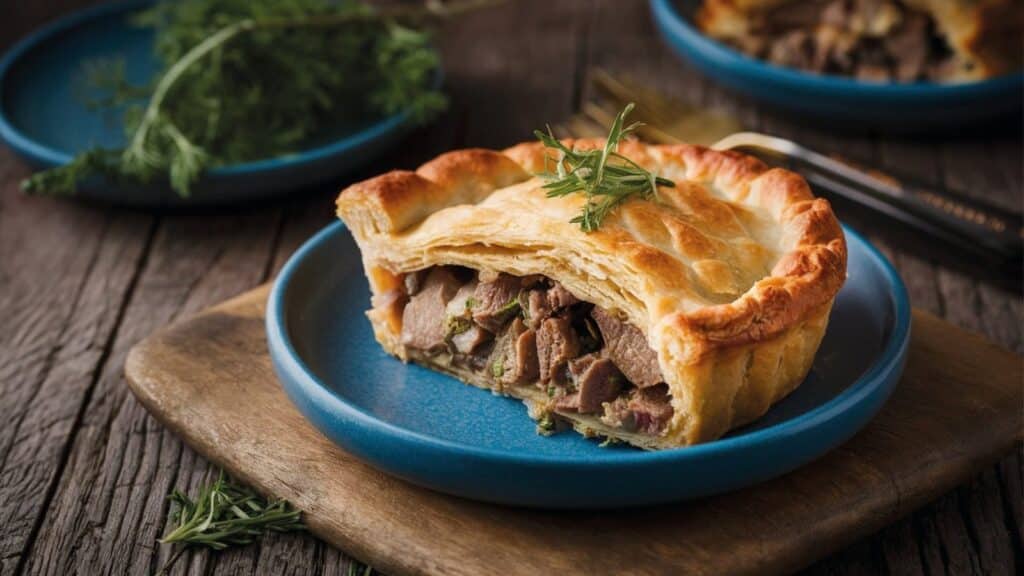
See it, shoot it and eat it: why every bird shot has to be eaten
Lord James Percy on why failing to use shot game for food risks the future of fieldsports, and what supporting Eat Wild actually asks of every Gun
By Lord James Percy | 19 September 2026
Get the latest news delivered direct to your door
Subscribe to Shooting Times & Country
Discover the ultimate companion for fieldsports enthusiasts with Shooting Times & Country Magazine, the UK’s leading weekly publication that has been at the forefront of shooting culture since 1882. Subscribers gain access to expert tips, comprehensive gear reviews, seasonal advice and a vibrant community of like-minded shooters.
Save on shop price when you subscribe with weekly issues featuring in-depth articles on gundog training, exclusive member offers and access to the digital back issue library. A Shooting Times & Country subscription is more than a magazine, don’t just read about the countryside; immerse yourself in its most authoritative and engaging publication.