★ Your magazine. Your say. Complete our reader survey with a chance to win Jack Pyke kit worth £500! ★


The Woodcock Moon: moon lore, poachers’ nights and a lost eclipse
In France people plant their vegetables by the moon, which features on pub signs and is named for woodcock in November. Jeremy Hobson answers a reader’s call to bring back the moon diary


I was delighted to see a request to bring back the moon diary (Letters, 5 August). When we lived in France, I subscribed to the monthly – and extremely popular – hunting/shooting magazine, Le Chasseur Français, which included a similar feature.
Planting and harvesting by the moon
The stages of the moon are obviously of interest to many on both sides of the English Channel. The French, though, are, it must be said, far more invested in such things, particularly in rural areas. Many still plant and harvest their vegetables by either the waning or the waxing moon.
As traditional and archaic as it may seem, doing so is not a product of superstition nor is it, in any way, an old wives’ tale. Growers who follow the moon are certain that lunar rhythms influence growth, though plant scientists who have reviewed the evidence find no mechanism to support it.
What the poaching writers actually said about a shining night
Some other rural practices concerning the moon may not be quite so correct. The folksong The Lincolnshire Poacher has it that “’tis my delight on a shining night, in the season of the year”, but well-known country writers and authors such as Ian Niall (The Poacher’s Handbook, 1950), Brian Vesey-Fitzgerald (It’s My Delight, 1947) and Frederick Rolfe (I Walked by Night, 1935) certainly make no case for moonlight providing the best conditions for their illicit activities.
It is, in fact, only in Jack Chance’s For Poachers Only (1955) that I have found any reference to the moon being helpful to the poacher. Writing of illegally catching salmon, he describes how “a half-moon shone furtively through cloud breaks to be mirrored in the oily blackness of the deep peaty water”.
Wildfowlers may think differently regarding the benefits – or otherwise – of a full moon to their chosen sport, but as I have only ever once been wildfowling, I am certainly not qualified to comment.
Why November’s full moon is called the Woodcock Moon
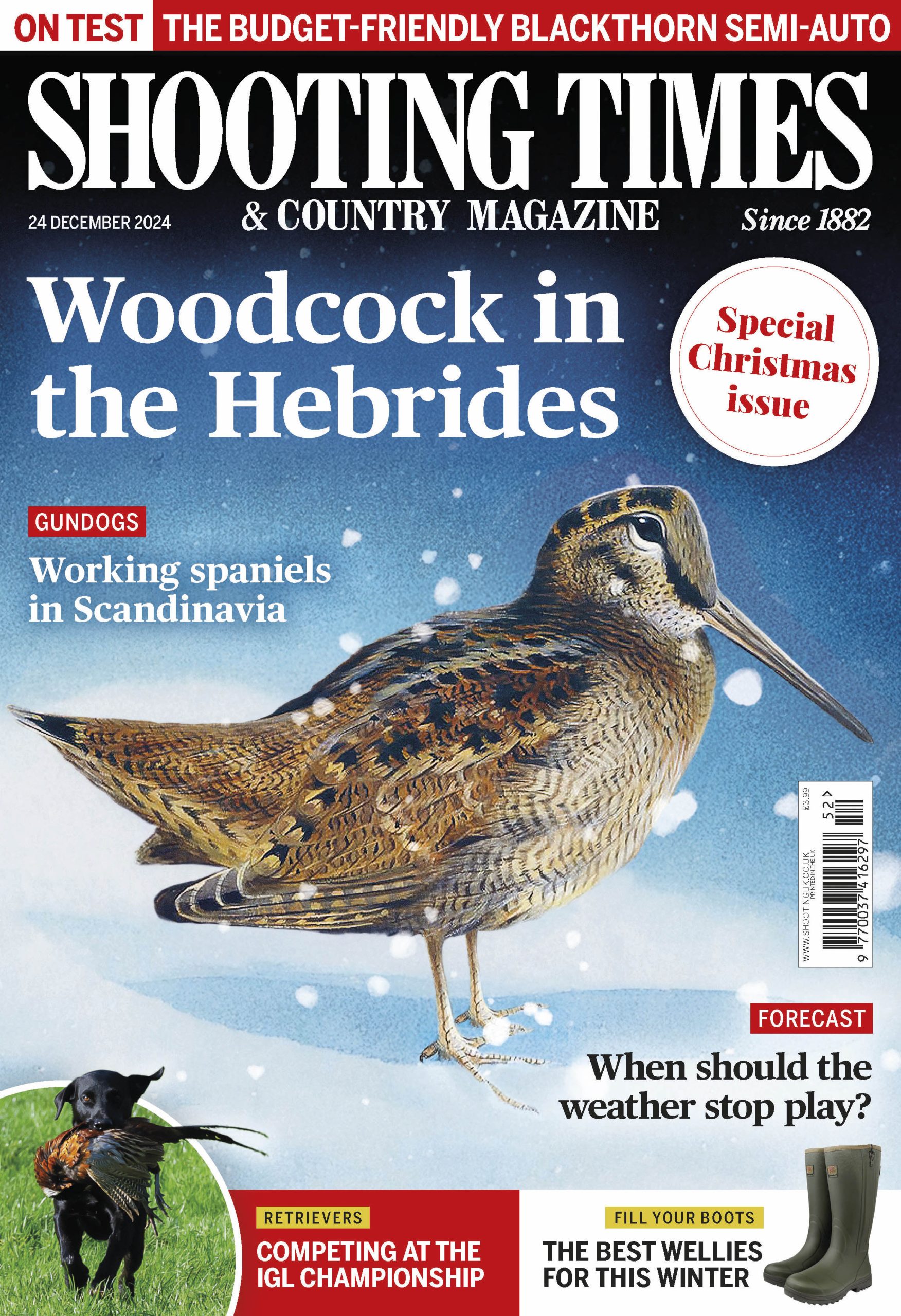
Many country folk refer to either the full moon of October – but primarily that of November – as being the Woodcock Moon, so-called because it is said to coincide with the arrival of woodcock migrating over the British shoreline from Scandinavia and Russia.
Several country inns refer to the moon in their names – the Half Moon and the Man in the Moon being just two examples. One particular Grade II-listed pub in Lancashire apparently used to have, as its sign, the silhouette of a baying dog in front of a full moon. Seemingly, it signified – to those who understood its meaning – that the inn was a “moon lodge”, a Masonic meeting house whose brethren met only on or about the full moon.
Two eclipses, and the release pen that fell silent
It’s now a few weeks since all the excitement generated by the partial eclipse on 12 August. When the last total eclipse visible from these islands occurred in August 1999, I was topping up water in one of my woodland release pens mid-morning and witnessed a far more striking occurrence than I did last month while watching from the garden, glass of chilled white wine in hand.
On that particular August morning, the blue skies and sunshine very quickly faded and were replaced by an eerie, hazy twilight as the moon began its journey across the sun. The pheasant poults in the pen became motionless as if they had been caught playing midway through a game of Grandmother’s Footsteps; the woodland birds ceased their song and the woodpigeons their normally monotonous calling.
In stark – and somewhat disappointing – comparison, this time I observed very little difference in the behaviour of the garden birds and ever-present woodpigeons.
Frequently asked questions
What is the Woodcock Moon?
The full moon of November, and sometimes that of October, so named because country folk hold that it coincides with the arrival of woodcock migrating over the British shoreline from Scandinavia and Russia.
Does moonlight really help a poacher?
Very little in the poaching literature says so. Ian Niall, Brian Vesey-Fitzgerald and Frederick Rolfe make no case for it, and only Jack Chance, writing in 1955 about illegally taking salmon, describes a half-moon through cloud breaks as any sort of help.
What is a moon lodge?
A Masonic meeting house whose brethren met only on or about the full moon. One Grade II-listed Lancashire pub is said to have signalled the fact with a sign showing a baying dog silhouetted against a full moon.

About the author
Jeremy Hobson
A Hampshire-based writer and author, Jeremy has been a professional freelance journalist for more than two decades, though his first article appeared in 1976, and behind the writing lies more than 30 years' involvement in gamekeeping and shoot management. He remains connected to the shooting world as host on a nearby sporting estate. The author of more than 30 books, most of them rural, from fieldsports and farming to smallholding and working dogs, he is best known for A Practical Guide to Modern Gamekeeping, first published in 2012 and now a modern classic in its expanded form as A Comprehensive Guide to Gamekeeping and Shoot Management, along with Running a Shoot and The Shoot Lunch. His most recent title is the authorised biography of the wildlife artist David Shepherd.
Related Articles

Country Diary: why partridge shooting really begins in October
Giles Catchpole on drought-cracked earth, responsible land management, and why true traditionalists wait until October before addressing any partridges
By Giles Catchpole | 18 September 2026
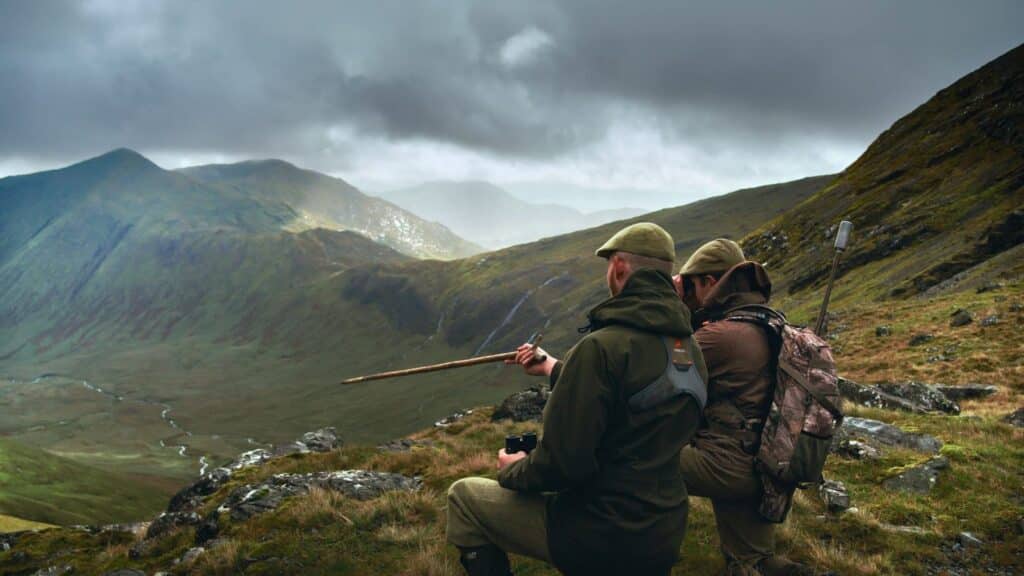
It isn’t meant to be easy: stalking and fishing at Benmore Estate on Mull
Kirk Norbury heads for Benmore Estate on the Isle of Mull, where sideways rain and cloud-covered hills are half the attraction and make it unforgettable
By Kirk Norbury | 18 September 2026
Get the latest news delivered direct to your door
Subscribe to Shooting Times & Country
Discover the ultimate companion for fieldsports enthusiasts with Shooting Times & Country Magazine, the UK’s leading weekly publication that has been at the forefront of shooting culture since 1882. Subscribers gain access to expert tips, comprehensive gear reviews, seasonal advice and a vibrant community of like-minded shooters.
Save on shop price when you subscribe with weekly issues featuring in-depth articles on gundog training, exclusive member offers and access to the digital back issue library. A Shooting Times & Country subscription is more than a magazine, don’t just read about the countryside; immerse yourself in its most authoritative and engaging publication.