

Deer pressure is stalling Britain’s new woodlands, study finds
A study of 82 planting sites finds seedlings are plentiful but few grow into trees where deer pressure passes a measurable threshold
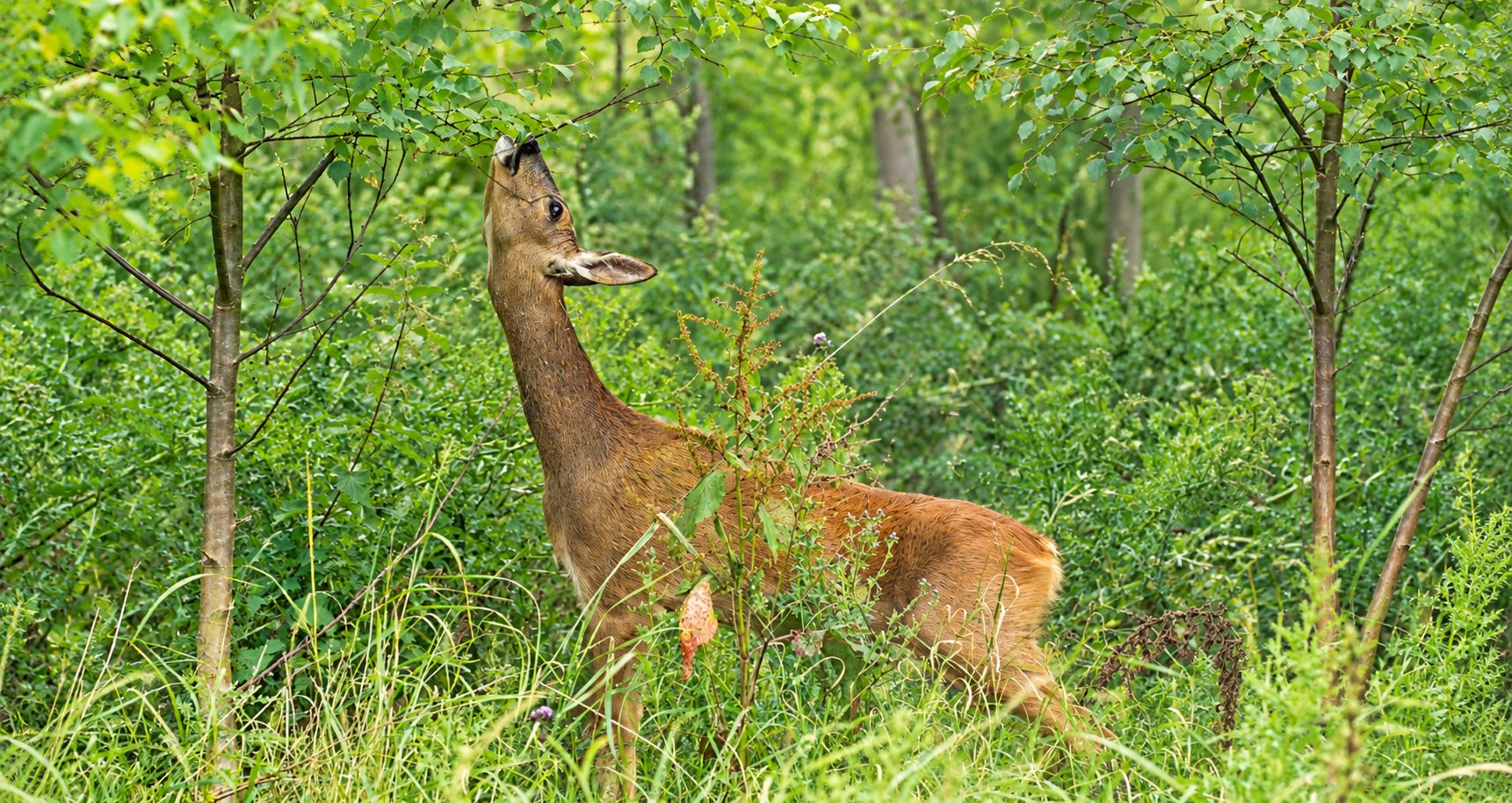

Forest Research and the University of Stirling monitored 82 woodland creation sites across England and Scotland and found that tree recruitment collapses where camera traps record more than about two deer visits a day. The British Deer Society (BDS) says the findings, published in the Journal of Applied Ecology, strengthen the case for deer management judged on impacts rather than headcounts.
What did the study find?
The researchers compared regeneration, browsing damage and deer activity across sites of different ages, from fresh planting to established young woodland. Seedlings were often plentiful, but far fewer went on to become saplings and juvenile trees, and it was deer activity that best explained the difference.
Recruitment failure became more likely where cameras recorded more than roughly two deer detections a day at a monitoring point. Small, dense and structurally varied sites proved the most vulnerable, while there was some evidence that light browsing can actually help young trees in places by suppressing competing vegetation.
From counting deer to measuring impacts
The BDS, reviewing the evidence, argues the results support four shifts in thinking: from deer numbers to deer impacts; from treating deer as a problem to treating them as part of the ecosystem; from blanket exclusion to agreed thresholds of acceptable impact; and from managing single sites to planning across whole landscapes.
“Deer are not external to nature recovery,” the society says, pointing to Glenfeshie in the Cairngorms, where sustained reductions in browsing pressure have brought trees back without planting, and to the UK Research and Innovation (UKRI) funded iDeer project, which ran from 2023 to 2025 and produced a decision-support tool for matching deer management to woodland objectives.
Government estimates cited by the society suggest around one-third of English woodlands are affected by deer impacts, and Defra and the Forestry Commission set out a deer impacts policy statement earlier this year.
What does this mean for deer managers?
For stalkers and professional deer managers, the study is hard evidence that their effort matters most where woods are youngest. It gives land managers a measurable threshold to work to, rather than a vague instruction to reduce numbers, and it treats fencing as one tool among many rather than the default answer.
The society closes its review with the question it says should now drive policy: “What level of deer impact is compatible with the landscapes we are trying to create?”
What happens next
The BDS is calling for long-term monitoring of woodland creation sites, better-defined browsing thresholds, species-specific research and further development of the iDeer tool. The study, “Deer activity limits tree recruitment in woodland creation sites” by Weaver and colleagues, can be read in full in the Journal of Applied Ecology; the link is in Useful links below.
Frequently asked questions
How many deer are too many for a new woodland?
The study found recruitment failure became more likely where camera traps recorded more than about two deer detections a day at a monitoring location, though the tipping point varies with a site’s size, density and structure.
Do deer ever help young woodland?
Sometimes. The researchers found evidence that in certain conditions browsing suppresses the competing vegetation that smothers seedlings, which is why the BDS argues for measuring impacts rather than assuming all browsing is damage.
How much of England’s woodland is affected by deer?
Government estimates cited by the BDS suggest around one-third of English woodlands are affected by deer impacts.
 Closes 15 JanuaryWorth £129.90Win a pair of tickets to the British Shooting Show 2027Enter nowFree to enter
Related Articles
Scotland’s first national deer plan due in 2027, minister confirms
The National Deer Management and Venison Plan created by this year’s Natural Environment Act will be published in 2027, and NatureScot will consult on a revised deer code before the end of the year, J...
By News Desk | 17 November 2026

Visitor levy would hit shoot dinner venues, MP warns Commons
Sir Julian Smith told the second reading debate on the Visitor Levy (England) Bill that suppliers to shoots in Skipton and Ripon are already worried by Defra’s game shooting review, and that a tax on...
By News Desk | 17 November 2026
Get the latest news delivered direct to your door
Subscribe to Shooting Times & Country
Discover the ultimate companion for fieldsports enthusiasts with Shooting Times & Country Magazine, the UK’s leading weekly publication that has been at the forefront of shooting culture since 1882. Subscribers gain access to expert tips, comprehensive gear reviews, seasonal advice and a vibrant community of like-minded shooters.
Save on shop price when you subscribe with weekly issues featuring in-depth articles on gundog training, exclusive member offers and access to the digital back issue library. A Shooting Times & Country subscription is more than a magazine, don’t just read about the countryside; immerse yourself in its most authoritative and engaging publication.

