★ Win four pegs on a Kent simulated game day with JBD Sporting worth £1,000! Click to enter ★

Blackbuck in Argentina: a hunting and conservation success story
Threatened in its native India, the blackbuck runs wild and abundant on the Argentine pampas. Simon Barr hunts it, and finds a lesson in what managed sport does for a species
 Spot-and-stalk country: glassing the herds from a distance and planning the approach before a foot is placed wrong
Stand on the Buenos Aires pampas as the sun comes up and the ground itself seems to move. Give it a minute in that first low light and the reason becomes clear: blackbuck, herd upon herd of them, streaming across open country that runs flat to the skyline. On that single morning I laid eyes on more of these antelope than survive in many of the reserves set aside to protect them in their native India. It is a startling thing to see, and it says a great deal about what sport and sound management can do for a species.
The blackbuck reached Argentina in the 1920s, with the odd record pointing back to the late nineteenth century, and it has taken to the country like almost no other introduced animal. These are not park deer behind wire. They are wild, free-ranging and self-sustaining, and after a hundred years on the plains they have made the pampas their own.

Home for the trip was Los Crestones, run by the well-regarded David Denies organisation and set right in the middle of blackbuck country. The ground we hunted lay around 45 minutes from the lodge and took in several of the original release sites; my guides reckoned we were working within 10 kilometres of the very place the species first arrived. The numbers backed them up. All day long we watched thousands of animals, herds of every age grazing quietly across a plain that seemed to have no edge.
From protected in India to abundant in Argentina
It is the contrast between the two homes that makes the blackbuck such an interesting case. Argentina suited it almost perfectly, helped by the fact that across much of its new range there is little to prey on it. A small founding herd has grown into a large one, spreading through the fertile country south of the capital until the sight of them is simply part of the landscape.
Things look very different where the animal came from. In India and Pakistan the blackbuck faces habitat loss and mounting human pressure, and depends on the full weight of the law. It is listed under Schedule I of India’s Wildlife (Protection) Act, the highest level of protection there is, and cannot be hunted anywhere in the country except where a human life is at risk. Protected and increasingly boxed in at home, it flourishes in Argentina, and it is exactly that abundance, managed and sustainably harvested, that gives regulated hunting a legitimate part to play in the species’ future.
None of which makes it easy to hunt. The blackbuck likes open plains and light woodland, gathers in herds of five to 50 under a dominant male, and is quick enough, at recorded speeds over 80km/h, to make a mature buck hard work on open ground. It grazes rather than browses, keeps out of thick forest, needs water every day and will cover long distances to find both feed and a drink. The bucks go around 38kg and wear the spiralled horns and jet-black coat that mark them out at once from the smaller, fawn does. Spotting the right male is rarely the problem. Getting within range of him is another thing entirely.
A hunt that lives on the animal’s caution
Our whole day hinged on how wary these animals are. A blackbuck trusts its eyes above all else and reads open country with a sharpness that is almost unnerving. A clumsy movement, a change in the wind, the wrong shape on the skyline, and the entire herd is gone in one flowing motion. Even at 350 metres they would not put up with the smallest thing out of place. It took me straight back to working up on big herds of fallow on the open Berkshire downs, where the ground betrays you long before the deer do.

The method at Los Crestones is plain spot-and-stalk. Because the country is so open you can glass a herd from a long way off and plan your route before you move a boot. As my guide, Sebastian Casado, said, finding blackbuck is no challenge when there are thousands of them; the real skill lies in closing the distance on a mature male. We spent hours at it, shifting from herd to herd with the wind and sun against us for most of the morning, and time and again a promising stalk fell apart in seconds as the animals streamed off across the plain.
Success came in the end, as it so often does, from one buck dropping its guard. We found him resting by a small clump of trees and worked in through the timber to 120 metres. The shot had to be slipped between trunks and branches, and as he rose, sensing something was wrong, a single well-placed round accounted for him cleanly.


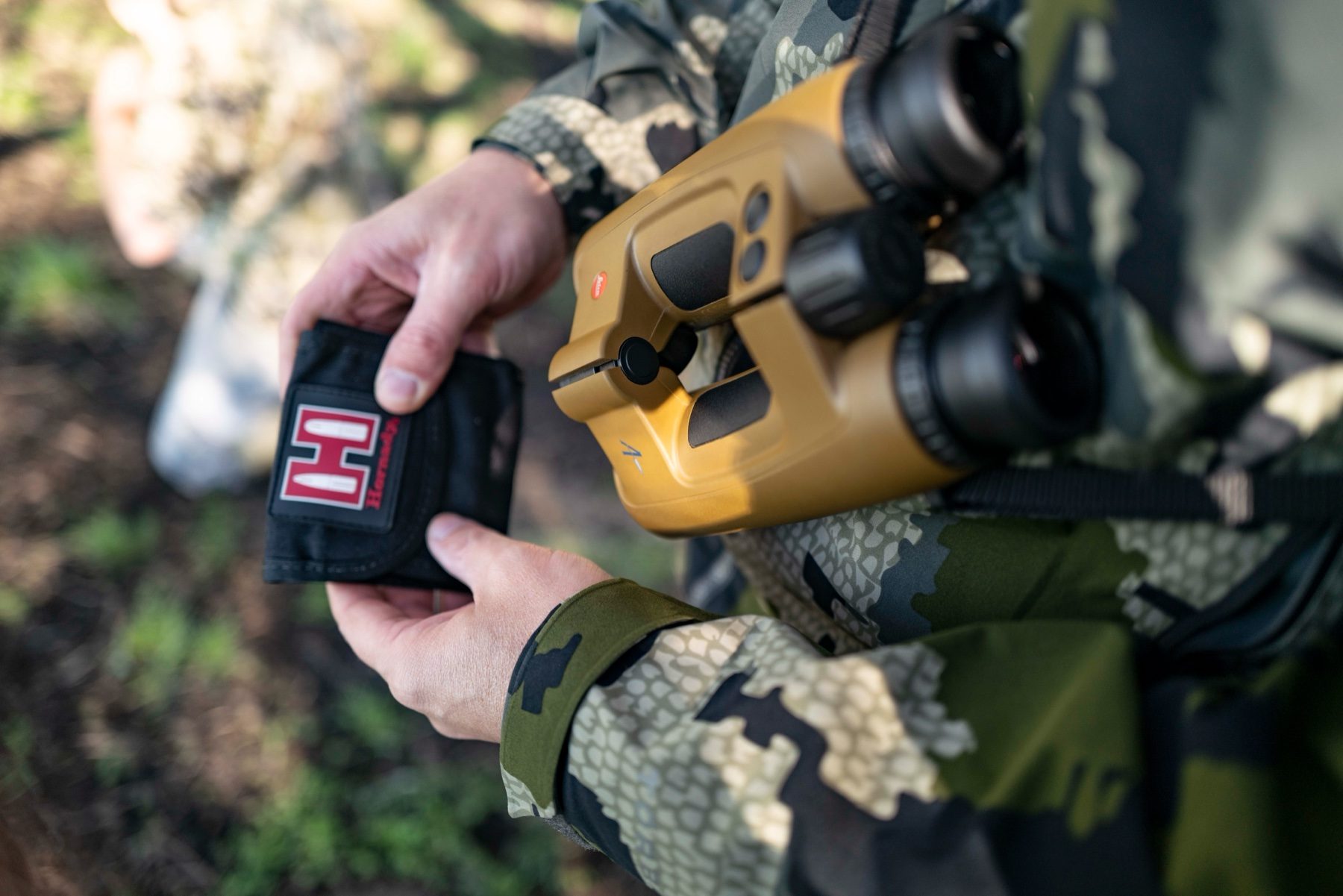
Los Crestones takes a practical view of rifles, well aware of the palaver of bringing your own into Argentina. Its gun room is well stocked, and the rifle I was handed was a fine thing in its own right: a custom build on an original Argentine 1909 Mauser 98 action, re-barrelled in 6.5×55 Swedish. The load was Hornady’s 140-grain SST, a long-standing favourite of mine, and it behaved impeccably, flat-shooting, accurate and decisive on the buck. The 6.5×55 has held its reputation for well over a century for good reason: an efficient 6.5mm bullet and light recoil suit it perfectly to the longer shots this country can throw up, while keeping it comfortable to shoot off quad sticks.
Good guiding does the rest, and here it is first rate. Sebastian, working with a local gaucho called Raúl, knew the daily movements of every herd, where the animals should be at any given hour and how to read the small signs that tell you whether a group is worth the stalk at all.
Blackbuck, but not only blackbuck
What raises Los Crestones above a single-species trip is the variety of sport on the same ground. Axis deer, another Asian introduction that has done well in Argentina, share the country, and in one day we met both: axis keeping to the wooded cover, blackbuck out on the open pampas. The axis were fine animals. One mature buck neared 90kg, the weight of a heavy fallow but with the condition that year-round feeding in a subtropical climate brings, and in a single day we saw bucks in velvet, in hard antler and freshly cast.
The season runs from May through July, the southern autumn and winter, when the animals are in their prime and the weather generally plays fair. With space for up to eight Guns the operation stays intimate, and the hunting can be tailored to you. For a trophy-class buck the lodge advises two or three full days, not because the animals are scarce, quite the opposite, but because picking a genuinely outstanding head from among thousands takes patience, judgement and the discipline to let plenty of good bucks walk.
A landscape that works for its living
The ranch itself runs to 15,000 hectares of prime country in what the guides called the lower basin of the Salado River, roughly 200 kilometres south of Buenos Aires. Along with its blackbuck and axis it carries thousands of cattle, a practical example of how a well-managed estate can keep livestock and thriving wildlife side by side.

The wildlife goes far beyond the quarry, too. The trees were alive with it, ducks and parakeets, raptors and owls, all adding to the sense of plenty. Every gaucho seemed to have four or five border collies trotting at heel. Raúl, who has worked the ranch for nearly 40 years, knew every corner of it, and between outings he introduced us to the ritual of yerba mate, the bitter green tea passed round in a shared gourd through a metal straw, just as it is right across rural Argentina.
The only predator worth the name is the silver fox, though the odd puma passes through without ever setting up home, which is fitting given it lends its name to Argentina’s national rugby side. That near-absence of predators goes a long way to explaining the sheer number of animals. The country tests you in other ways, though. Flat and low-lying, it had taken heavy rain a few days before we arrived, enough to cost us a day, and the tracks had turned to a skating rink that the vehicles slithered through as best they could.
Getting there and getting about
For anyone thinking about an Argentine blackbuck hunt, Los Crestones has location on its side, a shade over two hours’ drive from Buenos Aires. The difficulty comes in linking several lodges into one trip. Argentina is a big country and most internal flights funnel through the capital, which drags out even simple journeys. Córdoba to Salta by scheduled flight can take more than six hours; a direct charter does it in one hour and 40 minutes.

That is where an operator like Sundown Jet comes in. By flying direct between hunting destinations it does away with the stopovers, the queues and the wasted hours in terminals. Its fleet runs from Bombardier Learjet 45s and 40s for the longer legs to King Air turboprops for regional hops and Cessna Caravans able to use the smaller strips that serve many out-of-the-way lodges.
The cost is friendlier than you might think. A charter from Córdoba to Mendoza is around USD 6,000 for up to four Guns; shared between a party, the price per head sits close to a premium airline ticket while giving you a wholly private, direct service. Sundown’s shared-flight scheme on the busier routes, such as Córdoba to Buenos Aires, and its empty-legs offer, make it more accessible still. For a party moving between lodges the time saved can easily justify the outlay, especially weighed against an extra day in the field.
What the pampas has to teach
All that organisation has one purpose: to leave the guest free to hunt while everything else is taken care of, and the hospitality stays with you as long as the sport. The evenings turn on asado, the famous Argentine beef cooked slowly over a parrilla, with the day’s stalks retold around the fire. Dulce de leche turns up in one form or another all day, from breakfast pastries to puddings, and the open, all-inclusive bar is never far off, whether the morning has gone well or simply gone.
At a time when sporting opportunities are being squeezed across much of Europe, Argentina’s blackbuck show what real abundance looks like. From a handful of animals released more than a century ago has grown a hunt found nowhere else on earth, a true fair-chase pursuit built on sound wildlife management rather than artificially maintained stock. To watch thousands of blackbuck pour across the pampas at first light is to see one of the finest wildlife spectacles still open to the travelling shooter. It is also a plain reminder that, managed well, hunting and conservation keep healthy populations on the land, precisely because someone has a reason to value them.
Gear guide
Rifle: Custom rifle in 6.5×55 Swedish on an Argentine Mauser action
Optics: Leica Amplus 3-18×44 riflescope and Geovid Pro AB+ 10×42 rangefinding binoculars
Ammunition: Hornady SST 140-grain in 6.5×55 Swedish
Additional hunting: Perdiz, duck and dove shooting, and axis deer
Go there: daviddenies.com / redstagpatagonia.com
Frequently Asked Questions
How can hunting help conserve blackbuck?
In Argentina the blackbuck is wild, free-ranging and abundant, and regulated hunting gives it a clear value on the land. When a species is worth managing, landowners have a reason to keep habitat and healthy numbers, so sustainable, well-managed hunting supports rather than threatens the population. It is a different picture from India, where the animal is protected and may not be hunted at all.
Why are there so many blackbuck in Argentina?
Introduced around the 1920s, the blackbuck found the open pampas almost perfectly suited to it, with plentiful grazing and, across much of its range, no natural predators to check its numbers. From a modest founding population it has grown into large, wild, self-sustaining herds south of Buenos Aires.
Related Articles

Deer Stalking, Shooting
Hide and sika: stalking muntjac and sika through the early-autumn canopy
Stalking muntjac and sika through the early autumn canopy calls for closer shots, ghostlike concealment and superior fieldcraft
By Selena Barr

Airgun shooting, Shooting
Rabbit control with an air rifle: thermal spotting and summer fieldcraft
Using modern thermal gear and classic fieldcraft, Danny Brookfield spends a summer evening with an FAC air rifle, protecting an arable farmer's oilseed rape from ravenous rabbits
By Danny Brookfield
Get the latest news delivered direct to your door
Subscribe to Shooting Times & Country
Discover the ultimate companion for fieldsports enthusiasts with Shooting Times & Country Magazine, the UK’s leading weekly publication that has been at the forefront of shooting culture since 1882. Subscribers gain access to expert tips, comprehensive gear reviews, seasonal advice and a vibrant community of like-minded shooters.
Save on shop price when you subscribe with weekly issues featuring in-depth articles on gundog training, exclusive member offers and access to the digital back issue library. A Shooting Times & Country subscription is more than a magazine, don’t just read about the countryside; immerse yourself in its most authoritative and engaging publication.